Leaving a Mark
 The printing industry is a pretty tight-knit community, and even people who work for supposedly “rival” publications have often been friends for years, if not decades. Which is why we were very happy to see, via Printing Impressions, that Mark Michelson has been inducted into the Printing Industry Hall of Fame. Forty years ago, Mark took over Printing Impressions and made it one of the best and certainly longest-lived printing industry trade publication. As a writer and analyst, he towered over his peers—in more ways than one. And part of staying in the industry for so long is adapting to new technology, not just in terms of what you’re writing about, but how the magazine is produced.
“We had T-squares and X-Acto knives if you wanted to open up the leading between the lines, you had to manually move them down and keep it straight,” he says. “I would come home with type stuck on my elbows and my clothes and repro copy stuck to the bottom of my feet from the waxing machine … and I really enjoyed it. I really enjoyed the manufacturing side of publishing the magazine.”
Mark retired a couple of years ago, with a celebration held at PRINTING United in 2024. We are happy to see that Mark is now officially a living legend.
Liberté, ÉCALité, Fraternité
As any designer could tell you, type and typography are about more than making things readable. As Printmagazine said:
Letters carry more than language—they carry tone, history, politics, and place. Whether bold and declarative or subtle and utilitarian, type quietly mediates how we understand information and how culture presents itself back to us.
To demonstrate that, they cite a new traveling exhibition curated by the Master Type Design and Bachelor Graphic Design programs at ECAL (École cantonale d’art de Lausanne): ECAL: A Typographic Atlas, a collection of 300 typefaces created by students from around the world.
Conceived as both exhibition and navigational system, the project reframes typography not simply as form-making, but as a living, evolving territory.
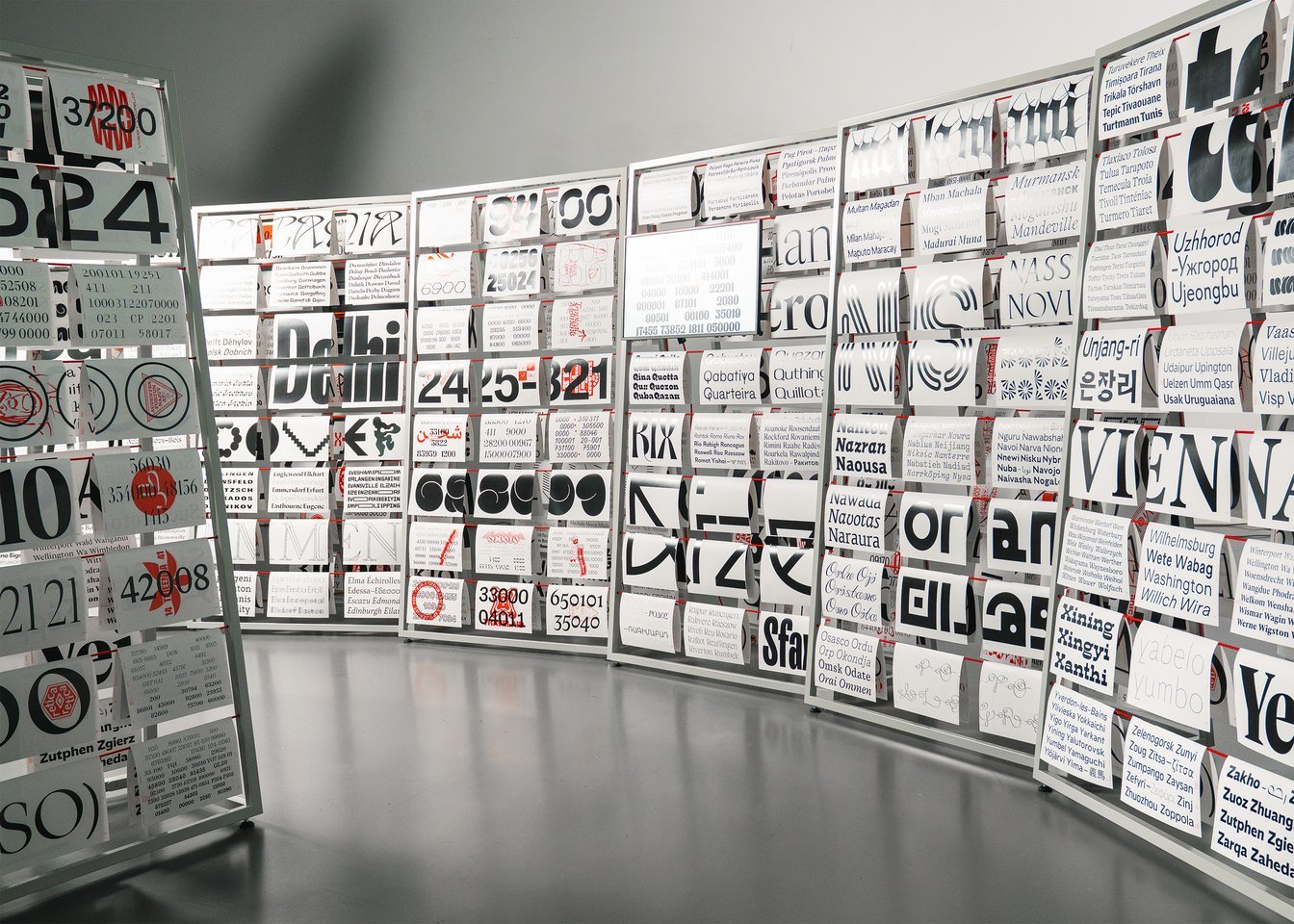
The exhibition is structured around a single indexing approach that organizes the work into alphabetical entries and numerical coordinates. This system becomes the foundation of the exhibition, turning the gallery into a map of contemporary type design.
The ECAL exhibition’s first stop is the Circolo del Design in Turin, Italy, which opened on February 12 with an opening presentation. The exhibit will stay in Turin until March 14, and there will be a conference and roundtable discussion on March 12.
After Turin, next stops include Leipzig, New York, Montreal, Los Angeles, Paris, Lausanne, and Tokyo, with more planned after that. If you’re near any of these locations and want to check it out, visit the ECAL site.
Code Comfort
QR codes have become well nigh ubiquitous (in large part due to COVID), and it has become common to see those black-and-white grids everywhere. But one you won’t see—but it’s there—is in the Guinness Book of Records. Created by researchers at Austria’s Technical University of Wien (TU Wien), it is the smallest QR code ever created, measuring only 1.98-square-micrometers.

(This is obviously not life size.)
It’s also not printed on paper, but rather etched onto a thin ceramic film using ion beams. So if a restaurant is using it for its menu, you’ll need to bring your electron microscope, which is only slightly more unwieldy than the usual way of accessing QR codes. But then it’s not intended to be scanned by a consumer, but is part of a larger initiative to develop effective data storage.
Says Popular Science:
Developing new storage methods that are economical, environmentally sound, and reliable is essential to ensuring data resiliency for generations to come. In some ways, it’s a story that’s come full-circle: similar to prehistoric civilizations etching information into stone, scientists are now doing nearly identical tasks—just on a much, much smaller scale. The team estimates that an area equal to a sheet of printer paper could contain over 2 terabytes of data if printed with their QR codes.
Hence the ceramic film, which the team chose because of its durability.
“With ceramic storage media, we are pursuing a similar approach to that of ancient cultures, whose inscriptions we can still read today,” Kirnbauer added. “We write information into stable, inert materials that can withstand the passage of time and remain fully accessible to future generations.”
So perhaps we can think of QR codes as modern cuneiform.
On the Road
How many of you remember the bookmobile? Or, we should say, a bookmobile, as (to our surprise, actually) it wasn’t run by any one particular entity. It was usually run by libraries, who would kit out buses or RVs and travel around, usually to schools, and serve as mobile libraries. They actually date back to the 19th century, when book publisher Harper & Brothers launched The American School Library in 1839, which was a traveling “frontier library.” Many other countries have also had bookmobiles. Believe it or not, bookmobiles still exist, and there is (or was) a National Bookmobile Day (recently renamed National Library Outreach Day) sponsored by the American Library Association and held in April each year, on the Wednesday of National Library Week. This year, it is April 22, so mark your calendars.
We mention this, because not only are there traveling libraries but there are also traveling bookstores. Via Atlas Obscura, Rita Collins runs Saint Rita’s Amazing Traveling Bookstore and Textual Apothecary, a roaming bookstore.
Since 2015, Collins has piloted her traveling bookstore around her home state of Montana and across the U.S. several times. What started as a seasonal summer project evolved into a year-round, part-time business after Collins retired in 2017 from a long career in adult education, teaching in Montana as well as recent stints in Romania and Czechia.

Reaching the first few mile markers—buying a used Sprinter van with a reliable diesel engine, asking a local friend to design a simple red-and-black logo for the business—was relatively straightforward. Harder to navigate was keeping the books from sliding off the shelves while on the road. Collins called a carpenter friend to build some sturdy custom wood bookshelves to hold the books at a secure, slight slant toward the van walls. The design mimics that of some library bookmobiles and keeps the books in place until eager shoppers pull them out.
This spring, Rita’s mobile bookstore will be tooling around the Southeast US. Check her blog to see where and when she’ll be in your vicinity. Tell her Around the Web sent you, and then note her confusion.
Though I Walk Through the Valley of the Shadow of AI
Even the Pope is weighing in on AI. Via Futurism:
In a closed-door meeting with clergy from the Diocese of Rome late last week, Pope Leo XIV clobbered his priests with a distinctly 21st-century request: to resist the “temptation to prepare homilies with artificial intelligence,” according to Vatican News.
The Pontiff stressed that despite AI’s capabilities—now or to come—a chatbot could never stand-in for an actual priest. “To give a homily is to share faith,” he said, and AI “will never be able to share faith.”
That said, the Vatican itself is developing an AI translation system that will “translate liturgical texts in up to 60 languages in real time.”
By the way, there is no truth to the rumor that John of Patmos used AI to write the Book of Revelation.
What’s a Grecian Urn?
About 16 euros a day?
Waka waka. Anyway, here’s an interesting twist on the phrase “rest in peace.” Via Laughing Squid, canned beverage company Liquid Death has partnered with Spotify to create the Endless Playlist Urn. Says the company:
Introducing the world’s first ever music-streaming urn from Liquid Death x Spotify. Finally death is a lot less boring. With the Eternal Playlist Urn, now the dead can listen to their favorite jams for all of eternity. Upgrade any post-life experience with this latest revolution in being dead.

Presumably it runs on batteries, so it’s probably going to be far from eternal. And if it is, we hope it’s a long playlist because listening to the same songs over and over for eternity doesn’t sound particularly appealing. And unless it’s soundproof, whoever gets custody of the urn is going to have to like the playlist, too.
Here is a video of how it works.
A steal at—yikes—$450. Well, it’ll be the last thing you ever buy so why not splurge.
Heavy Data
Here’s a pop quiz question from TechSpot: How heavy was the first ever 1 GB hard drive?
The IBM 3380 Direct Access Storage Device (DASD) marked the pinnacle of 14-inch disks in 1981. Utilizing nine platters, it broke the 1 gigabyte barrier with a total capacity of 1,260 MB and ultimately reached 2.52 GB when two HDAs were paired. A three-capacity version was offered in 1987.
It weighed 64 pounds, and was housed in a cabinet one meter wide, one meter deep, and two meters high. And it cost about $50,000.
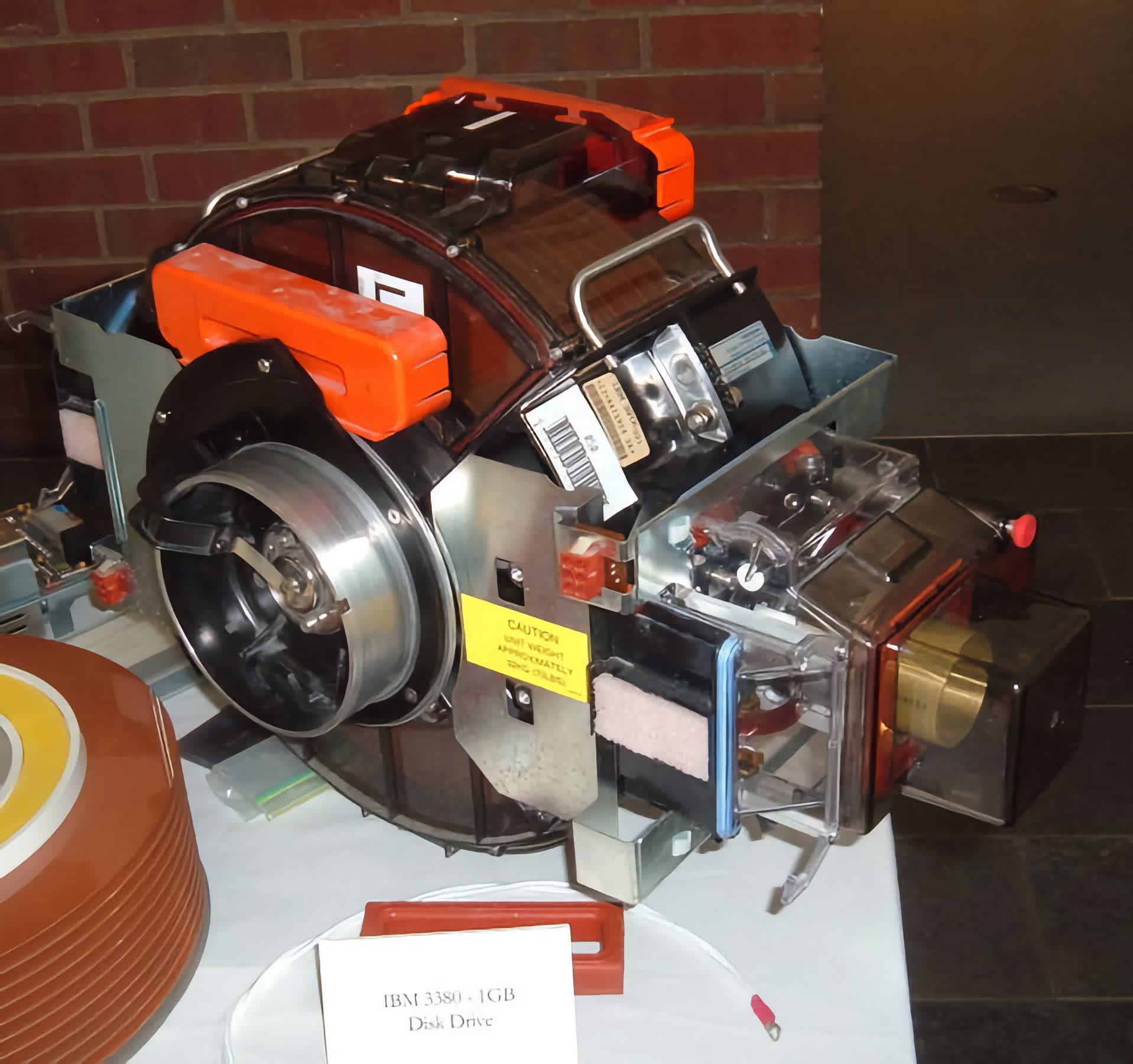
By comparison, our iPhone—which is six years old—has a total storage capacity of 128 GB. Imagine carrying 128 IBM 3380s around—it would weigh 8,192 pounds. Fortunately (at least in terms of data storage) it is not 1981.
Graphene Bears Up
Was it a good week for graphene news? It’s always a good week for graphene news! Graphene fibers mimicking polar bear fur enable improved thermal management and wearable electronics. From (who else?) Graphene-News:
Researchers from Lanzhou University, University of Science and Technology Beijing and the Chinese Academy of Sciences (CAS) have developed a new class of hollow graphene aerogel fibers (GAFs) inspired by the ultra-efficient thermal insulation of polar bear hair. By translating nature’s design into a scalable, coaxial-extrusion-spinning process, the team achieved a multifunctional fiber that sets records for both electrical conductivity and thermal insulation, paving the way for next-generation smart textiles.
… With its combination of high elasticity, conductivity, and insulation, the polar-bear-hair-inspired graphene aerogel fiber represents a promising platform for intelligent perception, energy harvesting, and thermal management, potentially transforming wearable electronics and thermal protection systems in both civilian and defense fields.
Keep Watching the Skis!
In the Northeast, it is still very much winter, and folks we know who are avid skiers are quite happy about this. Those of us who are not skiers, less so. Much less. Anyway, for those of you who want to get a jump on next winter’s ski season, why not try, via Core 77, Frigid Dynamics’ Vipera, a pair of powered skis. Yes, powered skis, which, we have to admit, sounds like the kind of thing Wile E. Coyote would have ordered from Acme. But no:
the custom-built skis feature a motorized track system at the rear, powered by batteries located fore of the wearer's boots.
A wireless remote is located within the handle of one of the included ski poles.

The skis can hit a top speed of 22 mph, and the battery range is said to be 10 miles.
We hasten to add that these are for cross-country skiing, not downhill—although we bet you could get some serious “agony of defeat” action.
Vipera was developed by mechanical engineer Gurnoor Sooch, who designed them with ski patrol and search-and-rescue professionals in mind. Nevertheless, the skis will be made available to the general public.
Emergency rooms should be prepared.
Anyway, a steal at $3,000. Frigid Dynamics is currently taking $200 deposits for pre-orders. The skis are said to ship in September.
Thereby Hangs a Tail
(Optional musical accompaniment to this item.)
Looking for a unique vacation option? Why not participate in what appears to be the latest travel trend: mermaiding. Say what? Yes, donning a tail and hanging out as if a mermaid (or merman, potentially). Says the BBC:
The trend – which has inspired a body-positive and inclusive subculture – is spreading to the seven seas, driven by conventions like MerMagic Conand PADI-certification courses. Mermaid classes and photo shoots amid stunning aquatic scenery are thrilling ways to take your holiday beyond the earthly realm.
“Mermaid classes.”
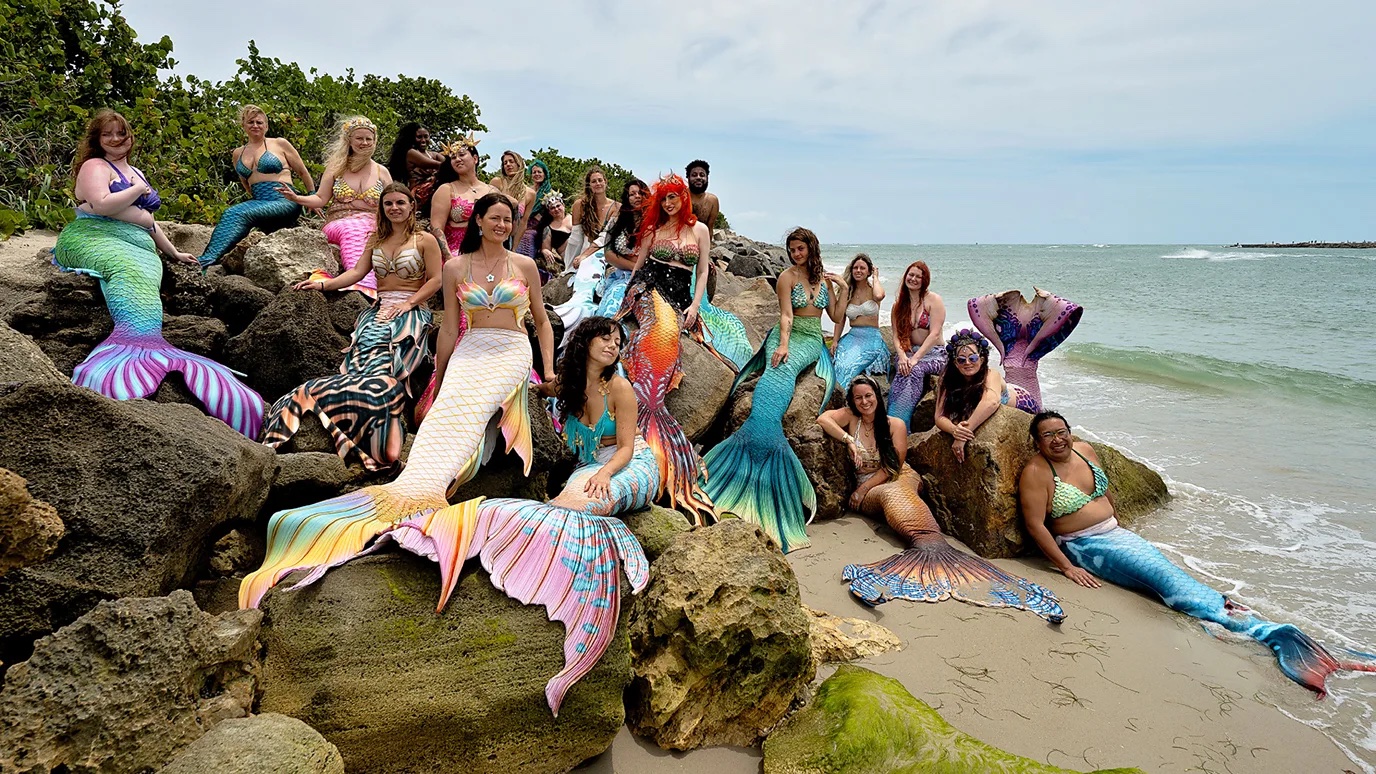
Brandee Anthony Media
My global mermaiding adventure may be pure whimsy, but as global tensions rise, I'm not the only one craving escape. From fantasy balls to LARPing weekends, "romantasy" travel (choosing immersive holidays inspired by fantasy literature) is one of 2026's fastest-growing travel trends, according to Booking.com. Mermaiding – swimming in natural water bodies and pools while wearing a mermaid tail – is as immersive as you can get.
Let’s hope no one gets into sirening, where they lie on rocks and lure sailors to their doom.
Not So Close Encounters
Ah, the best-laid plans… We can’t tell you how many times we have had this problem.
Via Boing Boing, in 1941, daredevil George Hopkins made a bet that he could parachute out of a plane and land on top of Devil's Tower. As a reminder, this is Devil’s Tower, which was the first officially recognized U.S. National Monument:
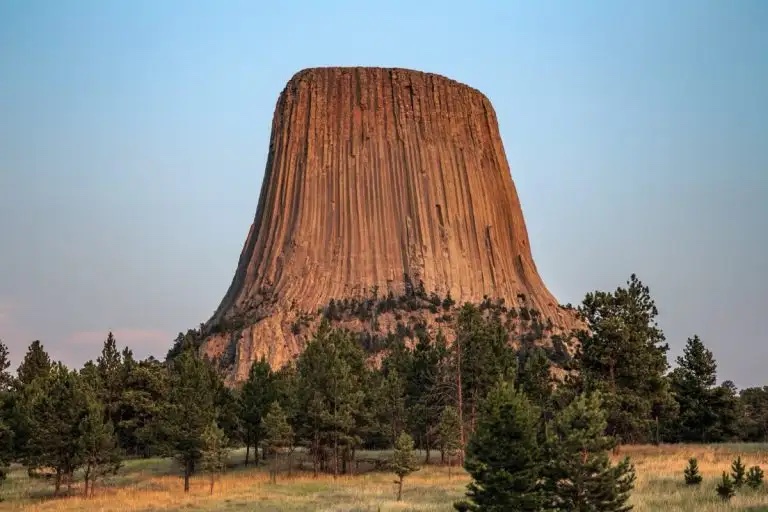
Hopkins had no problem with the parachute and he stuck the landing—in more ways than one, because as it happened, he was stuck up there. As you can tell from the photo, there is no easy way to get down.
The plane he jumped out of attempted to throw him a rope, a makeshift spike, and a hammer. The rope was not long enough, even if it hadn't been blown off course and never reached Hopkins. A subsequent attempt to provide another rope turned into a tangled nightmare.
He stayed up there for a week, with whiskey and steaks being airdropped to him until experienced climbers (or the aliens) could rescue him. Y’know, there are easier ways to make $50.
Here’s a fun video about Hopkins’ stunt.
“I Am the God of Air Fryer!”
Some years ago, if we ran into anyone who had an air fryer, they would waste no time telling us about it. That has ebbed, as now air fryers are just about ubiquitous, with more than 70% of US adults saying they already have one or plan to buy one in the next 12 months, at least according to a CNET survey. We have been tempted but have yet to explore the option, but we bring this up because, via Food & Wine, new research has found that air fryers are safer for indoor use than some other cooking methods.
A new University of Birmingham study found that air fryers emit 10 to 100 times fewer volatile organic compounds (VOCs) than traditional deep-fat frying.
Mind you, we don’t deep fry anything…well, ever. But, added the researchers in a press release:
The work, published in the American Chemical Society journal ES&T Air, is among the first to map out the full mix of pollutants released during air frying. That matters because surveys indicate air fryers are quickly becoming a standard appliance in many UK kitchens. Across several foods, the team measured lower emissions of volatile organic compounds (VOCs) and ultrafine particles than they typically saw with shallow frying or deep fat frying.
However, the key is keeping the fryer clean.
Tests with an air fryer used more than 70 times revealed 23% more cooking-related VOCs and more than twice as many ultra-fine particles emitted. The team attributes this to the build-up of residues on the air fryer in areas that the team could not reach for cleaning.
Food for thought…
This Week in Printing, Publishing, and Media History
March 2
1545: English diplomat and scholar, founder of the Bodleian Library Thomas Bodley born.
1717: The Loves of Mars and Venus is the first ballet performed in England.
1791: Long-distance communication speeds up with the unveiling of a semaphore machine in Paris.
1904: American children's book writer, poet, and illustrator Dr. Seuss (né Theodor Seuss Geisel) born.
1930: English novelist, poet, playwright, and critic D. H. Lawrence dies (b. 1885).
1933: The film King Kong opens at New York's Radio City Music Hall.
1942: American novelist and screenwriter John Irving born.
1942: American singer-songwriter, guitarist, producer, and actor Lou Reed born. Just like Sister Ray said.
1982: American philosopher and author Philip K. Dick dies (b. 1928).
1983: Compact discs and players are released for the first time in the United States and other markets. They had previously been available only in Japan.
1995: Yahoo! is incorporated.
2010: Hailey Dawson, an American girl a with 3D-printed robotic hand, born.
March 3
1847: Scottish-American engineer and academic and inventor of the telephone Alexander Graham Bell born.
1873: The U.S. Congress enacts the Comstock Law, making it illegal to send any “obscene, lewd, or lascivious” books through the mail.
1875: Georges Bizet’s opera Carmen receives its première at the Opéra-Comique in Paris.
1875: The first ever organized indoor game of ice hockey is played in Montreal, Quebec, Canada.
1882: Italian swindler, con artist, and “businessman” Charles Ponzi born. He was a practitioner of what eventually became known as the “Ponzi scheme.”
1885: The American Telephone & Telegraph Company is incorporated in New York.
1904: Kaiser Wilhelm II of Germany becomes the first person to make a sound recording of a political document, using Thomas Edison's phonograph cylinder.
1920: Canadian-American actor and purported inventor of transparent aluminum James Doohan born.
1923: TIME magazine is published for the first time.
1931: The United States adopts “The Star-Spangled Banner” as its national anthem.
1949: American historian, journalist, and author Ron Chernow born.
1951: Jackie Brenston, with Ike Turner and his band, records “Rocket 88,” often cited as “the first rock and roll record,” at Sam Phillips’s recording studios in Memphis, Tenn.
1953 English singer-songwriter and guitarist Robyn Hitchcock born.
March 4
1852: Ukrainian-Russian short story writer, novelist, and playwright Nikolai Gogol dies (b. 1809).
1882: Britain’s first electric trams run in east London.
1913: The United States Department of Labor is formed.
1957: The S&P 500 stock market index is introduced, replacing the S&P 90.
1974: People magazine is published for the first time in the United States as People Weekly.
March 5
1512: Flemish mathematician, cartographer, and philosopher Gerardus Mercator born.
1616: Nicolaus Copernicus’s book On the Revolutions of the Heavenly Spheres is added to the Index of Forbidden Books 73 years after it was first published.
1953: American screenwriter and producer Herman J. Mankiewicz dies (b. 1897).
March 6
1475: Italian painter and sculptor Michelangelo born.
1665: The first joint Secretary of the Royal Society, Henry Oldenburg, publishes the first issue of Philosophical Transactions of the Royal Society, the world's longest-running scientific journal.
1885: American journalist and author Ring Lardner born.
1888: American novelist and poet Louisa May Alcott dies (b. 1832).
1899: Bayer registers “Aspirin” as a trademark. What a headache that must have been.
1927: Colombian journalist, author, and Nobel Prize laureate Gabriel García Márquez born (not in the time of cholera).
1943: Norman Rockwell published Freedom from Want in The Saturday Evening Post with a matching essay by Carlos Bulosan as part of the Four Freedoms series.
1946: English singer-songwriter and guitarist David Gilmour born.
1966: English comedian, actor, and screenwriter Alan Davies born.
1975: For the first time the Zapruder film of the assassination of John F. Kennedy is shown in motion to a national TV audience by Robert J. Groden and Dick Gregory.
March 7
1274: Italian priest and philosopher Saint Thomas Aquinas dies (b. 1225).
1765: French inventor of photography Nicéphore Niépce born.
1792: English mathematician, astronomer, experimental photographer, and inventor of the blueprint John Herschel born.
1872: Dutch-American painter Piet Mondrian born.
1876: Alexander Graham Bell is granted a patent for an invention he calls the “telephone.”
1917: American engineer and programmer Frances Elizabeth “Betty” Holberton born. She was one of the six original programmers of ENIAC, the first general-purpose electronic digital computer, and was the inventor of breakpoints in computer debugging.
1999: American director, producer, and screenwriter Stanley Kubrick dies (b. 1928).
March 8
1010: Persian poet Ferdowsi completes his epic poem Shahnameh.
1618: Johannes Kepler discovers the third law of planetary motion.
1775: An anonymous writer, thought by some to be Thomas Paine, publishes “African Slavery in America,” the first article in the American colonies calling for the emancipation of slaves and the abolition of slavery.
1817: The New York Stock Exchange is founded.
1865: American type designer Frederic Goudy born.
1931: American author and critic Neil Postman born. (His 1985 book Amusing Ourselves to Death was eerily prescient.)
1979: Philips demonstrates the compact disc publicly for the first time.