Around the Webb, Part the Continuing: Going Deep (Space)
There are some pretty weird things in space, but this planet, captured by the James Webb Space Telescope, has one of the oddest appearances: it’s shaped like a football. Says Futurism:
The roughly Jupiter-mass object, designated PSR J2322-2650b, orbits just one million miles away from its star, or one percent of the Earth’s distance from the Sun, with a single “year” lasting just 7.8 Earth hours. And at such proximity, the extreme gravity of the star — an exotic type known as a pulsar — pulls the entire planet into an oblong shape, like a lemon or a football.

As it stands, everything about PSR J2322-2650b is an enigma. Few pulsars are known to have a planet, let alone one that’s shaped like a lemon, has graphite for clouds, and lacks the elements detected on other worlds.
It’s entirely possible that PSR J2322-2650b is an “entirely new type of object that we don’t have a name for.” How about…a lemonde?
Melt with You
An artist known as KSRA KSRA takes as her inspiration old neon signs, but her miniature reimaginings of them are as melty images. Says Print magazine:
During the pandemic, so many establishments were folding. My sculptural focus landed on immortalizing closing businesses. Disappearing from our skylines, these icons were fading away like mirages. Trying to remember them felt like a wavy sitcom flash back scene. It pulls my own heart strings thinking that places we all cherished have been wiped away from our growing cities. Or maybe I’m just sentimental and have bad vision.

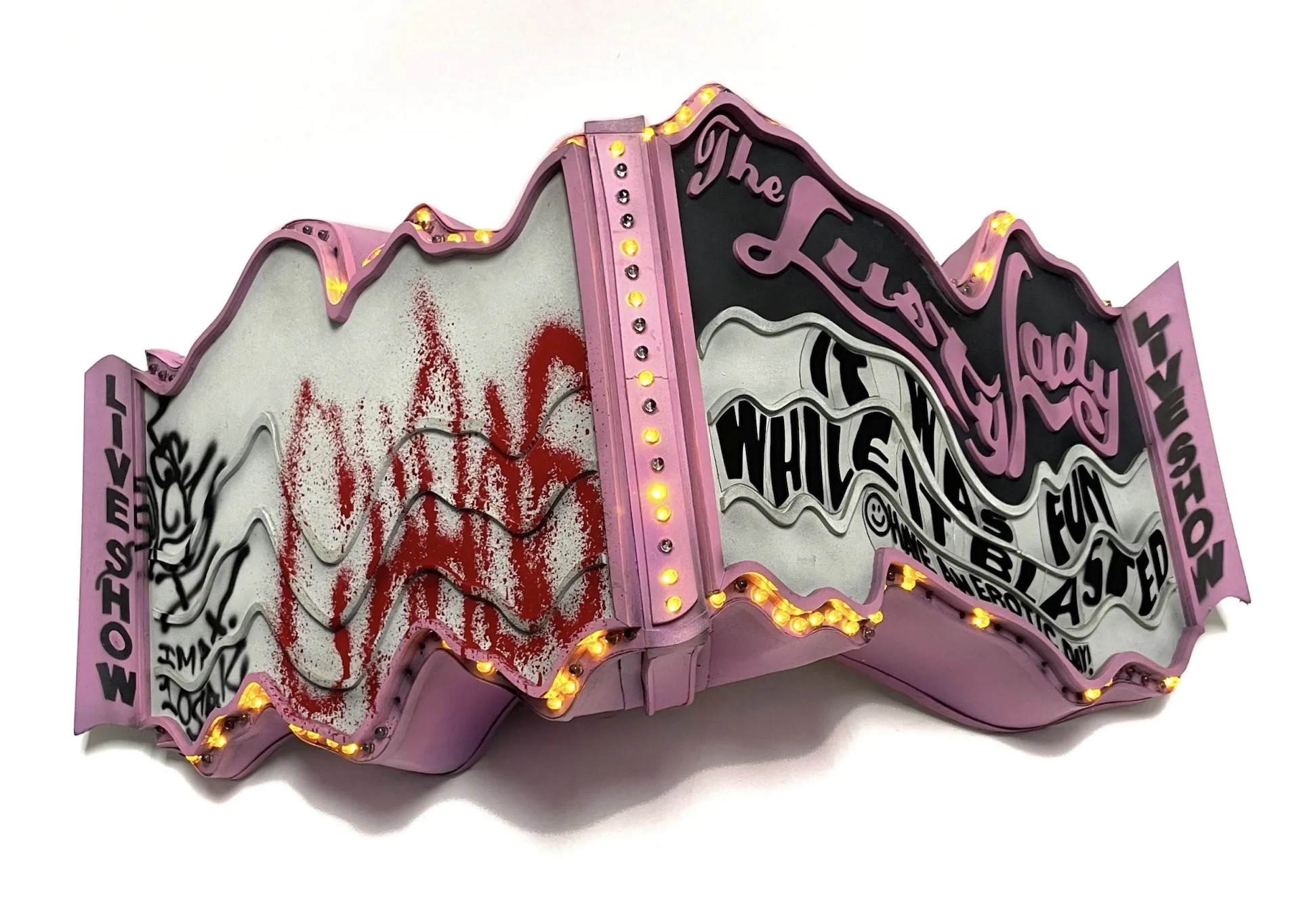
A lot of research goes into each piece before it’s actualized. I’m lucky if the sign is still in its location and I can take my own photos for reference. I digitally alter the photographs and then create them from various materials. Wood, foam, paper, metal, aluminum, styrene, foamcore, hardboard, grits, spray paints, airbrushing, pastels. Hours of cutting, sanding, bending, prying. And, of course, a ton of various adhesives.
It Is a Puzzlement
Consider the jigsaw puzzle. Ever notice that there is no relation between the shape of the pieces and image printed on them? No, nor did we. But Core77 points out that “The puzzle solver must thus solve by using two types of pattern recognition.” Apparently this is a problem. Ergo, Kansas-based puzzle designers Caylyn and Chad Krizan have launched a Bumfuzzled line of puzzle designs whose graphics and shapes correspond to each other.
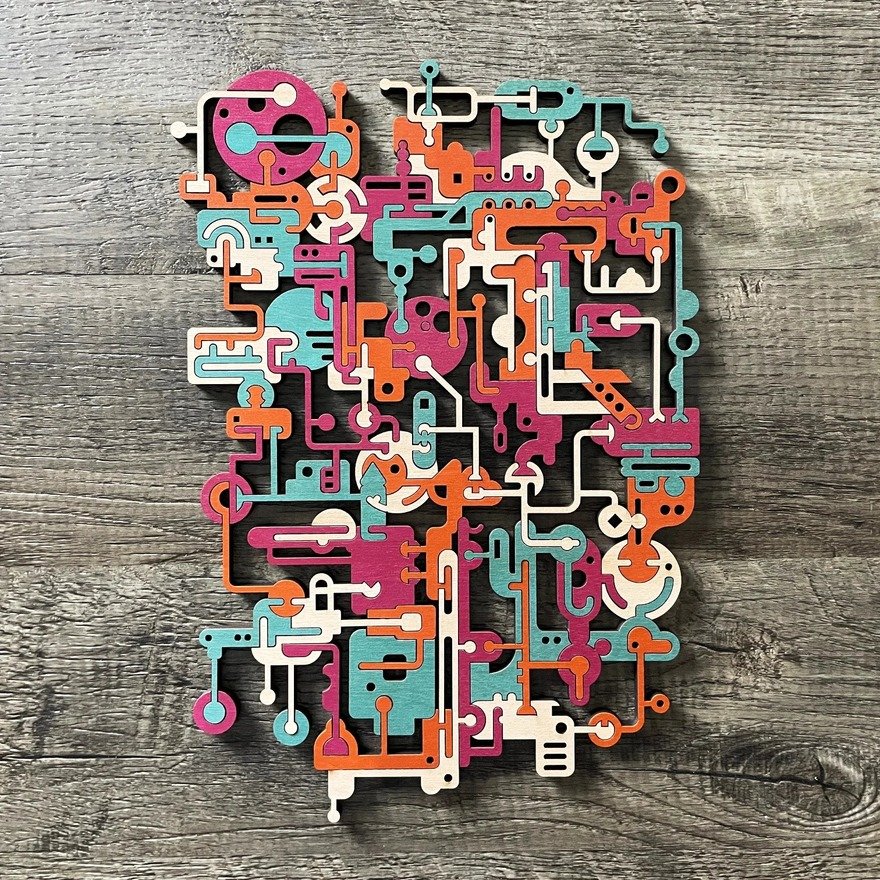
We’re not entirely sure what they’re talking about, but they do look like challenging puzzles, for those looking for a non-digital pastime. A steal at $69.
Voxel Populi
One of the challenges we as a culture face today is that of data storage. Sure we have parchment-, paper-, even stone-based documents that have lasted millennia, but those are often flukes, as the bulk of the material produced by humanity is gone forever. And this is even truer today and modern data storage—we’ve all backed stuff up to digital storage media that are no longer readable by anything. And the physical media themselves—hard disks and magnetic tape—have very limited lifespans. But via The Guardian, researchers have come up with a novel medium for archiving data—and one that they say could last for millennia: laser-writing in glass.
experts at Microsoft in Cambridge say they have refined a method for long-term data storage based on glass.
“It has incredible durability and incredible longevity. So once the data is safely inside the glass, it’s good for a really long time,” said Richard Black, the research director of Project Silica.
Writing in the journal Nature, Black and colleagues report how the system works by turning data – in the form of bits – into groups of symbols, which are then encoded as tiny deformations, or voxels, within a piece of glass using a femtosecond laser. Several hundred layers of these voxels, Black notes, can be made within 2mm of glass.
Each voxel is produced by a laser pulse, and the laser is split into four independent beams writing simultaneously, allowing it to record 65.9m bits per second.
The researchers found they could store 4.84TB of data in a 12 sq cm piece of fused silica glass, 2mm deep – about the same amount of information that is held in 2m printed books, an accompanying article by researchers in China notes.
The team have also developed a way to create voxels in borosilicate glass, the material used by the Pyrex brand.
So, ideally, you could record recipes on the same baking dish used to make them.
Once written, the voxels can be read by sweeping the glass under an automated microscope with a camera to capture images of each layer. These images are then processed and decoded using a machine learning system.
They are also quick to add that this is not likely something to be used in the home or office, but rather by big cloud companies.
Of course, we gotta ask: if all content is going to be generated by AI, is it even worth saving?
“You Didn’t Sink My Battleship!”
When most of us think of “vehicle wraps,” we usually think of cars, vans, tractor trailers, even the occasional yacht. But a battleship wrap? Yes, there was such a thing, and it helped the Royal Navy during the First World War. Via Laughing Squid, it wasn’t a vinyl wrap, but paint. Called “dazzle,” it was a type of camouflage that enabled battleships to avoid enemy torpedoes.

This is dazzle camouflage, and it’s probably the most popular and widely used method for camouflaging a ship. It’s been used since World War I, and can still be seen on warships today. …Dazzle camo, of course, did not make the ship harder to see, but it did make it a lot harder to understand what you were seeing.
From a distance, these black lines can create shadows where there are none, and these white lines can erase the shadows that were already there. This triangle in the middle might look like it’s pointed at the camera, for example, when it’s actually a flat surface on the side of the ship. It can also be tricky to tell where the sky starts and the ship ends.
There is no truth to the rumor that if you put dazzle camouflage on your car you’ll avoid speeding tickets.
Watch a cool video about it here.
Livin’ on the Edge
Here’s a pop quiz for all you bookbinders out there. What is the term for the decorative indentations made on page edges in old books?
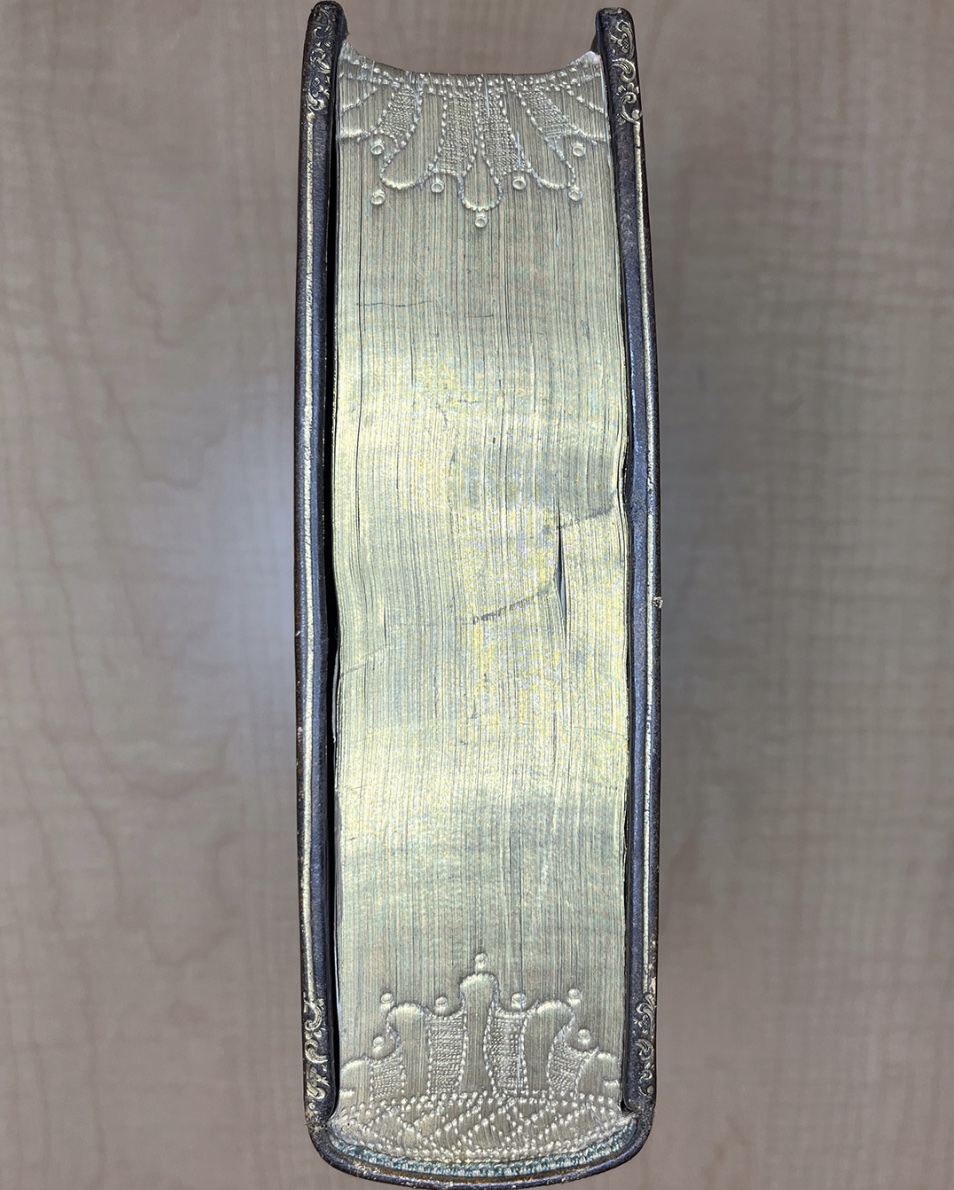
Via Boing Boing, they are called “gauffered edges,” a gilt edge further decorated by a finisher using heated tools to impress small repeating patterns. It was a popular book finishing style in the 16th and 17th centuries.
Patterns range from waves and chevrons to dots and floral motifs, making books worth looking at (and running your fingers across) even when they're closed. The example here is unusual because the gauffering is concentrated on the spine and fore-edge rather than spanning the whole head edge.
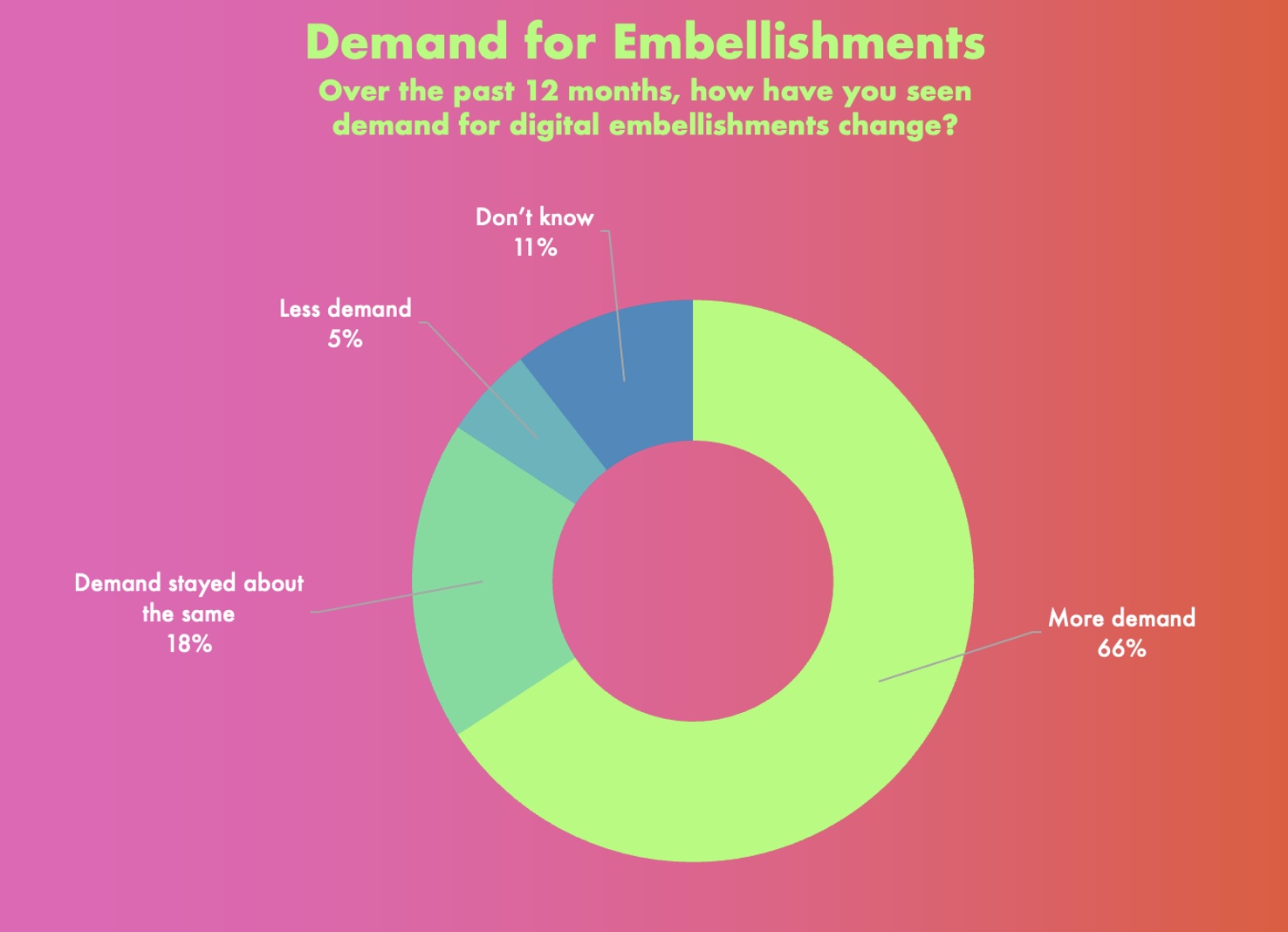
We should bring the effect back—it’d be a cool form of digital embellishment.
Able Was I Ere I Saw Elba
If there is anyone capable of amazing “appearance management,” it is the artisans who craft the waxwork figures at Madame Tussaud’s. Via the BBC, British actor Idris Elba appeared on the Graham Norton Show and found his waxwork figure stunningly lifelike.

So lifelike, in fact, that he was able to use its face to unlock his phone with Face ID. There has to be a Twilight Zone episode in there somewhere…
Handy
Here’s a creepy idea, quite literally: a robotic hand that can detach from its main body and crawl about of its own accord. Via TechSpot:
Unlike traditional robotic grippers fixed to stationary arms, this dual-mode manipulator functions both as a conventional end effector and as an independent mobile tool. Once undocked, it can navigate toward objects on its own, using a coordination system that lets each digit crawl and reorient in multiple directions.
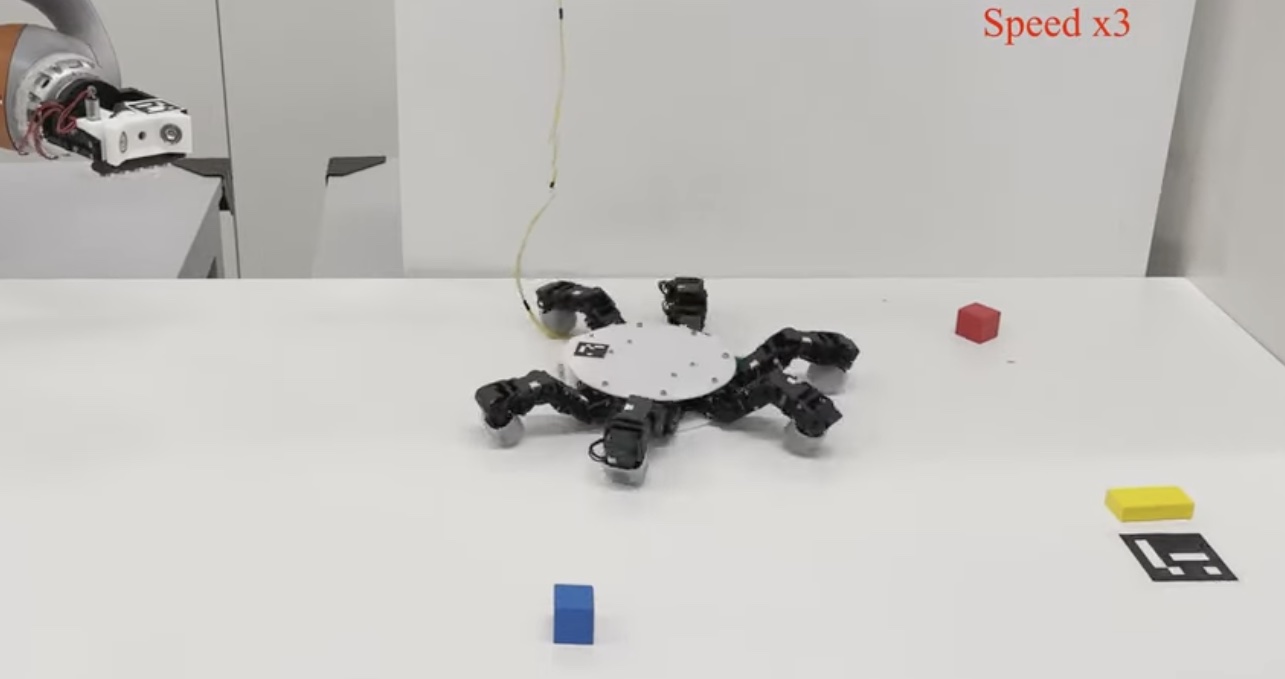
This was designed by engineers at the Swiss Federal Institute of Technology Lausanne (EPFL).
the team designed the system for functional manipulation, not stealth or surveillance. Industrial scenarios – such as pipeline inspection, mechanical repair, or machinery retrieval – stand to benefit most.
Or just scaring the crap out of people.
Eye-Yi-Yi
Via Boing Boing, J. A. Humphreys is an animator who specializes in paper animations, which are often creepy and not half surreal.
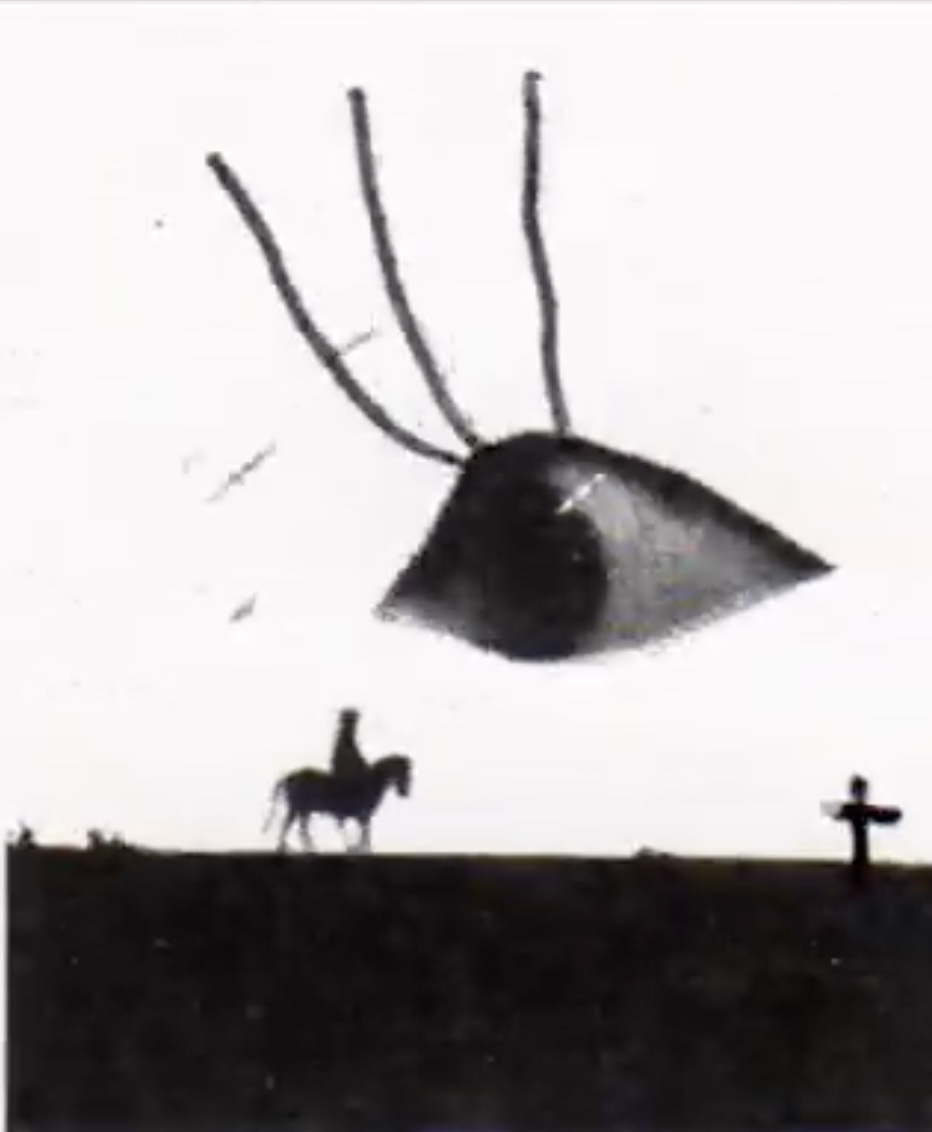
Still, the robotic hand is creepier.
Old Photo
For some of us older people struggling to stay up to date on technology (even while mocking it relentlessly), we can take some comfort in the fact that just about every generation has gone and will go through this exact same thing. Take John Owen. Born on April 16, 1735, he was a veteran of the French and Indian War as well as the Revolutionary War, and he passed away in 1843 at the ripe old age of 107. Shortly before his death, he was exposed to a brand new technology: photography, specifically the daguerreotype process, which was made public in 1839. Via Boing Boing, this gives Owen the distinction of being “one of the earliest-born humans ever to be photographed.”
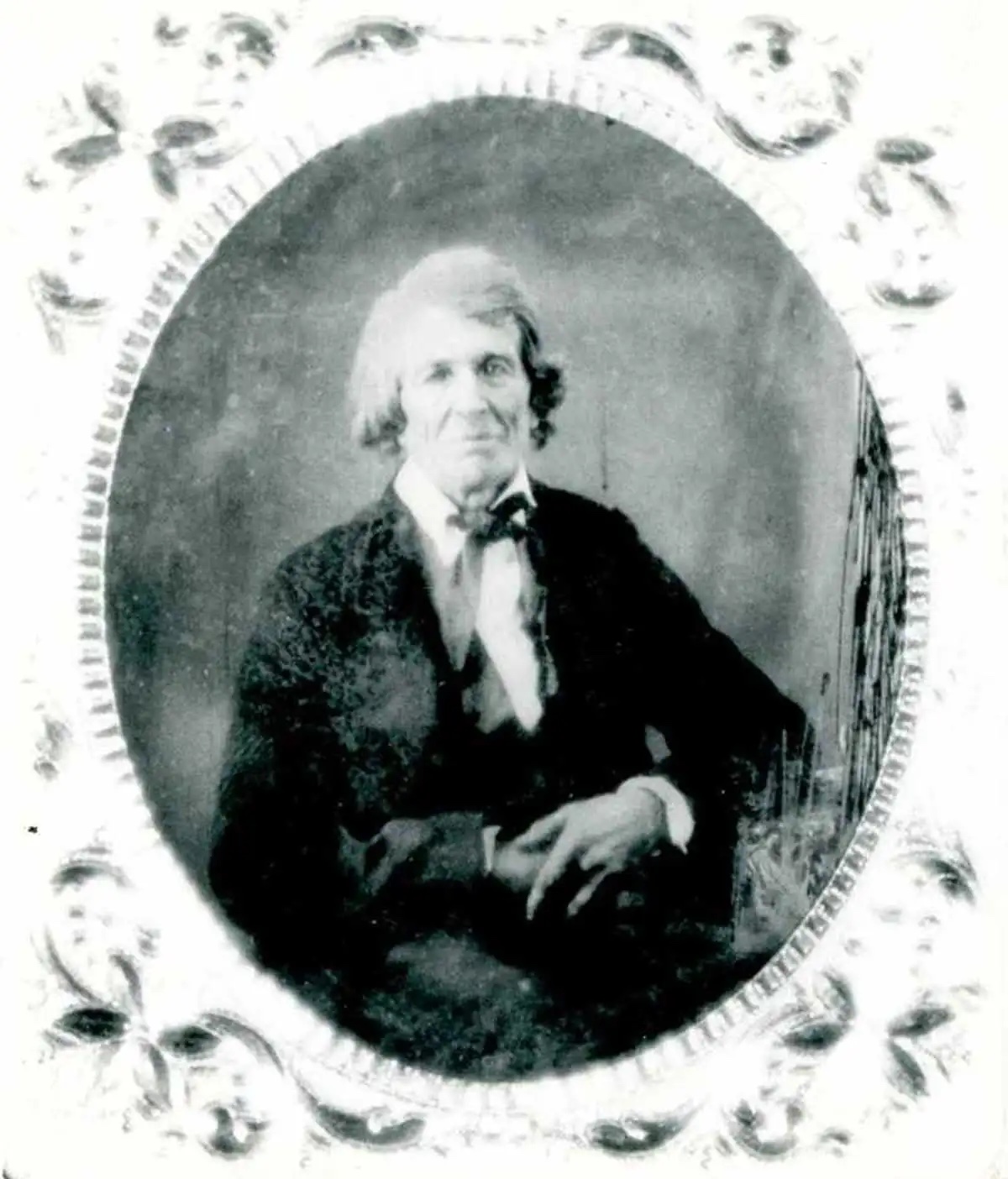
To sit for a photograph in 1843 and have been born during the reign of King George II is a collision of eras that's hard to wrap your head around.
23 Skiddoo
The buildings in New York City with perhaps the most iconic appearance is the Flatiron Building. Standing at the intersection of Fifth Avenue, Broadway, and 23rd Street, it first opened in 1902, originally as the Fuller Building, and had the distinction of being one of the first—if not the first—Manhattan skyscrapers.

Named after the original tenant, the Fuller construction company, it had many tenants over the years, including, for a time, book publisher St. Martin’s Press (who moved out in 2019), for whom we worked in the early 1990s. Naturally, the CEO had the office in the prow of the building.
And if you have ever heard the phrase “23 skiddoo,” one widely believed origin was related to the Flatiron Building. Says Wikipedia:
Because of the shape of the building, winds swirl around it. During the early 1900s, groups of men reportedly gathered to watch women walking by have their skirts blown up, revealing legs, which were seldom seen publicly at that time.
Cops, trying to shoo away the leering lads would shout “23 skiddoo!” at them, meaning “Scram!”
We mention this because, via CNBC, portions of the Flatiron Building are now being converted into residences.
Formerly a commercial building, the Flatiron Building is being converted into 38 luxury condominiums, with a full completion scheduled for later this year. Apartments in the building range from three-bedroom units selling for around $10.95 million to the penthouse on the 21st floor going for over $50 million.
If you’re looking to move into an iconic building:
There are currently two four-bedroom, four-bathroom units available, priced from $16 million to $18.9 million. Others are set to become available later this year, with three-quarters of the building expected to be done by July.
Let’s hope they replaced the horrible elevators.