Horse Play
It wouldn’t have made as catchy a hit for Al Stewart, but this week’s Lunar New Year celebrated the advent of the Year of the Horse. The Lunar New Year is the biggest annual celebration in China, and, via AP, this year’s celebration featured prayers, fireworks, fairs, and…robots?
One of the highlights of the CCTV Spring Festival gala was a martial arts performance by children and robots. For several minutes, humanoids from Unitree Robotics showed different sequences and even brandished swords.
The ’bots were generally well-received.
Viewers applauded the robots, with one saying they give good guidance and direction for young people. One man, though, said that while China’s advances in robotics are great, they detracted from his experience.
“It lacks a bit of the New Year atmosphere,” Li Bo said. “It’s not as enjoyable as when I was little watching the gala.”
And, gee, our old LaSalle ran great.
Let’s hope this Year of the Horse is a smooth ride.
Oh, DR
You have no doubt run across the common Internet initialism “tl;dr,” which stands for “too long; didn’t read,” usually used to introduce a summary of a blogpost or article. It was coined somewhere around 2002.
Now, via Futurism, we may have a new initialism: “ai;dr,” short for “AI; didn’t read.”
We’re not ready to christen AI;DR a word of the year yet, but it does appear to be gaining moderate traction online, after a recent post on Threads drew attention to it.
It’s not a new term, though:
The term has been used in the past, but never took off. Anti-AI sentiment, however, is higher than ever. The actual word of the year for 2025, as crowned by Merriam-Webster, was “slop,” a testament to just how much AI backlash has escalated in a pretty short amount of time, even as seemingly the entire economy doubles down on pouring money into the tech.
They do make a compelling point: “Why should I bother to read something someone else couldn’t be bothered to write?”
Slop 10 List
Ever heard of novelist Coral Hart? No, nor have we, but then we don’t read romance novels. But, via Futurism, Hart has started using Anthropic’s Claude AI to produce romance novels.
Across 21 different pen names, Hart says she produced more than 200 romance novels last year and self-published them on Amazon, which has been drowning in AI slop for years now. None were huge hits on their own, per the NYT, but in all they sold around 50,000 copies, raking in six figures. While being interviewed on Zoom, she finished producing a book in just 45 minutes. Your average human writer doesn’t stand a chance, she says.
“If I can generate a book in a day, and you need six months to write a book, who’s going to win the race?” Hart told the NYT.
Why does this need to be a race?
You might not have a high opinion of romance paperbacks, but there’s undeniably an art to writing them, especially at the incredible quantities required to match smut readers’ voracious appetite. And like in any other genre, plenty of veteran authors are worried that they’re being drowned out by the AI-reliant newcomers. “It bogs down the publishing ecosystem that we all rely on to make a living,” Marie Force, a best-selling romance novelist who was alarmed to discover that her novels were used to train Claude without permission, told the NYT. “It makes it difficult for newer authors to be discovered, because the swamp is teeming with crap.”
So that’s awesome.
Big Blue
Well, kudos to IBM. Via TechSpot:
Amid multiple depressing reports of AI causing job layoffs and white-collar workers under threat, here's some rare positive news: IBM is tripling the number of entry-level workers it plans to hire in the US this year. The company said the new positions will focus on tasks requiring human judgment, customer interaction, and oversight of AI systems.
Furthermore:
Examples include software engineers spending less time on routine coding and more time on interacting with customers. HR staffers, meanwhile, will work on taking more questions that chatbots can’t handle.
Like most questions, in our experience.
Outstanding In His Field
What is the world’s largest photograph? Or, more specifically, what is the world’s largest living photograph? Via Positive.News, it’s a French wheatfield that Spanish artist Almudena Romero is transforming into a giant photographic image. It’s part of a project called “Farming Photographs,” a collaboration with INRAE, France’s national institute for agriculture, food and the environment, which will look like this:
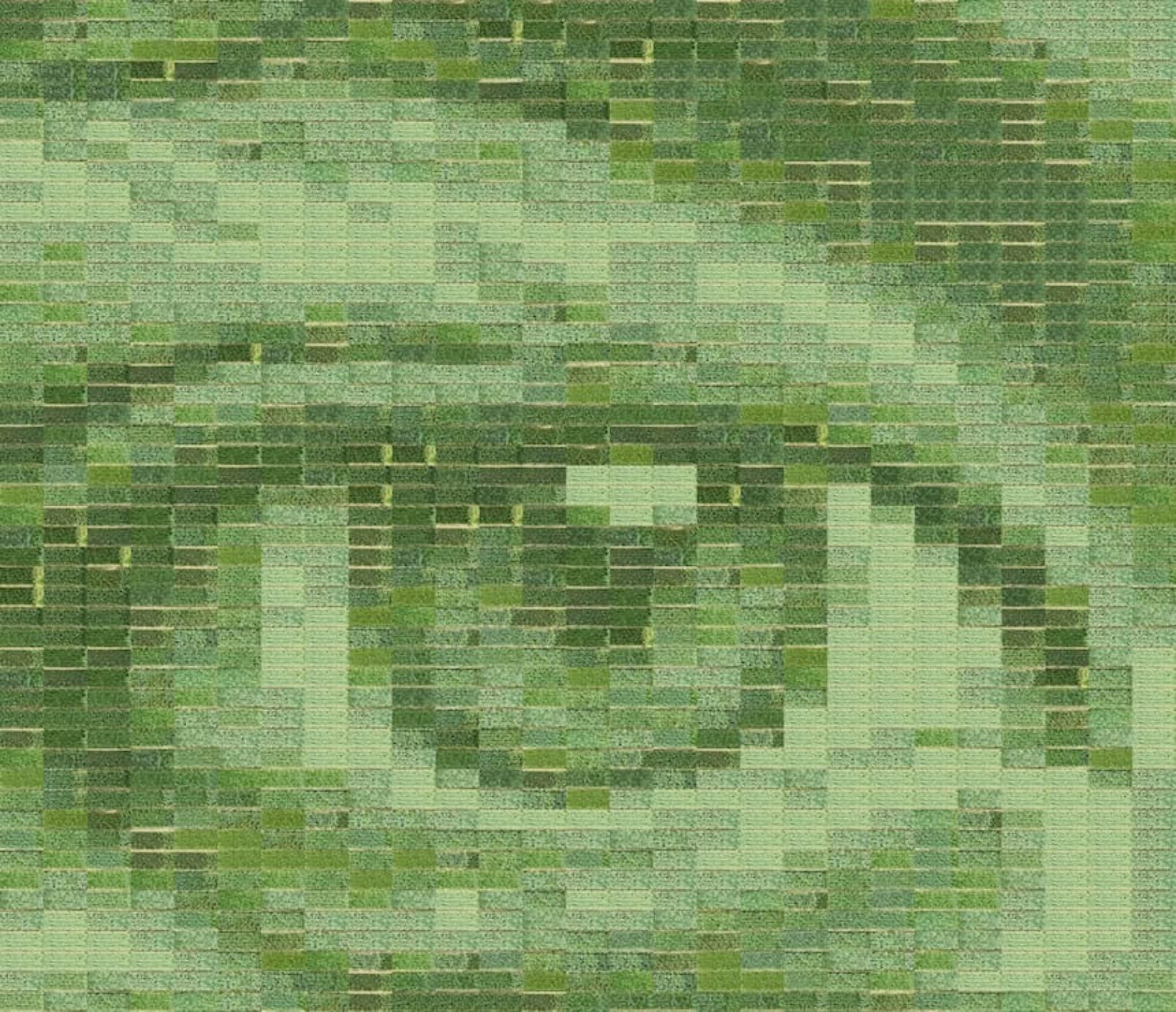
Or it could be that the aliens responsible for crop circles really upped their game. Anyway:
Instead of chemicals or cameras, Romero is using photosynthesis itself. Each wheat plant acts as a pixel, with subtle pigment variations creating an image that slowly appears as the crop matures.
“I wanted to see what photography could become if it worked with living systems rather than industrial processes,” she said. “The landscape becomes both the medium and the message.”
Pro tip: don’t hire him as your wedding photographer. Still, it is pretty cool.
Once the image has fully emerged, the wheat will be harvested, milled and distributed locally as flour. INRAE researcher Claire Manceau called it “a meeting of art and ecology that shows how creativity can reconnect us with the land.”
Mothers of Invention
Popular Science, Popular Mechanics, and Modern Mechanix were three, well, popular science magazines, founded in the 19th century or early 20th. Popular Science is no longer in print, but still exists online; Popular Mechanics is still in print as well as online; but, alas, Modern Mechanix folded in 2001. Not only did these publications report on the latest scientific developments at the times, but also included descriptions of new inventions‚—or at least proposed new inventions. Via Laughing Squid, a video from Dime Store Adventures discusses 30 of the most bizarre ideas and inventions he found in 1940s issues of these and other science magazines.
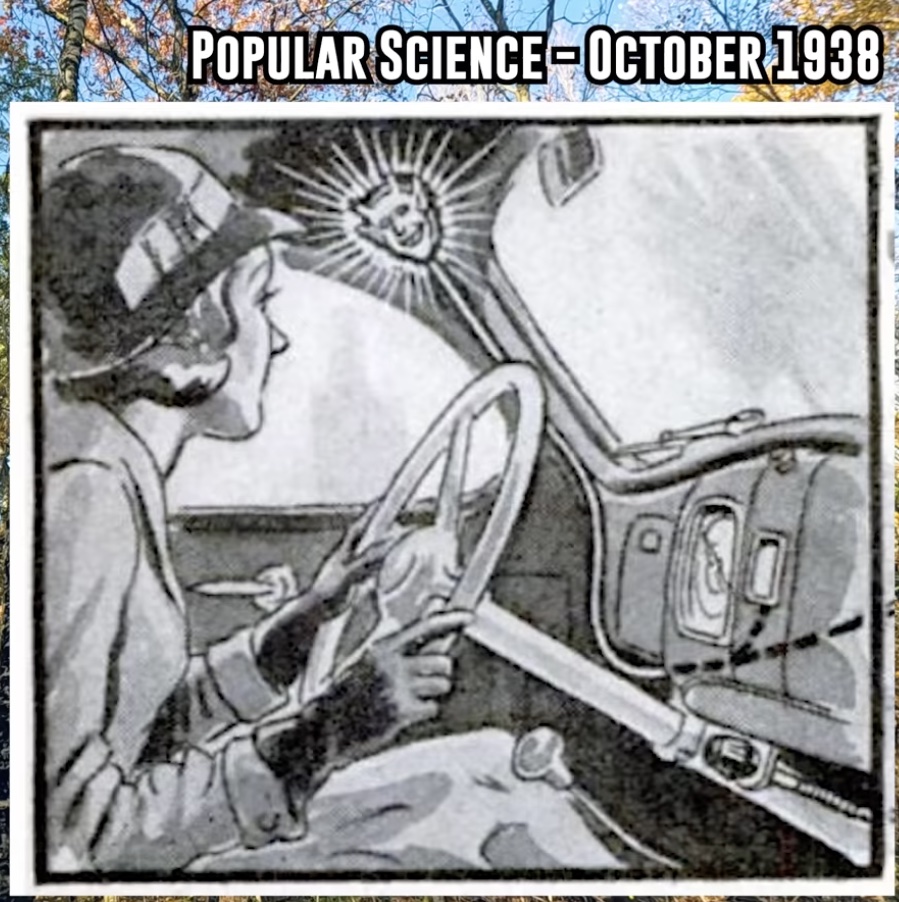
A few of them we (or some of us) still use today—such as the automobile turn signal—while others are a bit more outré, such as a devil-shaped warning light that flashes if you drive too fast:
Or an exterior transportation sack for your dog:
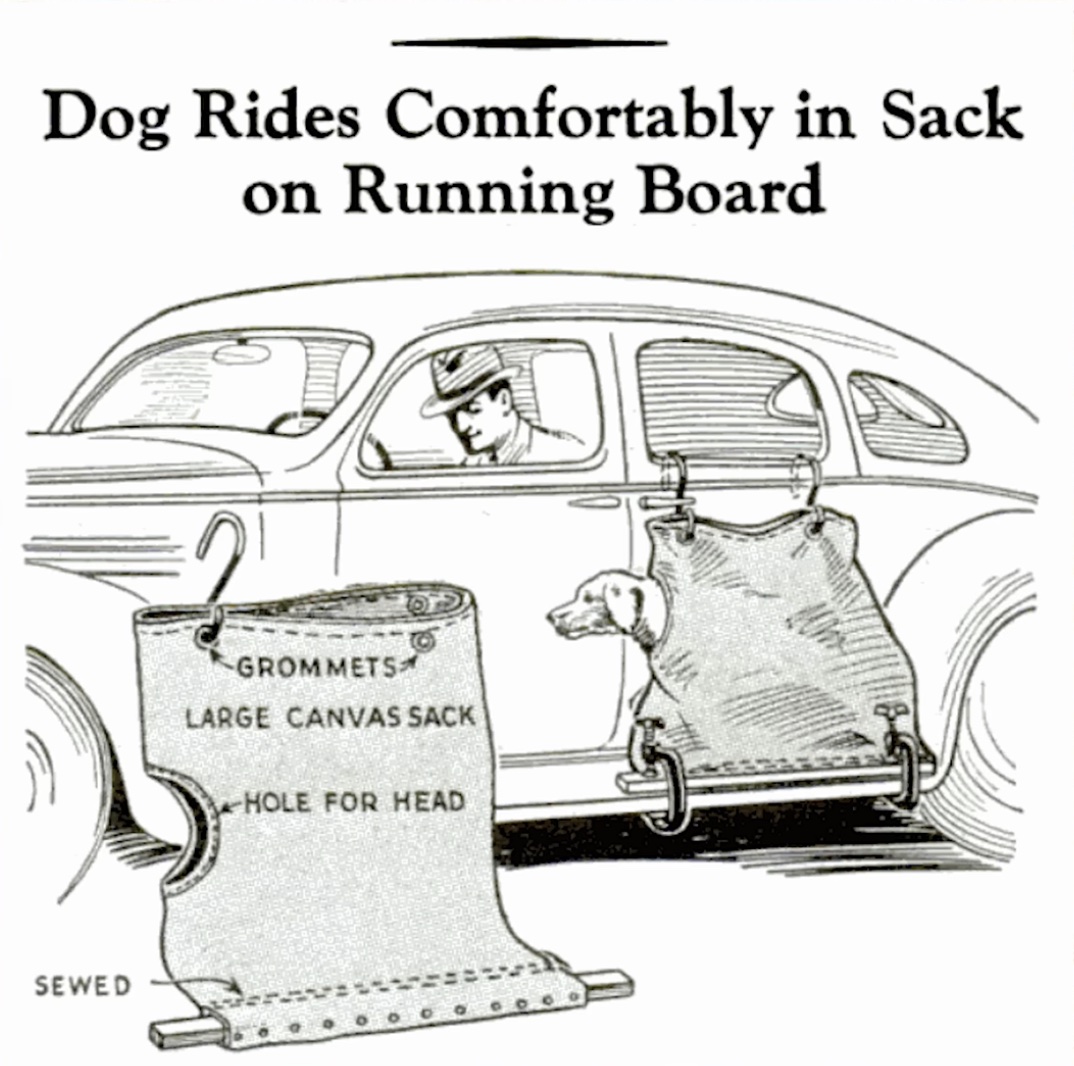
There’s a definition of the word “comfortably” with which we are unfamiliar. There is also a plan to transport water across Southern California using giant water cannons, special license plates for drivers who are repeat traffic law violators (there’s a good idea…), a giant six-player harmonica, and more.
Check out unembeddable video here.
There’s an Idea
Was it a good week for graphene news? It’s always a good week for graphene news! Thomas Edison’s 1879 light bulb has been turned into a mini graphene reactor. From (who else?) Graphene-News TechSpot:
Thomas Edison's 1879 light bulb is typically remembered as a milestone in electrification, not as a precursor to modern quantum materials. Yet by reconstructing that lamp with contemporary tools, researchers at Rice University say they have demonstrated that Edison's design can briefly produce turbostratic graphene, a form of carbon now central to advanced electronics and energy research.
Turbostratic graphene is a variety of graphene that, in essence, makes the material easier to process at scale. It is usually produced using a process called “flash Joule heating.” But:
Seeking simpler, more compact hardware for flash-like processing, graduate student Lucas Eddy began examining devices that already function as resistive heaters. Industrial arc welders were efficient but bulky, and natural "experiments" such as lightning-struck trees proved unhelpful. That search ultimately led him back to 19th-century electric lighting – specifically, to the era of carbon-filament bulbs.
The principle was simple enough: Edison’s 1879 patent described a carbon filament made from carefully treated bamboo, which was then sealed in a glass bulb and powered by a 110-volt direct current. This drove the filament to around 2,000°C—the same as is used in modern flash Joule heating. But the trick was finding such a bulb. Not only have incandescent light bulbs been largely phased out, even bulbs marketed as “Edison-style” actually use tungsten filaments.
After several false starts, the Rice team located an art shop in New York City selling replica bulbs whose bamboo filaments closely matched the dimensions in the original patent. Those filaments provided the right geometry and material to repeat Edison's experiment under laboratory conditions.
This wasn’t just a history project, but a practical development:
The Edison-style bulb effectively acts as a minimal graphene reactor: a low-cost, sealed, fully integrated device capable of pushing carbon into the right thermal window using only basic power electronics.
Open Door Policy
One of the issues that has developed with the rise (if it is a rise) of “robotaxis” like Waymo is that sometimes passengers don’t close the door when they get out. Which just seems rude, but it does make the robototaxi useless since it can’t move unless the door is closed. So, what to do? Via CNBC, Waymo is paying gig workers from DoorDash and the like to close the doors of its robotaxis.
The Alphabet-owned self-driving car company confirmed on Thursday that it’s running a pilot in Atlanta to compensate delivery drivers for closing Waymo doors that are left ajar. DoorDash drivers are notified when a Waymo in the area has an open door so the vehicles can quickly get back on the road, the company said.
It’s a pilot program being conducted in Atlanta, and reportedly a DoorDash driver was offered $11.25 to close the door of a nearby Waymo. By the way, if we were running the program, we’d pass that onto the rude person who didn’t close the door.
Waymo’s reliance on people for simple tasks underscores how even the most advanced autonomous technologies still require costly human intervention for some basic operations. Valued at $126 billion in a recent financing round, Waymo is central to Alphabet’s Other Bets, which are targeted at “using technology to try to solve big problems that affect a wide variety of industries, including transportation and health technology,” according to the company’s financial filings.
Of course, the only “big problem” this solves is that of paying a human to drive a taxi.
Wrap it Up
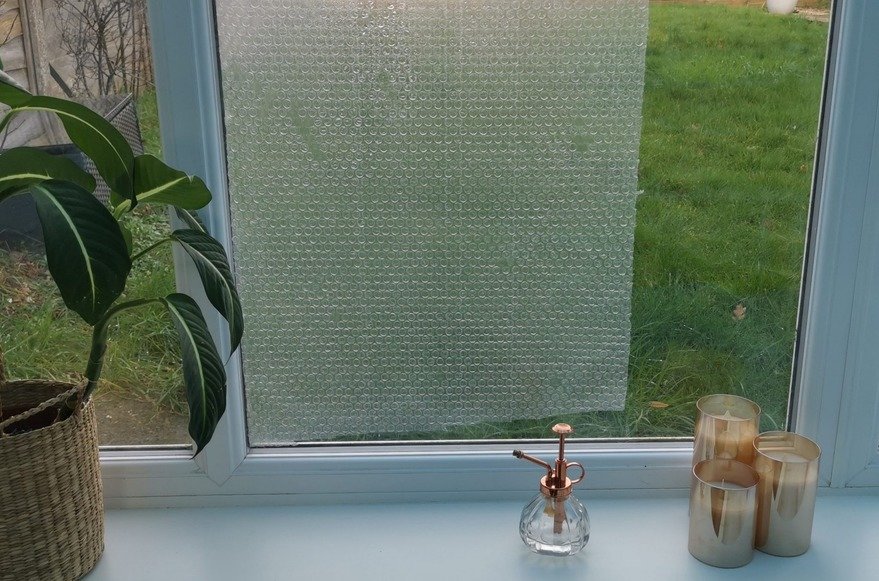
It’s been a brutally old winter in many parts of the country, and one challenge in cold weather is utility costs. As a result, anything that can cut home heating is welcome. So, via Core 77, here’s an inexpensive way to insulate those drafty windows: Bubble Wrap.
It sounds unconventional, but the science is solid. Bubble wrap works as an extra layer of insulation by trapping air between the bubbles, slowing down heat transfer through the glass. Windows are one of the biggest culprits for heat loss in a home, and this is a near-zero-cost fix anyone can do in minutes.
How does one install it?
All you need to do is cut a sheet of bubble wrap to fit your window, lightly mist the glass with water, and press it against the pane, the surface tension holds it in place with no tape or adhesive needed. It lets light in while keeping the cold out.
They do caution:
It's not something I'd recommend for your main living areas, but for rooms that don't see much use during winter, a guest bedroom, a basement, a utility room, it's a genuinely effective hack.
Which is ironic, as Bubble Wrap was originally invented as a form of interior décor—and insulation.
In 1957, in a Hawthorne, N.J., garage, two engineers — Alfred W. Fielding and Marc Chavannes — were beavering away on something they hoped would change interior décor as we (or more likely they) knew it. They sealed two plastic shower curtains together and attempted to market the result as wallpaper. Alas, the world was not ready for clear plastic wallpaper. Strike one….They then tried to sell it as insulation for greenhouses. Nope; strike two. However, there was one distinguishing characteristic that eventually made the material a success; in between the layers of shower curtain were small pockets of air. Bubbles you might say.
Fielding and Chervannes officially founded the Sealed Air Corporation in 1960. In one of the greatest strokes of luck in business history, a year earlier IBM had introduced the 1401, one of the world’s first mass-produced business computers. It ran on vacuum tubes and had other fragile internal components that needed to be protected during shipping.
According to the Sealed Air Corporation’s company lore, a marketing expert named Frederick Bowers brought the shower-curtains-with-air-bubbles to IBM and it proved to be the perfect material to protect glass and electronic computer components.
And thus was born Bubble Wrap. Put it on your windows and we’ll have come full circle. We missed the festivities, but January 26 was Bubble Wrap Awareness Day.
Heavy Rotation
Some of us have fond memories of the days when MTV played music videos before it devolved into reality TV—or when it even existed at all, as we were quite surprised to discover that MTV was shut down in 2025.
Which is why were interested to hear, via Boing Boing, about MTV Rewind:
It collects over 33,000 music videos, shows, and exclusive concert footage spanning the station's four decades. Want Pop Up Video? No problem. An MTV Unplugged concert you haven't seen in ages? Sorted. Need to show a millennial how truly terrible early '80s music videos were? This is your resource.
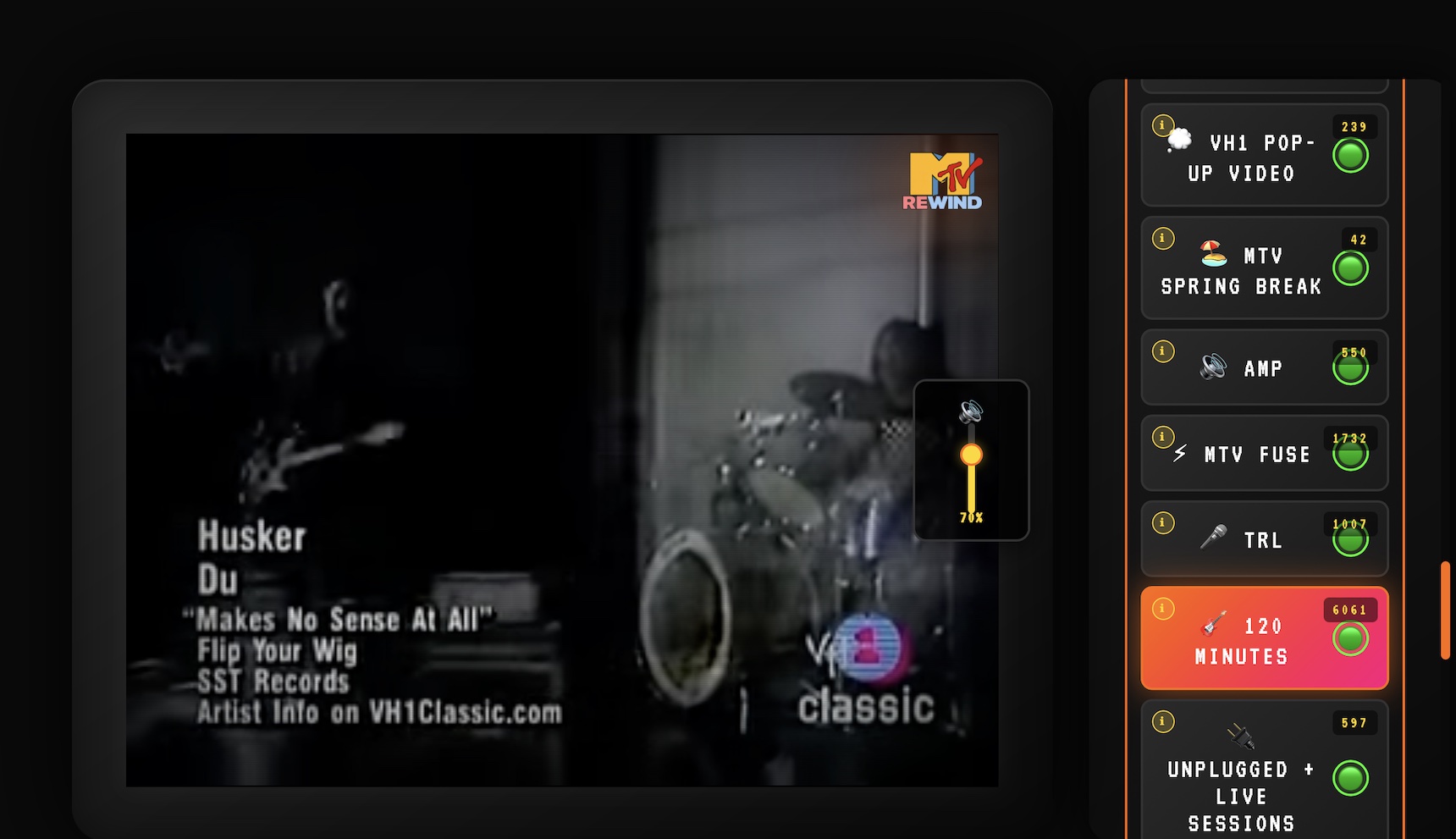
The drawback is that it doesn’t appear to be searchable, so if you’re looking for a specific video, you’ll probably have to use YouTube.
But No Bits?
They’re kidding, right? Via The Guardian: “‘Boy kibble’: why are young men turning to dog food for meal inspiration?”
Traditionally, yes, kibble is dried food for pets in pellet form, made of grains, vegetables and meat. Highly nutritional, keeps for ages.
How does one make kibble for humans?
Food content creator
“Food content creator”? In other words, a “cook.”
Patrick Kong’s recipe includes rice, chopped vegetables, minced meat and eggs, which he cooks together in one big pan, divides into containers to be refrigerated or frozen, then takes out to eat twice a day.
Actually, it sounds like fairly decent fried rice. One then has to ask, why, exactly?
Trying to reduce body fat while keeping muscle mass. Kong lost 9kg (1st 6lb) over six months. And, judging by his before and after pics, got ripped in the process (he won’t have achieved this through diet alone, obviously).
It seems vaguely healthy, but we’ll stick with our Snausages.
Big Dipper
Here’s one straight out of 1940s Popular Science. Says (who else?) Food & Wine:
You can’t have fries without ketchup
We don’t grant the premise, but continue…
but this classic combo has one issue: eating them together on-the-go can be a little awkward, considering you need a hand to hold your fries, another to hold the ketchup, and one for dunking.
Well, what are you doing, running a marathon? Sit down and have a meal, for crying out loud. But, anyway, what is the solution to this decidedly first-world problem?
Now, you can enjoy fries any time and anywhere, thanks to an iconic condiment brand. Heinz is introducing the Heinz Dipper, a fry box designed with a built-in ketchup pocket for easy dipping in any scenario.
Well, probably not literally any time and anywhere—3 a.m. in the middle of the Gobi Desert would be tricky, but presumably you’d need to be somewhere near a place where fries were sold and was open.
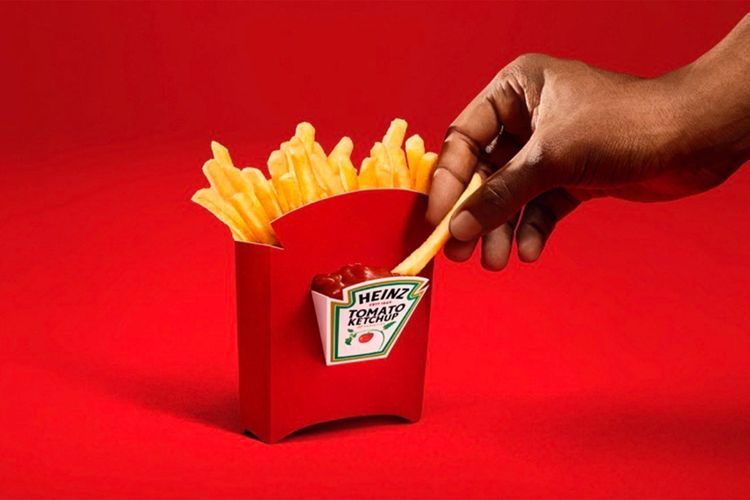

Launching January 13, the Heinz Dipper will debut at select restaurants and sports stadiums across 11 countries worldwide. In North America, participating establishments include Fat Sal's in Los Angeles, Devil Dawgs in Chicago, Lucky's Hot Chicken in Dallas, and Toronto's Scotiabank Arena, home of the Maple Leafs, among other destinations.
Human ingenuity has no bounds.
This Week in Printing, Publishing, and Media History
February 16
1740: Italian publisher and engraver Giambattista Bodoni born.
1933: The Blaine Act ends Prohibition in the United States. We’ll drink to that.
1937: Wallace H. Carothers receives a United States patent for nylon.
1944: American novelist and short story writer Richard Ford born.
1968: In Haleyville, Alabama, the first 9-1-1 emergency telephone system goes into service.
1978: The first computer bulletin board system is created (CBBS in Chicago).
February 17
1673: French actor and playwright Molière dies (b. 1622).
1781: French physician and inventor of the stethoscope René Laennec born.
1890: American publisher and politician and inventor of the first commercially successful typewriter Christopher Latham Sholes dies (b. 1819).
1904: Madama Butterfly receives its première at La Scala in Milan.
1933: Newsweek magazine is first published.
1996: The Rematch: In Philadelphia, world champion Garry Kasparov beats the Deep Blue supercomputer in a chess match.
February 18
1564: Italian sculptor and painter Michelangelo dies (b. 1475).
1745: Italian physicist and inventor of the battery Alessandro Volta born.
1885: Adventures of Huckleberry Finn by Mark Twain is published in the United States.
1896: French author and poet André Breton born.
1911: The first official flight with airmail takes place from Allahabad, United Provinces, British India (now India), when Henri Pequet, a 23-year-old pilot, delivers 6,500 letters to Naini, about 10 kilometres (6.2 mi) away.
1930: Elm Farm Ollie becomes the first cow to fly in a fixed-wing aircraft and also the first cow to be milked in an aircraft.
1931: American author, Pulitzer Prize winner, and Nobel laureate Toni Morrison born.
February 19
1473: Polish mathematician and astronomer Nicolaus Copernicus born.
1847: The first group of rescuers reaches the Donner Party. They politely decline a dinner invitation.
1878: Thomas Edison patents the phonograph.
1949: Ezra Pound is awarded the first Bollingen Prize in poetry by the Bollingen Foundation and Yale University.
1951: French novelist, essayist, and dramatist, Nobel Prize laureate André Gide dies (b. 1869).
1952: American novelist, essayist, and short story writer Amy Tan born. Much joy luck.
1953: Georgia approves the first literature censorship board in the United States.
1956: American singer-songwriter and guitarist Peter Holsapple born.
1963: The publication of Betty Friedan’s The Feminine Mystique reawakens the feminist movement in the United States as women's organizations and consciousness raising groups spread.
2016: Italian novelist, literary critic, and philosopher Umberto Eco dies (b. 1932).
2016: American author Harper Lee dies (b. 1926).
February 20
1792: The Postal Service Act, establishing the United States Post Office Department, is signed by United States President George Washington.
1816: Rossini’s opera The Barber of Seville premieres at the Teatro Argentina in Rome.
1872: The Metropolitan Museum of Art opens in New York City.
1877: Tchaikovsky’s ballet Swan Lake receives its premiere at the Bolshoi Theatre in Moscow.
1902: American photographer and environmentalist Ansel Adams born.
1926: American author and screenwriter Richard Matheson born. He was legend.
1933: The U.S. Congress approves the Blaine Act to repeal federal Prohibition in the United States, sending the Twenty-first Amendment to the United States Constitution to state ratifying conventions for approval. And there was much rejoicing throughout the land.
1943: The Saturday Evening Post publishes the first of Norman Rockwell’s Four Freedoms in support of United States President Franklin Roosevelt's 1941 State of the Union address theme of Four Freedoms.
1946: American singer-songwriter and guitarist J. Geils born. No anchovies, please.
1962 : While aboard Friendship 7, John Glenn becomes the first American to orbit the earth, making three orbits in four hours, 55 minutes.
February 21
1804: The first self-propelling steam locomotive makes its outing at the Pen-y-Darren Ironworks in Wales.
1821: American publisher and founder of Charles Scribner’s Sons Charles Scribner I born.
1828: Initial issue of the Cherokee Phoenix is the first periodical to use the Cherokee syllabary invented by Sequoyah.
1842: John Greenough is granted the first U.S. patent for the sewing machine.
1848: Karl Marx and Friedrich Engels publish The Communist Manifesto.
1874: The Oakland Daily Tribune publishes its first edition.
1878: The first telephone directory is issued in New Haven, Conn.
1903: French-American essayist and memoirist Anaïs Nin born.
1925: The New Yorker publishes its first issue.
1947: In New York City, Edwin Land demonstrates the first “instant camera,” the Polaroid Land Camera, to a meeting of the Optical Society of America.
1958: The CND symbol, aka peace symbol, commissioned by the Direct Action Committee in protest against the Atomic Weapons Research Establishment, is designed and completed by Gerald Holtom.

1962: American novelist, short story writer, and essayist David Foster Wallace born.
1967: American author and screenwriter Charles Beaumont dies (b. 1929).
February 22
1632: Galileo’s Dialogue Concerning the Two Chief World Systems is published.
1857: German physicist, philosopher, and academic Heinrich Hertz born.
1878: In Utica, N.Y., Frank Woolworth opens the first of many of five-and-dime Woolworth stores.
1924: U.S. President Calvin Coolidge becomes the first President to deliver a radio address from the White House. We bet it was riveting.
1925: American illustrator and poet Edward Gorey.
1983: The notorious Broadway flop Moose Murders opens and closes on the same night at the Eugene O’Neill Theatre.