Right Tactile
We’ve never been particular fans of the Super Bowl, but since it appears to be one of the only shared cultural experiences left, maybe it’s worth a shot. And maybe it’s worth a shot because the NFL is using Sunday’s game to test a new system for giving blind and low-vision fans the ability to “feel” the game. Now, that sounds a little ominous when you consider all the tackling that goes on, but it’s actually pretty cool. Says TechSpot:
The technology, developed by Seattle-based startup OneCourt, resembles a thick tablet etched with raised outlines of a football field. Beneath those lines, sensors pulse in patterns that reflect what's unfolding on the gridiron: the snap of the ball, a quarterback's throw, a tackle, a touchdown. In the same moment, synced live audio completes the experience, bridging sightless spectators directly to the action for the first time.
The NFL had been testing this on the DL in 15 games during the regular season, and the feedback was positive enough that the league gave the nod for a public unveiling this Sunday.
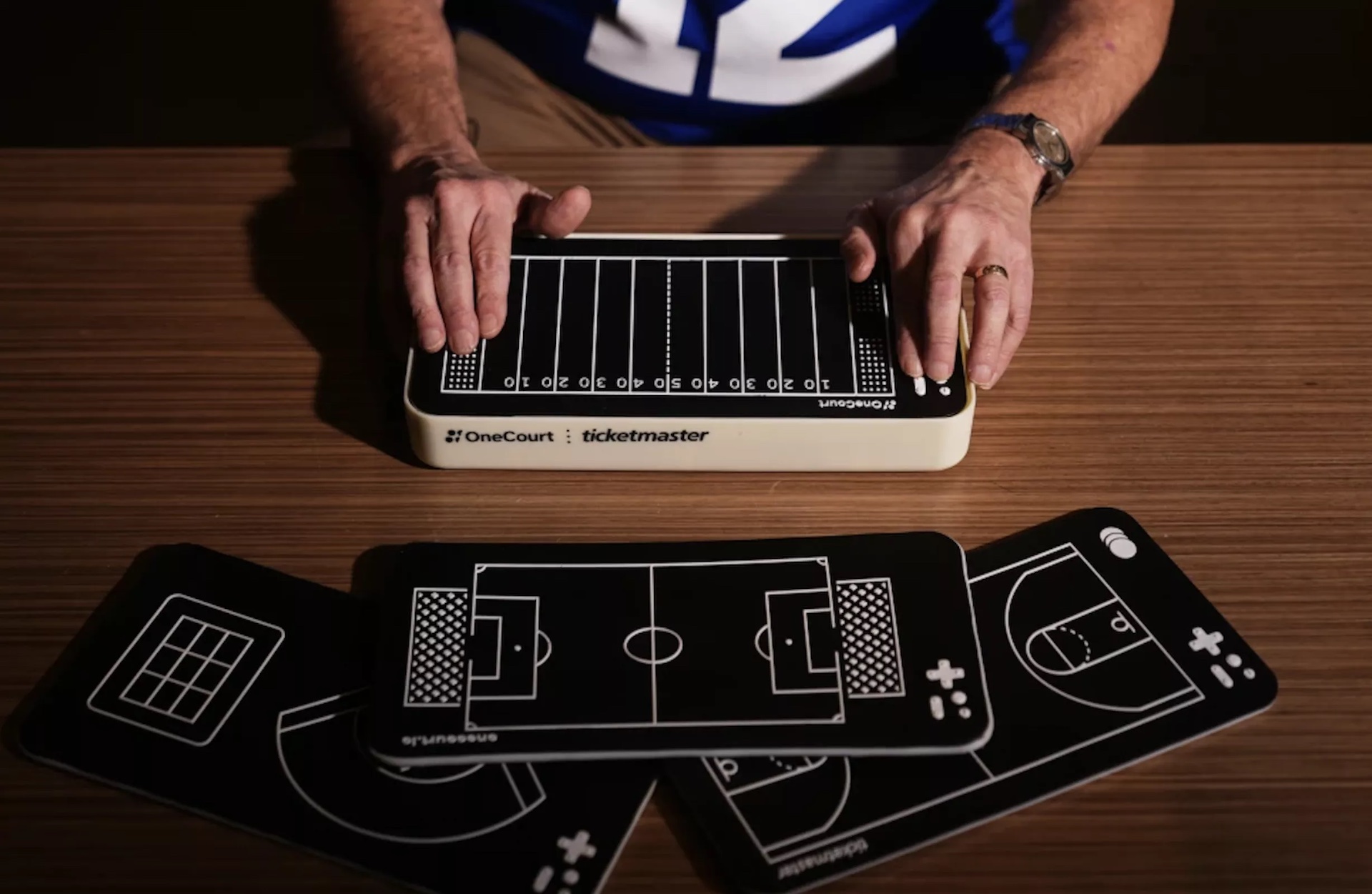
The OneCourt system functions by tapping into a technology we never knew existed: NFL’s Next Gen Stats infrastructure.
Every ball and jersey is embedded with microchips [and] streams location data via Genius Sports, the NFL’s data partner. Software inside OneCourt’s system interprets that data, converting spatial information into unique vibration signatures that correspond to each play on the tactile field. When a running back cuts down the sideline, users can track that lateral movement under their fingertips.
Those who have used it have become fans.
During Seattle’s December home game against Indianapolis, lifelong fan Clark Roberts was among the first to test the OneCourt unit. Blind since age 24, Roberts described the synchronized haptics and real-time audio as “two wonderful things” – a rare combination that eliminated the usual delay between broadcast and live play. “Can you imagine how this can open up everything, not just football?” he said.
The things we can do.
Phoning It In
Back in the day, when people used phones for actually talking to people—indeed, for decades that’s all you could really do with a phone—there used to be a variety of “dial-a-” services. For example back in the 1980s and 90s, we were big fans of They Might Be Giants’ Dial-a-Song—basically a bandmember’s answering machine (“just a phone call to Brooklyn!” their albums’ liner notes proclaimed). In 1968, poet John Giornofounded Dial-a-Poem, an attempt to technologically update poetry, which he felt was lagging behind the advances made in the other arts. For two years, it featured poems by Giorno, as well as other contemporary poets such as Burroughs, Patti Smith, Allen Ginsberg, Amiri Baraka, and others. Or at least until the government shut it down after the FCC and FBI “investigated complaints of indecency and claims that the poems, many of which were explicitly sexual and political in nature, would incite violence,” which is pretty hysterical by 2026 standards.
Anyway, the service was revived many times over the subsequent years, most recently in 2017 as part of a John Giorno retrospective. Giorno died in 2019, but now, via Gizmodo, Dial-a-Poem is back.
Today’s Dial-a-Poem service is a collaboration between Giorno’s non-profit, Giorno Poetry Systems, and The Poetry Project; it features work from 30 contemporary poets, and promises that “new recordings are added regularly”.
“Poetry systems.” OK.
The new service makes some concessions to the 21st century, most notably that you can simply visit the Dial-a-Poem website and have your computer play you a random poem from the service’s archives. But that’s no fun! To replicate the original Dial-a-Poem experience, you really should just pick up the phone and call the number.
So we did! It was, um, interesting. We couldn’t quite make out who it was or what it was called (which is probably why no one talks on phones anymore because the sound on phones is awful), and oddly the poem on the website was different than what played over the phone. If you’re more inclined to classical than modern poetry, you’ll probably have a rough time of it. But we applaud the attempt. Anyway, give it a shot at (718) 957-2379. (Just a phone call to Brooklyn!)
Signs of the Times, Part the Ongoing: 25 Years of ASM
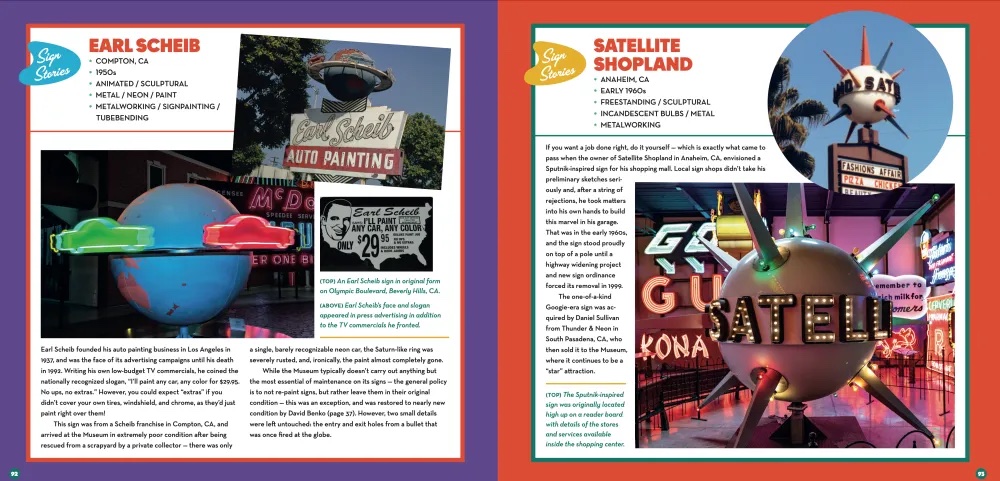
We’ve linked in the past to the New York City Sign Museum, and now, via Print magazine, the American Sign Museum in Cincinnati is celebrating its 25th anniversary.
The American Sign Museum, based in Cincinnati, covers more than 100 years of sign history and displays more than 800 signs and artifacts, making it the most comprehensive museum of its kind. With a mission to educate the community about the history of the sign industry and its significant contribution to commerce and the American landscape, the museum is organized to preserve, archive and display a historical collection of signs in their many types and forms.
To mark their quarter century, the ASM has published American Sign Museum: Celebrating 25 Years, a book—available in a verity of formats—that looks at the history of both American signage and the museum.
Intra Mural
During the Great Depression, one of the initiatives put forth as part of the New Deal was the Public Works of Art Project, which was designed to return artist workers to the job market. All told, the project saw the production of 15,660 works of art by 3,750 artists, including 700 murals on public display. When the project ended in the summer of 1934, such was the success of the program that it was decided that it should be extended, and thus was founded the Section of Painting and Sculpture (renamed the Section of Fine Arts in 1938) under the U.S. Treasury Department. The Section of Painting and Sculpture was initiated to commission 1,400 murals in federal post offices buildings in more than 1,300 cities across America.
Atlas Obscura celebrates these often overlooked artistic manifestations of civic pride.
“The murals boosted morale by celebrating local industry and historical events. Today these murals often go unnoticed, almost like real-life Easter eggs of art hidden across the country,” writes Texas-based photographer Justin Hamel in an email. Hamel documented nearly 375 of these works of civic art while traveling across the United States. According to him, the local industries that are depicted in many of the paintings still drive the economies of the communities they grace: cotton in Camilla, Georgia, for example, or wheat in Anthony, Kansas.
There are a couple in the Saratoga Springs, N.Y., Post Office, titled “Saratoga in Racing Season.”
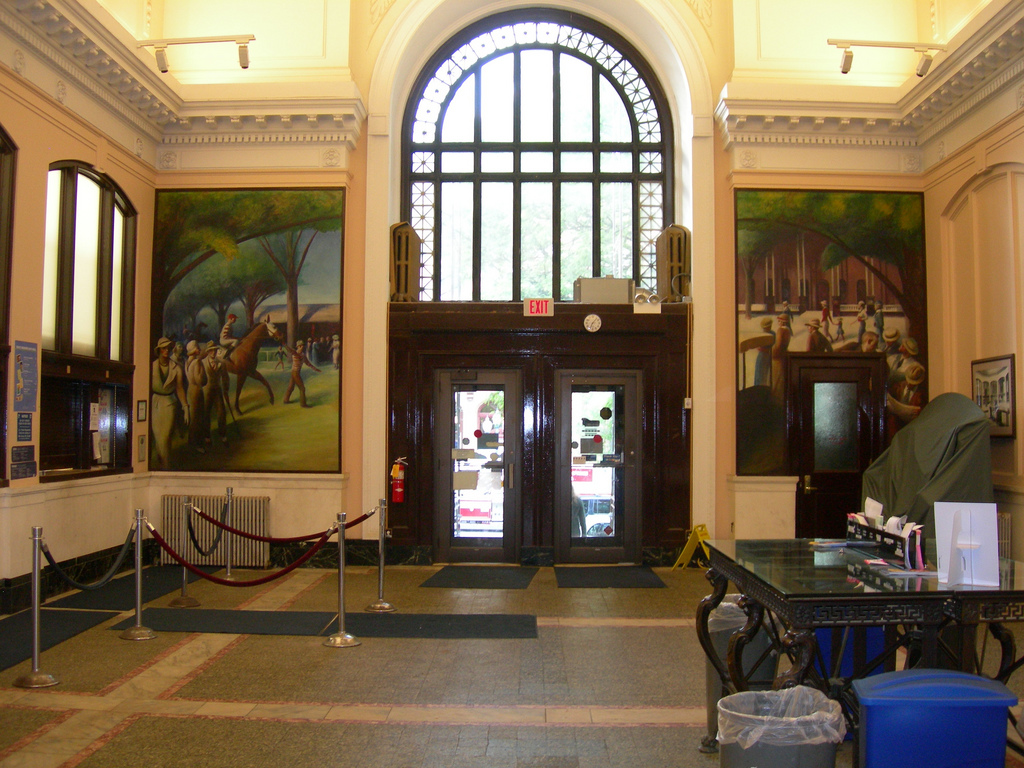
Hamel estimates that 900–1,000 of these murals remain.
Every year murals are lost due to the closing or sale of post offices or outright negligence. At the same time, murals are sometimes discovered in the basement of a post office, underneath paint in the lobby, or in the back room of a local museum.
Perhaps not unexpectedly, post office patrons rarely even notice them.
Unfortunately, most people that I’ve talked to haven’t noticed the murals or given them any thought until they see me photographing them. That is a shame because it’s one of the largest, if not the largest, public art program in the country. You can watch people pause, look up, and take in the artwork, and really begin to appreciate it.
By the way, a very good book we read recently is The Trackers by Charles Frazier, a Depression-era novel about an artist painting a post office mural in rural Wyoming, and getting embroiled in a missing persons case. Part of the Around the Web Book Club.
Post office murals, among other things, can be tracked at www.livingnewdeal.org, which catalogs and maps Works Progress Administration projects, if you are interested in finding out if there is a mural at a post office near you.
Stranger Than FICtion
A good many of us already sport some kind of wearable device, usually a smartwatch (or, as we’ve come to think of it, a “glorified joy buzzer”), and wearable tech has been one of the hot areas of R&D. But “wearable” has usually meant integrating microchips into some kind of textile—a combination of the rigid and the soft that doesn’t lend itself to comfort or positive “hand feel.” But that concept may be passé, as new research is concentrating on creating fabric fibers that are themselves computing circuits. Says TechSpot:
The key innovation is a fiber integrated circuit, or FIC. Traditional chips depend on flat, inflexible wafers; the Fudan team replaced these with elastic substrates capable of hosting resistors, capacitors, diodes, and transistors.
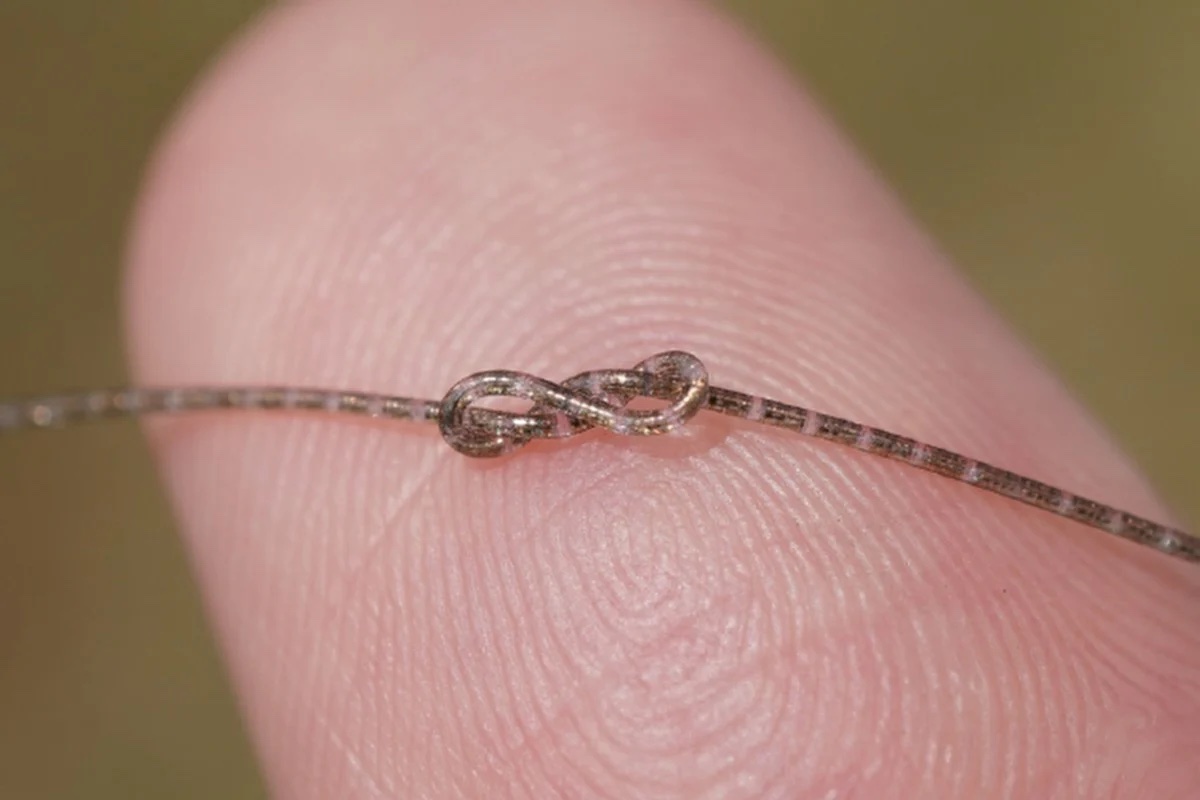
Once patterned, each substrate is rolled into a slender thread. A single fiber – roughly the diameter of a human hair – achieves a transistor density of about 100,000 per centimeter, comparable to the densities used in very large-scale integration for conventional processors.
It may be small, but it’s no slouch when it comes to computing power. “A one-millimeter-long segment integrates tens of thousands of transistors, giving it data-processing capabilities similar to those of chips used in medical implants.” It’s still a ways away from commercialization, but, say the researchers:
flexible fiber computers could pave the way for next-generation smart textiles, virtual-reality garments, and even brain – computer interface systems.
Their research appeared in Nature.
Blankety Blank
We’ve all come across, at one time or another, a page in a printed document that reads, ironically, “This page intentionally left blank.” It should really say, “The page intentionally left mostly blank,” but that may raise more questions than it answers.
Most of the folks reading this know why we often have blank pages in books and other documents: when we print on signatures of 8, 16, or perhaps 32 pages, if the content doesn’t fill all those pages, we get blanks. Sure, they’re more acceptable in books than magazines, but that’s one reason. And, of course, depending on a book designer’s preference, if a chapter should always start on a right-hand page, the previous page may be blank if the previous chapter doesn’t spill over. Via Boing Boing, there are other cases where blank pages can appear in a document.
Standardized tests use blank pages between sections so no one can see through the paper to the next set of questions. Sheet music arranges pieces to minimize page turns, with blanks filling gaps. Military documents mark every page — including blanks — so inventories come out right, and nobody thinks a classified page went missing.
These blanks—aka “vacat pages”—date from the earliest days of printing, where identifying a blank page was intended to reassure readers that the printer hadn’t goofed. (Sure, always blame the printer!) And as of 1984, the U.S. Code of Federal Regulations specifically mandated that blank pages in certain types of publications be identified as such.
Can’t Buy a Frill
Those writers looking for a writing device free of distractions may be interested in the new Zerowriter Ink, an E Ink-based electronic typewriter that features an electrophoretic screen, a physical keyboard, and nothing else. No apps or other frills and features.
Via Boing Boing, its dimensions are 12 x 7.5 x 0.6 in., features a 5.2-in. display, 61-key keyboard with keys that are hot-swappable, microSD and USB-C connectivity, and a battery that is said to allow “weeks of daily use on a single charge.” It generates .txt files that can be exported to Word or some other more full-featured word processing program.
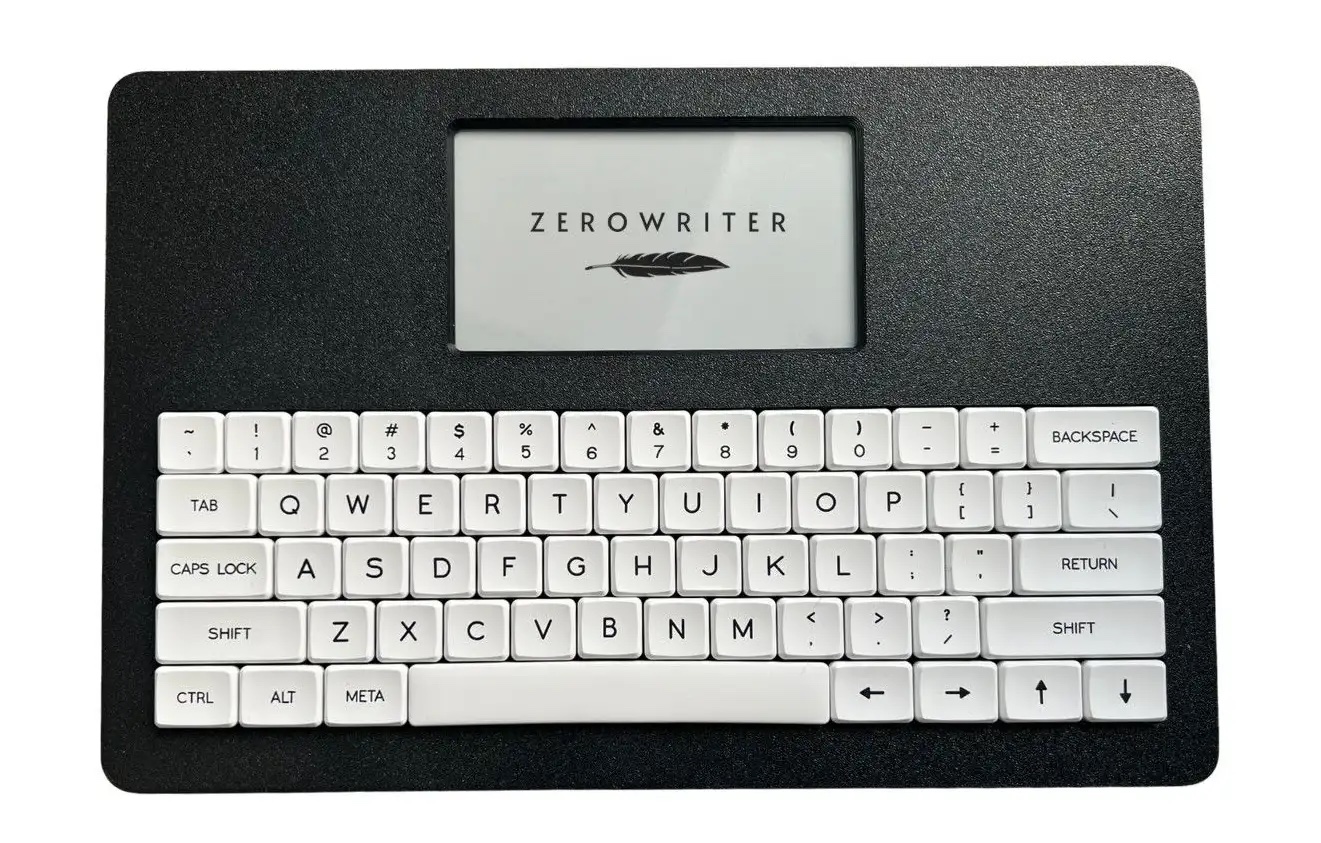
A steal at $269.
Check it out at https://youtu.be/M6mYgEIlwfQ.
Space Is [Not] the Place
Amongst all the buzz about AI and all the data centers that will be needed to power it, there has been talk of building data centers in space. Why space? Well, the argument goes, space is cold, so how better to dissipate all the heat generated by those centers without adding to climate change? Problem is, it won’t work, because space is a vacuum. Says a former NASA engineer/scientist in Taranis:
The short version: this is an absolutely terrible idea, and really makes zero sense whatsoever. There are multiple reasons for this, but they all amount to saying that the kind of electronics needed to make a datacenter work, particularly a datacenter deploying AI capacity in the form of GPUs and TPUs, is exactly the opposite of what works in space.
Take for example, the cooling issue. Cooling works on Earth because of convection: pass air over a surface and the heat from that surface will transfer to the air pretty well. That’s how fans work. But there is a fundamental reason why that won’t work in space.
In space, there is no air. The environment is close enough to a hard, total vacuum as makes no practical difference, so convection just doesn't happen. On the space engineering side, we typically think about thermal management, not just cooling. Thing is, space doesn’t really have a temperature as-such. Only materials have a temperature. It may come as a surprise, but in the Earth-Moon system the average temperature of pretty much anything is basically the same as the average temperature of Earth, because this is why Earth has that particular temperature. If a satellite is rotating, a bit like a chicken on a rotisserie, it will tend toward having a consistent temperature that's roughly similar to that of the Earth surface. If it isn't rotating, the side pointing away from the sun will tend to get progressively colder, with a limit due to the cosmic microwave background, around 4 Kelvin, just a little bit above absolute zero. On the sunward side, things can get a bit cooked, hitting hundreds of centigrade. Thermal management therefore requires very careful design, making sure that heat is carefully directed where it needs to go. Because there is no convection in a vacuum, this can only be achieved by conduction, or via some kind of heat pump.
Which is not to say that thermal regulation in space isn’t possible. The International Space Station has a very complex thermal regulation system which, if scaled to the size that would be needed for a data center, is “going to be a very large satellite, dwarfing the ISS in area.”
And there are myriad other problems, so we probably won’t be putting data centers in space any time soon. Of course, we could always just put AI in space and solve both problems.
AI-Yi-Yi, Part the Infinity: Just Eat It
Here’s a headline we never expected to see, certainly not on an art news site: “Alaska Art Student Arrested for Eating Another Student’s AI-Generated Art in Protest.” Says ArtNews:
One University of Alaska Fairbanks undergraduate apparently has found a way no one else seems to have thought of to fight back against AI-generated art. Graham Granger, a student in the school’s film and performing arts program, came upon some AI-generated art by MFA student Nick Dwyer and promptly ate it in protest, according to a report in the Sun Star, a student paper.
…“in his artist statement for the exhibit that was destroyed, Dwyer says that his work ‘explores identity, character narrative creation and crafting false memories of relationships in an interactive role digitally crafted before, during and after a state of AI psychosis.’” AI psychosis, not a clinical diagnosis but a much-discussed phenomenon according to Psychology Today, results from deep engagement with chatbots, which can reinforce “grandiose, referential, persecutory, and romantic delusions.”
Granger missed a terrific opportunity. He should have said, “It tasted like slop.”
Clip Joint
We don’t claim to have any sense of fashion whatsoever, and drinking coffee while seeing images from the big fashion shows such as Paris Fashion Week or Milan Fashion Week usually prompts spit-take after spit-take. But perhaps we could get behind this look. Says Core77:
In New York I ran a photography studio, and witnessed a lot of fashion shoots. The clothes would be delivered from the fashion designer's studio, and it was the stylist's job to make those clothes fit whatever models had been hired for the shoot. Because shoots move quickly, and the garments couldn't be physically modified, stylists frequently used safety pins, binder clips and the like to pinch the fabric (on the side of the model's body that the camera couldn't see).
Apparently, an emerging fashion trend is to wear such a clip—attached to ill-fitting clothes—overtly. And there is even an oversized dedicated clip called the Eye Clip, by Issey Miyake.

The designers also point out that “It can also be used as a regular clip to hold documents and memos together.” Or keep a bag of potato chips closed.
We like the idea of using stationery items as fashion accessories. Microsoft Word’s Clippy as a fashion icon! (“It looks like you’re attending a formal event...”) We do suspect our “suit of staplers” would not make it easy to get through airport security.
Clogged
If binder clips aren’t your cup of fashion tea, why not…Lego bricks. Yes, a bizarre partnership between Lego and Crocs has led to the introduction of the Brick Clog, which is exactly what it sounds like.
Says Syracuse.com:
Each clog features four studs stamped with the LEGO logo, a pivotable heel strap for a secure fit, and a faux anti-stud sole. The product includes a LEGO minifigure accompanied by four pairs of miniature LEGO Brick Clogs.
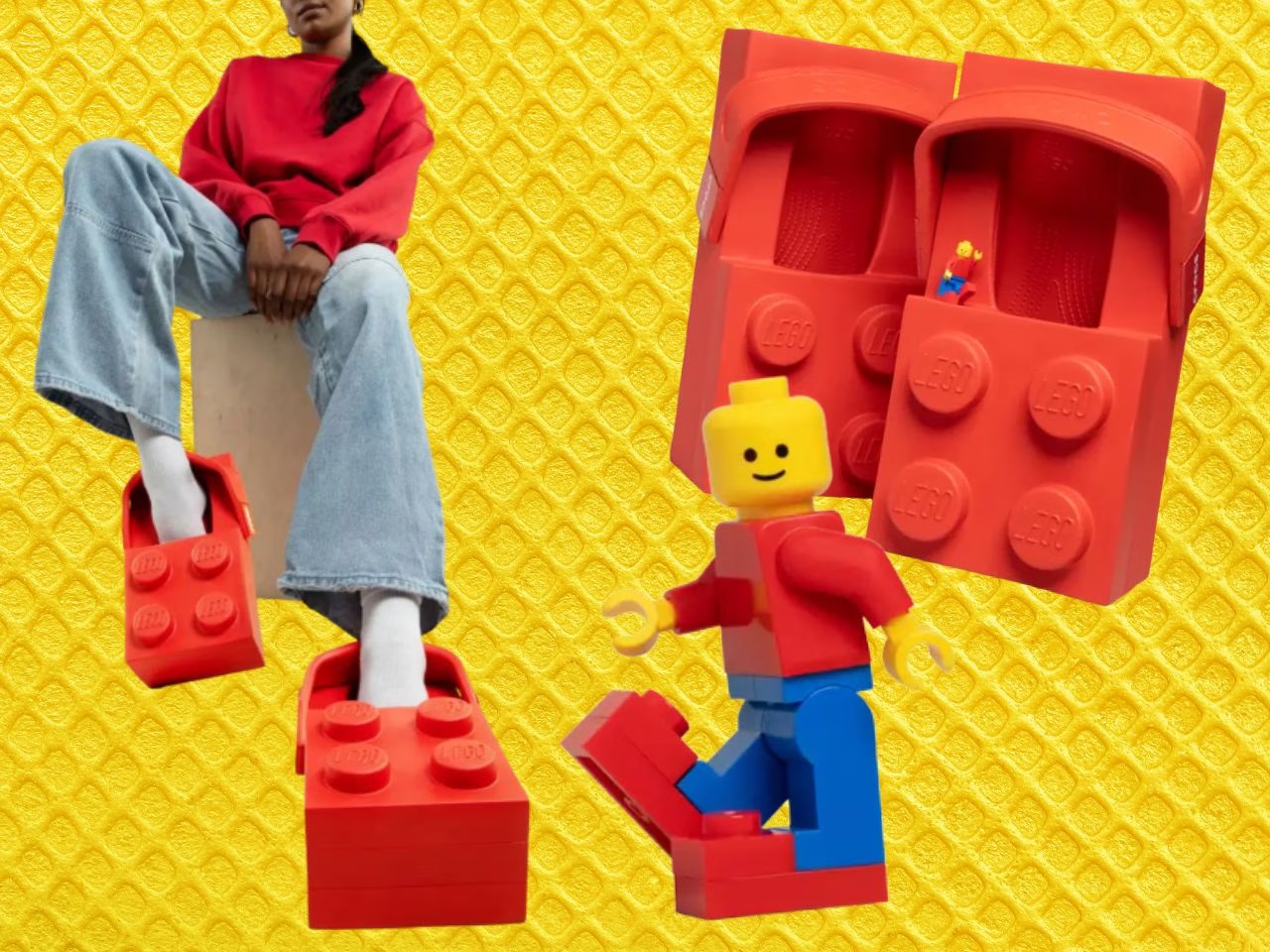
Can you snap more than one Brick Clog together and construct elaborate footwear? Probably not.
A particularly unique aspect of this product is the inclusion of a LEGO minifigure with miniature LEGO Brick Clogs. This addition enhances the collectible nature of the item and provides an extra layer of playfulness. The minifigure serves as a “partner” for the wearer’s creative journey, symbolizing the boundless possibilities of LEGO play.
A steal at—yikes!—$150–200, the financial equivalent of stepping on a Lego brick.
Uber Bowl
It’s well-known that people often tune into the Super Bowl just to watch the commercials. Even non-sports fans, who could not care less about the game, watch it for the ads (and perhaps the halftime show). It is also well-known that Super Bowl commercials cost a buttload of money to produce and to air. But this year, Uber Eats is offering something new: the ability for Super Bowl viewers to create their own Super Bowl commercials. Huh? Says (who else?) Food & Wine:
Starting February 3, Uber Eats users can design their own Super Bowl commercial by selecting from a variety of celebrity-inspired options in the food delivery app. The platform’s customizable commercial features far more than just McConaughey; you’ll also spot Bradley Cooper, Addison Rae, Parker Posey, Tramell Tillman, Sauce Gardner, Sourdough Sam, Jerry Rice, Pork Chop Womack, and one of my favorite food-focused celebs, Amelia Dimoldenberg, in the lineup.
We’ve heard of Parker Posey, at least. So how does this work?
Log in to the delivery app and head to the section titled “Super Bowl LX” at the top of the screen. On the following page, you’ll see an option to “build your own Super Bowl commercial.”
We should probably download the app…nah. What’s next?
Once you opt to design your own commercial, you’ll be given a variety of celebrity-inspired “menu” options to choose from. You’ll pick more than one item, and the offerings are divided into categories like "for the table" or "sweets and savories."
Needless to say, what you create will not actually air during the Super Bowl.
After choosing between items like Addison’s Diet Pepsi, Amelia’s Chicken, and Parker’s Pancakes — which don’t represent actual foods you’ll be ordering, so there’s no need to base your selections on what you really want to eat — you’ll receive a personalized Super Bowl commercial in your email inbox that's been customized according to the celebrity items you chose in-app. So if you selected Addison's Diet Pepsi, it's a safe bet to say she'll make an appearance in your commercial.
We’re not sure we understand, but then we’re probably not their target demographic. Still, there is an upside:
Once you design your own Super Bowl commercial, you won’t just receive the custom video clip. You’ll also get a discount code for up to 50% off orders of $15 or more (capped at $10), making ordering a little more budget-friendly this Super Bowl Sunday.
This Week in Printing, Publishing, and Media History
February 2
506: Alaric II, eighth king of the Visigoths promulgates the Breviary of Alaric (Breviarium Alaricianum or Lex Romana Visigothorum), a collection of “Roman law.”
1468: Johannes Gutenberg dies (b. 1398).
1882: Irish novelist, short story writer, and poet James Joyce born.
1887: In Punxsutawney, Pennsylvania the first Groundhog Day is observed. Again and again and again...
1922: Ulysses by James Joyce is published. Yes.
February 3
1690: The colony of Massachusetts issues the first paper money in the Americas.
1811: American journalist and politician Horace Greeley born.
1907: American author and philanthropist James A. Michener born, in rather epic fashion.
1947: American novelist, essayist, and poet Paul Auster born.
1947: English singer-songwriter and guitarist Dave Davies born.
1959: The day the music died: Rock and roll musicians Buddy Holly, Ritchie Valens, and J. P. “The Big Bopper” Richardson are killed in a plane crash near Clear Lake, Iowa.
February 4
1859: The Codex Sinaiticus is discovered in Egypt.
1960: American composer and playwright (Rent) Jonathan Larson born.
2004: Facebook, a mainstream online social networking site, is founded by Mark Zuckerberg.
2020: The COVID-19 pandemic causes all casinos in Macau to be closed down for 15 days.
February 5
1909: Belgian chemist Leo Baekeland announces the creation of Bakelite, the world's first synthetic plastic.
1919: Charlie Chaplin, Mary Pickford, Douglas Fairbanks, and D. W. Griffith launch United Artists.
1924: The Royal Greenwich Observatory begins broadcasting the hourly time signals known as the Greenwich Time Signal.
1926: American publisher Arthur Ochs Sulzberger born.
1940: Swiss painter, sculptor, and set designer (Alien) H. R. Giger born.
February 6
AD 60: The earliest date for which the day of the week is known. A graffito in Pompeii identifies this day as a dies Solis (Sunday). In modern reckoning, this date would have been a Wednesday.
1515: Italian publisher, founded the Aldine Press Aldus Manutius dies (b. 1449).
1756: American colonel and politician, 3rd Vice President of the United States Aaron Burr born. Wait for it.
1945: Jamaican singer-songwriter and guitarist Bob Marley born.
February 7
1497: In Florence, Italy, supporters of Girolamo Savonarola burn cosmetics, art, and books, in a “Bonfire of the vanities.”
1812: English novelist and critic Charles Dickens born.
1885: American novelist, short-story writer, playwright, and Nobel Prize laureate Sinclair Lewis born.
1898: Émile Zola is brought to trial for libel for publishing J'Accuse…!.
1997: NeXT merges with Apple Computer, starting the path to Mac OS X.
February 8
1587: The death of Mary, Queen of Scots (b. 1542).
1828: French author, poet, and playwright Jules Verne born.
1834: Russian chemist and academic, and creator of the Periodic Table of Elements Dmitri Mendeleev born.
1915: D. W. Griffith’s controversial film The Birth of a Nation premieres in Los Angeles.
1922: United States President Warren G. Harding introduces the first radio set in the White House.
1946: The first portion of the Revised Standard Version of the Bible, the first serious challenge to the popularity of the Authorized King James Version, is published.
1971: The NASDAQ stock market index opens for the first time.
1978: Proceedings of the United States Senate are broadcast on radio for the first time.