Say AA
Via TechSpot, at last year’s CES, Singapore-based Flint introduced a new technology that, a year later, is ready to go into production: a fully cellulose-based paper battery.
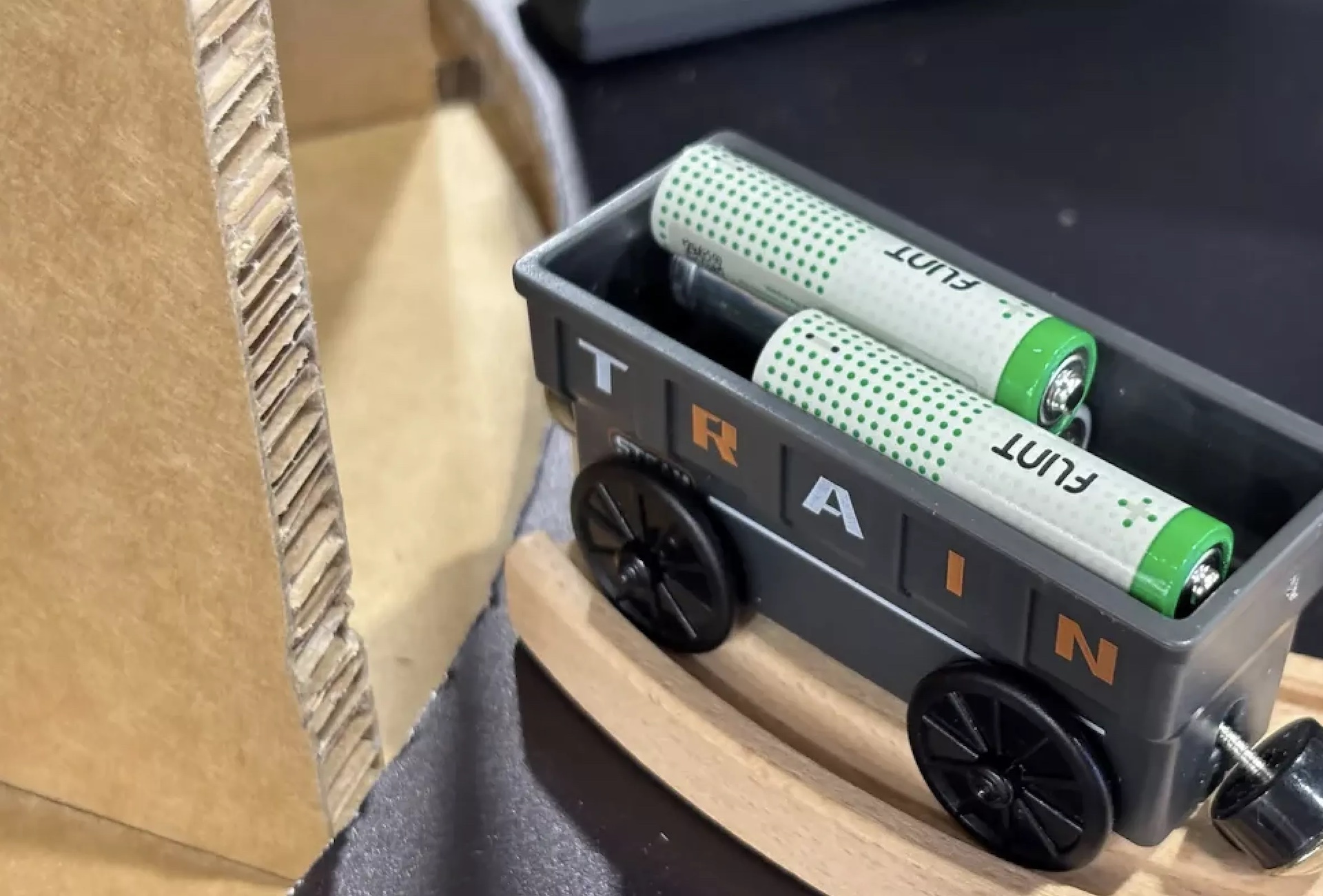
At this year's show, Flint wasn't showing off just lab prototypes. The batteries running toy trains at its booth were production-grade AA and AAA cells made from plant-based materials, not the metal-heavy chemistries that dominate today's market. Flint says those alkaline-style replacements are slated to reach consumers later in 2026, offering lifespan and voltage performance on par with conventional batteries.
Every core component of the battery—anode, cathode, electrolyte, separator—is made from cellulose sourced from plants.
The chemical reaction depends on water-based electrolytes mixed with food-safe minerals such as zinc and manganese. The result is a fully non-toxic, biodegradable cell that avoids the pollution risks and waste-handling challenges of current battery technology.
Interestingly, the company plans to deploy its manufacturing processes regionally such that the plants used for feedstocks are species considered invasive. And, even better, the batteries are biodegradable.
The company already has plans underway to supply its batteries to major electronics partners, such as Logitech, Amazon, and Apple accessory maker Nimble.
Pretty neat.
Cell Service
Our Mount Monadnock Media Maven points us to some, well, Interesting Engineering in which researchers in Slovenia 3D-printed polymer microstructures inside a human cell. As you probably know, human cells are pretty small—about 20 micrometers across, or one-fifth the width of a human hair. Check it out:
The process starts by placing the printing material inside the cell. Using ultra-fine glass needles, the researchers injected tiny droplets of a commercial photoresist, known as IP-S, into HeLa cells, a common human cell line. The material was carefully chosen to be compatible with living cells, remain non-toxic once hardened, and dissolve away if it was not fully solidified, Nanowerk reports.
After injection, each droplet, measuring about 10 to 15 micrometers across, was exposed to an ultrafast laser through a high-precision microscope. The laser triggered polymerization only at its focal point, enabling accurate three-dimensional shaping inside the cell. By scanning the focus through the material layer by layer at high speed, the team was able to build solid microstructures while leaving the surrounding cellular environment intact.
The team seemed to be having a grand old time, printing a bunch of tiny shapes, such as a 10-micrometer elephant, laboratory logos, hollow spheres, and lattice-like structures.
Imaging confirmed that these objects were located inside the cell membrane, with cell nuclei visibly shifting shape to make room for the printed material.
Surely, this can’t be good for cells. Well, sort of:
Cells that retained printed structures generally behaved normally. They maintained typical shape and continued to divide, and time-lapse imaging showed the printed objects being passed on to daughter cells during mitosis. Larger structures, however, had a measurable effect: objects bigger than 5 micrometers delayed cell division by at least an hour, suggesting that foreign bodies inside the cell can subtly alter its behavior.
Which raises the question, why are they doing this?
Being able to place tiny structures inside this space could allow scientists to track cells over time, measure chemical changes, or study how cells respond to physical forces.
AI-Yi-Yi, Part the Infinity: Let Us Illustrate…
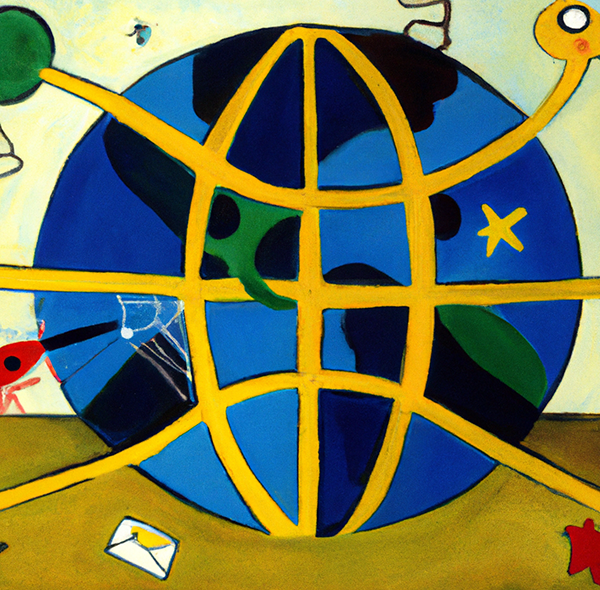
One big debate in design today is the role of AI in generating illustrations and other artwork. Part of the debate is how to use it as a creative tool, but without it actually replacing human designers and illustrators.
Via Print magazine, Italian agency Sangria Creative Studio, which provides illustration and design services to brands around the world, seeks to have illustration become the “antidote” to AI.
Sangria maintains that distinctiveness is an essential element of brand strategy, which is achievable only through the human hand and a human-led creative process. “While advancements in AI can emulate artistic styles, it fundamentally lacks the capacity for genuine emotion,” Sangria said in a statement. “AI tools draw on the work of other illustrators, whereas handmade illustrations, by contrast, draw on imagination. These small inconsistencies and spontaneous gestures of handmade work infuse visual campaigns with vitality that no algorithm can replace.”
But they do recognize that, for better or worse, AI is here to stay and the trick is to use it responsibly.
“Brands and designers should recognise the potential of combining AI’s efficiency with the authenticity of human expression. While AI can assist in the production and iteration, the emotional resonance for consumers must remain in human hands.”
Amen to that.
Built to Spill
Via LiveScience, some interesting research on Renaissance manuscripts that indicated what folk medicine practitioners were experimenting with as they leafed through medical books. For example, two German medical manuals—the ambitiously titled How to Cure and Expel All Afflictions and Illnesses of the Human Body and the more humble A Useful and Essential Little Book of Medicine for the Common Man—were published in 1531 by optometrist Bartholomäus Vogtherr and became medical bestsellers.
One copy of Vogtherr's works, in the collection of the John Rylands Research Institute and Library at the University of Manchester in England, is covered with 16th- and 17th-century scribbles and notes that suggest users tested the recipes in the manual and made their own additions. These fingerprints contained invisible chemical traces of proteins, and for the first time, researchers have worked out how to analyze these remnants.
In a study published November 19 in the journal American Historical Review, researchers detailed their use of proteomics analysis to identify what medical practitioners were experimenting with as they leafed through Vogtherr’s book.
"People always leave molecular traces on the pages of books and other documents when they come into contact with paper," study co-author Gleb Zilberstein, a biotechnology expert and inventor, told Live Science in an email. "These traces include components of sweat, sometimes saliva, metabolites, contaminants, and environmental components." Proteins and peptides are part of this mixture and are "often invisible to the naked eye," Zilberstein added.
And of course, coffee.
In total, the researchers sequenced 111 proteins from the Vogtherr manual. Most of the proteins were from the practitioners themselves, the team wrote in the study, but several were associated with plants or animals that were featured in the curative recipes.
So they found that medical men were experimenting with the materials as they were reading about them.
Other collagen peptides were harder to identify. One extracted protein could match either tortoise shell or lizards. While 16th-century medical literature mentions that turtle shells were reported to cure edema (fluid retention), pulverized lizard heads were used to prevent hair loss. But the protein was discovered on a page next to Vogtherr's hair-growth recipes, suggesting that the user of the medical manual may have experimented with lizards as hair-care therapy.
Hmm…sounds like they have our HMO.
Penguin Donkey
Via Core 77, if you were in the market for odd furniture designs in 1939—particularly for book storage—you would have been instantly drawn to the “Penguin Donkey.” Designed in 1939 by Viennese architect Egon Riss, it had been commissioned by Penguin Books, which had just recently been founded. It would be manufactured by British furniture company Isokon.

The idea was that it was optimized to hold Penguin paperbacks, with a center channel which could hold periodicals.
Alas, it was ill-timed; Hitler invaded Poland in 1939 and the Second World War was on, and wartime plywood shortages caused production to stop, with less than 100 having been produced.
However, if you have a stash of Penguin paperbacks you’re looking to store somewhere, Isokon, which is still around, revived the design in 1982, and you can buy your very own Penguin Donkey. A steal at—yikes!—£895 (USD $1,200).
Conducting Graphene
Was it a good week for graphene news? It’s always a good week for graphene news! Researchers develop 3D graphene-derived blocks for improved conductive inks. From (who else?) Graphene-Info:
Researchers from Monash University and Swansea University recently reported a new way to create highly concentrated graphene inks that flow well enough for industrial printing, without relying on performance-limiting additives.
The team addressed this challenge by compacting expanded reduced graphite oxide into dense-block reduced graphite oxide, termed DB-rGtO, allowing the formulation of stable dispersions of graphene-derived material at concentrations up to 200 mg·mL−1, while maintaining manageable flowability and deformation resistance.
… The team's findings establish general design rules for formulating concentrated, conductive graphene-based inks with little to no additive, adaptable across various deposition techniques for producing high-resolution, high-fidelity features.
The Gravity of the Situation
We’re often bemused by online conspiracy theories and other flimflammery. A bizarre one we heard, via Gizmodo, is that on August 12, 2026, the Earth will lose gravity for seven seconds. And how, pray tell, is this supposed to happen?
the anomaly would result from the intersection of two gravitational waves from black holes, predicted by NASA in 2019 with a probability of 94.7%. It also claimed the agency is “building underground bunkers” to provide refuge for government leaders, scientists, military personnel, and “selected citizens with genetic diversity” during the event.
And where did this come from?
These wild claims stemmed from a reel posted by Instagram user @mr_danya_of on December 31, 2025, whose account became unavailable just days later. The video showed a man sitting in a car, not speaking, while overlaid text read: “In November 2024, a secret NASA document titled “Project Anchor” leaked online. The project’s budget is $89 billion, and its goal is to survive a 7-second gravitational anomaly expected on August 12, 2026, at 14:33 UTC [10:33 a.m. ET].”
Ah, of course. Both Gizmodo and the invaluable Snopes could find no evidence of a Project Anchor or the documents supposedly leaked online. Indeed:
When Snopes contacted NASA about the rumor, a spokesperson said exactly what we’re all thinking: That’s not how gravity works.
Tale of the Tapes
Let’s spot the over-40s out there. Anyone remember this?
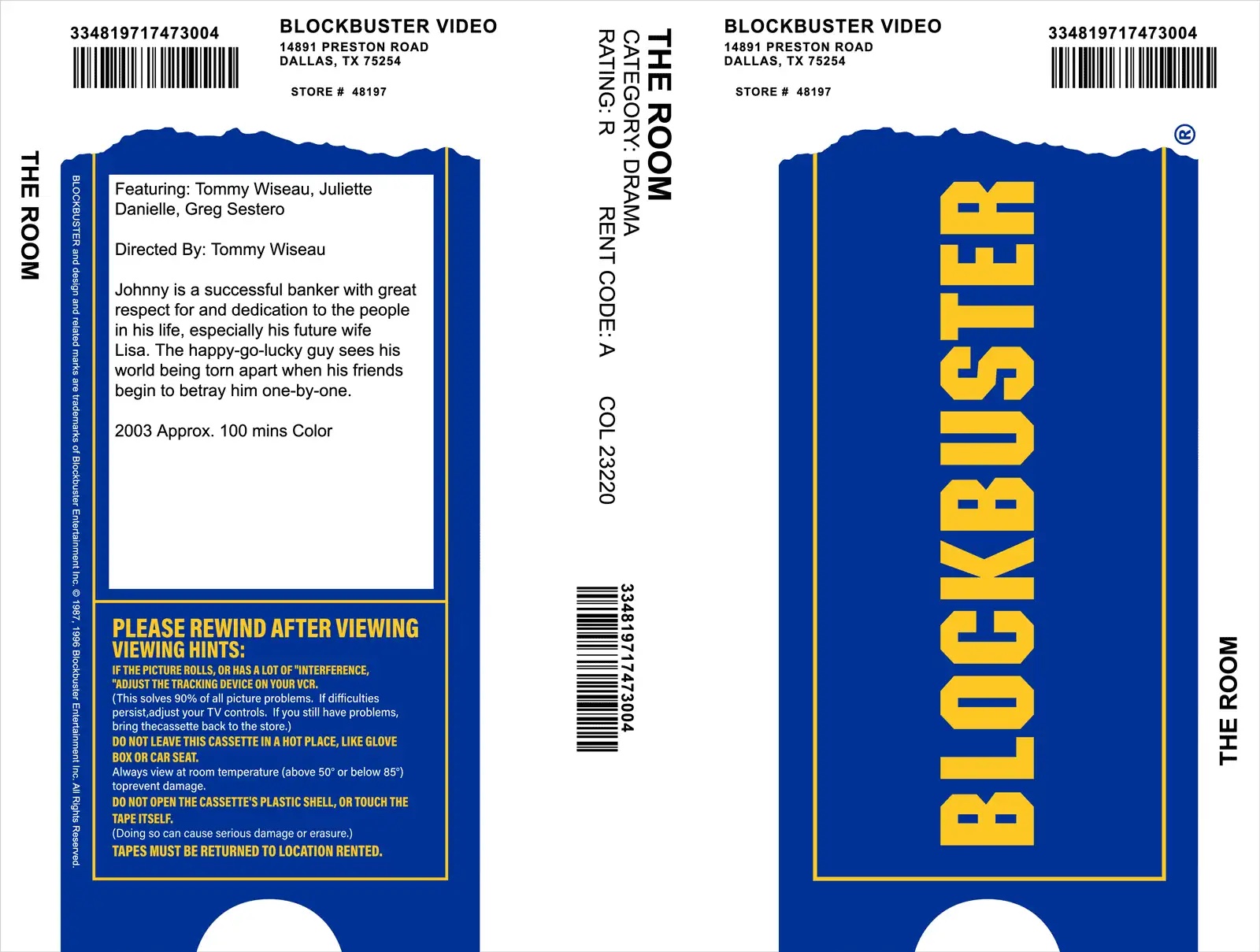
Yes, once upon a time Blockbuster Video stores ruled the land, renting VHS tapes (later DVDs) of movies and TV shows. Via Boing Boing, in 2004, the video rental chain had more than 9,000 stores, but now there is only one left, in Bend, Ore. A hallmark of Blockbuster’s VHS tapes was the distinctive branded insert templates.
Now, you can flash back to the 1990s and custom print your own Blockbuster VHS inserts.
Ryan Finnie recreated the template, and now Tex Jernigan has created the Blockbuster Sleeve Generator that lets non-designers craft nostalgic printouts of their own.
You type in the name of a movie, and it automatically populates the whole cover with title, genre, etc. You can even enter your old Blockbuster location (if you can remember it). “It even generates the actual barcodes based on store location and movie ID.”
And, it’s free.
One for the Road
Via Boing Boing, here’s a traffic safety initiative from Hungary that—literally—sounds pretty cool: a musical road that plays a song when a car drives over small strips at the posted speed limit.
Watch it here.
They should try this on the Mass Pike.
Hospitality
If you happened to be at the Mandalay Bay Resort and Casino in Las Vegas last November 10, you would have been able to check out the 35th Annual ISSA Housekeeping Olympics, in which 10 hospitality teams competed against one another. Via Laughing Squid, “The events included as precision bed-making, mop relays, buffer pad toss, and vacuum races.”
You can watch the highlights here.
Life of Pie
Here’s a question you may never have thought to ask: when did pie-throwing become a staple of slapstick comedies? Well, via Atlas Obscura, it actually pre-dates the movies. The hilarity of hitting someone in the face with a pie was first experienced in vaudeville, and the very first pie projectile on film came in 1913 via Max Sennett’s Keystone Studios, which produced a movie in which Mabel Normand and Roscoe “Fatty” Arbuckle “launched the first such missile in a Keystone film,” notes The Oxford Companion to Food.
Soon, the studio became known for pie-tossing shenanigans, and the high-flying desserts flew so freely that the studio needed its own bakery to make them.
As it turned out, such a bakery was located right across the street from the studio.
Sarah Brener owned a variety store there, but she also supplied the studio with its pies. Sometimes, they were delicious. Charlie Chaplin said that Brener’s pies were the best in town (he once gave her one of his trademark canes as a memento, too). But often, they had to be specially formulated for films. The ones Keystone used were “a special ballistic version of the pie, with heavy-duty pastry and especially slurpy ‘custard.’” As pie fights in film grew more elaborate, Brener’s bakery was soon making nothing else.
Discerning filmmakers—auteurs, if you prefer—preferred custard pies.
They were appropriately messy and, without a top crust, likely less painful than a lattice-edged cherry pie would be to the face. In one biography of the silent film comedy star Buster Keaton, author Marion Mead recorded his pratfall-ready custard pie recipe. In it, two baked pie crusts were welded together with a solid foundation of flour and water. Then, they were filled with an inch of thick flour-and-water paste.
The pie was even customized with different colors, depending on what color suit the intended target was going to be wearing, so it would show up to best effect. There was quite a science to pie fights. But, all good things must end, and by the 1920s pie fights had become passé, although they didn’t disappear completely.
Comedic films and animation alike have been peppered with pieing ever since, from Bugs Bunny to the Three Stooges. In 2015, The New York Times even reported that a “holy grail” of film history had been re-discovered: the second reel of the Laurel and Hardy 1927 short “The Battle of the Century”, where 3,000 pies sail through the air. It was supposed to be the pie fight to end all others, but in 1965 the film “The Great Race” promised viewers “the greatest pie fight in history.” Thousands of real pies were used, and after filming, the entire set stank of the rotting dessert.
If you happen to find yourself in Los Angeles, be sure to visit a self-storage facility on 1712 Glendale Blvd.—the former location of Keystone Studios a memorial plaque reads, “This was the birthplace of the motion picture comedy.”
Snaction
The Super Bowl is nearly upon us (the mournful howl you may have heard emanating from the Northeast last weekend was Buffalo fans’ reaction to the Bills losing the playoffs in overtime) so if you are hosting a watching party, it’s time to start thinking about what snacks you plan to serve. As it happens, Food & Wine has you covered, identifying “The most popular Super Bowl snacks across the US, according to Instacart.”
Delivery platform Instacart analyzed its shopping data from the biggest weekend in football and found that tortilla chips are the “undisputed MVP” of game day snacking in the United States. The California-based platform analyzed 2024 and 2025 data from the “big game” to identify surging orders (such as tortilla chips) on that weekend, as well as shoppers’ favorite snacks. The findings are compiled in a new report that breaks down some of those findings by state.

All together, we’re looking at a well-rounded nacho spread that’s pulled together by one crunchy vehicle, the tortilla chip. Orders of potato chips, a relatively less versatile snack, jumped a modest 32% on Game Day weekend.
Overall, Americans are largely grazing on nostalgic party bites, saucy wings, and homemade recipes — but those favorites largely depend on where you’re tuning in.
And ranch dressing, apparently.
One non-negotiable is ranch dressing, according to Instacart. The condiment is ordered 53% more often than the next-best dip on Super Bowl weekend, per 2025 data. (That’s French onion dip, for those curious.) Ranch is also 886% more likely to be purchased with Buffalo Sauce, according to this report.
Given that the Super Bowl is one of the last remaining mass cultural events we have, perhaps we need to take the snacking seriously.
This Week in Printing, Publishing, and Media History
January 19
1729: English playwright and poet William Congreve dies (b. 1670).
1736: Scottish-English chemist and engineer James Watt born.
1764: The world’s first mail bomb severely injures the Danish Colonel Poulsen, residing at Børglum Abbey.
1809: American short story writer, poet, and critic Edgar Allan Poe born.
1829: Johann Wolfgang von Goethe’s Faust: The First Part of the Tragedy receives its premiere performance.
1853: Giuseppe Verdi’s opera Il trovatore receives its premiere performance in Rome.
1883: The first electric lighting system employing overhead wires, built by Thomas Edison, begins service at Roselle, N.J.
1915: Georges Claude patents the neon discharge tube for use in advertising.
1940: You Nazty Spy!, the very first Hollywood film of any kind to satirize Adolf Hitler and the Nazis, premieres, starring The Three Stooges, with Moe Howard as the character “Moe Hailstone” satirizing Hitler.
1953: Almost 72% of all television sets in the United States are tuned into I Love Lucy to watch Lucy give birth.
1983: The Apple Lisa, the first commercial personal computer from Apple Inc. to have a graphical user interface and a computer mouse, is announced.
1986: The first IBM PC computer virus is released into the wild. A boot sector virus dubbed (c)Brain, it was created by the Farooq Alvi Brothers in Lahore, Pakistan, reportedly to deter unauthorized copying of the software they had written.
2038: The 32-bit Unix time will overflow at 03:14:07 UTC.
January 20
1894: American cartoonist and creator of Little Orphan Annie Harold Gray born.
1920: Italian director and screenwriter Federico Fellini born.
1920: American actor DeForest Kelley born.
1929: In Old Arizona, the first full-length talking motion picture filmed outdoors, is released.
1937: Franklin D. Roosevelt is sworn in for his second term as U.S. President, the first Presidential Inauguration to take place on January 20 following the ratification of the 20th Amendment.
1954: In the United States, the National Negro Network is established with 40 charter member radio stations.
1986: In the United States, Martin Luther King, Jr. Day is celebrated as a federal holiday for the first time.
January 21
1535: Following the Affair of the Placards—an incident in which anti-Catholic posters appeared in public places in Paris and in other major French cities, including one on the bedchamber door of King Francis I—French Protestants are burned at the stake in front of the Cathedral of Notre Dame de Paris. Don’t underestimate the power of display graphics!
1789: The first American novel, The Power of Sympathy or the Triumph of Nature Founded in Truth by William Hill Brown, is printed in Boston.
1924: English actor, singer, and screenwriter Benny Hill born.
1950: British novelist, essayist, and critic George Orwell dies (b. 1903).
1953: Co-founder of Microsoft Paul Allen born.
1971: The current Emley Moor transmitting station, the tallest free-standing structure in the United Kingdom, begins transmitting UHF broadcasts.
2020: Welsh actor, director, and screenwriter Terry Jones dies (b. 1942).
January 22
1573: English poet John Donne born.
1788: English poet and playwright Lord Byron (né George Gordon Byron) born.
1889: Columbia Phonograph is formed in Washington, D.C.
1898: Russian director and screenwriter Sergei Eisenstein born.
1927: Teddy Wakelam gives the first live radio commentary of a football match anywhere in the world, between Arsenal F.C. and Sheffield United at Highbury.
1947: KTLA, the first commercial television station west of the Mississippi River, begins operation in Hollywood.
1984: The Apple Macintosh, the first consumer computer to popularize the computer mouse and the graphical user interface, is introduced during a Super Bowl XVIII television commercial.
2018: American sci-fi and fantasy novelist Ursula K. Le Guin dies (b. 1929).
January 23
1546: Having published nothing for 11 years, François Rabelais publishes the Tiers Livre, his sequel to Gargantua and Pantagruel.
1656: Blaise Pascal publishes the first of his Lettres provinciales.
1783: French novelist Stendhal (né Marie-Henri Beyle) born.
1832: French painter Édouard Manet born.
1919: American actor, game show host, and TV pioneer Ernie Kovacs born.
1957: American inventor Walter Frederick Morrison sells the rights to his flying disc to the Wham-O toy company, which later renames it the “Frisbee.”
1998: Netscape announced Mozilla, with the intention to release Communicator code as open source.
January 24
1670: English playwright and poet William Congreve born.
1947: American singer-songwriter Warren Zevon born. Life’ll kill ya.
1984: Apple Computer places the Macintosh personal computer on sale in the United States.
January 25
1507: Swiss printer Johannes Oporinus born.
1759: Scottish poet Robert Burns born.
1783: English-American businessman and philanthropist and founder of Colgate-Palmolive William Colgate born.
1858: The Wedding March by Felix Mendelssohn is played at the marriage of Queen Victoria's daughter, Victoria, and Friedrich of Prussia, and becomes a popular wedding processional.
1881: Thomas Edison and Alexander Graham Bell form the Oriental Telephone Company.
1882: English novelist, essayist, short story writer, and critic Virginia Woolf born. Who’s afraid?
1915: Alexander Graham Bell inaugurates U.S. transcontinental telephone service, speaking from New York to Thomas Watson in San Francisco.
1937: The Guiding Light debuts on NBC radio from Chicago. In 1952 it moves to CBS television, where it remains until September 18, 2009.
1947: Thomas Goldsmith Jr. files a patent for a “Cathode Ray Tube Amusement Device,” the first ever electronic game.
1949: The first Emmy Awards are presented; the venue is the Hollywood Athletic Club.
1960: The National Association of Broadcasters reacts to the "payola" scandal by threatening fines for any disc jockeys who accept money for playing particular records.
1961: In Washington, D.C., President John F. Kennedy delivers the first live presidential television news conference.
1961: 101 Dalmatians premieres from Walt Disney Productions.
1964: Blue Ribbon Sports is founded by University of Oregon track and field athletes, which would later become Nike.
1996: American playwright and composer Jonathan Larson dies, in far too untimely a fashion (b. 1960).