Communicator Breakdown
Gizmodo wonders, are mobile phones with physical keypads are starting to make something of a comeback?
No, BlackBerry isn’t returning despite enthusiast efforts to retrofit old BlackBerry Classics with modern-day components like a faster CPU, more RAM and storage, a bigger battery, and a USB-C port. Whether it’s nostalgia for a physical keyboard, frustration at iOS’s ever-worsening software keyboard, or just plain boredom with glass slabs, companies are rebooting QWERTY phones this year for some reason.
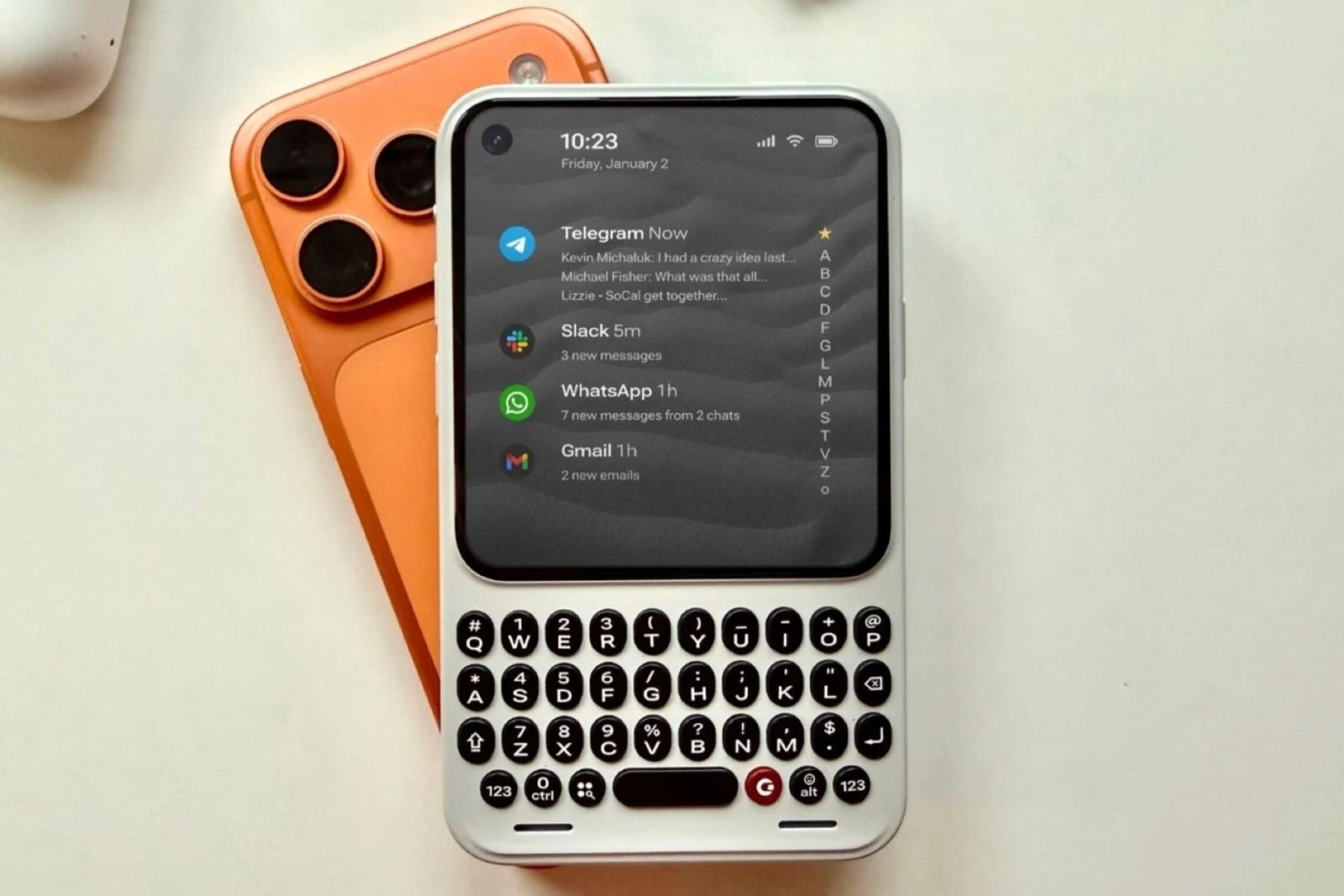
Case in point, so to speak, Clicks, which introduced the Clicks keyboard case and the Power Keyboard. At CES last week, the company announced the Communicator, a BlackBerry-esque device with a physical keypad. It’s a cool idea but with a dubious MO. It is positioned as a “second phone.”
Clicks pitches the $500 phone, launching later this year, as a device primarily intended for messaging—sending texts, DMs, Slack messages, whatever. The company didn’t have a functional unit—only a mockup dummy to fondle at the show—but it looked cool enough, even if it’ll be a very niche product.
$500 (plus God knows whatever subscription plan you have to have) for a “second phone” that doesn’t make calls and just sends and receives text-esque messages? Not sure about that.
But Clicks isn’t the only one trying to bring back QWERTY phones. Unihertz, makers of the really tiny Jelly Android phones and also Tank phones with massive battery capacities, also teased a new phone with a physical keyboard. The Titan 2 Elite seems to be a less gimmicky version of the Titan 2, which itself was a BlackBerry Passport knockoff but with a bizarre square screen on the backside.
The Titan 2 Elite looks identical to the Communicator, so something may be afoot there. But is the physical keypad on its way back?
Maybe after 19 years of the iPhone and touchscreens defining the mobile experience, it’s time to go back to the physical keyboard and its more tactile typing. Or maybe there’s just a keyboard supplier out there firing up its factories and trying to pump out slightly different—but mostly identical—phones to anybody willing to pay them.
We’re not paying for two phones. One is bad enough.
It’s About Time
We’re a little disappointed that the Museum of Printing did not give out a printed wall calendar this year (though we understand why), so the search was on for an alternative. Via Core 77, this may not be it: a haptic Momentum Calendar, or “a physical manifestation of time,” according to its manufacturer, the German design firm Momentum Studio.
“This concept explores the calendar as a daily haptic ritual rather than a passive display.”
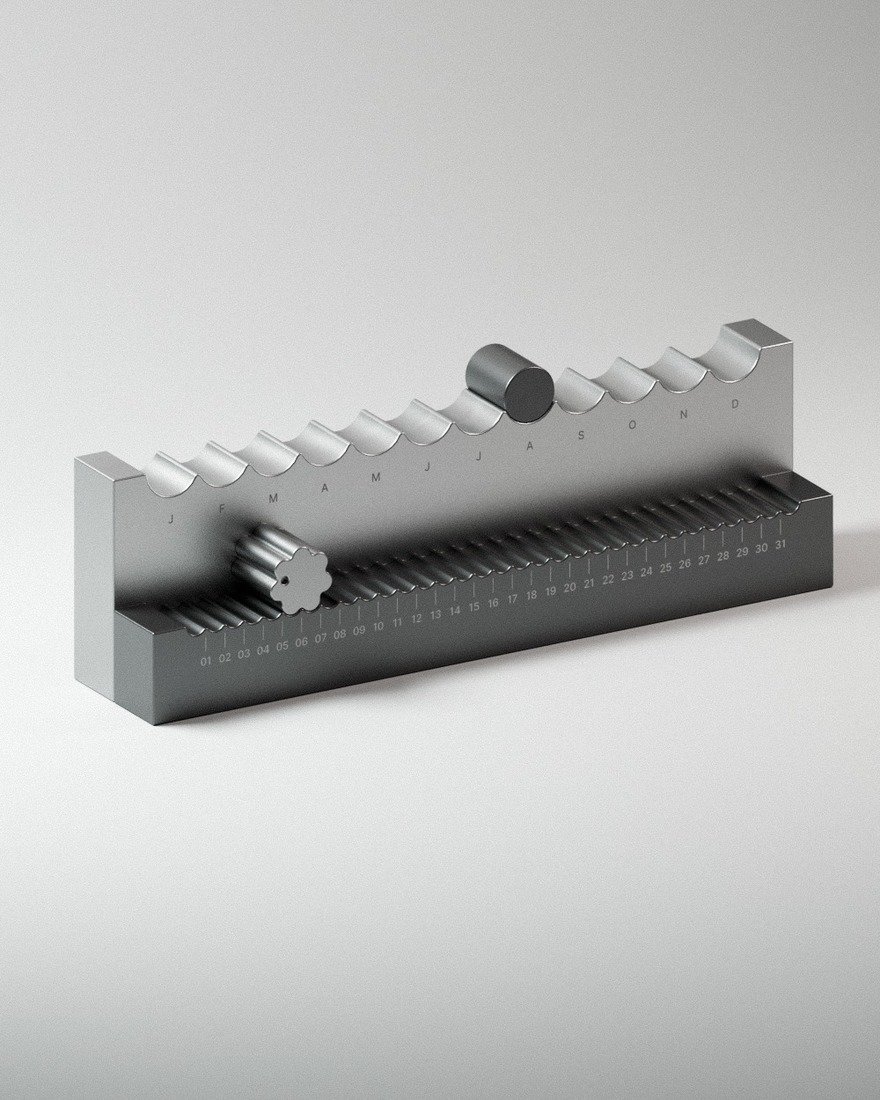
Of course, if you forget to change it or have been traveling, it will defeat the purpose of actually having a calendar. But then that doesn’t differ much from a page-a-day calendar.
Ironically, Momentum has not announced a release date.
Design…On Ice
It’s likely a safe bet that few of us know much about Iceland aside from Björk and prawn rings, although the latter are not from the country Iceland. Oh, and there was a volcano that erupted in 2010 affecting Ipex travel. But, via Print magazine’s Steven Heller, Iceland (the country, not the UK supermarket) has a rich graphic design tradition. Gudmundur Oddur Magnusson, aka Goddur, was at the forefront of research into Iceland’s design history, and chronicling it in his two-part textbook, Íslensk Myndmals-Saga.
His scholarship investigated the heritage of Icelandic visuals and symbols, putting them into context with imagery from other countries, finding connections and patterns. He also hosted regular shows about culture on national television. Alongside his interest in the past, his big heart, eyes and ears were always at the center of what was happening at the present.
Goddur died earlier this month in a motorcycle accident, but Heller had interviewed him in 2023.
When laying the groundwork for my research, I used Ways of Seeing by John Berger. That led me to Walter Benjamin (The Work of Art in the Age of Mechanical Reproduction) and later Alexandra Middle (Design by Accident / For a New History of Design, which changed my point of view a lot) and lots of other works, like Jan Tsichihold’s The New Typography from 1928. The interesting thing about that book is that the chairman of The Union of Icelandic Printers was at conference of unions in Leipzig in the late ’20s, and he got a copy in 1929 and translated some excerpts in the Printers union magazine in 1930—and that influenced at least one printer, who got [enamored] by the idea of a new profession about to be born.
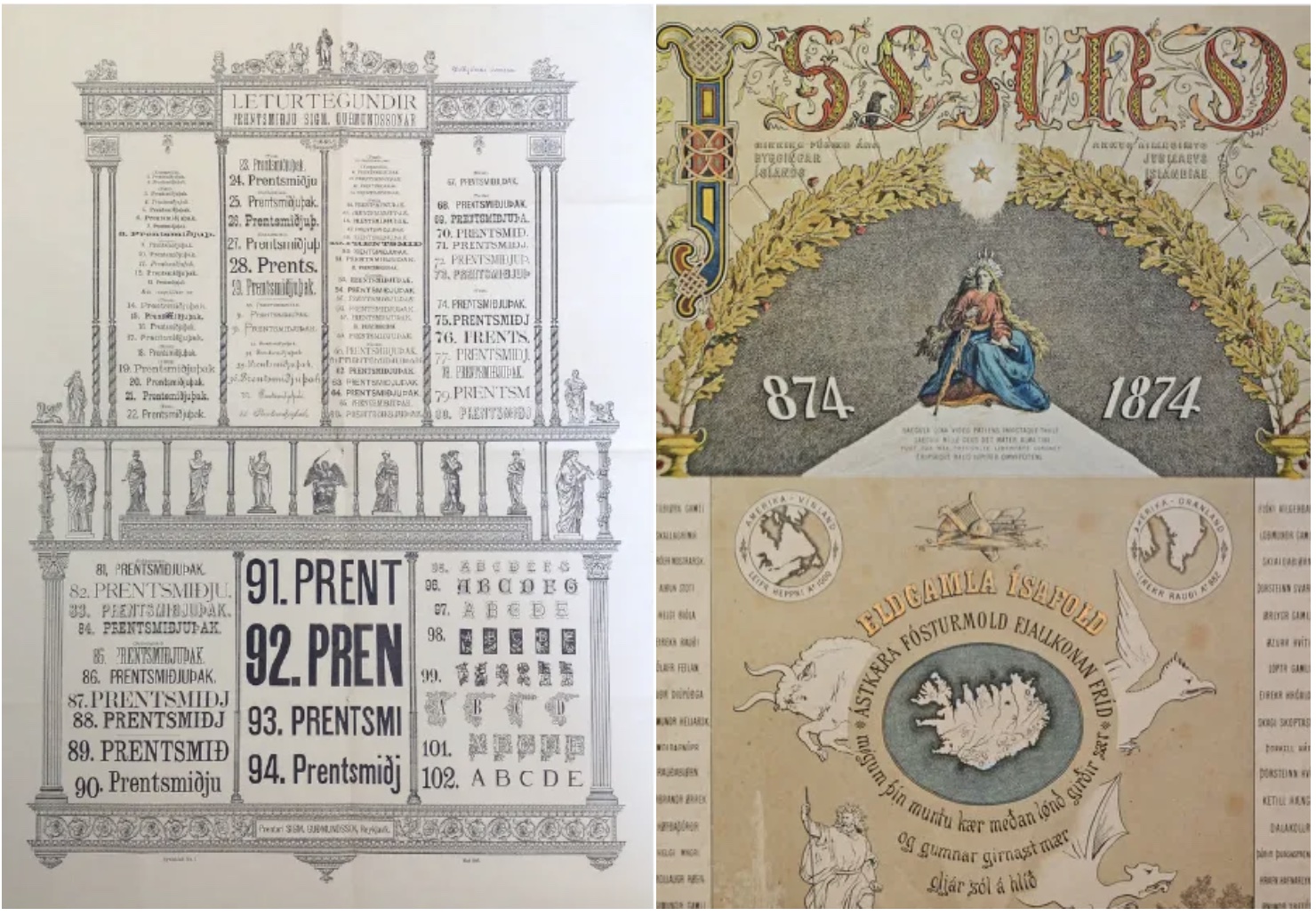
I started to collect examples from municipal archives around Iceland and slowly it started to make sense. The influences came also by type specimen catalogues from Germany and from the U.K. Other interesting influences came from Seventh-day Adventist who published a magazine in the beginning of the 20th century (1902) with Art Nouveau type and ornaments—the reason was they were vegetarians and loved these forms of flora. All basic form ideas are like throwing a stone into water, where the ideas are born, and they build a flow of circles around that place that will sooner or later reach other territories.
Unfortunately, we were not able to find any link to buy Goddur’s textbook.
Going for Brogue
When visiting the Outer Banks off the coast of North Carolina, it is customary to check out the trinity of lighthouses: Currituck, Hatteras, and Ocracoke. When staying in Avon (down the beach from Dirty Dick’s Crab House), the trip to Ocracoke is quite the trek, involving a long drive and two ferries. And whilst it was worth it, we didn’t know at the time that the Ocracokans spoke Elizabethan English, or a unique dialect rather like it. Says the BBC:
I’d never been called a “dingbatter” until I went to Ocracoke, North Carolina for the first time. I've spent a good part of my life in the state, but I’m still learning how to speak the Hoi Toider brogue. The people here just have their own way of speaking: it's like someone took Elizabethan English, sprinkled in some Irish tones and 1700s Scottish accents, then mixed it all up with pirate slang.
Ocracoke, being fairly isolated and not easy to get to—even today—it was an attraction for pirates. One of them, William Howard, had the dubious distinction of having served as quartermaster on Blackbeard’s ship Queen Anne’s Revenge. Howard eventually made his way to the Americas. In 1759, he bought Ocracoke Island for £105 and, with a few other ex-pirates, started a community.
A mainland North Carolina Native American tribe also interacted with the early settlers. The Woccon tribe had set up fishing and hunting outposts on the island, which they called Woccocock. Through misspellings and mispronunciations, it became Wokokon, Oakacock and Okercock, before finally arriving at the current version of Ocracoke in the mid-1700s. So at this point, there were Native Americans, English sailors and pirates from a variety of places all in one location. And that isolated community of just under 200 started blending words and dialects, and eventually building its own way of speaking.
The community was virtually isolated from the rest of the country/world for nearly two centuries, and it was only in 1957 that a regular ferry service started. And even today, as they have become slightly more connected, the locals still preserved their unique “Ocracoke brogue.”
When older Ocracoke natives, or “O’cockers” as they call themselves, speak, the “I” sound is an “oi”, so they say “hoi” instead of “high”. That’s where the Hoi Toider name comes from: it’s based on how the O’cockers say “high tide”.
Then there are the phrases and vocabulary, many of which are also kept over from the original British and Irish settlers. For example, when you’re on Ocracoke, someone might “mommuck a buck before going up the beach”, which means “to tease a friend before going off the island”.
As you might expect, with each new generation, the coming of technology is eroding the traditional dialect.
In the past, kids adopted the dialect because that was the only version they heard. Now there are hundreds of dialects and languages that most will encounter before they graduate high school. In fact, as of 2024, on this island of 676 people, fewer than half actually speak with the full Hoi Toider brogue.
“Within one to two generations, it’ll be gone,” said Dr Wolfram. “It’s dying out and we can’t stop that.”
Drone Home
This is a cool idea, which we may have linked to previously: a drone-based flying umbrella. Via Laughing Squid, John Xu of I Build Stuff designed and built a flying umbrella back in 2024, but has since updated it to solve a nagging problem: it needed a controller to manually navigate the brolly bot.
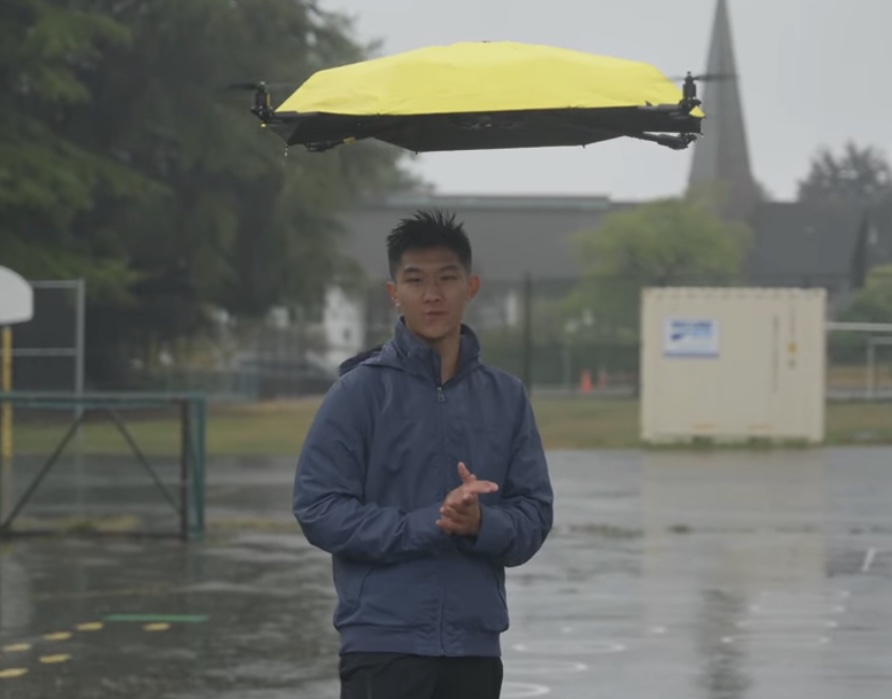
Version one was built all the way back in 2024. …Except as thousands of you guys pointed out, it doesn’t follow you. What if you made the drone follow you instead of using a controller?
Check out his video here.
File This…If You Can
We remember back in the early 1990s, when the Portable Document Format (PDF) was introduced, many techies were witnessing the coming of the “paperless office.” Now, 30 years later, we are not much closer to that goal (if it is indeed a “goal”) so a staple of most of our offices remains—sure, yes, the staple—but also the filing cabinet.
If you ever find yourself in Burlington, Vt., which we highly recommend you do at some point, be sure to visit what is claimed to be the world’s tallest filing cabinet. Via Atlas Obscura:
Built in 2002 by local artist Bren Alvarez, the filing cabinet…is made up of 38 drawers, with each one representing the number of years of paperwork that Alvarez accumulated while working on a local street project. While Alvarez's piece proudly claims to be the tallest filing cabinet on Earth, it's unclear if that is actually the case, since other works of art also claim the same title.


Alvarez built the tower—titled "File Under File Under So. Co., Waiting for..."—as a comment on bureaucratic delays building the "Southern Connector," a roadway intended to connect Interstate 89 to downtown Burlington. Officials originally proposed the road spur in 1965, but was delayed due to bureaucracy and legal battles.
Doh!
Glasses Half Full
Ooh, ooh, we want these! Via Futurism: “Instant Bifocals: New Glasses Can Change Their Prescription on the Fly Depending on What You’re Looking At.” Take our money, please! Well, OK, not just yet.
a Finnish company called IXI is claiming to have manufactured the world’s first eyeglasses that can adjust their corrective lenses automatically.
These special glasses have “dynamic lenses” made of liquid crystals, which can transform to accommodate whatever focal length the user’s eyesight requires, IXI CEO Niko Eiden told CNN.
Sounds like an improvement over bifocals or even “progressive” glasses, which are like bifocals but whose lenses transition more smoothly than via the hard divider used by bifocals and can make navigating stairs kind of tricky.
“The eyewear industry hasn’t really been innovating for vision correction,” Eiden told CNN. “Maybe 10, 15 years from now people will be wondering, how did we wear those fixed focus glasses in the old days?”
How do they work?
Tiny LEDs inside the IXI frame bounce invisible infrared light into your eyes while photodiodes, also within the slim eyeglass frame, pick up the reflection on your eyeballs while measuring and tracking what you’re looking at. Then it converts that reflection and data into electrical signals that control the liquid crystals; like bifocals or progressives, the IXI has a reading area within the lens for near sighted vision, but that disappears entirely if it detects your eyes looking to the far distance.
But, as one would expect, there’s a catch: they need to be charged “and will brick to their ‘base’ prescription if they run out of batteries.” Oh, well. Seemed like a nice idea.
Graphene In 3D
Was it a good week for graphene news? It’s always a good week for graphene news! New 3D graphene nanomaterial for batteries. From (who else?) Graphene-Info:
At CES last week, Japanese startup 3DC introduced a 3D graphene nanomaterial that aims to improve fast-charging and other aspects of battery performance.
The material, called Graphene MesoSponge (GMS), uses a porous, nanoscale structure that allows electrons to move more freely inside battery electrodes. Unlike flat graphene sheets, GMS forms a connected internal network, which 3DC says reduces resistance and improves charging efficiency.
… GMS' structure is different than that of conventional graphene. It forms a hollow, sponge-like network with walls only one atom thick. The company controls pore size, layer count, and overall shape during manufacturing. The nanoscale structure allows electrons to travel through interconnected pathways rather than across flat surfaces.
According to the company, that design improves electrical conductivity inside battery electrodes without relying on additional conductive additives. By embedding the material directly into the electrode structure, 3DC aims to improve how batteries handle rapid energy flow during charging and discharging. The company says this design can also help reduce degradation over time. Improved electron transport lowers stress on battery materials during repeated charging cycles, which can extend usable life.
Twin Beaks
The COVID pandemic and the consequent lockdown had a number of impacts, certainly on human behavior, but it also had some interesting effects on nature. Specifically, birds. Back in 2021, researchers discovered that bird song got quieter during the lockdowns, as there was less human-generated noise to down them out. Now, researchers have discovered that the pandemic lockdowns also changed birds’ beak size. Specifically, the beaks of dark-eyed junco songbirds, some of which decades ago moved into the University of California, Los Angeles, campus, where they forage for food. Says CNN:
The city-dwelling birds have shorter and stubbier beaks, a stark contrast from the long ones their mountain counterparts use to eat seeds and insects.
However:
as UCLA researchers looked over data on the birds that have resided on their campus in recent years, they noticed something odd: Juncos that hatched in 2021 and 2022, after the start of the Covid-19 pandemic, had longer beaks similar to those seen on the mountain birds. But as pandemic restrictions eased at UCLA and students returned to classes, the city bird traits returned, and the beaks of the birds hatched in 2023 and 2024 were shortened once more, researchers Pamela Yeh and ??Eleanor Diamant reported in December in the journal Proceedings of the National Academy of Sciences.
What happened? They believe that the campus birds’ shorter beaks are better suited for the wider range of human food scraps that comprises their diet (no word on whether they gain 15 pounds their freshman year).
But in 2020, when classes first went online and dining halls closed, the beaks of newborn birds evolved back to their longer state fitted for their natural diets.
We often think of evolution as a slow process, but in some species changes can be generational. This was detailed in Jonathan Weiner’s excellent 1995 Pulitzer Prize-winning book The Beak of the Finch, which detailed researchers studying several generations of finches native to the Galapagos, watching avian bird evolution in real time, as beak size and shape changes according to changes in food sources. (If we had an Around the Web Book Club, this book would definitely be on it.)
“When we think about human impacts on wildlife, we tend to consider the big players including urbanization, pollution, habitat loss, ocean acidification, and the introduction of invasive species. But this study focuses on a much more subtle and transient factor — whether or not a college campus was in session. Who would’ve thought?” Jeff Podos, a behavioral ecologist and professor at the University of Massachusetts Amherst, said via email.
Message in a Bortle
Amateur—or even professional—astronomers may be familiar with the Bortle Scale, a measure of the night sky’s brightness, essentially quantifying interference caused by light pollution and thus the observability of various celestial objects. The scale ranges from Bortle 1 (the darkest skies available on Earth) to Bortle 9 (the least darkest, most light-polluted). Light pollution is a very real problem for those wishing to observe the night sky, either as a hobby or professionally. (For example, Flagstaff, Ariz., has very strict nighttime illumination laws because Lowell Observatory is located nearby.)
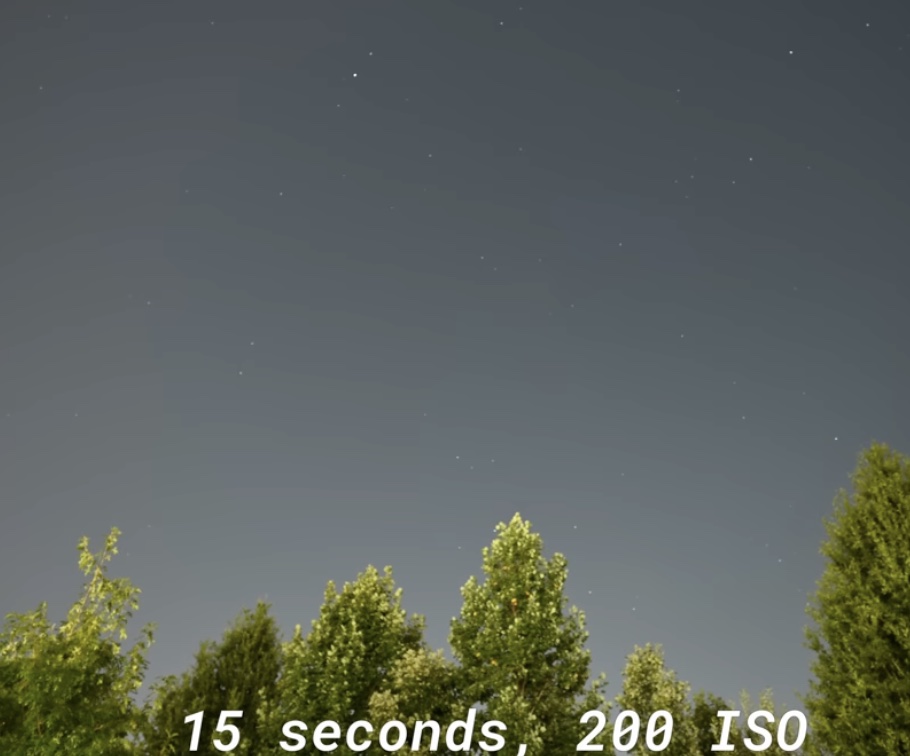
To illustrate this, via Laughing Squid, astrophotographer Ian Lauro Astro traveled across the United States to photograph the Milky Way at every level of light pollution.
He began this quest in Atlanta which has a Bortle index of 8. He then traveled to Boise, Idaho (Bortle 7) then to Auburn, Alabama and its surrounding areas (Bortle 6, 5, 4) (Bortle 5), Baker City, Oregon (Bortle 3), Eastern Oregon (Bortle 2) and the “middle of nowhere” Oregon (Bortle 1), explaining the visual difference between each number on the scale.
This is the Milky Way as seen (or not) in Atlanta (Bortle 8):
Or outside Auburn, Ala. (Bortle 4):
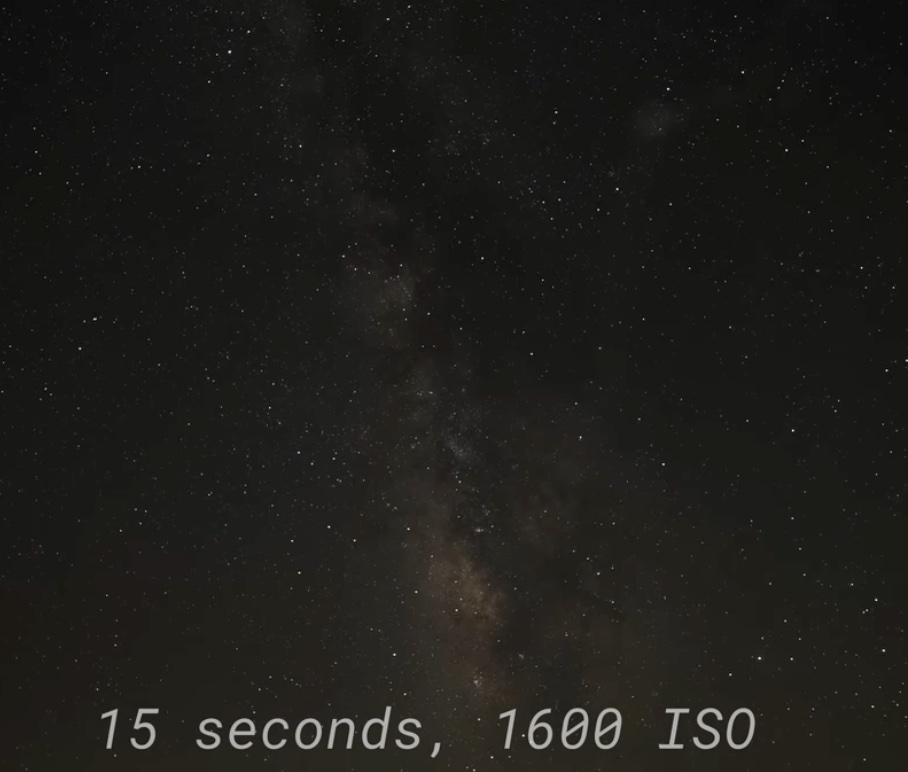
Or the middle of nowhere in Oregon (Bortle 1):

Pretty amazing. Check out the whole journey here.
Honey, Moon Suite
(Optional musical accompaniment to this item.)
Looking for a unique place to spend your next holiday? And without getting stranded in Detroit? How about the Moon? Yes, via Gizmodo, GRU (Galactic Resource Utilization) Space is looking to build the first hotel on the Moon.
The commercialization of the Moon seems inevitable at this point, and space startups are wanting to secure their spot on the lunar soil. GRU Space aims to begin testing its technology on the Moon by 2029, deploying inflatable structures and turning lunar regolith into bricks.
They’ve even started accepting applications.
Wealthy space tourists can put their hat in the ring for a hefty deposit of $1 million to be the first guests at the company’s hotel on the Moon, with the grand opening planned for as early as 2032.
It’d be a great opportunity for a Space:1999-like situation .
Raw Deal
Do you like sushi? Do you wish it could be a handheld food? Technically anything can be a handheld food, except maybe soup, but to make sushi portable, NYC’s Suka Sushi has designed a sushi roll that functions as a handheld snack à la push pop candy. Says (who else?) Food & Wine:
If you’re familiar with the classic push pop candy, which lets you gradually push a lollipop out of a tube, you know how satisfying this simple process is. The sushi push pop employs a similar packaging system: a pre-sliced roll of sushi is placed inside a cardboard tube.
By using a smaller plastic tube (conveniently filled with soy sauce) to push on one end of the roll, you can gradually eat pieces of sushi as they emerge from the top of the cardboard container. This format is, ostensibly, intended to make it easier to eat sushi on the go. For added convenience, you can use the soy sauce tube to drizzle seasoning over the sushi.
It went viral on the Internet, so make of that what you will. Apparently, there are very long, unmoving lines to get into Suka Sushi. Each tube includes 10 pieces, which run from $15 to $17—and of course you’re really paying for the packaging. But is it worth it?
When it comes to the quality of the sushi itself, it’s nothing to write home about — but it’s also not bad. Imagine the neighborhood sushi spot you get takeout from, and this probably comes quite close. The rolls are pre-made, so they’re ready to go when you order them, and the fish tastes surprisingly fresh, even if it may have been prepared a few hours earlier.
We’ll stick with our local sushi place, especially as they deliver.
This Week in Printing, Publishing, and Media History
January 12
1908: A long-distance radio message is sent from the Eiffel Tower for the first time.
1949: Japanese novelist, short-story writer, and essayist Haruki Murakami born.
1976: English crime novelist, short story writer, and playwright Agatha Christie dies (b. 1890).
January 13
1888: The National Geographic Society is founded in Washington, D.C.
1898: Émile Zola’s J’accuse…! exposes the Dreyfus affair.
1910: The first public radio broadcast takes place; a live performance of the operas Cavalleria rusticana and Pagliacci are sent out over the airwaves from the Metropolitan Opera House in New York.
1941: Irish novelist, short story writer, and poet James Joyce dies (b. 1882).
2009: Irish-American actor, director, and producer Patrick McGoohan dies (b. 1928). Be seeing you.
January 14
1896: American novelist, poet, essayist, and playwright John Dos Passos born.
1898: English novelist, poet, and mathematician Lewis Carroll (né Charles Dodgson) dies (b. 1832).
1952: NBC's long-running morning news program Today debuts, with host Dave Garroway.
1967: The Human Be-In takes place in San Francisco, California’s Golden Gate Park, launching the Summer of Love.
1973: Elvis Presley’s concert Aloha from Hawaii is broadcast live via satellite, and sets the record as the most watched broadcast by an individual entertainer in television history.
January 15
1759: The British Museum opens.
1876: The first newspaper in Afrikaans, Die Afrikaanse Patriot, is published in Paarl.
1892: James Naismith publishes the rules of basketball.
1936: The first building to be completely covered in glass, built for the Owens-Illinois Glass Company, is completed in Toledo, Ohio.
1941: American singer-songwriter, musician, and artist Captain Beefheart (né Don Van Vliet) born.
1962: The Derveni papyrus, Europe's oldest surviving manuscript dating to 340 BC, is found in northern Greece.
1967: The first Super Bowl is played in Los Angeles. The Green Bay Packers defeat the Kansas City Chiefs 35–10.
2001: Wikipedia, a free wiki content encyclopedia, debuts online.
January 16
27 BC: Gaius Julius Caesar Octavianus is granted the title Augustus by the Roman Senate, marking the beginning of the Roman Empire.
1492: The first grammar of the Spanish language (Gramática de la lengua castellana) is presented to Queen Isabella I.
1605: The first edition of El ingenioso hidalgo Don Quijote de la Mancha (Book One of Don Quixote) by Miguel de Cervantes is published in Madrid, Spain.
January 17
1706: Benjamin Franklin born.
1867: German-born American film producer and co-founder of Universal Studios Carl Laemmle born.
1904: Anton Chekhov’s The Cherry Orchard receives its premiere performance at the Moscow Art Theatre.
1929: Popeye the Sailor Man, a cartoon character created by E. C. Segar, first appears in the Thimble Theatre comic strip.
January 18
1873: English author, poet, playwright, and politician, Secretary of State for the Colonies Edward Bulwer-Lytton dies (b. 1803).
1882: English author, poet, and playwright A. A. Milne born.
1936: English author and poet, Nobel Prize laureate Rudyard Kipling dies (b. 1865).
1993: Martin Luther King, Jr. Day is officially observed for the first time in all 50 states.