Just Your Type
Via Print magazine, Rosetta is an award-winning type design studio that “create[s] original fonts for a polyphonic world.” To that end, they ask: “Can we study the relationships of characters within the Latin script and use them to create a myriad of typeface variants so that everyone can get a unique one?” Basically, personalized typography. Ergo, Only Yours and Softly Yours, aka “The Yourses”
The generation of a new font variant works not unlike the building blocks of DNA, where a multitude of characteristics and genetic factors come together to create a unique human. The Yourses leverage a myriad of Latin-script letterforms and design features to create unique fonts all formed by the same universe of possibilities. Rosetta releases nine new variants each day. There’s scarcity baked in, but this process also makes matching of font to the designer-customer less random. If you connect with a variant and license it, that particular font is no longer available. The Yourses essentially delivers a custom typeface to each customer.
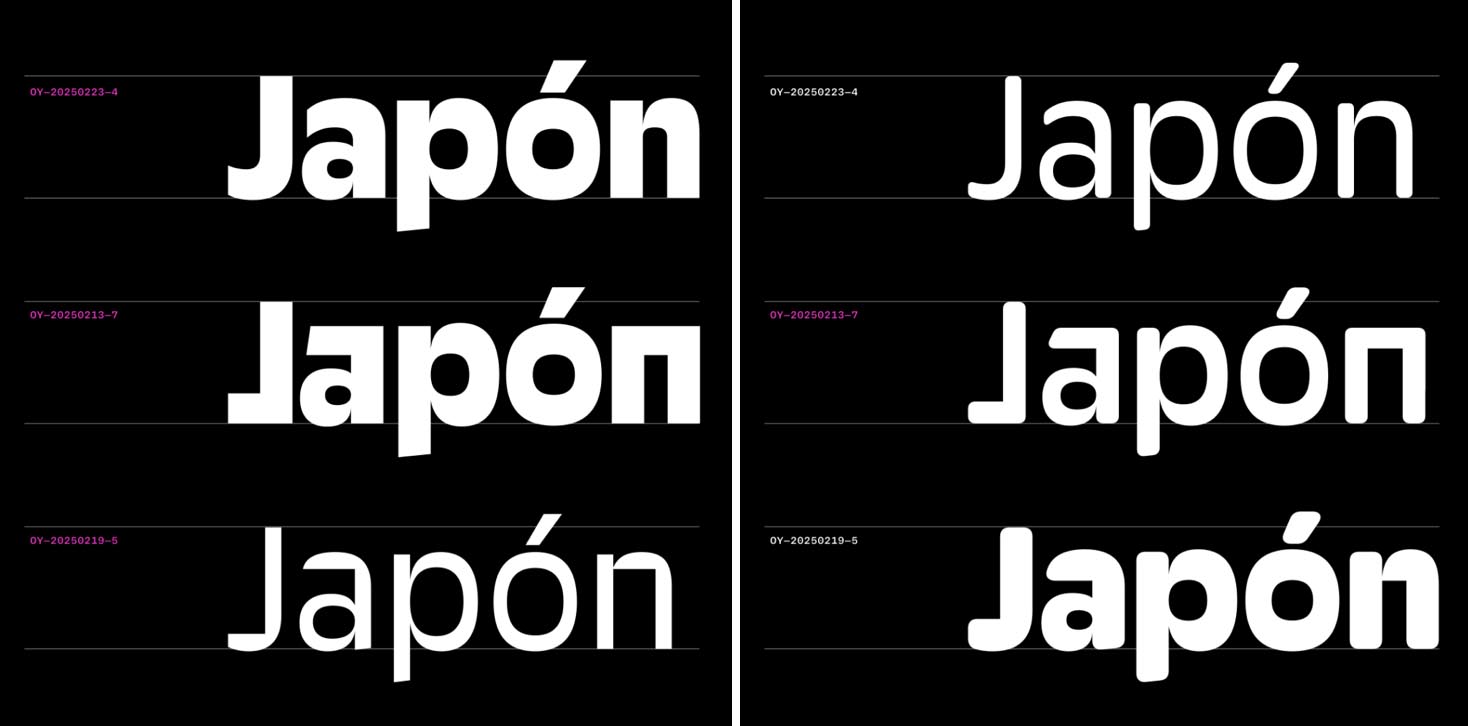
Only Yours (left) and Softly Yours
Adds David Brezina, Rosetta Type’s managing director:
Rather than building numerous different alternate characters, the system uses alternate building blocks. Those are put together to create well-formed character shapes. Avoiding potential glitches and incompatible characters was quite a challenge. We have developed our own tools to produce the individual variants and to test them. Another challenge was quality control. Since there are over a million variants, we could only check the key ones. Some of the blocks that change occur in many letters, others occur only in a single character, so that makes the checks easier.
Zine But Not Heard
One late lamented publishing niche is the “zine.” A zine (short for “magazine” or, more appropriately, “fanzine”) was a self-published magazine—often simply photocopied—that were devoted to specific, niche topics. According to Wikipedia, “Zines are popularly defined within a circulation of 1,000 or fewer copies; in practice, however, many are produced in editions of fewer than 100.” They heyday of the zine was roughly 1982–1998 (largely before digital printing, if the circulation numbers raised an eyebrow).
We mention this because, via Boing Boing, a new book celebrates the “golden age” of the zine.
Zinelandia collects cover art from 115 zines published between 1982 and 1998, documenting the visual evolution of underground publishing during the Factsheet Five era. The 125-page full-color book has zines from 15 countries, tracing the shift from stolen office photocopies to home laser printing as zines connected artists, punks, and Mail Art practitioners across an international network.
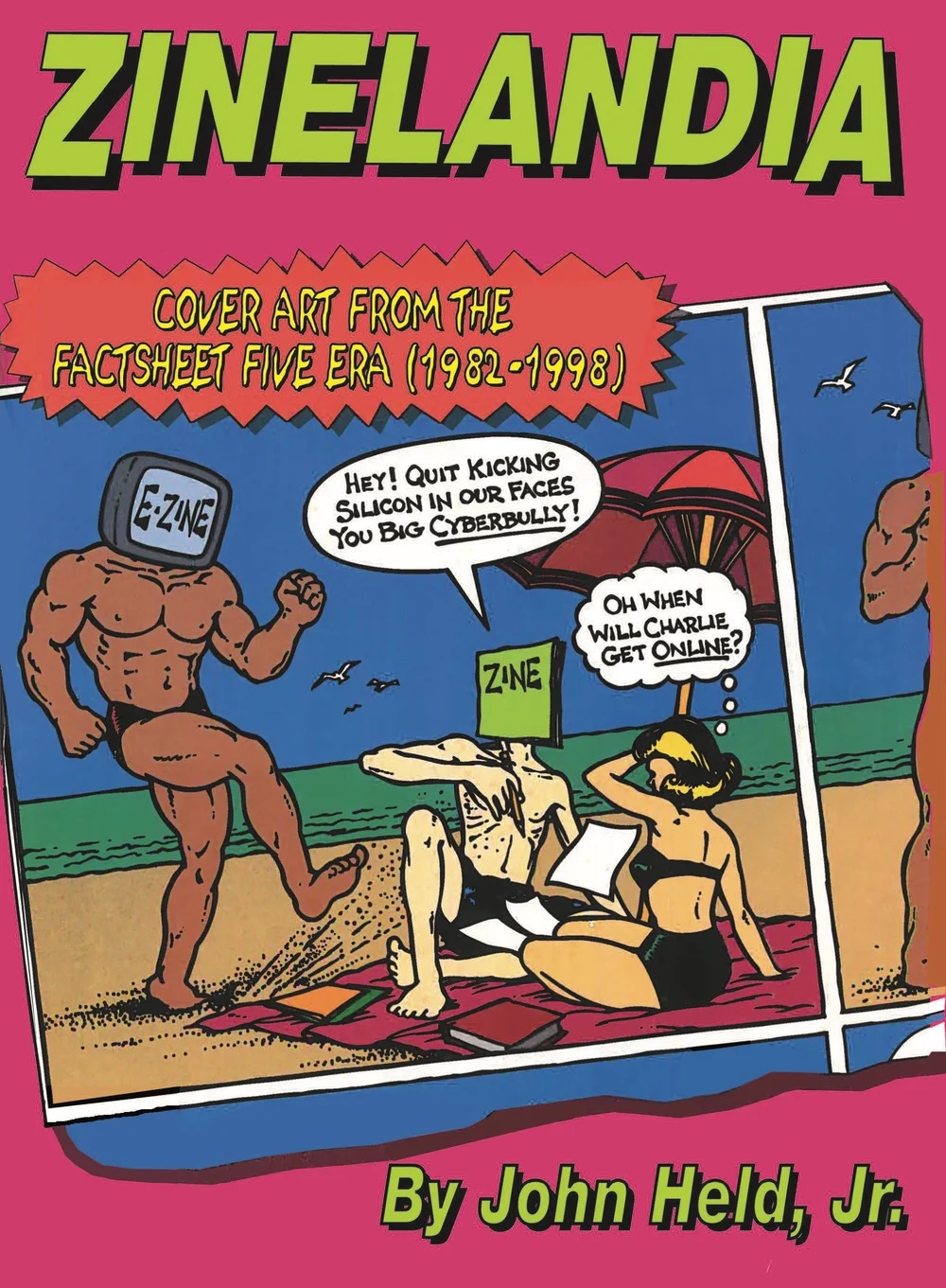
Factsheet Five, by the way, was a periodical that consisted of short reviews of privately published material—like zines. Before the Internet, it was a way that fans of specific topics could find each other and relevant zines.
Says the publisher:
Examining the covers in this collection, we witness the evolution of zine culture from the early years of stolen office photocopy to laser printing at home. The covers provide a panoramic view of zine culture at the twilight of the Twentieth Century—its art, concerns, creative spirit and clamor for community.
A steal at $15.
To Dye For
The bacterium Escherichia (“E.”) coli gets a bad rap, and deservedly so, but for those glass-half-full types it turns out that it’s not entirely evil, via LiveScience, researchers have used the bad bacillus to create sustainable, colored fabric fibers. Traditional methods for producing synthetic fibers are energy-intensive, generate large amounts of greenhouse gas emissions, and contaminate water and soil.
Therefore, in recent years, there has been a growing trend to use an alternative method of producing natural fibers from the fermentation of bacteria. Cellulose is a promising target, as this material mimics the natural fibers found in fabrics such as cotton. A wide range of bacteria ordinarily convert glucose into fibers of cellulose to lend structural support and defend against other microbes. However, cellulose produced by bacteria is naturally white, which means it often needs to be dyed after processing.
Enter our friend E. coli.
Lee and his team have now simplified this process by growing cellulose-producing bacteria alongside microbes that produce natural colorants. The team used strains of color-producing Escherichia coli (E. coli) to create two classes of dyes: darker violaceins (which produced colors such as purple, blue and green) and warmer carotenoids (which produced colors such as red, orange and yellow).
If they don’t call it E. color they simply have no imagination.
The colored bacterial cellulose showed an overall strong stability against acids, bases, heat treatments, and washing. However, the team noted that further work is needed to fully test these materials — notably, to check their durability against industrial detergents and mechanical wear and tear.
Their results were presented in a study published November 12 in the journal Trends in Biotechnology.
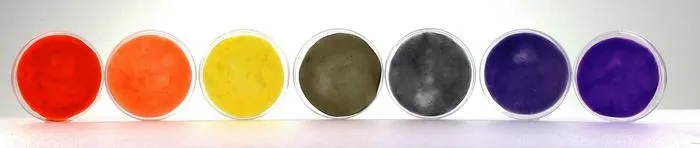
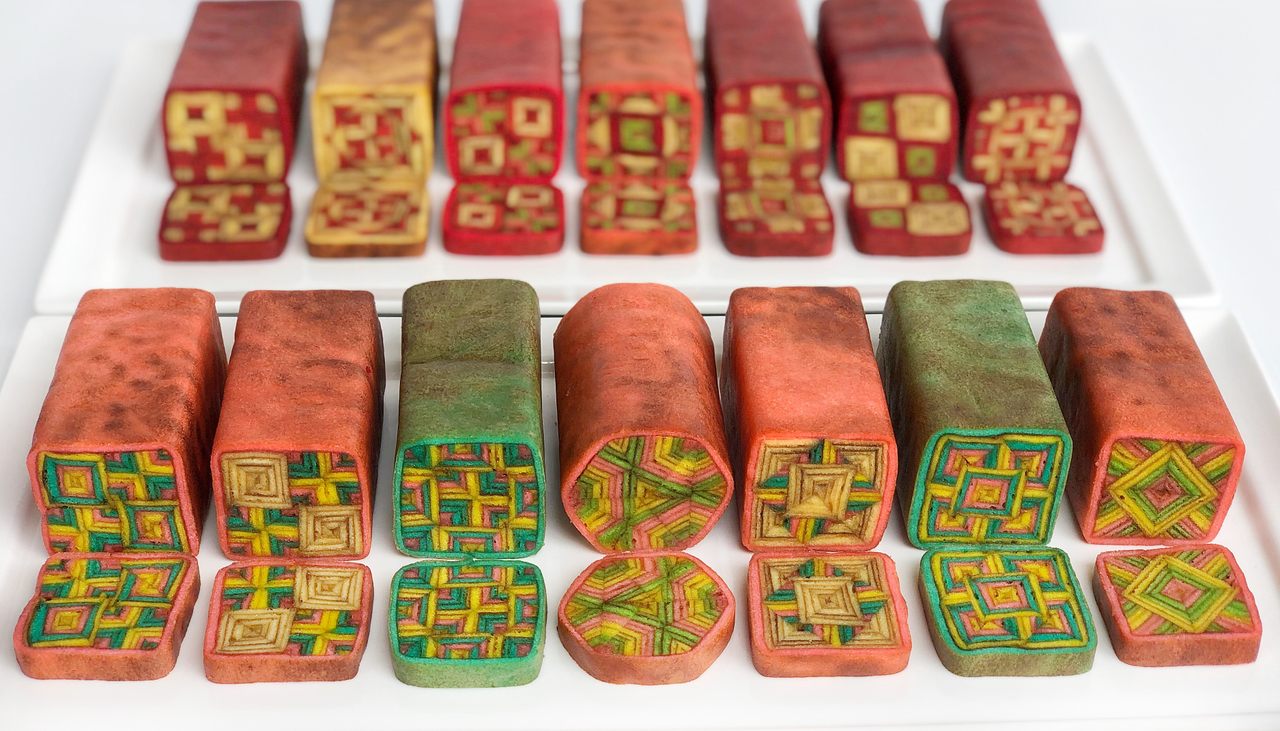
Caption from LiveScience: “The full spectrum of colored textiles made by the E. coli bacteria using the team’s new method.” (Image credit: Zhou et al., Trends in Biotechnology)
Moving forward, Lee wants to "extend the current seven color platform to a broader spectrum" and scale up the process to an industrial level while maintaining consistent quality. Further altering the way bacteria produce the cellulose could open up other uses of the material, such as biodegradable packaging, he said.
Why I Otter…
Here’s something to keep in mind the next time you have an AI notetaker like Otter.ai, Google’s Gemini, or Zoom’s Fathom to summarize your virtual meetings. Via Futurism, Fireflies is an AI notetaking startup company whose founders boasted that 75% of Fortune 500 companies were using it to transcribe corporate meetings. As it turned out, Fireflies’ CTO and co-founder Sam Udotong, admitted, its “AI” “was really just two guys.”
“The best way to validate your business idea is by becoming the product yourself,” Udotong wrote in a LinkedIn post. “We told our customers there’s an ‘AI that’ll join a meeting.’ In reality it was just me and my co-founder calling in to the meeting sitting there silently and taking notes by hand.”
Whenever a customer needed notes taken for a meeting, the CTO explained, either he or his co-founder, Krish Ramineni, would dial into the room as “Fred,” masquerading as a Siri-like equivalent. “We’d sit there silently, take detailed notes, and send them 10 minutes later,” Udotong explained.
Since then, apparently, they have automated the process.
We are always reminded of the Amazon “Just Walk Out” cashierless payment system that was really just 1,000 people in India watching videos of people checking out.
Don’t Cut This Cable
“Cheap crap that breaks” should be the motto for 99% of all products sold today. So it is no surprise that, via Core77, Kickstarter gleaned $600,000+ for a Rolling Square inCharge Life cable.
The cables are said to be extremely durable, being reinforced with
Hey hey!
graphene, jacketed in silicone and sleeved in nylon braiding. The company guarantees them for life, offering free replacements upon proof of destruction. (You have to send them a video of you snipping your theoretically-failed cable in half.)
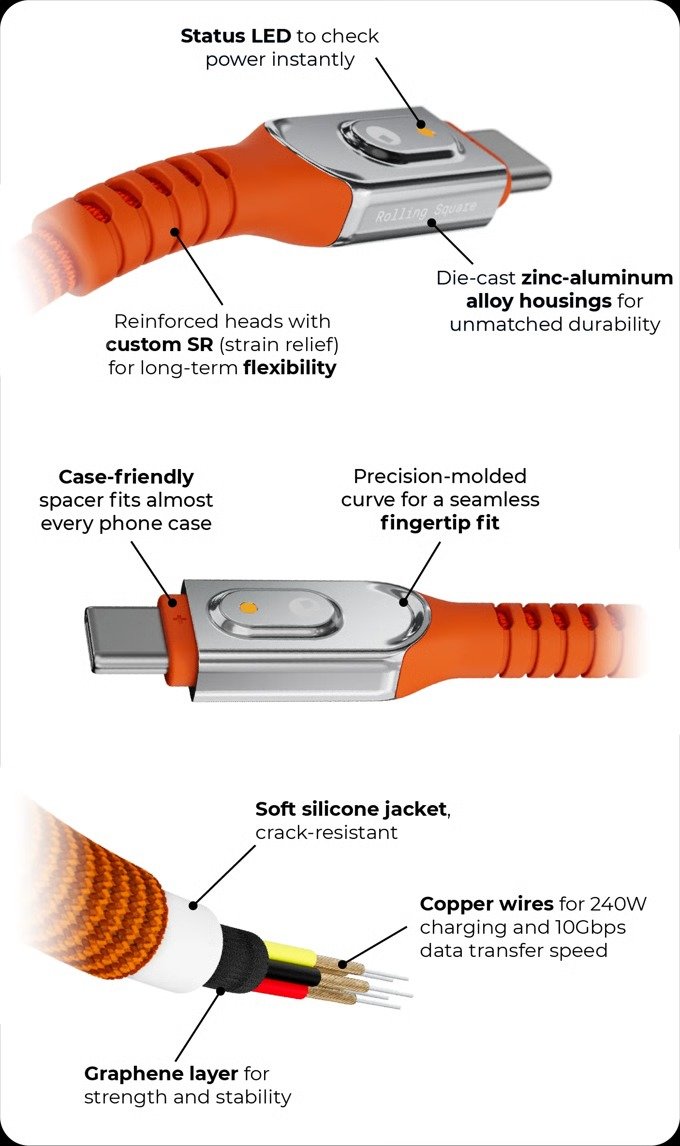
A steal at €25 (USD $29).
Kitschy Cabinet
Ah, kitsch. We think we know it when we see it, but what exactly is kitsch? According to Merriam-Webster, it is “something that appeals to popular or lowbrow taste and is often of poor quality” or “a tacky or lowbrow quality or condition.” Wikipedia calls it “a term applied to art and design that is perceived as naïve imitation, overly eccentric, gratuitous or of banal taste.” The great British panel show QI adds that an essential quality for something to be “kitsch” is that it is worthless.
We mention this because over at Laughing Squid, Lance Geiger of The History Guy has compiled some of the most kitschy items from the 20th century. Geiger looks at the history of the coin-operated “Magic Fingers Vibrating Bed” once found in motels across the United States (are they still?), the ubiquitous use of neon signage (is that really kitsch?), and pink flamingo lawn ornaments.
We’re not even going to try to embed it, but you can watch it here.
Big Cheese
Do you like cheese? Well, who doesn’t? But, if you are looking for the best cheese, this year’s World Cheese Champion was crowned last week. Via Le Monde, 2025’s best cheese is a Swiss gruyère, which beat out more than 5,000 rivals from 46 countries at the World Cheese Awards, held in Bern, Switzerland. The first-place fromage was an 18-month-old Vorderfultigen Spezial produced by Bergkaserei Vorderfultigen.
The winning cheese came from a mountain dairy in the pre-Alps region of Gantrisch, just south of Bern. Grand final judge Perry Wakeman said it was the kind of cheese "that would make people get excited about cheese." "It's a big old cheese – there's a lot going on. The texture is beautiful: it's flinty as you break it apart; the crystalline in there are so delicate," he said. "It is massive. It makes an impact."
This is the first time since the contest’s founding in 1988 by the British Guild of Fine Food that it has been held in Switzerland.
Laid out on seemingly endless tables draped in white tablecloths, 5,244 cheeses were tasted by an international jury of 265 experts made up of cheesemakers, chefs, buyers, sellers and journalists from more than 40 countries, recognizable by their yellow aprons.
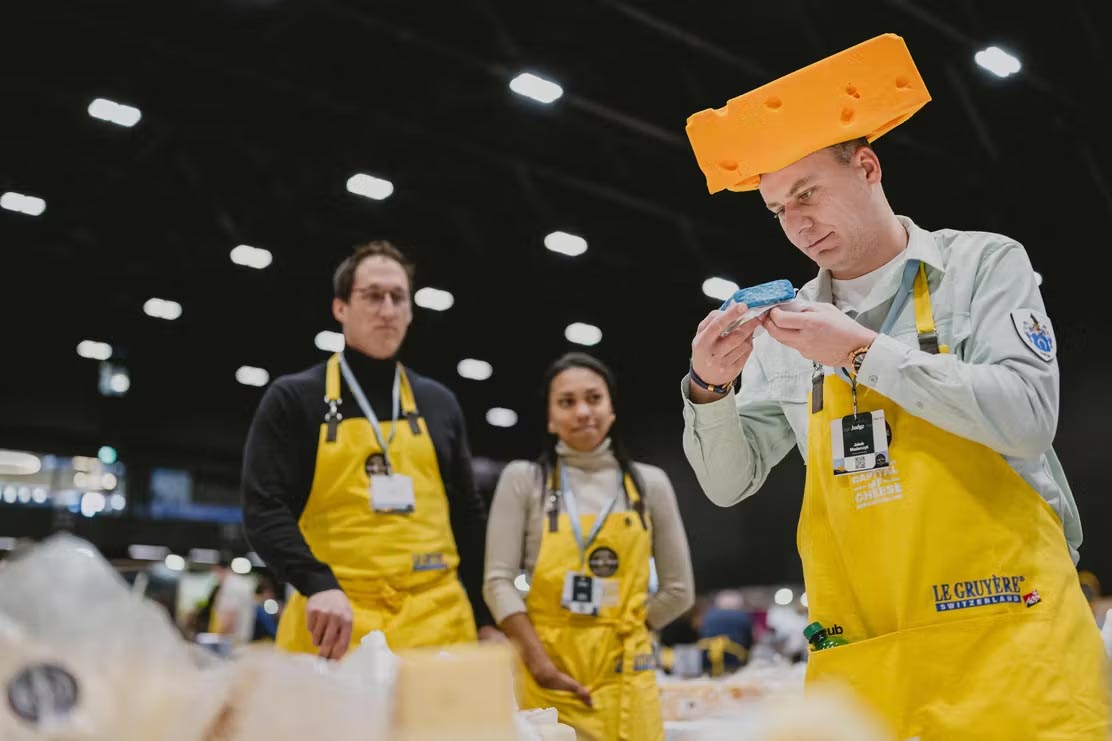
Caption from Le Monde: “Kuba Maziarczyk, super jury member and Polish cheesemaker, smells a piece of cheese during the 37th edition of the World Cheese Awards, organised by the Guild of Fine Food, in Bern, on November 13, 2025.” GABRIEL MONNET / AFP
One wonders if they are Packers fans…
TILT!
Here’s something rather unnerving, via Popular Mechanics: in less than two decades, the Earth has tilted on its axis 31.5 inches. Now, that may not sound like much when you’re talking about something the size of, you know, a planet. But it works out to 0.24 inches of sea level rise. So what has caused this? According to a recent study published in the journal Geophysical Research Letters, it’s from pumping groundwater.
With the Earth moving on a rotational pole, the distribution of water on the planet impacts distribution of mass. “Like adding a tiny bit of weight to a spinning top,” authors say, “the Earth spins a little differently as water is moved around.”
This confirms something that NASA had warned about a decade earlier, and now adds some hard numbers to the speculation.
The study included data from 1993 through 2010, and showed that the pumping of as much as 2,150 gigatons of groundwater has caused a change in the Earth’s tilt of roughly 31.5 inches. The pumping is largely for irrigation and human use, with the groundwater eventually relocating to the oceans.
How water is redistributed can help conservationists help understand—and potentially mitigate—sea level rise and other climate concerns.
All Pendulum, No Pit
Speaking of the rotation of the Earth, one of the most important experiments that proved that the Earth constantly rotated was conducted at the Paris Panthéon in 1851 by physicist Léon Foucault using what has come to be known as “Foucault’s pendulum.” Says Atlas Obscura:
By constructing a fixed 67-meter swinging lead bob beneath the central dome, Foucault was able to prove that the earth was in fact in rotation at all times, as the plane of the pendulum never changed, yet it seemed to move with earth's rotation.
Foucault’s original pendulum is now located at the Musée des Arts et Métiers, but a working copy is on display at the Panthéon, where it has been swinging since 1995.
Recast as a “church of reason” during the French Revolution, the Paris Panthéon is a mausoleum in which the remains of such notable French figures as Victor Hugo, Jean-Jacques Rousseau, and Voltaire are interred. Interestingly, it was also the site of a unique anti-vandalism incident.
In 2007, four members of the rogue art group Untergunther snuck into the Panthéon and restored the famous clock inside the building. Without being caught, the group decided to reveal itself and took credit for the work in front of the building administrator. Shortly after, the police were alerted, resulting in the arrest of the four members and a ridiculous trial in which the members of Untergunther were declared innocent.
We must always be on our guard against rogue clock restorers. While we still have time…
Graphene Rallies in Australia
Was it a good week for graphene news? It’s always a good week for graphene news! A graphene lubricant achieves 13.8% fuel saving in an Australian charity rally. From (who else?) Graphene-Info:
Before the start of the Charity Rally, the Rally Car Team drove 2,650km, 2,180km on sealed and 470km on unsealed roads, from Gold Coast to Alice Springs over a three day period. The Rally Car Team made the trip in a Ford Falcon Petrol/Gasoline engine rally car that had not yet been treated with G-LUBRICANT. On the trip to Alice Springs, the Ford Falcon averaged 10.8ltrs / 100km of fuel.
But:
The Charity Rally itself began in Alice Springs and ran a total of 3,850 kilometers, approximately 2,000km on sealed and 1,850 on unsealed roads (some of which had river crossings and were badly rutted), to Australia's Gold Coast. After adding G-LUBRICANT, the Ford Falcon Rally Car averaged 9.3ltrs / 100km on the trip, a reduction of 1.5ltrs / 100km, approximately 13.8%, in fuel efficiency savings.
…The Charity Rally is not a race, but rather a challenge to drive cars worth just $1,500 across Australia via some of its most challenging roads, all in the name of charity. The Charity Rally is a dedicated fundraising event for cancer research with funds going to Cancer Council.
Express Check-In
There was a time when train stations were virtual palaces. If you look at New York City’s original Penn Station—an architectural masterpiece that made you feel like you were arriving in some enchanted kingdom—vs. today’s atrocity, which was designed with nothing but contempt for humanity, you realize what was lost (although Amtrak’s newish Moynihan Train Hall is a vast improvement). But, much like newspaper pressrooms are being reinvented as sports bars, so, too—via the BBC—are train stations being reimagined as luxury hotels.
“I think it is super exciting when an entity can take a historic building [and repurpose it] in an interesting way, because the shame is demolishing the building,” said Toland Grinnell, president and chief operating officer at EverGreene Architectural Arts, which pecializes in building restoration and conservation. “Let’s keep as much of the historic fabric as we can and find really interesting ways to insert modernity into it… so that people can enjoy both worlds.”
For example, if you ever find yourself in St. Louis, you can stay at the St. Louis Union Station Hotel.
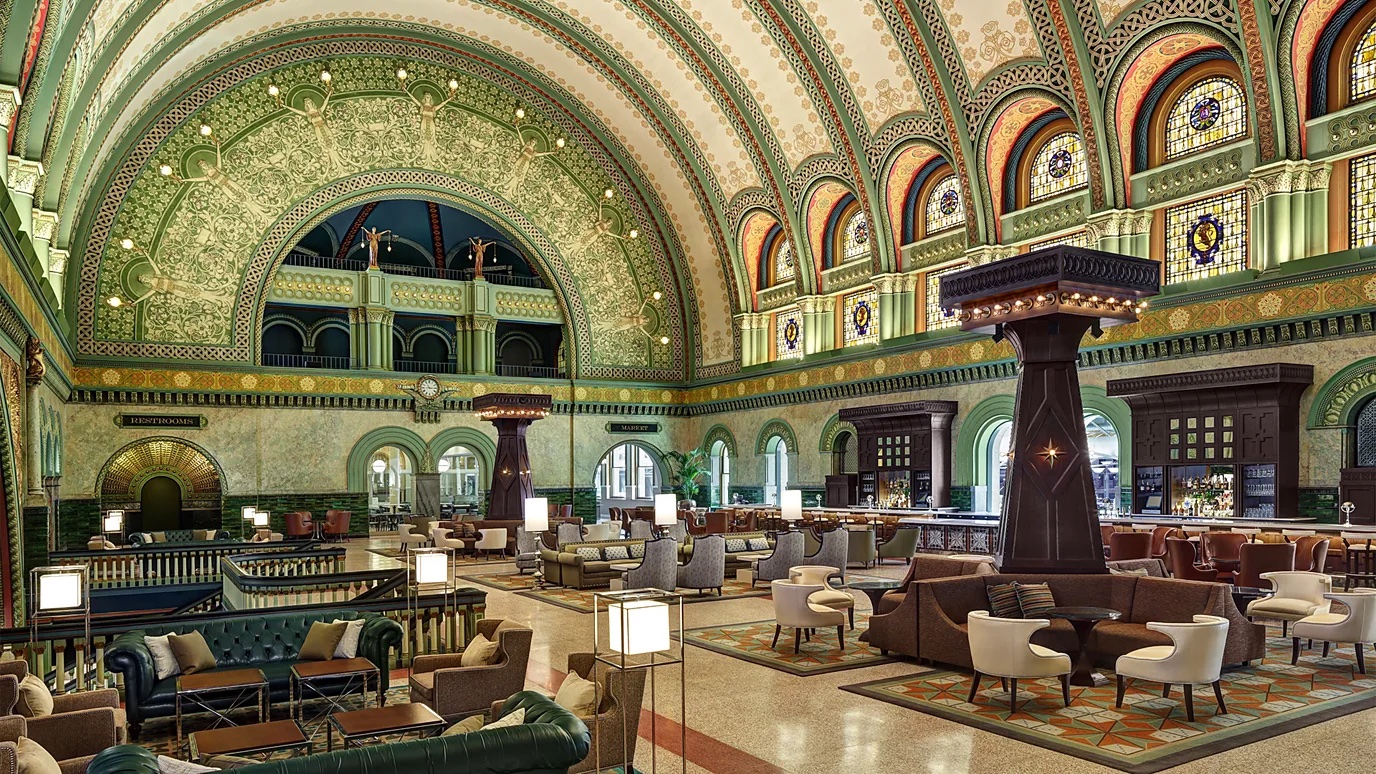
Credit: Tom Paule Photography
Located in the heart of the city, the St Louis Union Station Hotel is a striking example of historic architecture, with Romanesque archways and gold-leaf details throughout. The station opened in 1894 and became one of the largest and busiest passenger terminals in the world. After launching its last train in 1978, the property reopened seven years later as a 539-room hotel. Its $150m (£114m) renovation restored much of the original stonework and the Station Grille restaurant that catered to rail passengers during the station's heyday.
Gravy Train
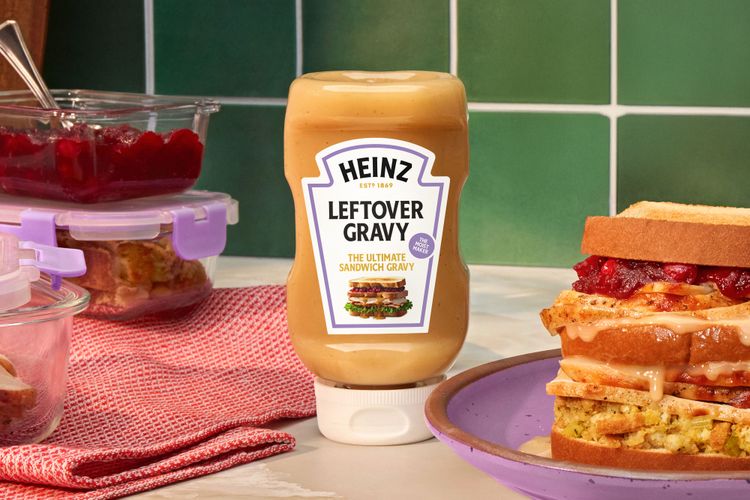
OK, there should be Nobel Prizes awarded for things like this:
Says (who else?) Food & Wine:
Heinz Leftover Gravy bottles are available exclusively via Walmart.com starting today. Each 12-ounce squeezable bottle is filled with the brand’s signature Heinz Homestyle Turkey Gravy, now in a mess-free format. While Heinz offers several different types of gravy in jars, the new, squeezable format will only come with turkey gravy inside.
Supposedly it was inspired by something from an episode of Friends, with which we are unfamiliar. Still, it might be worth a trip to Walmart…
This Week in Printing, Publishing, and Media History
November 17
1749: French chef Nicolas Appert born. He invented the principle of canning.
1790: German mathematician and astronomer August Ferdinand Möbius born. (It’s not true that his life had no beginning and no end.)
1839: Oberto, Giuseppe Verdi's first opera, opens at the Teatro alla Scala in Milan, Italy.
1944: College basketball coach Jim Boeheim born.
1947: American scientists John Bardeen and Walter Houser Brattain observe the basic principles of the transistor, a key element for the electronics revolution of the 20th century.
1968: Viewers of the Raiders–Jets football game in the eastern United States are denied the opportunity to watch its exciting finish when NBC broadcasts Heidi instead, prompting changes to sports broadcasting in the U.S.
2019: The first known case of COVID-19 is traced to a 55-year-old man who had visited a market in Wuhan, Hubei Province, China. And so it begins…
November 18
1787: French physicist and photographer, and inventor of the daguerreotype, Louis Daguerre, born.
1836: English playwright and poet W. S. Gilbert born.
1865: Mark Twain’s short story “The Celebrated Jumping Frog of Calaveras County” is published in the New York Saturday Press.
1883: American and Canadian railroads institute five standard continental time zones, ending the confusion of thousands of local times. Well, it was about time.
1922: French author and critic Marcel Proust dies (b. 1871).
1928: Release of the animated short Steamboat Willie, the first fully synchronized sound cartoon, directed by Walt Disney and Ub Iwerks, featuring the third appearances of cartoon characters Mickey Mouse and Minnie Mouse. This is considered by the Disney corporation to be Mickey’s birthday.
1963: The first push-button telephone goes into service.
November 19
1909: Austrian-American theorist, educator, and author Peter Drucker born.
1916: Samuel Goldwyn and Edgar Selwyn establish Goldwyn Pictures.
1954: Télé Monte Carlo, Europe’s oldest private television channel, is launched by Prince Rainier III.
1955: National Review publishes its first issue.
1959: The Ford Motor Company announces the discontinuation of the unpopular Edsel.
1967; The establishment of TVB, the first wireless commercial television station in Hong Kong.
1998: Vincent van Gogh’s Portrait of the Artist Without Beard sells at auction for US$71.5 million.
2006: Nintendo's first video game console with motion control, the Wii, is released.
November 20
1805: Beethoven's only opera, Fidelio, premieres in Vienna.
1908: British-American journalist and author Alistair Cooke born.
1910: Russian author and playwright Leo Tolstoy dies (b. 1828).
1924: Polish-American mathematician and economist, and coiner of the term “fractal,” Benoit Mandelbrot born.
1936: American novelist, essayist, and playwright Don DeLillo born.
1969: The Plain Dealer publishes explicit photographs of dead villagers from the My Lai Massacre in Vietnam.
1985: Microsoft Windows 1.0 is released.
November 21
1676: The Danish astronomer Ole Rømer presents the first quantitative measurements of the speed of light.
1694: French historian, playwright, and philosopher Voltaire (né François-Marie Arouet) born.
1783: In Paris, Jean-François Pilâtre de Rozier and François Laurent d’Arlandes, make the first untethered hot air balloon flight.
1877: Thomas Edison announces his invention of the phonograph, a machine that can record and play sound.
1898: Belgian painter René Magritte born.
1902: Polish-American novelist and short story writer, Nobel Prize laureate Isaac Bashevis Singer born.
1905: Albert Einstein’s paper that leads to the mass–energy equivalence formula, E = mc², is published in the journal Annalen der Physik.
1945: American humorist, newspaper columnist, and actor Robert Benchley dies (b. 1889).
1969: The first permanent ARPANET link is established between UCLA and SRI.
November 22
1819: English novelist and poet George Eliot (née Mary Ann Evans) born.
1869: French novelist, essayist, and dramatist, Nobel Prize laureate André Gide born.
1928: The premier performance of Ravel’s Boléro takes place in Paris.
1935: The China Clipper inaugurates the first commercial transpacific air service, connecting Alameda, California with Manila.
1963: English novelist and philosopher Aldous Huxley dies (b. 1894).
1977: British Airways inaugurates a regular London to New York City supersonic Concorde service.
1995: Toy Story is released as the first feature-length film created completely using computer-generated imagery.
November 23
534 BC: Thespis of Icaria becomes the first recorded actor to portray a character onstage.
1644: John Milton publishes Areopagitica, a pamphlet decrying censorship.
1888: American comedian and musician Harpo Marx (né Adolph Marx) born.
1889: The first jukebox goes into operation at the Palais Royale Saloon in San Francisco.
1924: Edwin Hubble's discovery, that the Andromeda “nebula” is actually another island galaxy far outside of our own Milky Way, is first published in The New York Times.
1936: Life magazine is reborn as a photo magazine and enjoys instant success.
1963: The BBC broadcasts the first episode of An Unearthly Child (starring William Hartnell), the first story from the first series of Doctor Who, which is now the world’s longest running science fiction drama.