Kind of Blue
You may have seen a festive new pumpkin style this Halloween: teal pumpkins (although we prefer to refer to them as cyan). However, teal pumpkins are not merely decorative. Via Food & Wine, the Teal Pumpkin Project, founded in 2013, is a global initiative that aims to raise awareness about food allergies. Indeed, a teal pumpkin placed outside one’s home indicates that non-food treats are available for trick-or-treaters who may have food allergies.

trick-or-treating can pose serious risks for children with food allergies if they encounter unsafe candy or snacks. That’s why [Atlanta mom Becky Basalone] decided to take action. After her youngest son was diagnosed with multiple food allergies, she placed a teal pumpkin on her porch to let others know she was offering allergy-safe, non-food treats. The small, inclusive gesture sparked a global movement.
To help parents plan safe trick-or-treating routes, a Teal Pumpkin Project map is available, and participants can add their address to the map.
What are some non-food treats?
FARE recommends non-food items like glow wands, crayons, Halloween erasers, stickers, stencils, bookmarks, playing cards, vampire fangs, spider rings, whistles, kazoos, novelty toys, and bouncy balls as suitable alternatives for typical Halloween treats.
And given what Halloween candy is going for this year, these may be cheaper options.
Common children’s items like Play-Doh and finger paint aren’t recommended for the Teal Pumpkin Project because they may contain food allergens like wheat.
Good to know.
Scared Straight
If you’re looking to take in some scary movies this weekend, it may actually be therapeutic. Via the BBC, the “paradox of horror” indicates that frightening movies can actually help soothe anxiety.
Some evidence indicates that horror stories tap into key processes of the brain that help us deal with uncertainty. The latest results suggest these fictional tales of terror may even bring some serious psychological benefits – including reducing the anxiety we feel about events out in the real world. They are a salve for our worries.
Arizona State University psychologist Coltan Scrivner has pioneered much of this research, which is detailed in his new book Morbidly Curious: A Scientist Explains Why We Can't Look Away.
One explanation is that horror stories serve as a kind of play that allows us to understand the world around us and prepare us for threats we might face. "It is adaptive for any animal, including humans, to understand and learn about the dangers around them," he says.
Costume Drama
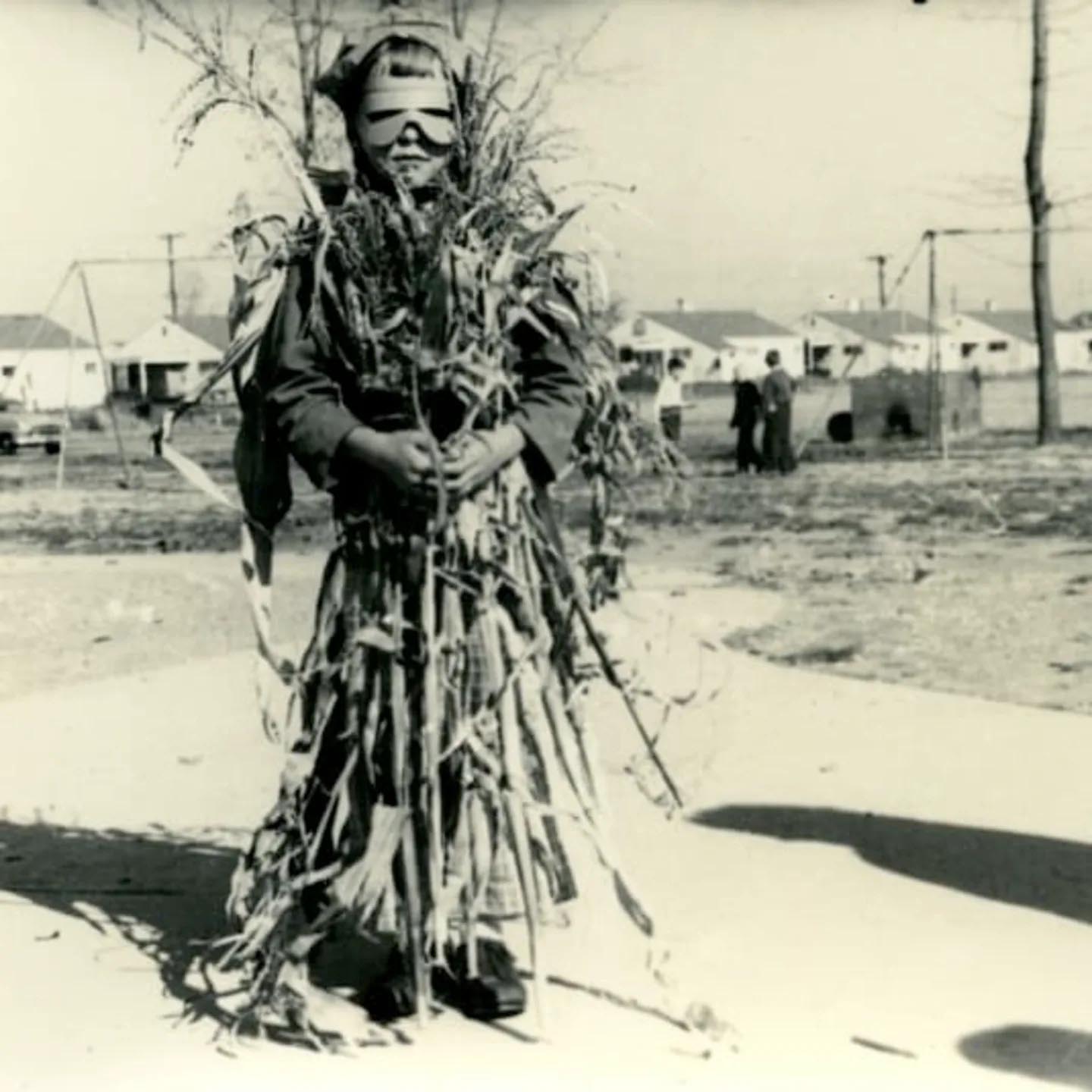
Trick-or-treating, as we know it today, started in the US in the early 20th century but truly took off in the 1950s after post-WWII sugar rationing ended. Today, kids (or, probably, their parents) can buy mass-produced costumes or, if they’re feeling creative and ambitious, can make their own.
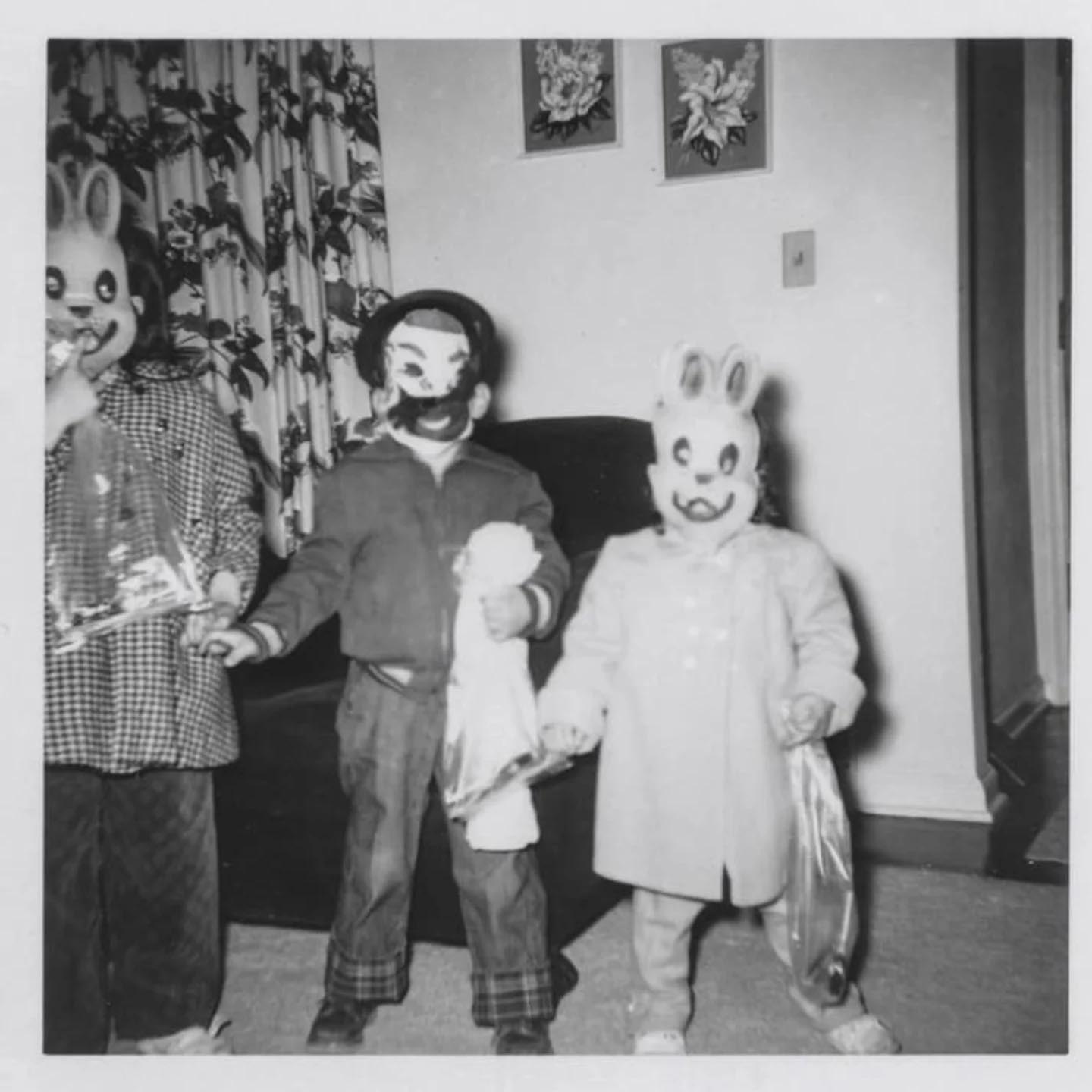
Mental Floss has a disturbing photo gallery of vintage Halloween costumes from the 1950s, which will haunt your dreams. Here are a couple.
Not sure what this is about, but it’s pretty damn weird:
And Easter…Halloween…it’s a fine line.
AI-Yi-Yi, Part the Infinity: Sign of the Times
Via Futurism, San Franciscans were recently treated to a little bit of dystopia via a billboard:
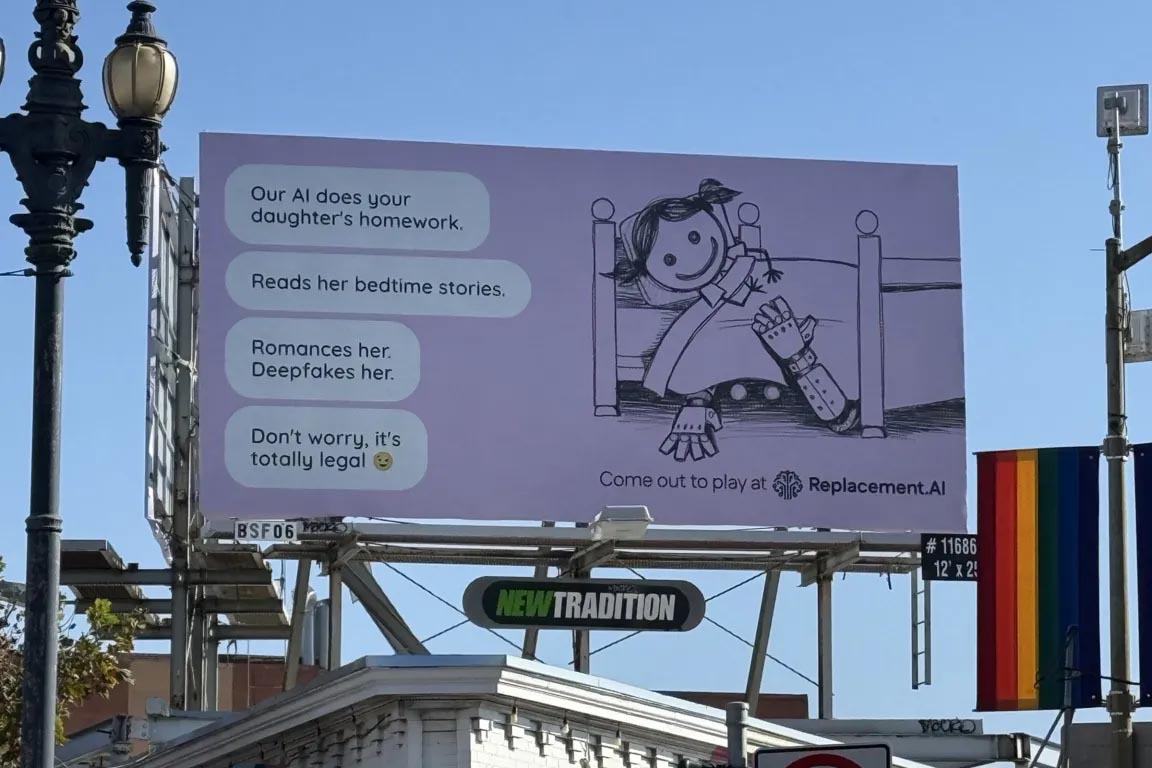
Lest we get too disturbed, it’s worth pointing out that it’s satire.
The ad was highlighted in a now-viral tweet by makeup artist and influencer Matt Bernstein, before being reshared across the internet in places like Reddit, where the joke was lost on many users.
Which is not surprising if you live near Silicon Valley.
The shtick is only slightly more outrageous than billboards for actual AI startups that have been plaguing Silicon Valley, like the “Stop Hiring Humans” campaign, which was obviously designed to stir up controversy, as are many others. Angering Luddites or generally just ticking you off is the name of the game.
Or we can just ignore it and hope it all goes away.
Shelley Game
There is apparently a new remake of Frankenstein headed to Netflix next month, and a favorite author around the AtW Bunker—Christopher Moore—has a new book out called Anima Rising, a comic horror novel that teams up Gustave Klimt, Sigmund Freud, and the Bride of Frankenstein (it’s not his best but it’s pretty funny). So more than 200 years after it was first written, Mary Shelley’s creation is hotter than ever. Why? What makes Frankenstein endure? The BBC has a go at explaining the phenomenon.
Frankenstein is simultaneously the first science-fiction novel, a Gothic horror, a tragic romance and a parable all sewn into one towering body. Its central tragedies – the dangers of "playing God" on one hand; parental abandonment and societal rejection on the other – are as relevant today as they ever were.
It is also one of the most remade stories, not just straightforward adaptations but also derivative works like The Rocky Horror Picture Show, Ed Wood’s MST3K favorite Bride of the Monster, or virtually any “mad scientist” movie. And of course we cannot forget the most obvious adaptation: Mel Brooks’ Young Frankenstein, easily one of the funniest movies ever made.
But why was Mary's vision of "science gone wrong" so resonant at the time? She certainly captured the zeitgeist: the early 19th Century teetered on the brink of the modern age, and although the term "science" existed, the concept of a "scientist" didn't. Great change brings fear, as Fiona Sampson, author of In Search of Mary Shelley, tells the BBC: "With modernity comes a sense of anxiety about what humans can do and particularly an anxiety about science and technology." Frankenstein fused these contemporary concerns about the possibilities of science with fiction for the very first time – with electrifying results. Far from a completely outrageous fantasy, the novel imagined what might conceivably happen if people – and in particular overreaching or out-of-control scientists – went too far.
Indeed.
King Things
We’re not big on linking to quizzes round these parts, but if you are a Stephen King fan, why not give this Mental Floss King quiz a try.
And, like Frankenstein, there have been zillions of screen adaptations of King novels or King-adjacent projects—with two more on their way: Welcome to Derry, a prequel series based on King’s 1985 novel It (which has Itself been adapted at least twice) and The Long Walk, based on the 1979 novel written by King under his Richard Bachman pseudonym.
Fans of King may also want to check out the Just King Things podcast, in which two literature Ph.D s take a monthly deep dive into all the works of King in publication order. It’s enlightening and very often laugh-out-loud funny.
Ghost Story
Women are tragically underrepresented in many areas of human endeavor but not, apparently, when it comes to ghosts. So Atlas Obscura asks, “Why are there so many female ghosts?”
First of all, though, do we grant the premise? The Census Bureau (or anyone, as far as we know) does not collect data on the undead, but anecdotal evidence suggests a distinct bias toward the female.
“It does really seem that the numbers are skewed more towards female ghosts,” says Leanna Renee Hieber, a writer and co-author of A Haunted History of Invisible Women: True Stories of America’s Ghosts.
“True Stories…” OK. Anyway, what are some reasons?
Potential explanations range from the supernatural to the mundane. Do women’s souls have more sticking power? Are women more motivated to return after their mortal coil has been shuffled? Are female ghosts more memorable to us? Or perhaps we’re more likely to think of a woman in a white dress when we see an errant patch of fog (or ectoplasm).
Edgar Allan Poe once wrote that “dead women are simply more emotionally resonant than dead men.” Are they?
“The death, then, of a beautiful woman is, unquestionably, the most poetical topic in the world,” Poe wrote in his essay “The Philosophy of Composition.”
…One big factor could be the gravitational pull of the Victorian era, when ghost stories abounded, on present-day culture. It was a time when gender roles were becoming tightly confined, Hieber says, in response to a changing, industrializing society.
That meant women were more tightly tied to the domestic sphere, and their houses, even after death. In a time before funeral parlors, it was often women who washed and prepared the dead, further strengthening their connection with death. Add to that a predilection toward romanticizing death, as Poe did, and you’ve got a formula for memorable dead women—and their ghosts.
So keep track of your ghostly visitations. It would be great to back all this up with data.
That Sucks
Here’s a true horror story via Futurism: a man discovered that his smart vacuum cleaner was broadcasting a detailed map of his home. Computer programmer Harishankar Narayanan had been using a $300 iLife A11 smart vacuum for about a year when he decided to monitor the device’s network traffic.
“My robot vacuum was constantly communicating with its manufacturer, transmitting logs and telemetry that I had never consented to share,” Narayanan wrote. “That’s when I made my first mistake: I decided to stop it.”
That ended up bricking the device.
After reverse engineering the vacuum, a painstaking process which included reprinting the devices’ circuit boards and testing its sensors, he found something horrifying: Android Debug Bridge, a program for installing and debugging apps on devices, was “wide open” to the world.
The result being:
The device was running Google Cartographer, an open-source program designed to create a 3D map of his home, data which the gadget was transmitting back to its parent company.
We should try to be careful with so-called “smart” devices.
Narayanan warns that “dozens of smart vacuums” are likely operating similar systems. “Our homes are filled with cameras, microphones, and mobile sensors connected to companies we barely know, all capable of being weaponized with a single line of code,” he wrote.
Or, better yet, avoid them entirely.
Graphene Is Not On One’s Radar
Was it a good week for graphene news? It’s always a good week for graphene news! A graphene coating for aircraft stealth applications. From (who else?) Graphene-Info:
Researchers from Beijing University of Technology, Harbin University and Peking University have developed a graphene-based metasurface designed for electromagnetic wave (EMW) absorption in high-speed aerospace applications.
EMW absorption is what makes these aircraft undetectable by radar.
The method provides a scalable route for fabricating EMW-absorbing materials that combine tunable impedance, thermal resilience, and manufacturability. In addition to aerospace stealth coatings, potential applications include electromagnetic shielding for satellite payloads and high-temperature electronics. The same laser patterning strategy could be extended to millimeter-wave and terahertz frequencies, relevant to future space-based sensing and communication systems.
New Moon on Monday
Here’s a term with which we were unfamiliar: Beaver supermoon. There is such a thing, and it will take place next week, November 3–5. Says Discover magazine:
This particular supermoon’s brilliance will shine between November 3 to 5, 2025, with the best time to see it being the early morning of November 5, 2025. Although 2025 has a total of eight supermoons, the Beaver supermoon is special since it is the closest full moon to Earth this year. It also occurs in the middle of a supermoon parade – four consecutive months where a supermoon will appear.
Why “Beaver,” dam it? It’s also called the Hunter’s Moon, names usually derived from Indigenous cultures or European folklore.
This time of the year signals two important beaver-related activities: the time when beavers start to hunker down in their well-stocked shelters for the winter months and, since they have bulked up for the incoming inclement weather, the time when beavers are often hunted for their pelts.
There are many other names for the November moon, all based on the fact that November is the time when animals and humans prepare for winter.
Other names include the Digging Moon, a Tlingit name referencing foraging, and the Whitefish Moon, from the Algonquin, which coincides with this fish species’ spawning season.
At about 221,817 miles from Earth, the Beaver will be the closest supermoon to the Earth in 2025.
What makes supermoons special is not their size. A supermoon is technically bigger than the average full moon, but only by about 7 percent, which is not enough of a size change to be noticeable by the untrained eye.
The Beaver supermoon is also expected to shine a brilliant orange—perfect for autumn.
Death By Food
Looking for the next thrill? Or perhaps you’re looking to emulate your favorite Agatha Christie novel. Via Laughing Squid, Tom Blank of Weird History Food details the world’s most deadly foods—meals that are only safe if prepared properly.
These poisonous yet highly desired treats range from specialized dishes such as blowfish, stonefish, cassava, akee, and shark fin, to common foods which include beef, chicken, and other poultry.
Watch unembeddable video here.
You’ll need more than a teal pumpkin to warn you about some of these things.
Creepy Cooking
So what are the TikTokers up to this Halloween season? Via (who else?) Food & Wine, apparently “creepy cooking” is a thing.
Some of the most creative examples I’ve seen include a bubbling pot of soup with meatball mice (complete with pomegranate arils for eyes) and floating mushroom skulls, or a platter full of miniature cherry pies that appear to have sinister faces in the top layer of crust, bleeding from their mouths and eyes.
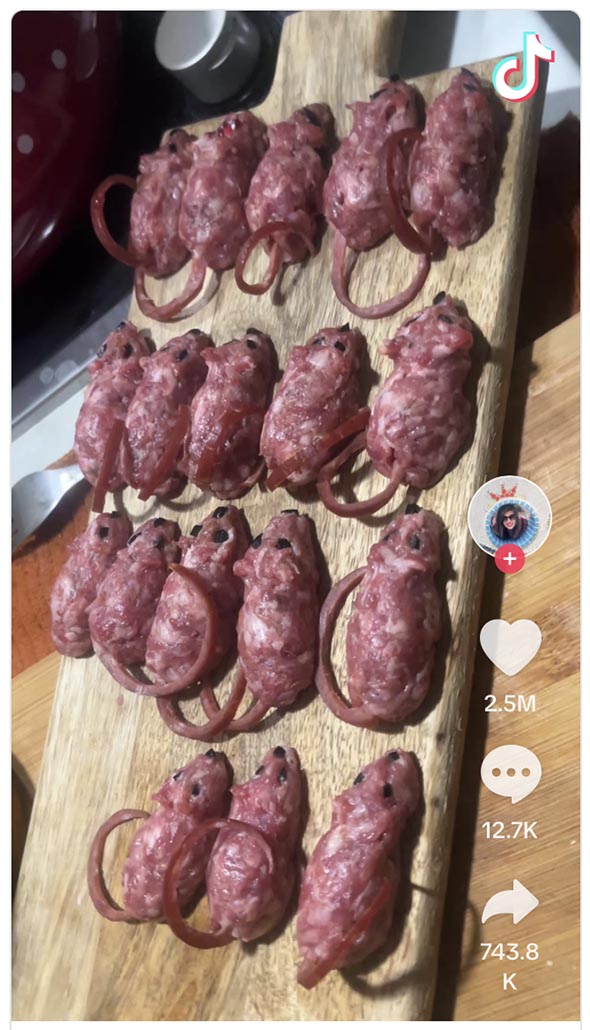
However, it’s the other form of creepy cooking you’ll come across on TikTok that’s more likely to linger in your mind and prompt the need for a nightlight. With special effects makeup, fast-paced video editing, and chaotic body movements, some users have produced videos that show them cooking but also look like scenes straight out of a horror movie.
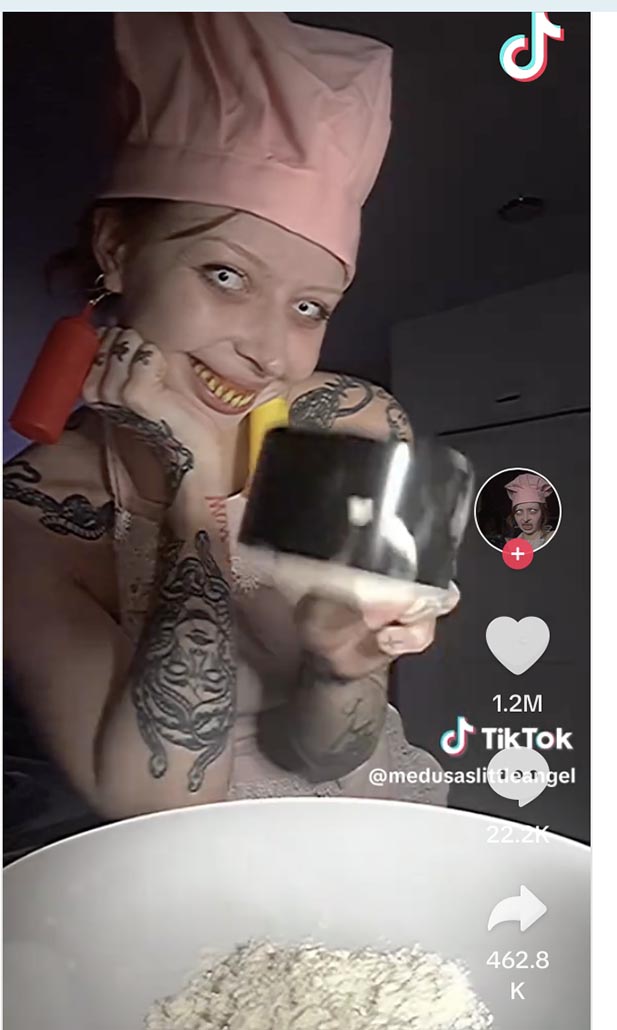
Kind of clever, actually.
This Week in Printing, Publishing, and Media History
October 27
1858: Theodore Roosevelt born.
1904: The first underground New York City Subway line opens, later designated as the IRT Broadway–Seventh Avenue Line.
1914: Welsh poet and author Dylan Thomas born.
1923: American painter and sculptor Roy Lichtenstein born.
1932: American poet, novelist, and short story writer Sylvia Plath born.
1939: English actor, comedian, screenwriter, and producer John Cleese born.
1977: American journalist and author James M. Cain dies (b. 1892).
2004: The Boston Red Sox defeat the St. Louis Cardinals to win their first World Series in 86 years.
October 28
1726: The novel Gulliver’s Travels by Jonathan Swift is published.
1886: In New York Harbor, President Grover Cleveland dedicates the Statue of Liberty. The first ticker tape parade takes place in New York City when office workers spontaneously throw ticker tape into the streets as the statue is dedicated.
1899: German-American engineer, invented the Linotype machine Ottmar Mergenthaler dies (b. 1854).
October 29
1675: Leibniz makes the first use of the long s (∫) as a symbol of the integral in calculus.
1787: Mozart’s opera Don Giovanni receives its first performance in Prague.
1911: Hungarian-American publisher, lawyer, and politician, founded Pulitzer, Inc. Joseph Pulitzer dies (b. 1847).
1969: The first-ever computer-to-computer link is established on ARPANET, the precursor to the Internet.
October 30
1466: German printer Johann Fust dies (b. c. 1400).
1885: American poet Ezra Pound born.
1938: Legitimately fake news—Orson Welles broadcasts his radio play of H. G. Wells’ The War of the Worlds, causing anxiety in some of the audience in the United States.
October 31
1795: English poet John Keats born.
1941: After 14 years of work, Mount Rushmore is completed.
1963: English singer-songwriter and guitarist Johnny Marr born.
1993: Italian director and screenwriter Federico Fellini dies (b. 1920).
2000: American journalist and screenwriter Ring Lardner, Jr. dies (b. 1915).
November 1
1512: The ceiling of the Sistine Chapel, painted by Michelangelo, is exhibited to the public for the first time.
1604: William Shakespeare’s tragedy Othello is performed for the first time, at Whitehall Palace in London. A few years later...
1611: Shakespeare’s play The Tempest is performed for the first time, again at Whitehall Palace in London.
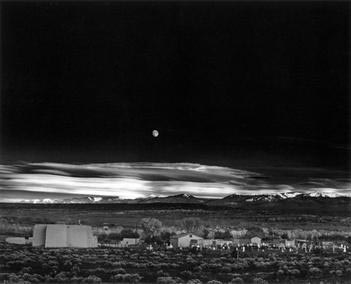
1941: American photographer Ansel Adams takes a picture of a moonrise over the town of Hernandez, New Mexico that would become one of the most famous images in the history of photography.
1968: The Motion Picture Association of America's film rating system is officially introduced, originating with the ratings G, M, R, and X.
1972: American poet and critic Ezra Pound dies (b. 1885).
November 2
1920: KDKA of Pittsburgh starts broadcasting as the first commercial radio station.
1936: The British Broadcasting Corporation initiates the BBC Television Service, the world’s first regular, “high-definition” (then defined as at least 200 lines) service. It was renamed BBC1 in 1964.
1950: Irish author, playwright, critic, and Nobel Prize laureate George Bernard Shaw dies (b. 1856).
1960: Penguin Books is found not guilty of obscenity in the trial R v Penguin Books Ltd, the Lady Chatterley’s Lover case.
1961: American humorist and cartoonist James Thurber dies (b. 1894).
1988: The Morris worm, the first Internet-distributed computer worm to gain significant mainstream media attention, is launched from MIT.