Poster Child
Drew Struzan may not be a household name, but like a lot of artists who worked in his genre, his art is instantly identifiable. Struzan designed some of the most iconic movie posters in cinema history. Says NPR:
Struzan frequently collaborated with filmmakers Steven Spielberg and George Lucas, designing the posters not only for big, blockbuster hits such as The Empire Strikes Back and E.T. The Extra-Terrestrial but also cult classics like Blade Runner and The Thing.
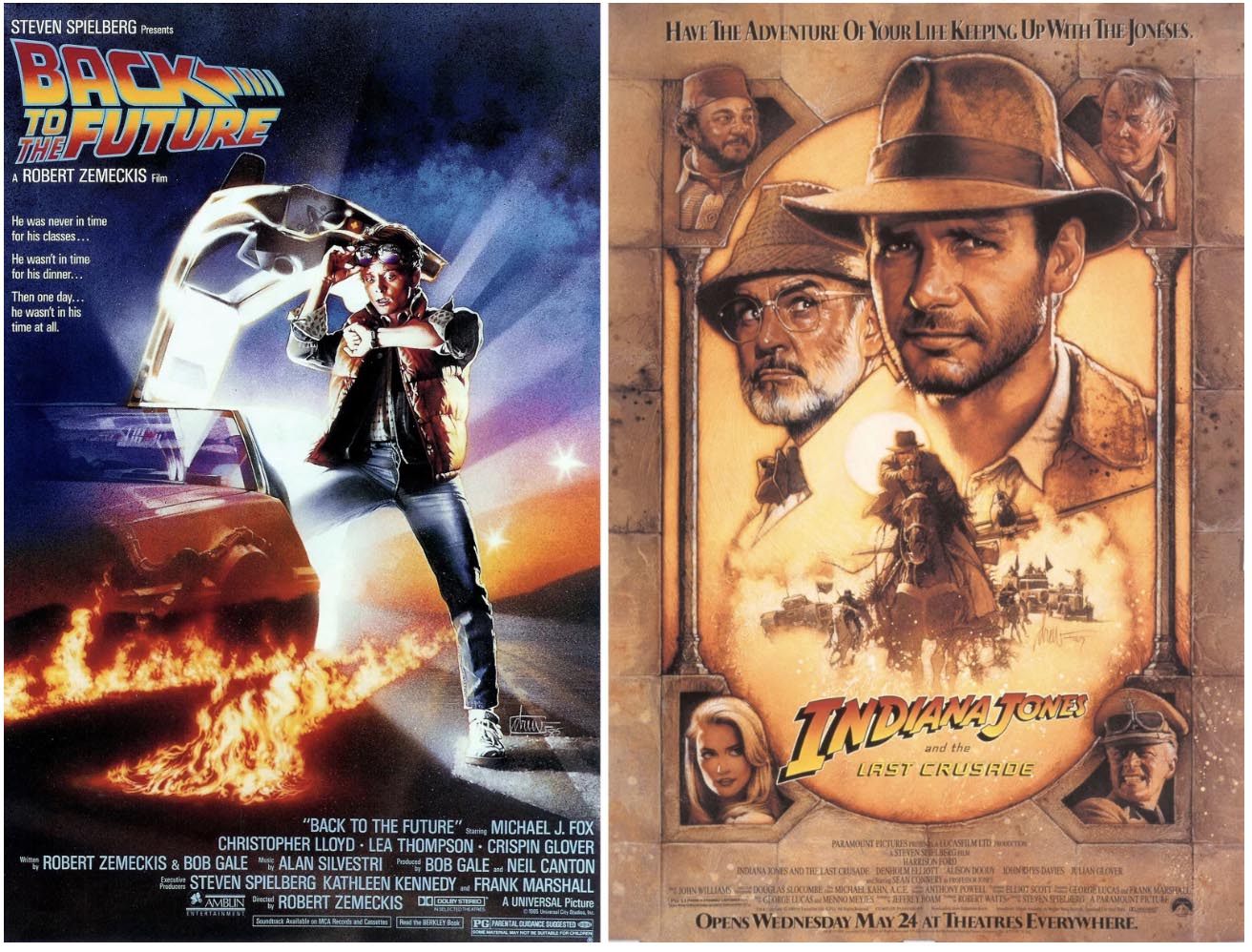
Struzan passed away this week at age 78 after a long battle with Alzheimer’s disease.
"Telling the story in a poster is wrong for a movie," Struzan said in an interview with the online movie news site Slashfilm in 2021. "I wasn't looking to tell a story. I'm looking to give a person a feeling about something they could hope for… I design a composition that is open-ended. Not closed-ended saying, 'This is what you have to think about this.' Open-ended means the viewer explores the subject from their point of view. I love when that happens."
When asked what his favorite poster was, he always responded “the very next one.”
Laced Up
Via Print magazine, mixed-media artist NeSpoon creates large-scale outdoor murals, but she uses an unusual medium: lace.
I didn’t choose lace— lace chose me. At first, it reminded me of the past—dusty apartments, outdated, pretentious clothing. In my country, Poland, lace is part of folk art, which also wasn’t something I was particularly drawn to. I’ve always liked modern design and minimalism. For many years, I painted minimalist abstract works on canvas, until one day I felt I had reached a dead end and needed a reset.

Once I find the right pattern, I design the mural around it, choosing colors that harmonize with the surrounding environment. Depending on the technical conditions, I sketch the design freehand or use a video projector. I see the projector as a practical tool— it can save a day or two of work. I don’t fetishize painting freehand.
Lace. Go figure.
Windows on the World
Let’s see if we can spot the over-40s out there. See if this idyllic scene looks familiar:
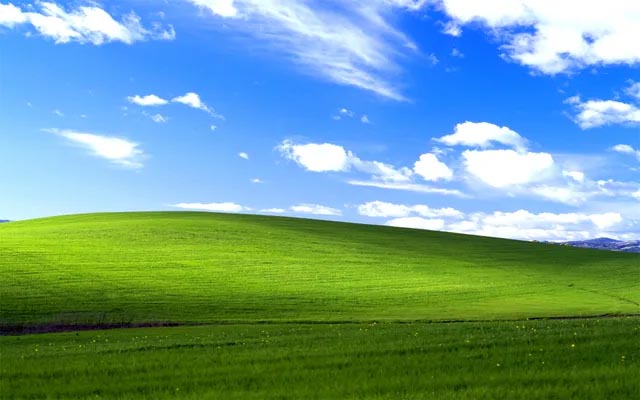
If you used Windows XP in the early 2000s, you may recognize it as the default wallpaper. Via Atlas Obscura, it’s a real place (not a fake place generated by AI—see below), and it’s even become something of a tourist destination, as XP fans (both of them) photograph the site as it changes with the seasons.
As for how the image came about:
In January 1998, National Geographic photographer Charles O'Rear was driving down Highway 121 through Sonoma to see his girlfriend in San Francisco just as he’d done plenty of times before. But this time the view caught his eye. The grass was especially green after a winter shower, which had passed to reveal a blue sky dotted by fluffy white clouds. He stopped his car and shot the scene with his medium-format camera.
This was back when professional photographers still used film—in this case, Fujifilm’s Velvia. O’Rear uploaded the image (unretouched) to Corbis, and two years later Microsoft called and asked to license the image for its new version of Windows. Called “Bliss,” it would come to grace the screens of over a billion computers.
Tourist Trap
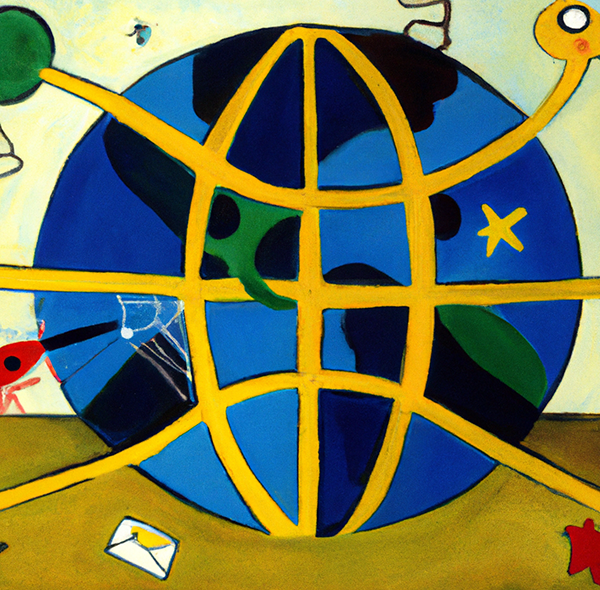
Here’s another awesome contribution of AI to the improvement of the human experience: when AI is used to plan trips, it makes things up. Says the BBC:
An imagined town in Peru, an Eiffel tower in Beijing: travellers are increasingly using tools like ChatGPT for itinerary ideas – and being sent to destinations that don't exist.
Although, to be fair, we seem to recall that pre-AI, the Apple Maps app had a similar problem. We continue:
While these programs can offer valuable travel tips when they're working properly, they can also lead people into some frustrating or even dangerous situations when they're not. This is a lesson some travellers are learning when they arrive at their would-be destination, only to find they've been fed incorrect information or steered to a place that only exists in the hard-wired imagination of a robot.
According to one 2024 survey, 37% of people who used AI to help plan travel reported that it could not provide enough information, and 33% said AI-generated recommendations included false information.
For example, two tourists in Peru planned to hike alone in the mountains to the “Sacred Canyon of Humantay”—which, as it turns out, does not exist. And the result could have been tragic.
“This sort of misinformation is perilous in Peru,” [Miguel Angel Gongora Meza, founder and director of Evolution Treks Peru] explained. “The elevation, the climatic changes and accessibility [of the] paths have to be planned. When you [use] a program [like ChatGPT], which combines pictures and names to create a fantasy, then you can find yourself at an altitude of 4,000m without oxygen and [phone] signal.”
Better stick with the Lonely Planet guides.
Animal Illusions
Here’s an interesting question that, for obvious reasons, never occurred to us before: do animals fall for optical illusions? And the answer, via Ars Technica, is a bit complicated. Take for example the “Ebbinghaus illusion,” in which a central circle looks smaller when surrounded by larger circles but larger when surrounded by smaller circles. Like so:

It's what psychologists call “context-dependent size perception.” But is it unique to humans? According to a paper published in the journal Frontiers in Psychology, “it might depend on the specific sensory environment, since the illusion relies on contextual clues to be effective.”
Prior research has produced mixed results on the question of animals and their susceptibility to optical illusions, per the authors. Dolphins, chicks, and redtail splitfins seem to be susceptible, for example, while pigeons, baboons, and gray bamboo snakes are not.
So the authors decided to test the Ebbinghaus illusion on two species that dwell in very different sensory environments: ring doves and guppies.
The doves are terrestrial, pecking at small seeds scattered on the ground for food, so the authors reasoned that precision and attention to detail—rather than global processing to first analyze an entire scene, as humans do—would be more advantageous for the doves. Plus the doves have binocular vision and thus should be good at accurately judging size and distance.
On the other hand:
Guppies, by contrast, live in the shallow waters of tropical streams. They must contend with dense vegetation, flickering light, and the unpredictability of predators. They must make rapid decisions in order to survive, and thus it would be advantageous for guppies to be able to judge relative size at a glance—a human-like global processing ability that is key to the Ebbinghaus illusion.
Click through for the details of the experiment, but, ultimately:
The authors found that the guppies were indeed highly susceptible to the Ebbinghaus illusion, choosing food surrounded by smaller circles much more frequently, suggesting they perceived it as larger and hence more desirable. The results for ring doves were more mixed, however: some of the doves seemed to be susceptible while others were not, suggesting that their perceptual strategies are more local, detail-oriented, and less influenced by their surrounding context.
Where Graphene Meets the Road
Was it a good week for graphene news? It’s always a good week for graphene news! Sustainable graphene-enhanced natural rubber for tires, thanks to a partnership between Perpetuus Advanced Materials and Asiatic Rubber. From (who else?) Graphene-Info:
The new venture includes a comprehensive upgrade of Asiatic’s existing manufacturing facility to produce graphene, natural rubber carbon black masterbatch. This material is currently under evaluation by several of India’s leading multinational tire producers.
… Perpetuus’s graphene masterbatch technology aims to enhance tire durability, wet grip, and energy efficiency. By eliminating the need for many traditional processing oils and toxic additives, it also helps manufacturers meet regulatory compliance. Offered as ready-to-mix sheets, the masterbatch allows tyre and rubber companies to seamlessly integrate graphene into existing production workflows, reducing energy consumption, minimizing airborne particulates, and improving workplace safety.
Retina Display
Here’s good news for those who suffer macular degeneration. Via LiveScience, a surgically implanted chip and augmented reality (AR) glasses are helping some people who have lost their sight to read again.
In a small trial, about 80% of people who had lost vision due to age-related macular degeneration (AMD) were able to read letters and words a year after receiving the treatment, according to a study published Monday (Oct. 20) in The New England Journal of Medicine.
…“Before receiving the implant, it was like having two black discs in my eyes, with the outside distorted,” Sheila Irvine, a participant in the study who was diagnosed with AMD, said in the statement.
AMD causes what is known as geographic atrophy—which affects about 5 million people worldwide. So any breakthrough in restoring sight to those afflicted would be highly welcome.
The way the set up—called the photovoltaic retina implant microarray or PRIMA system—works is that a microchip is implanted in the retina below the cells that had died. A video camera in the AR glasses captures images of text, and the glasses then project those images as infrared light onto the implanted chip. The IR light is then converted into electrical signals, which the brain interprets as vision.
The PRIMA system does have some limitations, Dr. Demetrios Vavvas, director of the retina service at Mass Eye and Ear, who was not involved in the study, told NBC News. In its current form, the device only restores vision in black and white, not color or grayscale, so it can't be used to recognize faces. In addition, it's not yet clear if the device will remain as effective after multiple years of use.
Still, the system can only get better.
Those Are Nice Shoes
If you’re a fan of TV detective Columbo (played by the late Peter Falk), you may be aware that there is actually a national Columbo Day, which is apparently the second Monday in October. With his rumpled raincoat, mysterious wife (who would eventually get lost in the Delta Quadrant), but brilliant mind, Lt. Columbo (and the show) popularized the sub-genre of mystery shows called the “howcatchem”: the audience is told who the killer is, usually in the opening minutes of an episode, and the rest of the show is all about how Columbo figures it out.
We are ardent fans of Columbo, but whenever we catch an old episode (of course, they’re all old episodes at this point), we do wonder: how well would any of it stand up in court? We’d love someone to come up with a sequel show called After Columbo or something, where a DA has to actually try to prosecute a criminal ostensibly caught by Columbo. Boing Boing had similar questions:
As a police procedural drama, though, something odd emerges from the formula: why would a detective do all this before conducting a formal investigation? If he Mirandizes a suspect now and again, it's only after he has explained in exhaustive detail the evidence against them, the likely theory of their prosecution, and in all likelihood demanded and received a full confession. Do you think District Attorneys want cops doing all that before suspects are even read their rights?
Some of the dodgy investigative tactics employed by Columbo over the years include:
He tells people the evidence against them and solicits confessions before they are official suspects or read their rights. He shows casual disregard for legal procedures and outright contempt for evidentiary preservation: no crime scene is left unspoiled.
…He organizes bizarre set-pieces that often involve him entering suspects' homes and places of business and altering and arranging items relevant to the investigation, all to unsettle his targets and show them what he knows about them. He is making clear to them that he represents the power of the law but is free to engage in unlawful conduct.
Still, it made for great TV!
In One’s Cups
(Optional musical accompaniment to this item.)
Those of an anal retentive disposition who also are into cooking have often had the experience of adding highly viscous ingredients such as honey, peanut butter, etc., using a measuring cup often results in Herculean efforts to wring the last bit of honey (or whatever) out of the cup. Now, via Core77, the UpCup from Australian kitchen goods manufacturer Dreamfarm is a potential godsend for the anal retentive chef: it squeegees out every last bit.
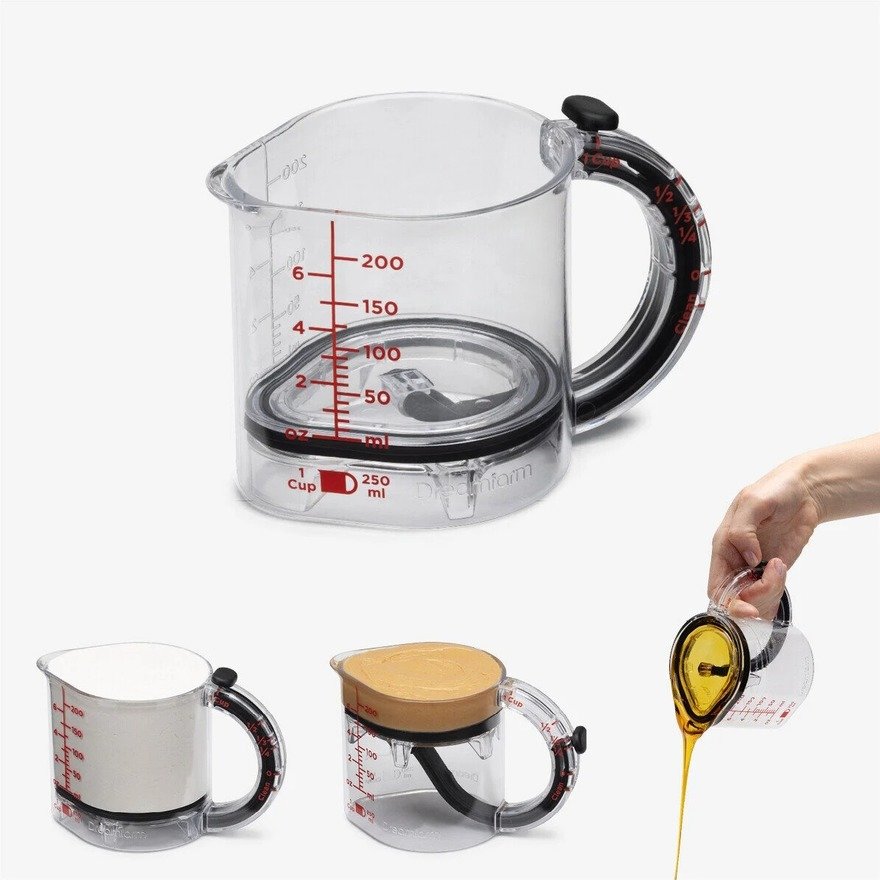
The squeegee can be removed and the lot put in the dishwasher.
A steal at $17.95.
In One’s Coffee Cups
If you want to add a little meta-ism to you morning beverage, why not drink coffee from a cup made of…coffee. Via Laughing Squid, Portuguese high school art and design teacher Luis Giestas showed how to make a bioplastic cup based on used coffee grounds.
In addition to coffee grounds, the cups consist of water, honey, and agar, and the mixture is then cured.
After the cup was fully cured, he then demonstrated its sturdiness by drinking hot coffee out of it. When he was done with that, he then poured boiling water into the cup which sat for eight hours without a single leak.

Giestas does stress that these are single use cups, as they develop fissures, but since they are easy to make, there’s no problem, especially since the used cups can be repurposed as garden planters for coffee plants.
The Shining
Here’s what sounds like a relaxing competition to watch. Back in May, at the London Super Trunk Show (one of the biggest shoe events in the world), competitors vied in the World Championships of Shoe Shining. In this competition, three finalists had 20 minutes to buff a men’s Oxford shoe. When time was up, the competitor with the brightest and clearest “mirror shine” was declared the winner. Via Laughing Squid:
At the 2025 event, held on May 10 on London’s Regent Street, three finalists were given a pair of Bridlen Straight Tip Oxfords and just 20 minutes to achieve the highest possible mirror shine. …Meet the Finalists: Ryu Niita (Japan) – Representing Brift H Atsuhiro Yoshidomi (Japan) – From Boston & Re Olds Mathew (United Kingdom) – Known as Mr. Bull & Shine
And the winner was…Ryu Niita.
Check it out:
Super Size Mice
We know that fast food is bad for the body, but what about the mind? Well, it’s also not good for cognitive function. Indeed, researchers found that even after a mere four days of eating high-fat meals key circuits tied to memory can be disrupted. Via Food & Wine, it was a new study out of the University of North Carolina School of Medicine.
In September, the research team published their findings in the journal Neuron, which examined how high-fat foods (which the authors explained in a statement resemble “typical Western-style junk food” rich in saturated fat — like cheeseburgers and fries) affect our memory. They found that even a few days of eating this way can lead to “cognitive dysfunction.”
For the study, they fed mice a high-fat, “junk food diet” and measured the neuronal activity in the hippocampus, which is the part of the brain important for memory.
They found that this diet disrupted key memory circuits in the brain almost instantly. Specifically, they stated in a statement about their work that within four days, neurons in this part of the brain became overactive, impairing their ability to retain memory.
“Stated in a statement”? Hmm… Anyway:
“We knew that diet and metabolism could affect brain health, but we didn’t expect to find such a specific and vulnerable group of brain cells, CCK interneurons in the hippocampus, that were directly disrupted by short-term, high-fat diet exposure,” Juan Song, PhD, principal investigator and professor of pharmacology at UNC’s Neuroscience Center, shared in a statement. “What surprised us most was how quickly these cells changed their activity in response to reduced glucose (sugar) availability, and how this shift alone was enough to impair memory.”
Happily, it is not permanent.
Restoring glucose levels “calmed” the neurons, suggesting that it is possible to restore brain health. The team noted that “interventions like fasting or dietary shifts” can achieve this — and added that these changes could also help “prevent obesity-related dementia and Alzheimer’s.”
The study of course has its limitations, not the least pf which is that, well, they’re mice.
Further research is necessary to determine whether the same mechanisms are at play in humans. Additionally, the study primarily focuses on the short-term effects of a high-fat diet, leaving long-term impacts and potential interactions with other dietary or lifestyle factors unexplored.
So for now, Super Size Me is the last word on this.
This Week in Printing, Publishing, and Media History
October 20
1632: English physicist, mathematician, architect, and designer of St Paul's Cathedral Christopher Wren born.
1882: American actress Margaret Dumont born.
1882: Hungarian-American actor Bela Lugosi born.
1971: American rapper, producer, actor, and admirer of fine, digitally printed posters Snoop Dogg (né Calvin Cordozar Broadus Jr.) born.
1973: The Sydney Opera House is opened by Elizabeth II after 14 years of construction.
2020: Canadian-American stage magician and author James Randi dies (b. 1928).
October 21
1772: English poet, philosopher, and critic Samuel Taylor Coleridge born.
1833: Swedish chemist and engineer, inventor of dynamite and founder of the Nobel Prize Alfred Nobel born.
1879: Thomas Edison applies for a patent for his design for an incandescent light bulb.
1914: American mathematician, cryptographer, and author Martin Gardner born.
1929: American author and critic Ursula K. Le Guin born.
1940: The first edition of the Ernest Hemingway novel For Whom the Bell Tolls is published.
1959: In New York City, the Solomon R. Guggenheim Museum opens to the public.
1969: American novelist and poet Jack Kerouac dies (b. 1922).
1983: The meter is defined as the distance light travels in a vacuum in 1/299,792,458 of a second.
October 22
1565: French book collector Jean Grolier de Servières dies (b. 1479).
1875: First telegraphic connection in Argentina.
1879: Using a filament of carbonized thread, Thomas Edison tests the first practical electric incandescent light bulb (it lasted 13½ hours before burning out).
1883: The Metropolitan Opera House in New York City opens with a performance of Gounod’s Faust.
1884: The International Meridian Conference designates the Royal Observatory, Greenwich as the world's prime meridian.
1964: Hell is other awards: Jean-Paul Sartre is awarded the Nobel Prize in Literature, but turns down the honor.
October 23
1959: "Weird Al" Yankovic born.
2012: After 38 years, the world's first teletext service (BBC's Ceefax) ceases broadcast due to Northern Ireland completing the digital switchover.
October 24
1861: The first transcontinental telegraph line across the United States is completed.
1911: Orville Wright remains in the air nine minutes and 45 seconds in a glider at Kill Devil Hills, N.C.
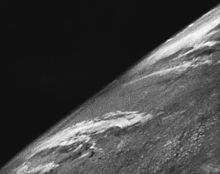
1946: A camera on board the V-2 No. 13 rocket takes the first photograph of earth from outer space.
1991: American captain, screenwriter, and producer, creator of Star Trek, Gene Roddenberry dies (b. 1921).
2003: The Concorde makes its last commercial flight.
October 25
1977: Digital Equipment Corporation releases OpenVMS V1.0.
2001: Microsoft releases Windows XP, becoming one of Microsoft’s most successful operating systems.
October 26
1825: The Erie Canal opens, allowing direct passage from the Hudson River to Lake Erie.
1861: The Pony Express officially ceases operations.
1892: Ida B. Wells publishes Southern Horrors: Lynch Law in All Its Phases.
1946: Puerto Rican actress and author Holly Woodlawn born to walk on the wild side.
1958: Pan American Airways makes the first commercial flight of the Boeing 707 from New York City to Paris.