WhatTheyThink

Premium Commentary & Analysis

Variable Data…to use or not to use

In the last few weeks,

Thursday, August 09, 2001

In the last few weeks, this topic has been discussed both here (with a WhatTheyThink.com survey) and also in a news article from TrendWatch.

The WhatTheyThink.com survey showed that only 21% of those surveyed used a "form" of variable data printing.

The Trend Watch article quoted a Design and Production survey which showed only 4% of all creative people and 1% of graphic designers see Variable Data Printing (VDP) as a top sales opportunity. It also stated that it would be easy to blame the printers for not promoting the technology. It also states that creative's "play a key role in helping clients determine which printer or print process to use…"

Neither survey nor the article actually delves into what is considered variable printing. Are we talking about slapping someone’s name on a cover of a catalog? Are we discussing a truly personalized multi-page catalog where my spending habits are addressed specifically? Since we don’t know, we will assume we are talking about a combination of these two techniques.

Now, why isn’t variable printing being used more often, by more companies and in its correct variation? I believe true variable printing works off of a database with multiple variable elements being personalized onto the project.

Why isn’t this marketing tool used more often? I believe it is because of some basic reasons. Let’s look at some of them:

- Print Production People do not educate their coworkers- Having monthly or quarterly vendor seminars for creative and marketing people will allow them to see and hear what new technologies are out there. This might spark their creative juices to think about VDP and other new technologies.

- Print Production must be involved early- It is imperative, in my mind, that print production be involved from the original job creation stage. To give creative an assignment, let them go off to design and then show it to production is ludicrous. If print production is involved at the beginning, suggestions can be made to help develop the creative.

- Without a database, how can you use VDP? - This is huge. Most companies have databases, but they are totally useless. Populated with information that means nothing, and void of important information. One client of mine, a telecommunications company, had such a horrendous database, I was unsure how they ever got monthly payments from their customers. Another past client, a large department store, used to boast that they had 120+ individual pieces of information on every holder of their credit card. I used to joke that we would soon be able to mail only to blonde women living on the south side of the street. This was back in 1989 -1990. I guess I wasn’t so far off! I now wish I still worked with this company, because with that type of data available, we could do some incredible mailings.

- This is not a one time affair – The up-front costs to massage the database, set up the parameters of the project, set up a file transfer system and all the other startup costs make this prohibitive for a one time project. If you are serious, take it seriously and do it correctly.

Now is anyone out there actually using this great technology? I thought only printers were, when I would get my direct mail piece from them with my name in 5-6 spots. Oh how cool - the first time….after that…yawn.

Using VDP to put my name in a few spots so I will think this mailing is just for me, is just a waste. The beauty of VDP is to truly customize for each recipient.

A local bank on Long Island send out postcards with a picture of your local branch staff and a map, from your driveway to their front door. Nice…ok, this is a better application of VDP, but still….

I also remember one of the car companies setting up their web-site, where you could select your car, the color, the interior and the accessories. Within a few days, in your mailbox, came a self-mailer with your exact car, the specs, the cost and the name of your local dealer. Now I see this is all done on the web, without the mailing. What if I don’t have a color printer at home?

Where are the really great applications of VDP?

One I read about a year or so ago was a company called Novartis. One of this company's businesses is selling seed to farmers. Not seeds for your backyard garden, but seeds to those huge farming combines that grow the food we buy in the store. Using their own database (a key to a strong VDP campaign, using a purchased list will drive you crazy), they were able to distinguish approximately 75 different pieces of data for each of their customers. They have the entire history of the customer with their company. In this way, their mailing spoke directly to Farmer Jones. They told him the crops he planted, when he planted, what crops he should be thinking of planting, and why these suggestions work for his farm and conditions.

They also knew what type of equipment the farmer used. This is a big deal to farmers. It would be like sending a NY Mets mailing to a die-hard NY Yankees fan. Look out garbage, here it comes. With their knowledge, Novartis was able to place either a John Deere or an International Harvester on the cover. "Hey, that’s my tractor!" Good way to bond with your customer.

Now, if Novartis can do this, what about the rest of us? Well, you must be committed. You must have the patience to get this type of campaign up and running (it can take 6-18 months). You must have someone within the company campaigning for this type of program. This is probably not one person, but a team of a marketing person, a creative and a production person.

By the way, Novartis uses VDP for other divisions, including their pharmaceutical division, sending mailings to doctors, which, I understand, is also very successful.

Have you tried a VDP campaign? Was your campaign successful, or not? Have you tried to suggest one and gotten shot down? Let me know, and I will publish any information I receive.

The more we communicate, the better we will be at our careers.


Continue reading your article
with a WhatTheyThink membership.

WhatTheyThink Annual Membership

Less than $4/week.

Get unlimited access to in-depth commentary and analysis covering the latest trends, emerging technologies, operational strategies, and key events across every segment of today's printing industry.

Stay informed. Stay competitive. Stay ahead.
WhatTheyThink Day Pass

$5 for 24 hours

Unlimited access to all of WhatTheyThink. Get your Day Pass

Already a member?
Sign In

About WhatTheyThink

WhatTheyThink is the global printing industry's go-to information source with both print and digital offerings, including WhatTheyThink.com, WhatTheyThink Email Newsletters, and the WhatTheyThink magazine. Our mission is to inform, educate, and inspire the industry. We provide cogent news and analysis about trends, technologies, operations, and events in all the markets that comprise today's printing and sign industries including commercial, in-plant, mailing, finishing, sign, display, textile, industrial, finishing, labels, packaging, marketing technology, software and workflow.

Recent Articles from WhatTheyThink

The Total Label Issue

The Total Label Issue

This issue of the WhatTheyThink Quarterly is all about labels, which are seen as a high-growth part of commercial printing, driven by e-commerce, food/beverage demand, and regulations. The market has surpassed 1.2 trillion square meters of label production volume per year, and is moving toward high-mix, low-waste production rather than only high-volume throughput. While flexo is still used for high-volume label production, digital label printing often complements it—or in some cases replaces it. But labels are about more than printing technology. Read More
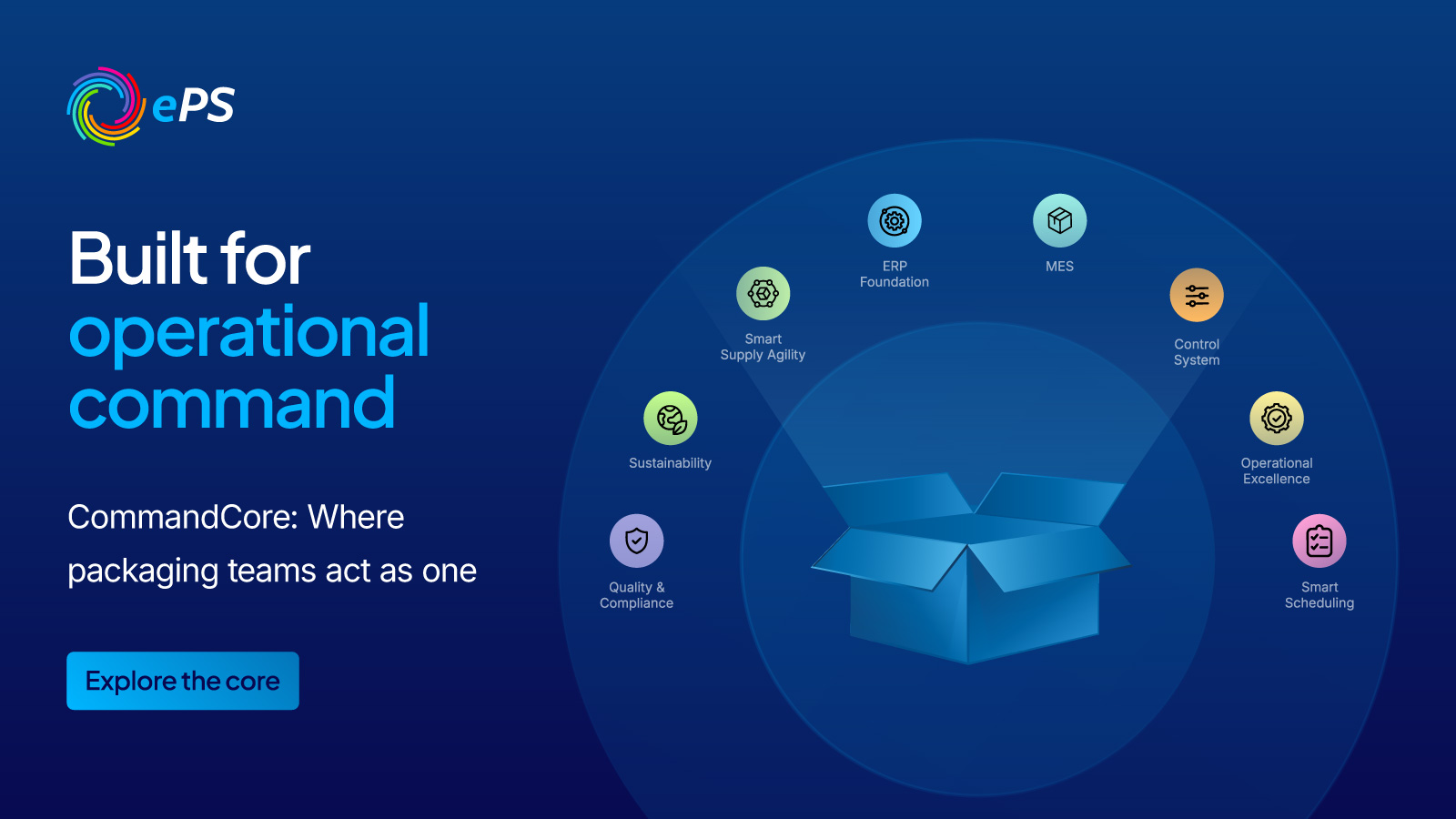
The Unified Platform for Packaging Manufacturing Excellence

The Unified Platform for Packaging Manufacturing Excellence

Leverage 30+ years of plant-floor expertise. Trusted by 700+ packaging manufacturers globally to reduce waste, optimize scheduling, and drive digital transformation. One unified foundation. Eight packaging-native pillars. Zero fragmentation. Read More
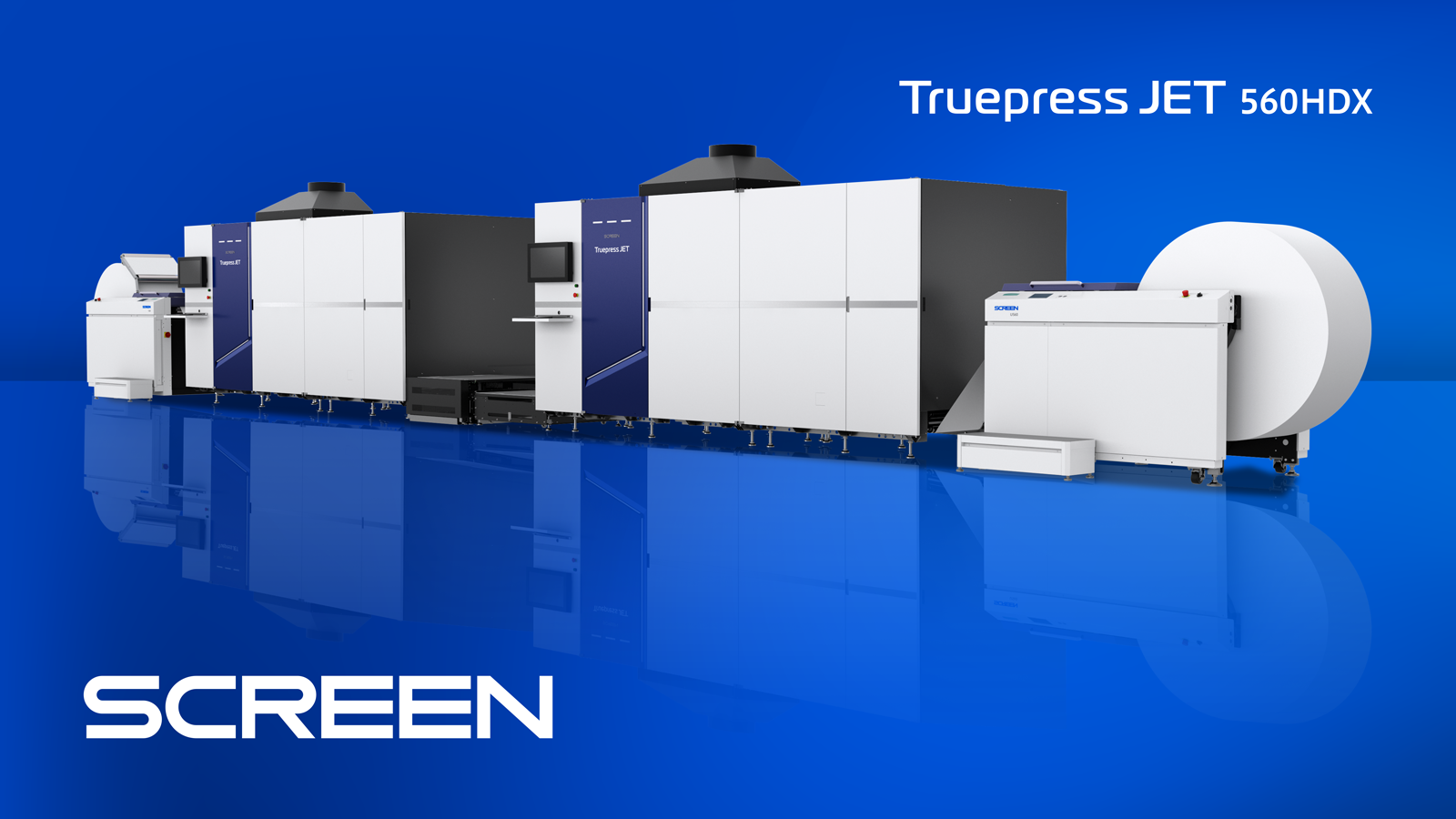
Expand Your Opportunities with the Truepress JET 560HDX from SCREEN

Expand Your Opportunities with the Truepress JET 560HDX from SCREEN

Commercial, direct mail, and publishing printers accustomed to producing jobs over several weeks can now print them in days with the SCREEN Truepress JET 560HDX. The press can accommodate 120 lb. coated or uncoated paper up to 560 mm wide. Read More

Around the Web: Of Water and Winners

Around the Web: Of Water and Winners

A sign-writer created the visual style of music festivals. The “2026 Milky Way Photographer of the Year” winners. AI appears to be catching on among the Amish. Sony has upgraded its wearable air conditioner. How to easily reuse produce bags. A complex digital water clock. A Nobel Prize–winning technology is able to extract water from dry air. Yes, it is possible to be allergic to water. Laser-induced graphene on Kevlar enables multifunctional structural composites. The “most desired” place in each of the 50 states. “The rise in plastic surgeons asked to create ‘AI face.’” K-pop band BTS has teamed with Oreo to release limited edition OREO x BTS Cookies. Welcome to WhatTheyThink’s weekly miscellany. Read More
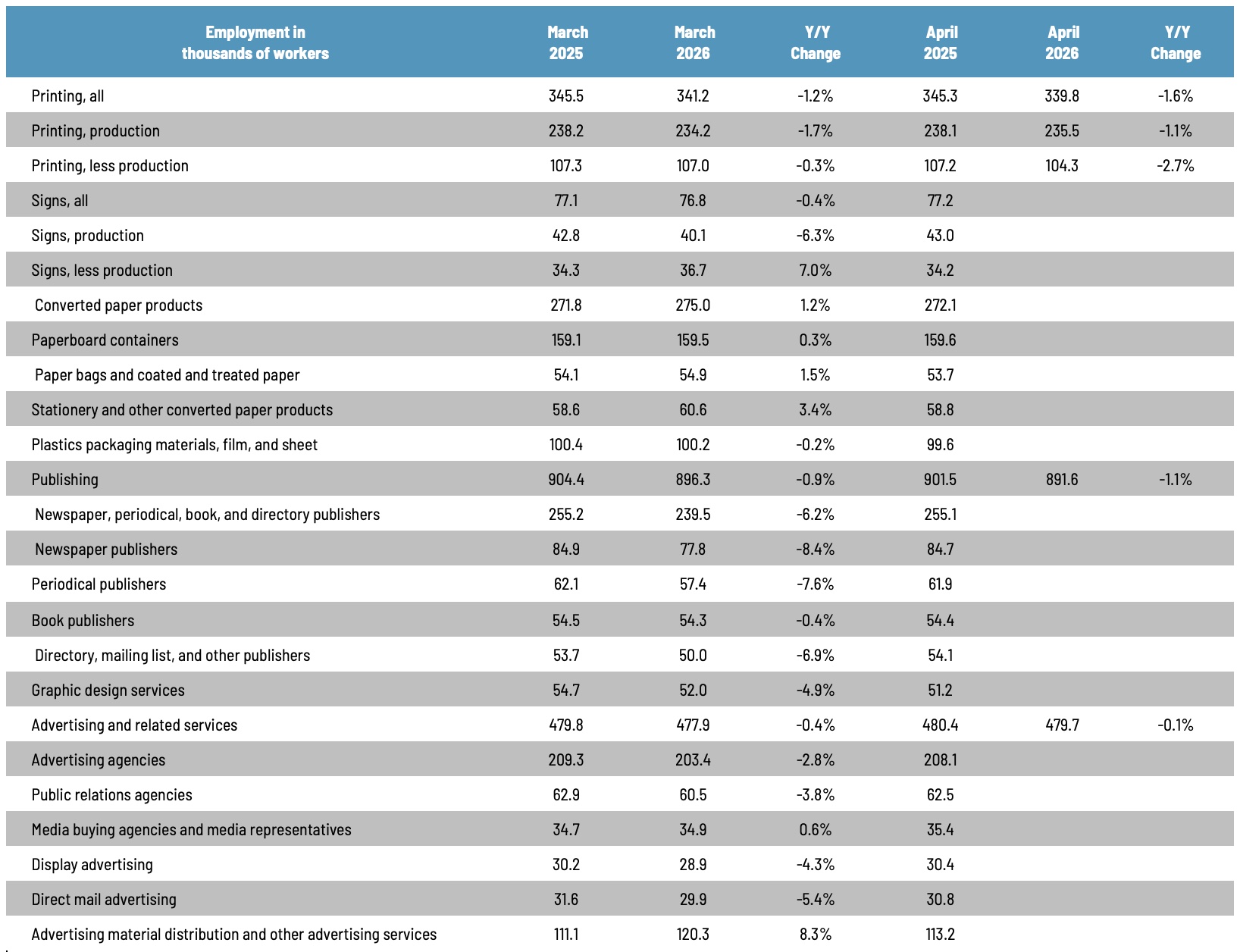
Graphic Arts Employment in April Down Overall—Substantially Among Non-Production

Graphic Arts Employment in April Down Overall—Substantially Among Non-Production

April 2026 saw printing industry employment overall generally flat, down 0.4% from March. And while production employment was up 0.6%, non-production employment was down by 2.5%—basically the reverse of what we saw in March. Read More

Recent Printing Industry News

Wednesday, June 03, 2026