Source: Shutterstock Under License
The printing industry is no stranger to change. From the shift to digital to the rise of short-run and on-demand printing, printers have continually adapted to customer demands and market changes. Yet today’s challenges run deeper. Labor shortages strain already lean operations. Customer expectations for speed, personalization, and real-time updates are rising. Margins are tight, and variability in job types, run lengths, or substrates complicate planning and scheduling. Adding to the complexity is an aging workforce, often paired with legacy equipment and siloed software systems that limit workflow efficiencies and business insights.
The good news? These pain points also present an opportunity. By embracing intelligent automation, print providers can shift from reactive to proactive operations. Intelligent automation helps eliminate workflow friction, reduce human error, and turn raw data into actionable insight. It enables print businesses to adapt faster, run leaner, and deliver more value to customers. Automation, as it has existed for the last decade, is no longer enough. What is needed today is automation that learns, responds, and adapts.
What Is Intelligent Automation?
For the printing industry, intelligent automation goes beyond basic scripting and scheduling. It is the combination of software, real-time data, and machine learning that adapts to your business needs. Think of it as automation with brains. Not just for preflighting a file or sending a job to press, but for using connected systems that learn, predict, and act. From estimating and job onboarding to production optimization and customer communication, intelligent automation helps you do more with fewer touchpoints, fewer errors, and more time to grow your business.
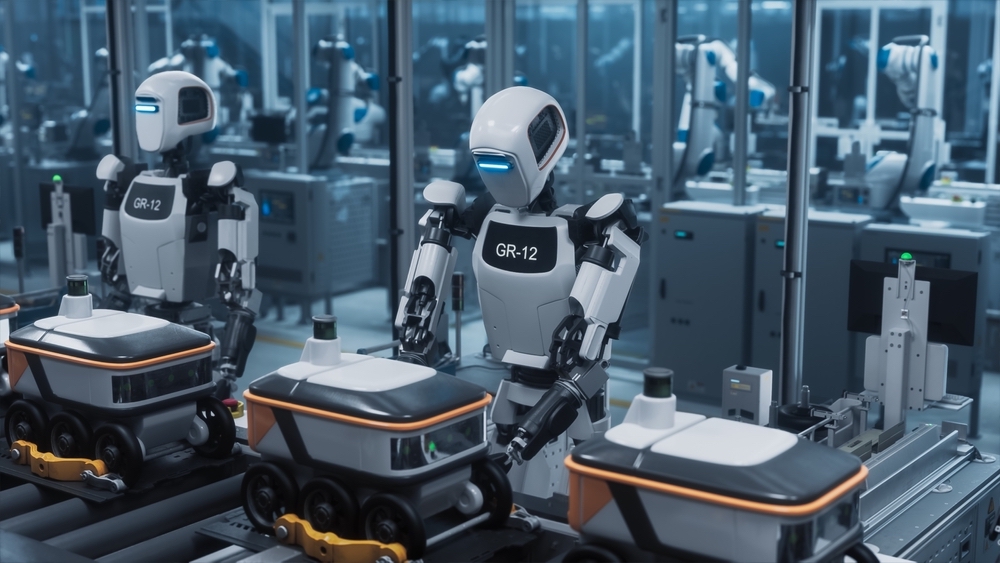
Intelligent automation combines artificial intelligence, business process management, robotic process automation, and industrial IoT technologies. It creates an interconnected solution where machines, software, and data collaborate to manage tasks, make decisions, and continuously improve operations. In a production print setting, this can’t include AI systems monitoring press performance, automated guided vehicles (AGVs) that handle repetitive physical tasks like paper movement, and smart workflows that automatically route jobs, trigger alerts, or adjust scheduling based on real-time production data.
The key is that intelligent automation doesn’t just follow predefined rules. It uses machine learning and feedback loops to get smarter over time. It can flag anomalies, recommend process improvements, and surface insights that improve performance across the shop floor. Where traditional automation simply replicates and automates tasks, intelligent automation optimizes the way work flows through an entire print operation on a real-time basis.
From Concept to Impact: Real-World Applications That Deliver Results
One of the applications of intelligent automation that produces immediate value is in print is predictive maintenance. By collecting press data such as motor load, temperature, and vibration patterns, AI models can predict when a part is likely to fail before it actually does. This reduces unplanned downtime and allows printers to service equipment at optimal, off-peak production times. Operators can also plan and execute a schedule more confidently when the fear of breakdowns is minimized.
Another powerful use case is dynamic job scheduling. It is a monumental task to balance loads, be attentive to deadlines, and handle unexpected downtime, but most shops have someone who does it every day. The problem is, when that person isn’t available, production can suffer, even if there is a backup. Intelligent systems analyze job specifications, press availability, operator capacity, and finishing requirements to build a schedule that maximizes throughput and minimizes changeovers. When a rush job comes in or a press goes offline, the system automatically reroutes the job and rebalances the queue. This real-time agility helps meet tight turnaround times while keeping machines running efficiently.
Quality control is also being transformed. Vision systems integrated into presses and finishing equipment detect registration shifts, color variations, and print defects as they happen. Rather than stopping for manual inspection, the systems inspect, identify, and adjust settings on the fly or flag jobs for operator review if the corrective action cannot be automated. This results in higher consistency, fewer reruns, and better overall print quality. Combined with AI-driven analytics, printers can use this data to spot trends, isolate recurring issues, and offer their customers a level of trust in consistency and certification.
These applications deliver meaningful results. Downtime drops, press utilization rises, and job turnaround speeds up. Quality improves with automated checks and real-time feedback. Time-intensive administrative tasks like job onboarding and invoicing are handled by bots, freeing up staff members to focus on customers and innovation. Most importantly, intelligent automation empowers smarter decision-making by connecting systems that were once isolated, like your print MIS and production software. This integration transforms data from a forgotten byproduct into a powerful strategic asset.
Starting the Journey: A Practical Roadmap for Printers
Does this all sound like some forward-looking future where George Jetson pushes buttons and manufacturing magically happens? Does it sound too removed from today’s realities?
If you look around, you will find that these technologies exist today, are in use by printers, and are improving rapidly. The challenge is building a scalable framework that can evolve to incorporate and embed these technologies into your existing toolsets, staff, and production environment.
The good news is that getting started with intelligent automation doesn’t require a full system overhaul. The most successful implementations begin with a clear understanding of business goals and pain points. Start by identifying a few core workflows that are repetitive, error-prone, or slow. Common starting points include automating job onboarding, improving file preflight and approval, or enhancing visibility into press uptime.
Once you identify the targets, the next step is to pilot a solution. This could involve adding sensors to a key press, integrating a machine vision system, or implementing workflow automation software that connects to existing W2P storefronts, MIS, and production tools. The goal in this phase is to test, measure, and refine in a controlled environment with clear success metrics. Wins in these pilots build internal support and confidence.
As the team develops confidence in the automation, more opportunities will emerge. More equipment can be connected. Processes can be orchestrated across departments, from estimating to production to shipping. Business process automation can be layered in to handle administrative work, like creating job tickets or sending customer updates. Generative AI tools can generate natural language responses for customer interactions, freeing up customer support resources. Agentic AI can monitor production variables and alert managers when action is required.
Throughout the journey, one critical factor is team enablement. Operators, prepress technicians, and customer service reps must understand how automation supports their roles. Rather than viewing technology as a replacement. The messaging should be the use of technology to augment their job tasks, freeing them from repetitive tasks so they can focus on quality, creativity, and service.
Agenic AI—The Game Changer
Unlike traditional AI that reacts to input, Agenic AI acts independently, setting goals, making decisions, and taking action without waiting for human commands. It’s like having a digital team member who doesn’t just follow rules, but thinks ahead, anticipates problems, and adapts in real time. For printers, this means systems that can optimize workflows, reroute jobs, and even identify opportunities without being instructed. It’s early days, but Agenic AI is pointing us toward a future where automation isn’t just intelligent, it’s proactive.
A Smarter Way Forward
Finally, printers should establish governance. This includes setting data quality standards, ensuring integration stability, and creating a feedback loop between human decision-makers and AI systems. Clear ownership of processes and accountability for outcomes ensures that automation investments deliver consistent value over time.
The future of production printing is not just faster. It’s smarter. Intelligent automation offers a path toward that future, enabling print providers to run more efficiently, adapt more quickly, serve customers more effectively, and compete within the greater media landscape. By starting with high-impact use cases, involving teams early, and scaling thoughtfully, printers can build resilient operations that thrive in a dynamic market.
Those who invest today won’t just keep up—they’ll lead. The opportunity is here, the tools are available, and the time to start is now.