Tick Tock
Ah, the kids of today and their TikTok. And, as it turns out, the kids of yesterday and their Tick Tock. Via Boing Boing:
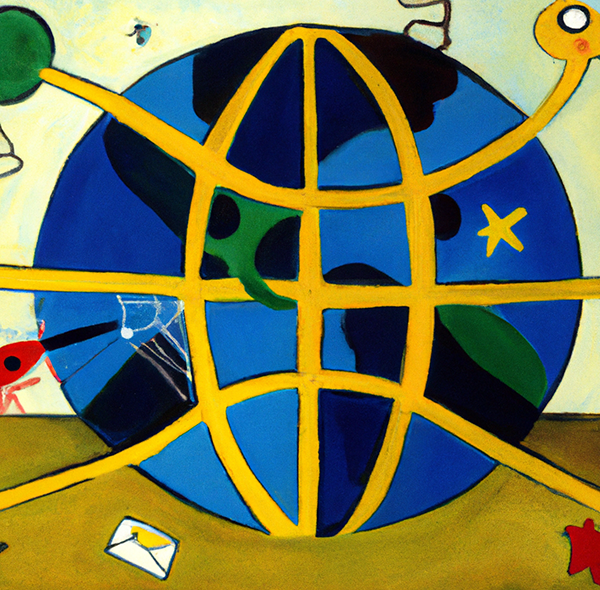
In 1937, a group of Dutch students created remarkable art using only typewriters, as documented in the film "Able to tick? Tick along" by Polygon-Profilti (now part of the Netherlands Institute for Sound and Vision). The footage shows students working intently in a classroom, crafting intricate images — from clowns and camels to portraits of children — using nothing but typewriter keystrokes on paper.
Who’s the Emboss?
One print application that will likely never go away is the business card. And especially in this age of embellishments, tactile effects can make a business card stand out from all the others. But via Core77, you can add these effects to business cards cheaply and inexpensively.
This 3D-printed contraption is by Igor Daemen, an Eindhoven-based product designer. "I designed this business card embosser to be modular and 3D printable without using any support and without any hardware required to assemble," he writes.
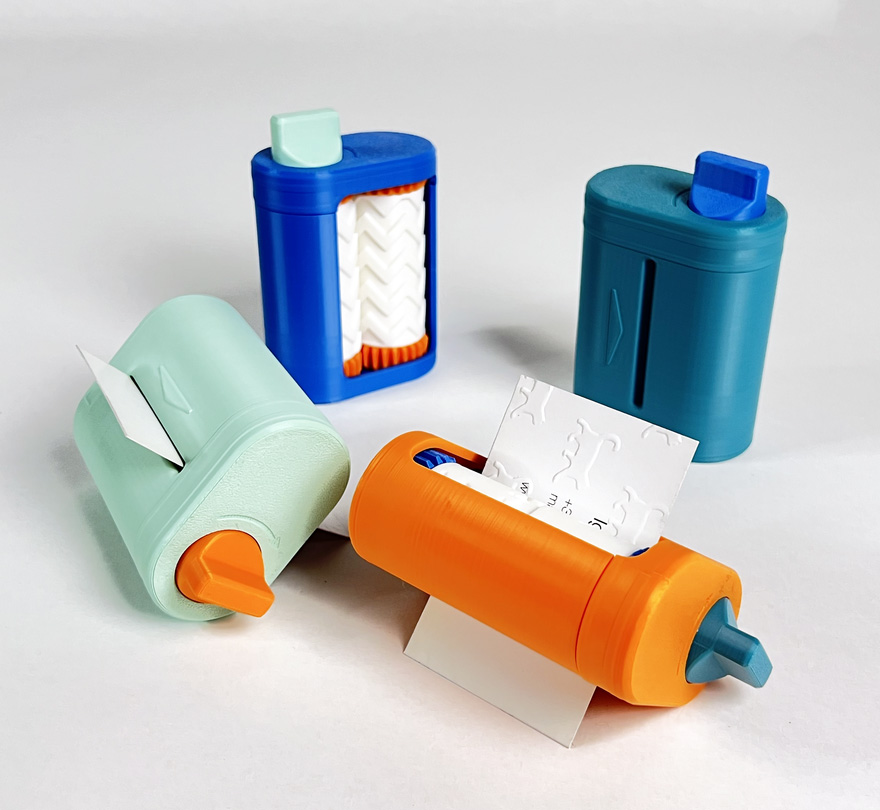
Looks like Fisher-Price’s My First Embellishments.
If you want a 3D-printed business card embellisher, you can download the files for free here.
Off the Leash
There was apparently an Apple iPhone event recently (it’s an annual thing) and Gizmodo covered it so we don’t have to:
We got several new versions of the iPhone 17, including a first-ever slim variant in the iPhone 17 Air, a new Apple Watch Ultra, new AirPods Pro 3,and much more.
There are also accessories, such as an iPhone “leash.” Say what?
A phone leash, or a leash for you that your phone holds? It’s hard to say which one it is, really, but there’s definitely a leash that connects to your iPhone, and you definitely are supposed to wear it.
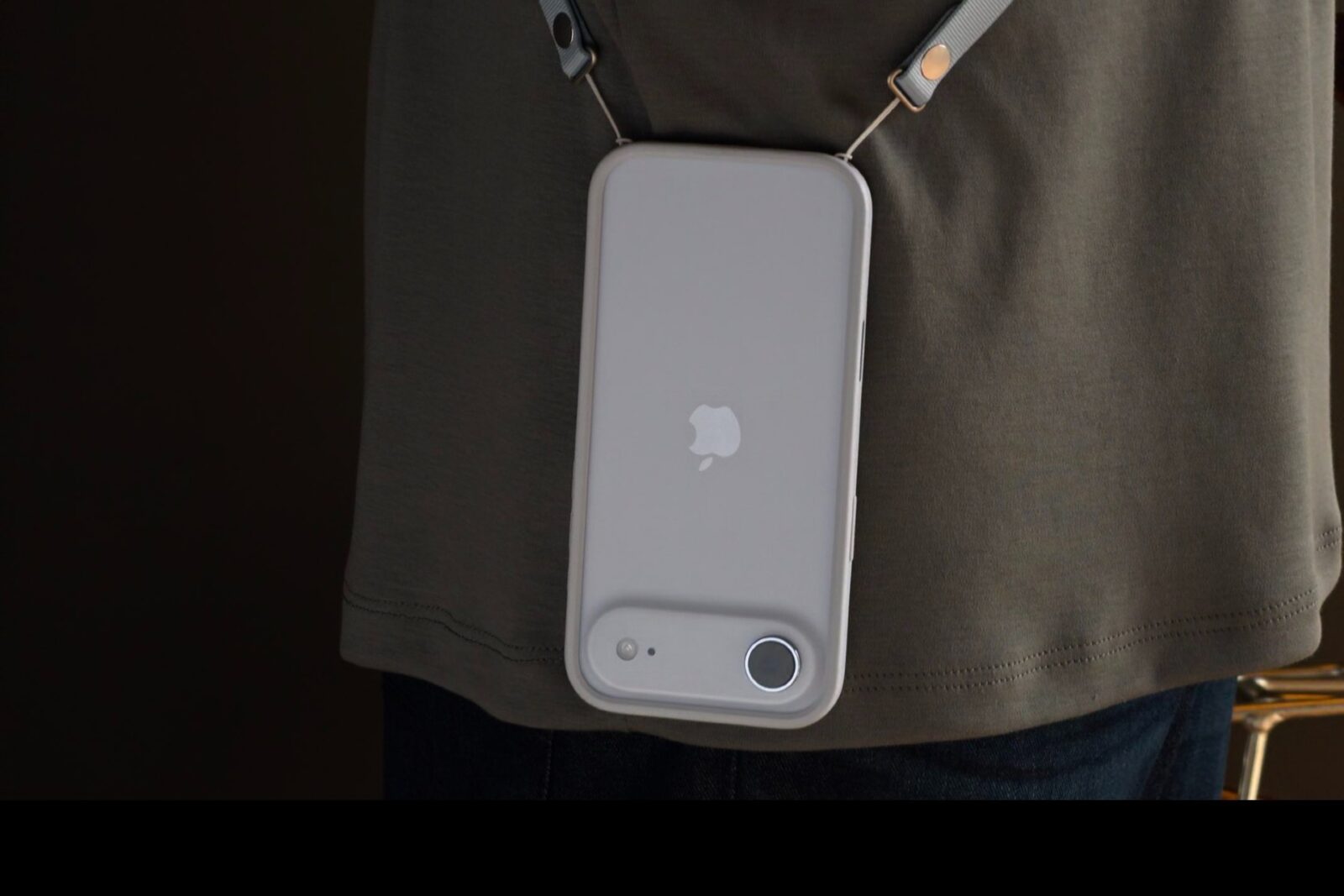
Perfect if you want to take selfies of your navel.
Called the Crossbody Strap, a steal at—blah!—$59.
Inque Spot
Print magazine’s Steven Heller sings the praises of a new print publication called Inque.
Inque is a rare breed of magazine that comes along every generation or so. It is without ads and full of surprising content, wrapped in covers that lean nearer to art than most other indies on the racks. In fact, Inque, edited by Dan Crowe with art direction by Matt Willey, is printed only once a year in such a limited run it barely stays on said racks before being scooped up by fans and collectors.
Willey, by the way, is the 2025 recipient of the Smithsonian National Design Award. Inque includes some unique production choices, such as a hand-painted issue number.
There are various influences at play in the design, most notably a freewheeling Eastern European Modernist aesthetic. But Willey is not mimicking or paying homage to past eras. His excellence as a typographer and type designer is an exploration of text and texture. In this issue his page designs tend to emphasize light and dark. The body type is mostly typewriter-style, while the headlines are graphic and bold, offsetting each other in the most pleasing way.

The Revolution Will Not Be Streamed
(Optional musical accompaniment to this item.)
Physical media live! Recognizing that the way people consume music in the streaming age, Neil Kohler and Jesse Mann have launched Tiny Vinyl, a four-in. diameter vinyl record. Says Ars Technica:
Kohler’s day job is working with toy companies to develop and market their ideas. He was involved in helping Funko popularize its stylized vinyl figurines, now a ubiquitous presence at pop culture conventions, comic book stores, and toy shops of all kinds. Mann has worked in production, marketing, and the music business for nearly three decades, including a stint at LiveNation and years of running operations for the annual summer music festival Bonnaroo.
Meanwhile, vinyl as a music format is decidedly back.
It’s 2025, and the global vinyl record market has reached $2 billion in annual sales and is still growing at roughly 7 percent annually, according to market research firm Imarc. Vinyl record sales now account for over 50 percent of physical media sales for music (and this is despite a recent resurgence in both cassette and CD sales among Millennials).
Ergo:
“Would it be possible to make a real vinyl record that is small enough to fit inside the box with a Funko Pop, so roughly four inches in diameter?” Kohler asked Coker at the time.
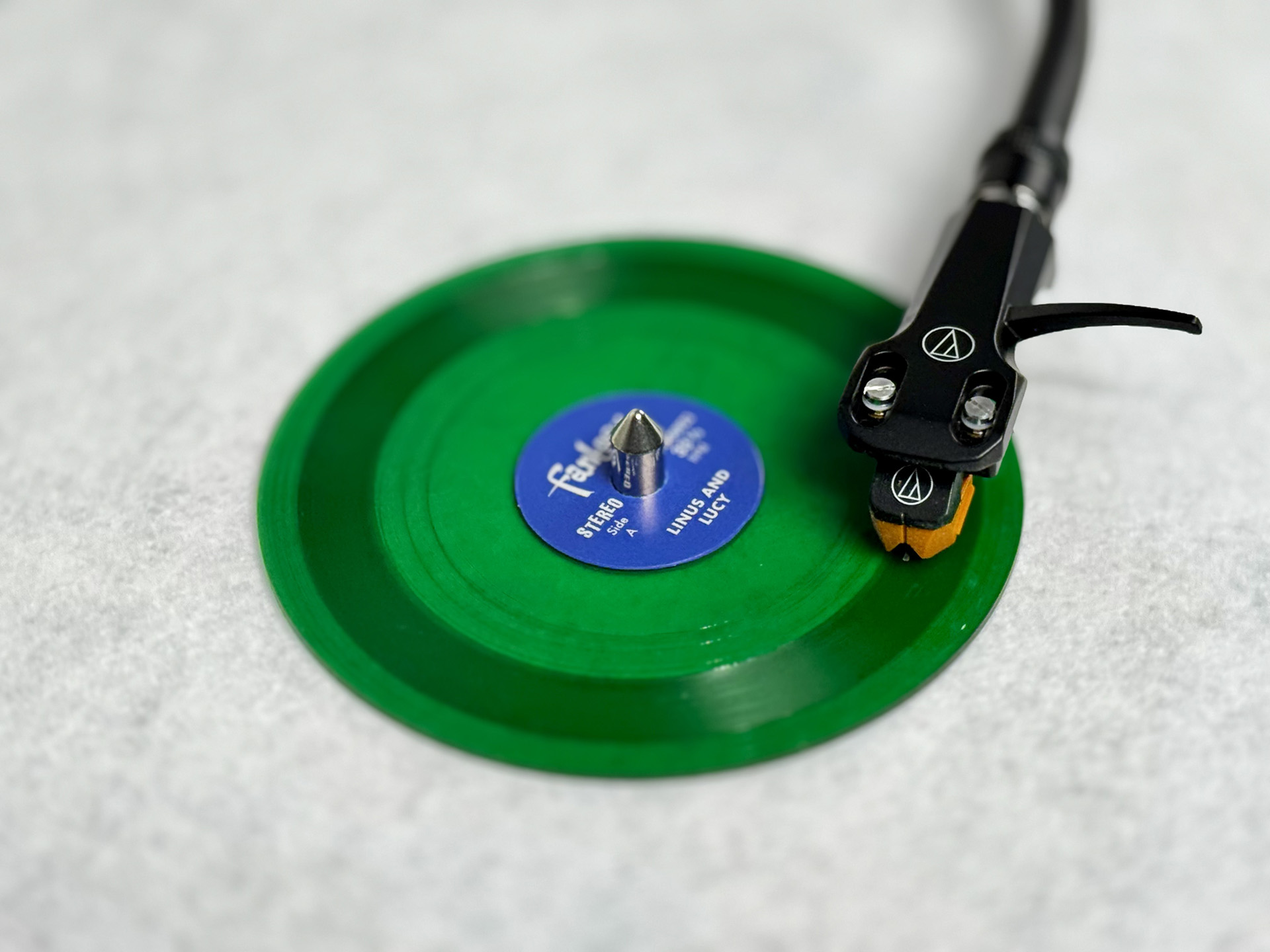
So, basically, they reinvented the 45 rpm record. Or…remember flexidisks?
It’s sort of compatible with current turntables.
Furthermore, 4-inch vinyl records are almost the exact size of the label on an LP or 7-inch single, so automatic turntables won’t work. If you want to play Tiny Vinyl at home, you’ll need a manual turntable or one that allows turning off auto stop and start. The good news is that the majority of turntables in use are manual. But some of the most popular entry-level models, such as Audio-Technica’s LP60-series, are strictly automatic.
They’ve partnered with Target for distribution, and artists’ own merch tables are also a distribution route.
“We will make Tiny Vinyl for anyone, any artist or label that brings us music they have the rights to, and they can distribute that however they want,” Kohler told Ars. “Some people are using their own direct-to-consumer websites. Some other artists are doing it on tour, at merch tables. There is a Lindsey Stirling title that was the first Tiny Vinyl that was available at retail at Urban Outfitters.”
We look forward to the day when 78s come back into style.
Can’t Hold a Candle
Do you like candles, but can’t always get the height right? Well, now you can, with a pneumatically height-adjustable candlestick. Via Core77, Brooklyn-based industrial designer Dan McMahon designed the Rise + Shine adjustable candleholder.
“The object is humorously direct in its evocation of arousal, a quality which came out of the mechanics-forward exploratory design process. By squeezing the rubber bulb, air pushes a candlestick up to the desired height. By twisting the release knob, the candle can drop down into the aluminum cylinder.”
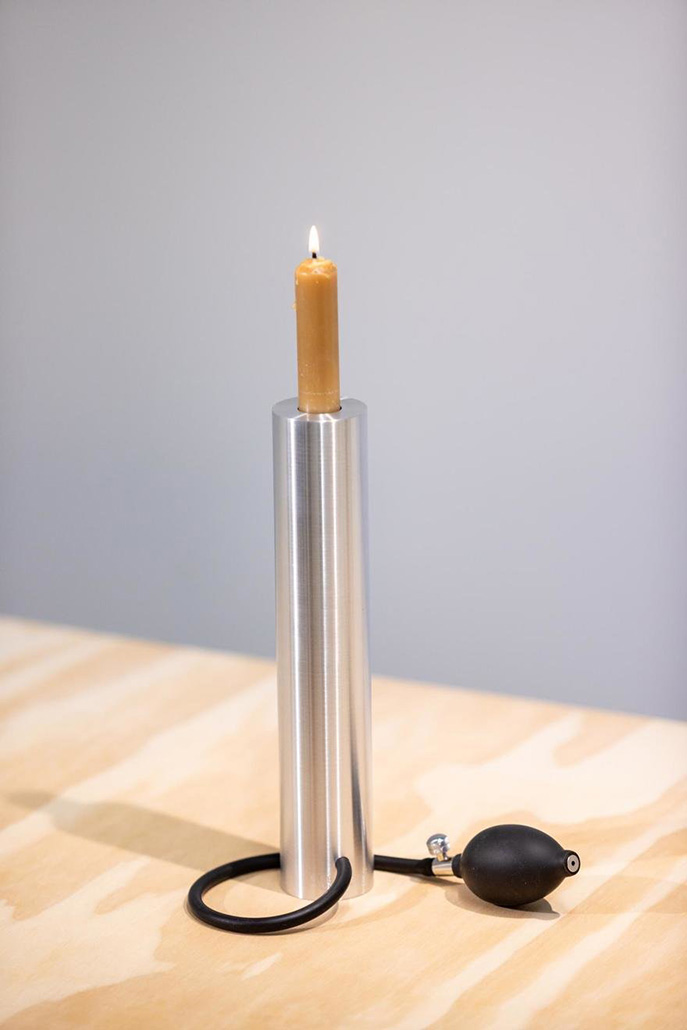
Alas, McMahon only produced a few of them for an exhibition, but there are no production plans.
Toasted
Since the advent of AI, it’s been a while since we checked in with the Internet of Things, but, via Gizmodo, Revolution Cooking’s R180 is a smart toaster that has 38 different presets.
Like any smart gadget worth mentioning, the R180 centers around a giant touchscreen slapped on the front of the toaster. This is where the smarts come in. Here you’ll find all sorts of options for toasting that include an eye-watering 38 bread types, all with seven levels of doneness displayed in varying shades of brown. To be honest, I didn’t even realize how many different things there were to toast until I started tapping through the pages on the R180. There’s an option for white bread, of course, but also waffles, hamburger buns, English muffins, bagels, and (my favorite) LARGE bagels.
And don’t even think of trying to mix and match breads and presets.
Trying to toast the brioche under the artisan bread setting was not a good idea, since it started to burn the toast to the point that I cancelled the function early for fear that I would smoke my office kitchen out. On one hand, yikes, but on the other, there’s clearly a major difference in heat and timing between settings that makes presets more tailored to certain things.
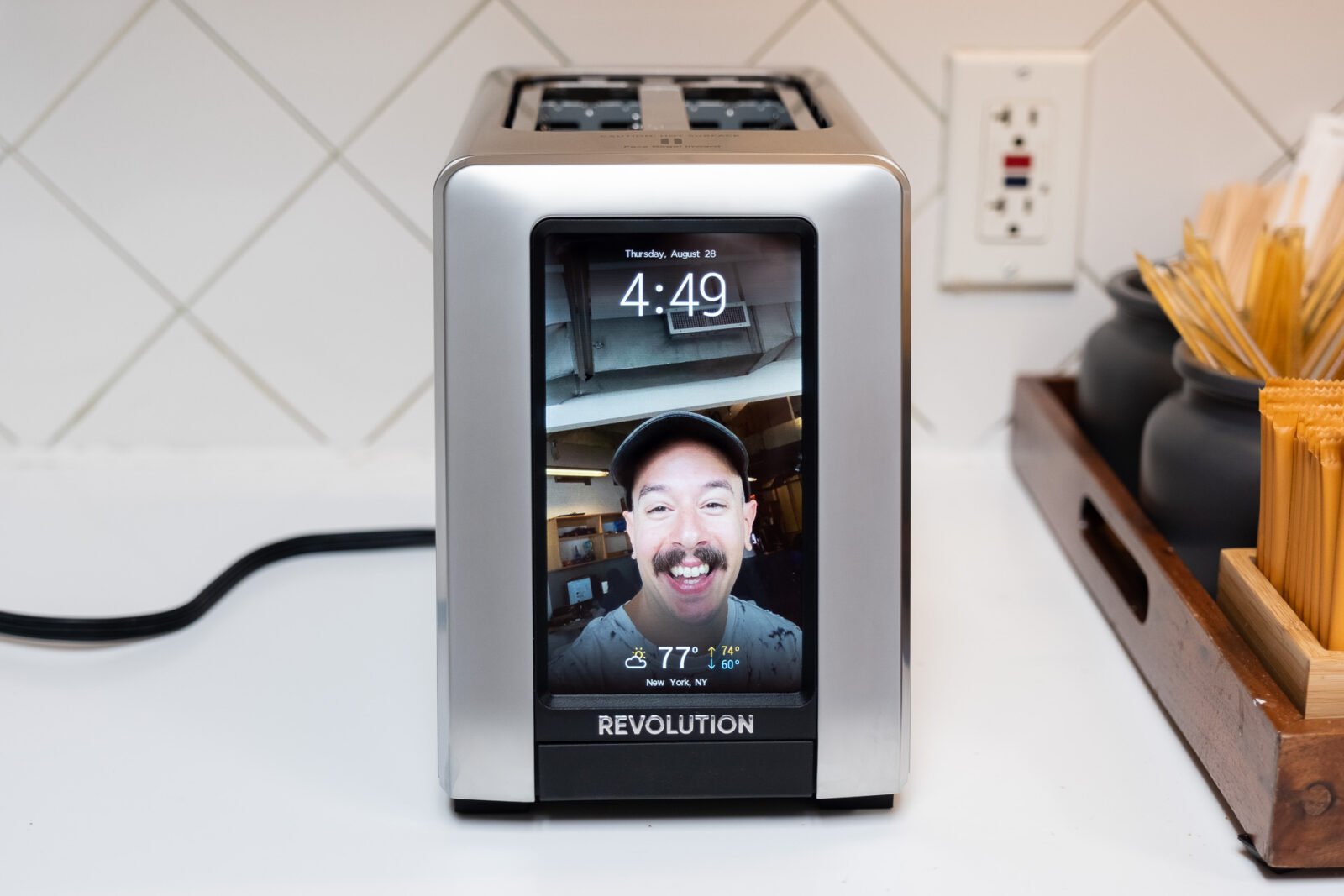
One thing I don’t love about the smart features is that there’s no way to do certain stuff via an app or some kind of web-based interface.
Funny, that’s exactly the kind of thing we like about a proper toaster.
Graphene Is Cookin’
Was it a good week for graphene news? It’s always a good week for graphene news! Midea unveils multi-functional oven featuring graphene heating tech. From (who else?) Graphene-Info:
Midea, a global producer of smart home and lifestyle solutions, has unveiled the Midea Wave Range - a multi-functional free-standing oven that integrates microwave and graphene heating technologies, with emphasis on its applicability for compact European kitchens and efficient cooking. Key innovations and technical features include the incorporation of graphene heating tubes and integrated appliance design tailored to user needs in small domestic spaces.
Taskmaster
If we know the average robot (and we don’t), it won’t stand for this for very long. Via Laughing Squid, a humanoid robot that loads a dishwasher—without breaking anything, except for perhaps its own spirit. Robotics company Figure developed its Helix humanoid robot that uses “a Vision-Language-Action (VLA) model to process verbal requests, respond, and proceed in general and logistical tasks, such as folding laundry, loading the dishwasher, and sorting packages.”
Don’t be Tarotfied
If you ever find yourself in Tuscany (and who among us would not want to?), be sure to check out Capalbio on the Tuscan coast and check out the Giardino dei Tarocchi, or Niki's Tarot garden, 22 large sculptures that depict the main figures depicted on Tarot cards. Begun in 1978 by French sculptor and filmmaker Niki de Saint Phalle, it finally opened on May 15, 1998. Says Atlas Obscura:
The bold statues, completely covered in colorful mosaics, were built on top of Etruscan ruins on an estate on the coast of Tuscany. The unique statues look like whimsical giant monsters. One of the figures—the Sphinx-like Empress (card III in the deck)—is so large the artist lived inside it for several months.
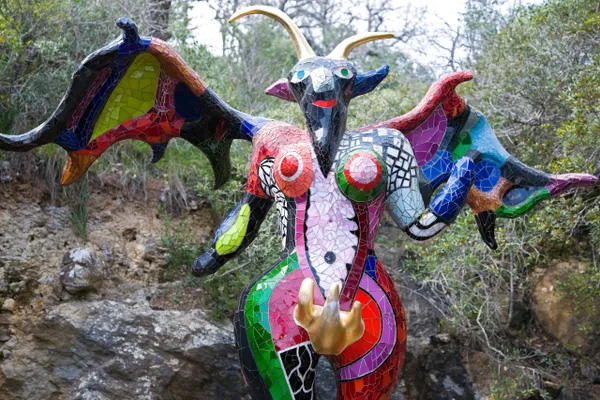
The Tarot figures depicted in the garden include The Magician, The High Priestess, The Empress, The Emperor, The Hierophant, The Choice, The Chariot, Justice, The Hermit, The Wheel of Fortune, Strength, The Hanged Man, Death, Temperance, The Devil, The Falling Tower, The Star, The Moon, The Sun, The Judgement, and The World. The fantastical monuments represent the artist's personal interpretation of these esoteric cards.
Our favorite interpretation of the Tarot figures have to be the Hello Kitty series.
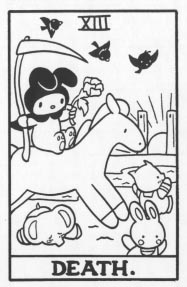
These originals seem to have vanished from the Internet, but Sanrio has apparently launched a new version.
Capital Ideas
Humans may not seem too chill these days, but we used to be a lot worse, in that a lot of mundane things used to be punishable by death. Via Laughing Squid:
Animator Chill Dude Explains recounts some of the most common everyday things that humans consume, wear, and do that were once punishable by death. Several of these mortal offenses include drinking coffee, eating potatoes, washing hands, falling asleep in church, growing a beard, flipping coins, and kissing in public.
Isopod People
(Optional musical accompaniment to this item.)
One of the top-of-mind issues we have doggedly been covering is how the “Endless Shrimp” promotion nearly boiled Red Lobster alive. Shockingly, they are back with a new take on the concept—and one they hope will be more sustainable (in the business sense, not the environmental sense). Via (who else?) Food & Wine:
On Monday, Red Lobster announced its new "Ultimate SpendLESS Shrimp" deal, which is actually a trio of shrimp dishes, including Garlic Shrimp Scampi, Shrimp Linguini Alfredo, and Popcorn Shrimp, that diners can try for just $15.99.
Damola Adamolekun, new chief executive officer of Red Lobster, had no choice but to bring it back—customers were insistent. (She’s just a prawn in their game.)
"Since stepping into this role, I've gotten questions about Endless Shrimp – 'Is it coming back? 'What really happened with the promotion?' 'How much shrimp is too much shrimp?' And it's time we officially turn the tides," Adamolekun said. "We're starting a new chapter here at Red Lobster, one that's smarter, more sustainable, and still packed with the unbeatable value and delicious flavors our guests have come to expect."
They’re hoping they can change their name to In the Black Lobster.
This Week in Printing, Publishing, and Media History
September 8
1504: Michelangelo’s David is unveiled in Piazza della Signoria in Florence.
1930: 3M begins marketing Scotch transparent tape. The idea seemed to stick.
1966: Star Trek premieres.
1971: In Washington, D.C., the John F. Kennedy Center for the Performing Arts is inaugurated, with the opening feature being the premiere of Leonard Bernstein’s Mass.
September 9
1828: Russian author and playwright Leo Tolstoy born.
1839: John Herschel takes the first glass plate photograph.
1947: The first computer bug is found when a moth lodges in a relay of a Harvard Mark II computer at Harvard University.
2006: American businessman, founder of Ziff Davis William Bernard Ziff Jr. dies (b. 1930).
September 10
1846: Elias Howe is granted a patent for the sewing machine, setting the stage for digital textile printing more than 170 years later.
2008: The Large Hadron Collider at CERN, described as the biggest scientific experiment in history, is powered up in Geneva, Switzerland.
1839: American minister, publisher, and co-founder of Funk & Wagnalls Isaac K. Funk born. Look that up in your Funk & Wagnalls.
1941: American paleontologist, biologist, and author Stephen Jay Gould born. (Wonderful Life is one of the best science books ever written.)
September 11
1789: Alexander Hamilton is appointed the first United States Secretary of the Treasury.
1862: American short story writer O. Henry born (né William Sydney Porter).
1885: English novelist, poet, playwright, and critic D. H. Lawrence born.
1922: The Sun News-Pictorial is founded in Melbourne, Australia.
September 12
1940: Cave paintings are discovered in Lascaux, France.
1959: Bonanza premieres, the first regularly scheduled TV program presented in color. (And full color, not just Lorne Greene.)
1812: American engineer, businessman, and inventor of the rotary printing press Richard March Hoe born.
1891: American publisher Arthur Hays Sulzberger born.
1892: Alfred A. Knopf, Sr., American publisher and founder of Alfred A. Knopf Inc., born.
1952: Canadian drummer Neil Peart born.
September 13
1898: Hannibal Goodwin patents celluloid photographic film.
September 14
1321: Italian writer Dante Alighieri dies (b. 1265).
1814: The poem Defence of Fort McHenry is written by Francis Scott Key. The poem would later be used as the lyrics of The Star-Spangled Banner.