Touchy Subject
Core 77 raises an interesting point: “they’re called touch screens, and yet they’re not tactile.” Enter the Tactile Media Alliance, co-founded in 2019 by Georgia Tech industrial design professor Abigail Stangl, a kind of trade organization for touch-minded designers.
TMA’s mission has become especially potent during the past few decades, wherein the “touch screen” has essentially become the de facto user interface, from smartphones to electric cars dashboards to ostensibly “smart” kitchen appliances. But this space-age approach has substantial downsides, especially for those who rely on touch to navigate their world; when moving into a new home, for example, Yazzolino’s blind friends must often seek out modern appliances whose design haven’t yet become totally inaccessible.
We call something visually striking “eye-catching.” So tactile media would be “hand-catching.”
Although braille still remains one of the most iconic examples, tactile media has made more than a few advances since the script's invention just over two hundred years ago. Raised line drawings, for example, allow for the creation of drawn outlines using carbon-infused ink—typically on specialized microcapsule paper, such as Swell—that raise with the application of heat. The advent of 3D printing, of course, has allowed for the relatively easy production of all sorts of 3D creations (albeit, at a consumer level, out of specialized plastic like PLA). And more recently, enthusiasm has been building for a variety of "Holy Braile" devices, which contain refreshable displays that can provide dynamic and on-demand braille and tactile graphics.
And as our friends at Taktiful often point out, adding tactile effects to printed materials can boost response rates, move packaged products, and otherwise make print stand out from other materials.
The Tactile Media Alliance launched a three-day “Workshop on Design for Tactile and Embodied Learning” back in February, and Georgia Tech has launched student design competitions centering on tactile experiences.

In other words, we’re trying to get back in touch.
Ad Nauseam
It’s fairly safe to say that few people reading this remember the 1930s, although it’s not out of the realm of possibility. As decades go, it was one of the country’s roughest. Sure, Prohibition was rescinded, but there was the Great Depression and the winds of war. What was advertising like in such an environment? The Guardian offers a preview of a forthcoming book that collects print ads from the 1930s.
colorful advertisements for everything from alcohol to cereal showcase new developments in design and a persistent optimism despite economic concerns.

The book will be released in September. If you’re into Americana or the history of print media, be sure to check it out.
Stick to Your Knitting
Do you love a good yarn? And do you love yarn? If you live in Minneapolis, you can indulge both loves simultaneously. Once a month, the Edina Mann Theater hosts about 60 knitting enthusiasts to watch a movie while knitting, the brainchild of two Twin Cities yarn shops, Harriet and Alice and Dandelion Fiber Company. Says Fox 9:
“I think the appeal is community. It’s kind of being around a bunch of people, going out with your friends, making a night of it. A lot of knitting and crafting can be a little bit solitary at times, but it can be kind of a group thing, and it can be social,” said Valente.
Last month, they did Dirty Dancing and thus month’s feature is Drop Dead Gorgeous.
The theater keeps the lights up, so the audience can see what they are doing, but some bring their own knitting lights to make sure the only loose ends are on the silver screen and not in their passion projects.
Knitting lights?
Blink at 3:10 and you’ll miss WhatTheyThink’s own knitter extraordinaire Amy Hahn!
AI-Yi-Yi, Part the Infinity: Encyclopedic Knowledge
In another sign of the impending apocalypse, the so-called “AI revolution” is affecting Wikipedia. And can you imagine how much AI slop Wikipedia editors have to deal with? The human-generated slop was bad enough…
Anyway, via Boing Boing, Wikipedia has compiled a list of signs of AI writing for use by editors. (Presumably, the list was not generated by AI.)
Signs of AI writing should be treated as signs of a potential problem, not the problem itself. While, on a superficial level, they can be analyzed as problems in and of themselves, most are quite trivial and easy to fix (excessive boldface, poor wordsmithing, broken markup, citation style quirks, stray text, et cetera—nothing special).
It’s worth giving the list a look.
Signs of the Times, Part the Ongoing: Painted by Hand
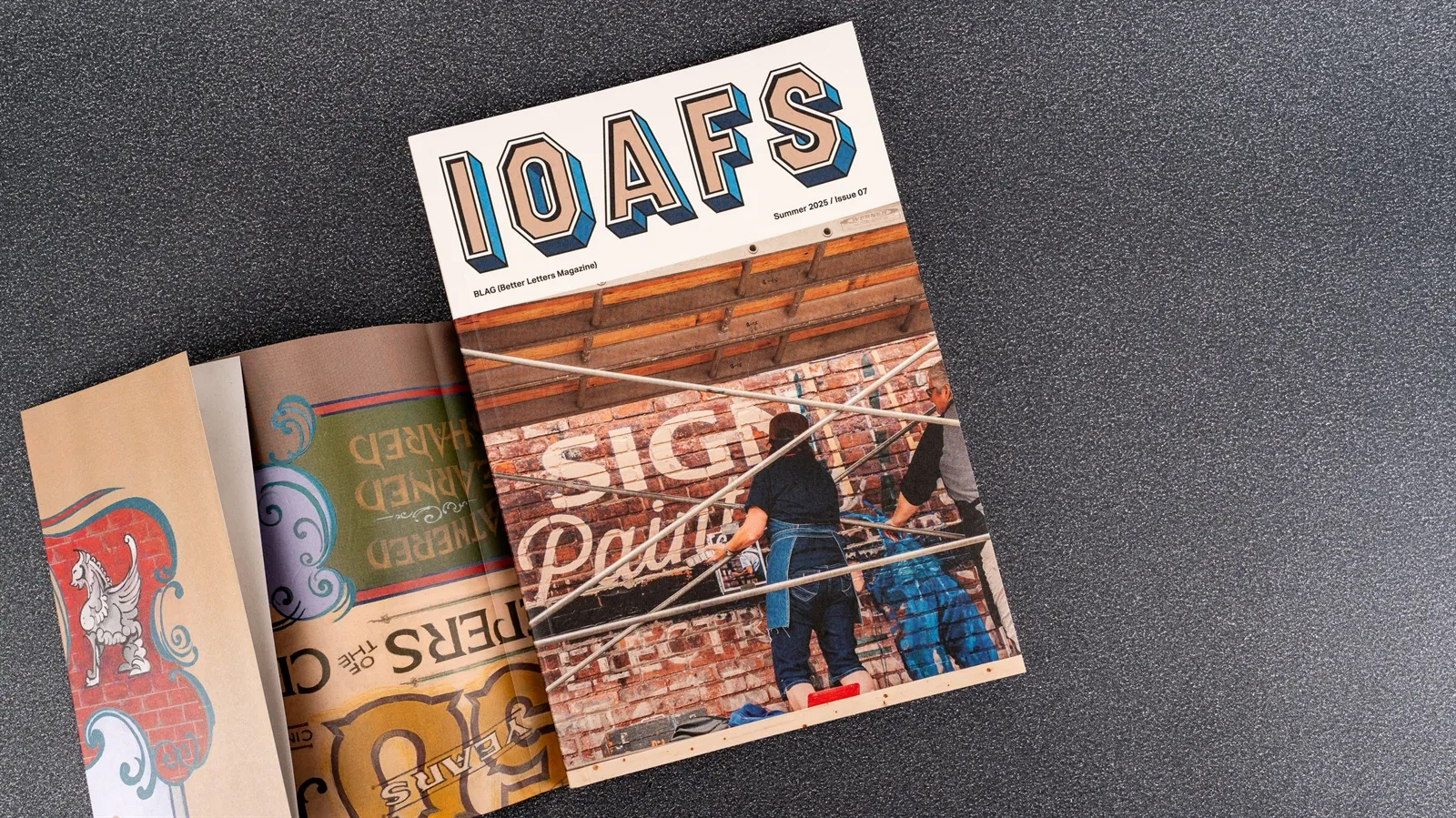
Today, when we think of signmaking, we think of things like channel letters, monument signs, illuminated signage, perhaps even printed display graphics. But once upon a time, hand-painted signs were the default. And for some, they still are. Print magazine’s Steve Heller revisits sign painter and historian Sam Roberts and his BLAG (Better Letters Magazine), a publication that “has become a clearing house for precision work by contemporary sign and showcard makers, and has invigorated the art of lettering ingenuity.”
The latest issue has a guest editor and guest title:
The current summer 2025 issue continues the tradition but with a distinct new twist, thanks to the help of guest editor Mark Oatis, founder of the Letterheads 50 project. The temporarily retitled magazine, IOAFS (International Organization [of] Adverturesome, Fearless Signpainters), showcases “a robust band of artists” that deserve a dedicated issue, at least once every 50 years. The issue takes the art and craft seriously but does not take itself so seriously.
There are a variety of subscription tiers that start from $0 all the way up to the $999 sponsor level. A basic subscription to the print edition will run about $89 a year. If you’re a signage aficionado, subscribe now!
Beast of the Numbers
Here’s an aspect of décor we don’t always think about: house numbers. If you’re looking to update your house numbering, check out these “sculptural” house numbers created by Dutch artist Reinoud Oudshoorn. Says Core 77:
Oudshoorn was something like a graphic designer who transitions into industrial design: He originally trained as a painter, but grew dissatisfied with the limitations of 2D and started pushing into sculptural 3D works. In short, he was the perfect guy to render boring 2D characters interesting:
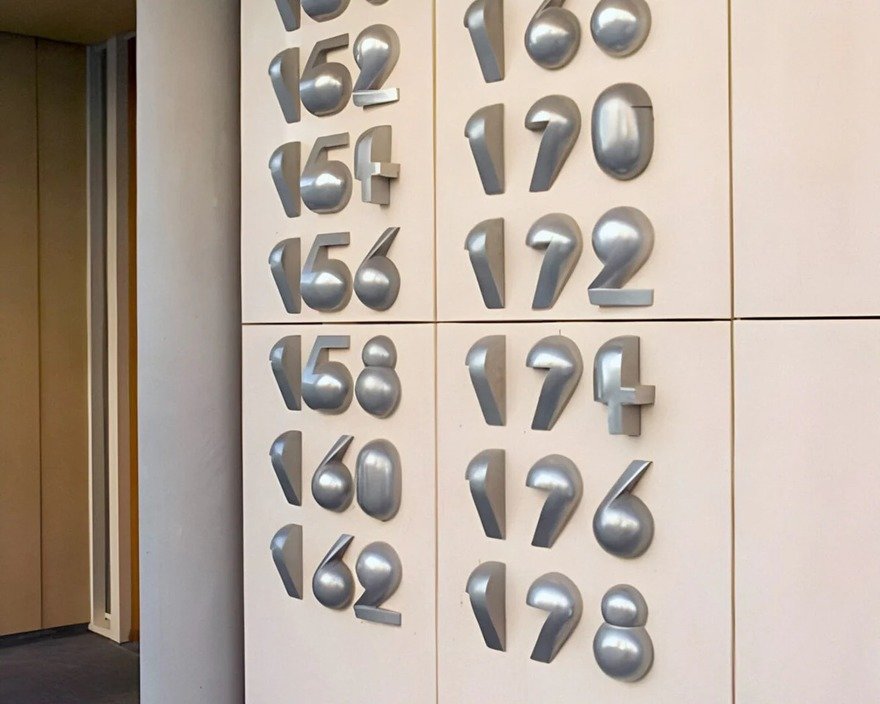
They are manufactured by Petra and are cast aluminum. A steal at—yikes!—$625 a pop! Or:
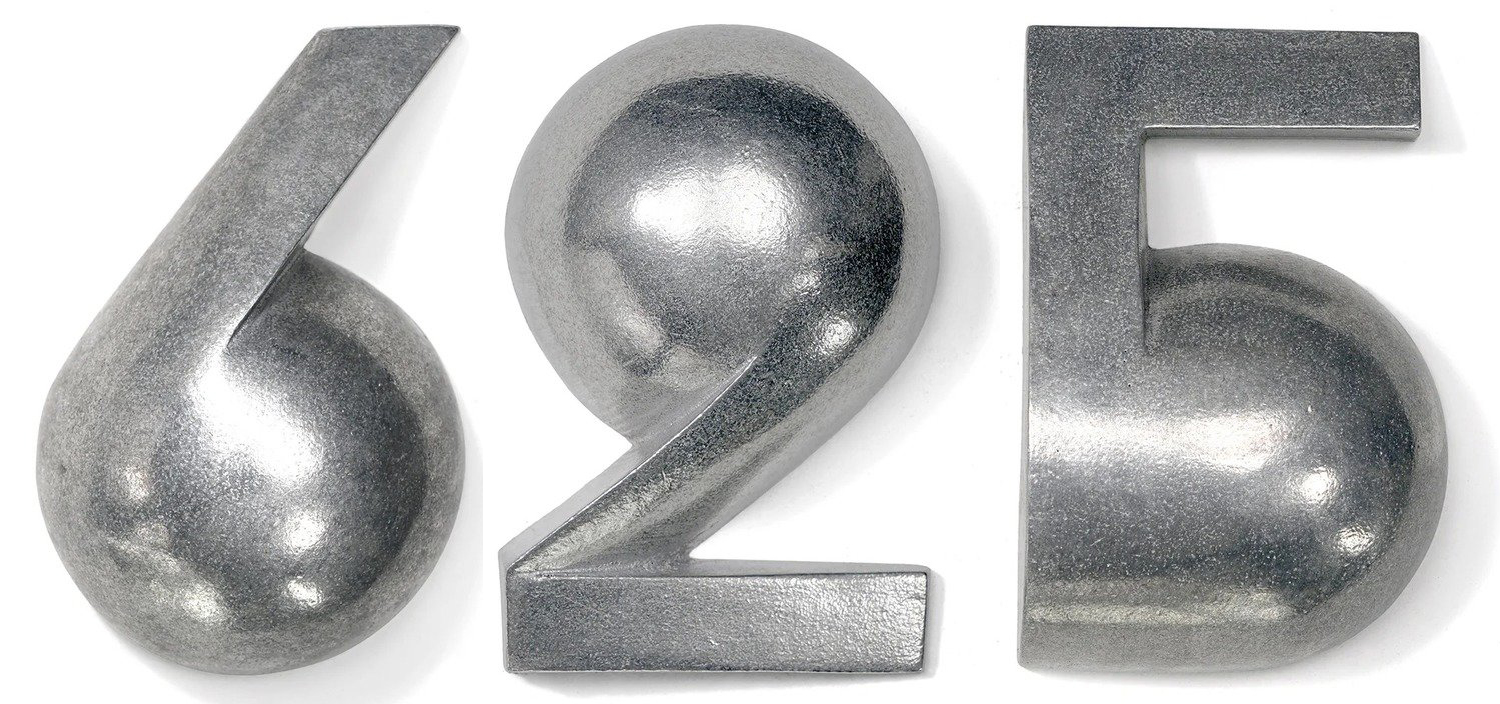
If you want to get these, better clear it with UPS and FedEx as they’re the only ones who ever really use them, occasionally correctly.
reMarkable
We have no doubt remarked in the past on the reMarkable E Ink tablet, but users of the device are excited about the newest edition, the Paper Pro Move, a more pocket-sized (if you’re a kangaroo) version of its color E Ink tablet. Says Gizmodo:
Priced at $449 and available today, Sept. 3, the Paper Pro Move has dimensions (7.7 x 4.24 inches) that more closely resemble a reporter’s notebook. Even with my small palm, I could comfortably grip the Paper Pro Move in one hand and use the included Marker stylus to write on it. At 230g (0.51 pounds) and 6.5mm thick (0.26 inches thick), it also slipped easily into the chore jackets that I’ve been fond of lately.
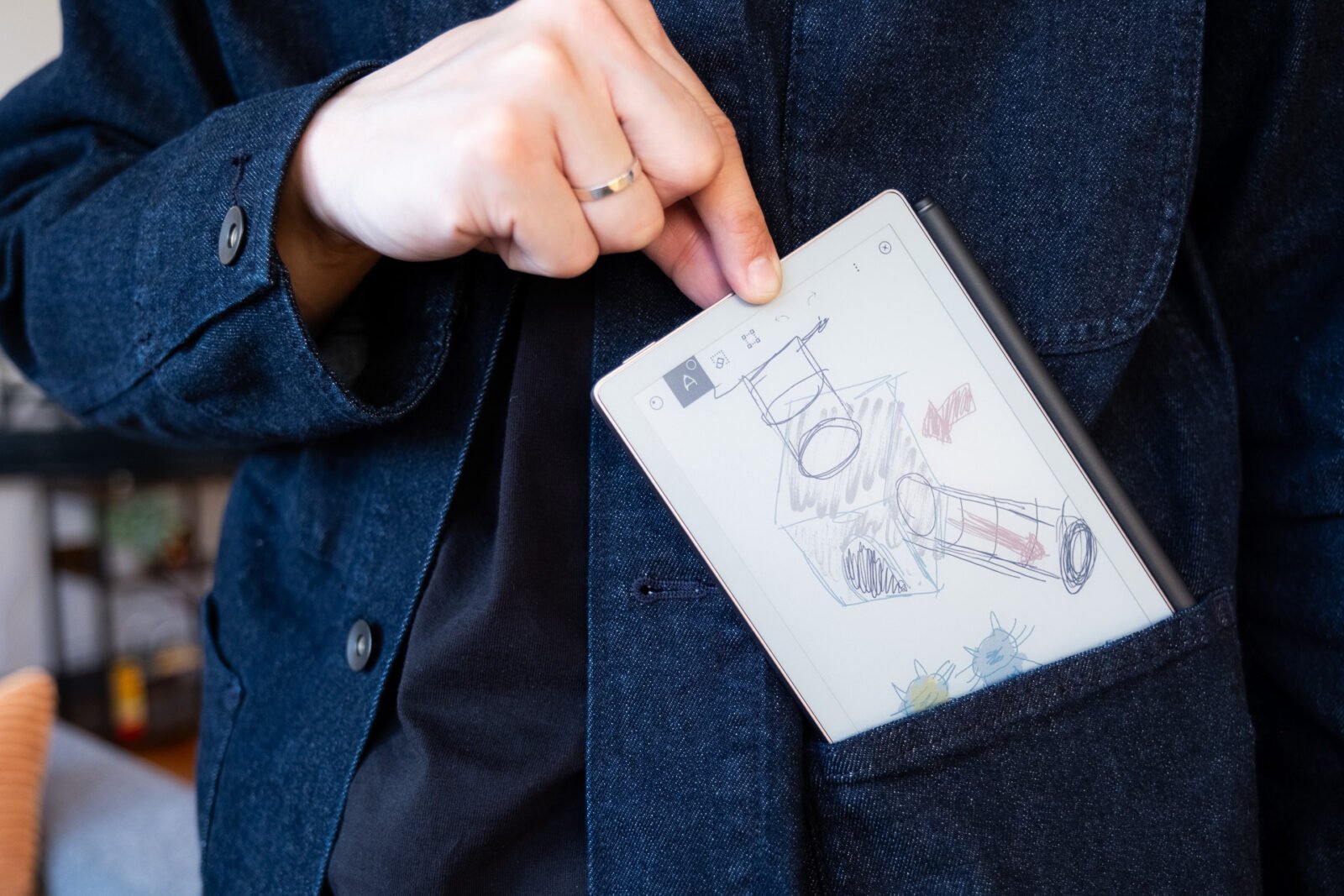
If you’re looking to replace a paper notepad and pen, it may be worth investigating.
Miracle Bot
(Optional musical accompaniment to this item.)
Over the past several years, we have been tracking the increasing sophistication of robots, and the increasing number of tasks they can perform. But…can they walk on water?
It turns out, they can. Via Ars Technica, researchers have taken a tip from the water strider (390 species in the genus Rhagovelia), a semi-aquatic insect that has evolved to be able to walk across the surface of lakes or rivers.
Rhagovelia (as opposed to other species of water striders) have fan-like appendages toward the ends of their middle legs that passively open and close depending on how the water beneath them is moving. This is why they appear to glide effortlessly across the water’s surface. Biologist Victor Ortega-Jimenez of the University of California, Berkeley, was intrigued by how such tiny insects can accelerate and pull off rapid turns and other maneuvers, almost as if they are flying across a liquid surface.
Ergo, the Rhagobot.
After closely studying the structure and function of Rhagovelia legs and fans, he and his team created artificial versions that were also designed to morph when exposed to water. These were attached to the middle legs of Rhagobot. Just like their inspiration, the fans spread immediately when submerged in water and closed again once they were out. There is no need for an extra power source because the morphing of the fans is determined by the motion and speed of water.
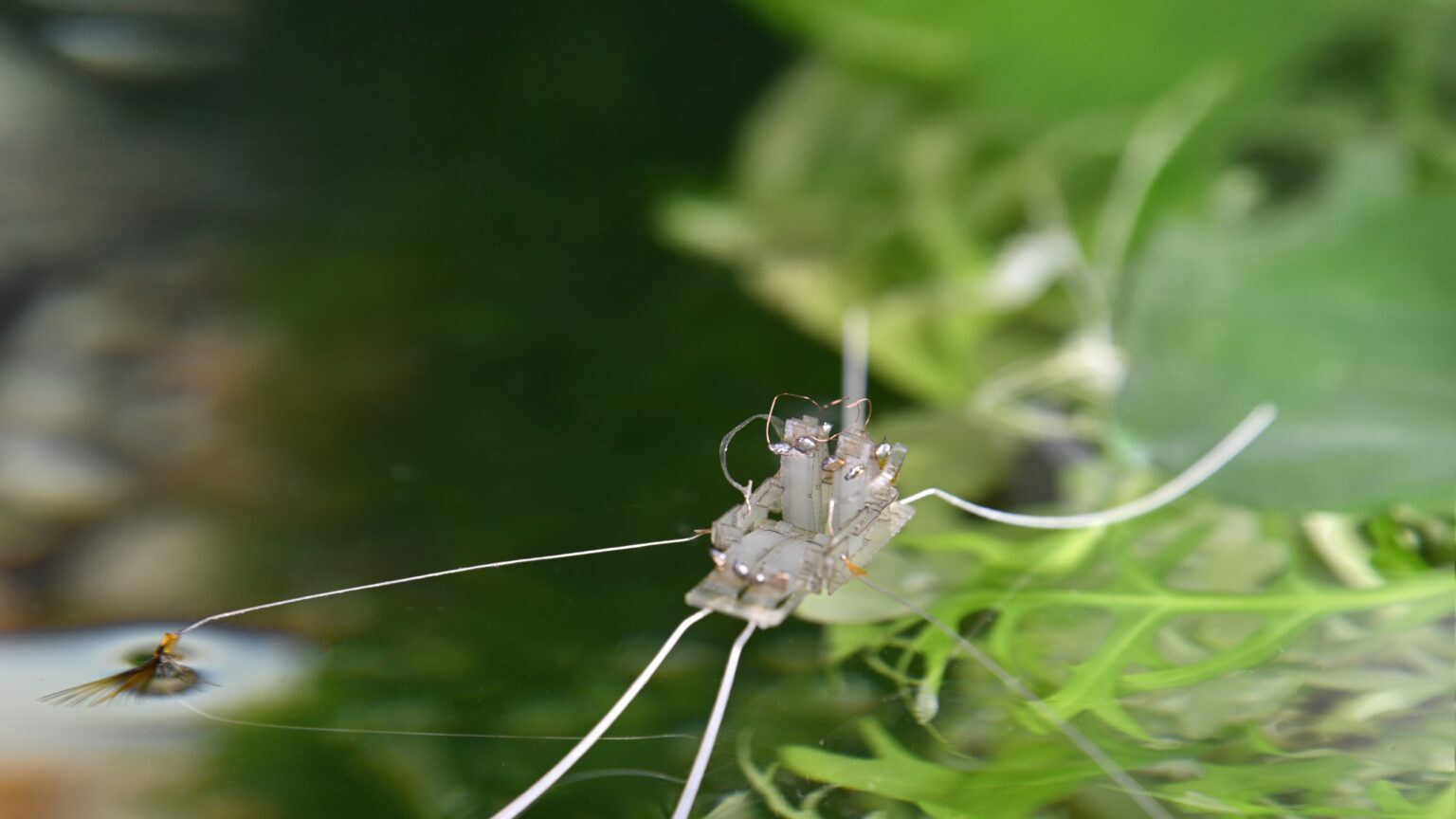
Credit: Saad Bhamla
The team wanted to see if their artificial fans would give Rhagobot an edge. They built an alternate robot, modeled after another species of water strider that propels itself using surface tension, and pitted it against Rhagobot. Both were given the same amount of power, yet Rhagobot was able to travel farther and make sharper, faster turns than its competition because the fans gave it an edge
This isn’t just academic; there are some practical uses for Rhagobot, such as environmental monitoring, search and rescue during floods, or even exploration of other worlds, such as Saturn’s moon Titan and its methane oceans.
Dressing Down
We’ve all likely heard of “glass slippers,” the ill-advised footwear that plays a critical role in the story of Cinderella, but have you heard of a glass dress? Via Atlas Obscura, glass dresses were once a thing, if not a terribly popular thing. In 1893, the World’s Columbian Exposition in Chicago drew 27 million people to the Windy City to gaze in wonder at replicas of ancient Greek and Roman palaces, neon lights (a new thing), recreations of ancient Egyptian temples, an early prototype fax machine, a moving sidewalk, and pancake mix. It was an eclectic mix of the wondrous and the prosaic.
One exhibitor, Toledo, Ohio’s Libbey Glass Company, had erected a kind of “crystal palace” in which attendees could watch glass being formed into lampshades and other items. Alas, no one was all that excited. So Libbey started to find ways of drawing a crowd, first by charging admission (surely something worth paying for was worth seeing) then by selling people Libbey-branded souvenirs, such as neckties and dolls that were made using spun glass. The centerpiece of the crystal palace, and the thing that attendees queued up for, was an evening gown made from threads of spun glass, which had been custom-made for American actress Georgia Cayvan.
To “spin” these glass fibers, a glassworker used tweezers to pluck filament after filament from a rod dipped into a flame. These threads were often wound onto a wheel and then woven on hand looms, dressed with some organic fiber to cushion the fragile glass. According to Charlotte Holzer, a textile conservator who studies glass clothing, the ties and belts were fashioned by gathering bunches of fibers into braids.
(Cinema hadn’t been invented yet, so you couldn’t watch movies and knit spun glass dresses. But you’d definitely want knitting lights for that.)
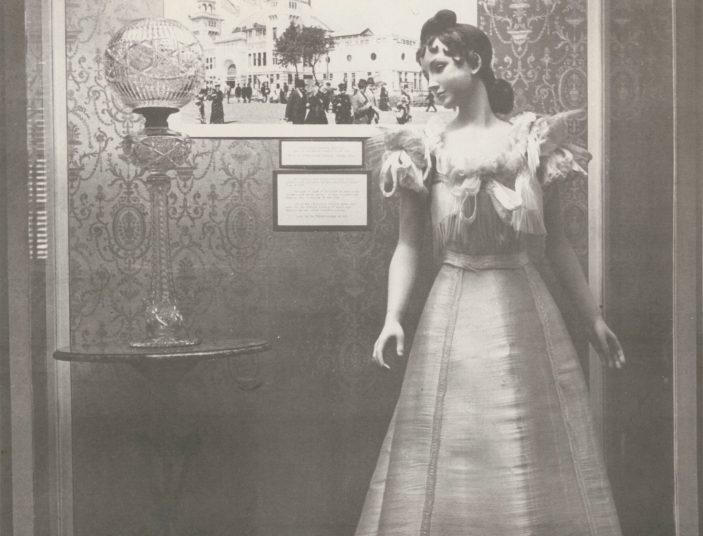
A dress made from spun-glass cloth. Courtesy Rakow Library, Corning Museum of Glass
One person who absolutely had to have one of these was Eulalia, the Infanta of Spain, so she commissioned one from Libbey.
Dresses like Eulalia’s weren’t boxy sheaths made from pieces of glass, but rather consisted of very thin strands mingled with other fabrics, such as silk. The garment would have been shiny and fragile, but not so brittle that it would shatter at the slightest touch.
That would be a drawback.
A team of workers spent more than 67 hours spinning and weaving to create a gown that weighed nearly 14 pounds—not counting the dangling trimmings—and carried a $2,500 price tag.
Our inflation calculator only goes back to 1913, at which point $2,500 would have been the equivalent of $81,577.78 in 2025 dollars. But then if you’re the Infanta of Spain, chances are you’ve got the bucks.
Regardless, Libbey’s seemed to think that “fiberglass” (essentially) couture was a potentially hot trend.
After the fair, papers extolled glass fabric’s many virtues. Women who wore it would be “quite independent of the cleaner and the laundress,” they promised, because the glassy garments just needed a quick scrub with soap and water. Wool made with glass fibers was “lighter than feathers,” another paper added, and “cannot be distinguished from the genuine article.”
But it turned out that there not that much demand for glasswear, aside from curiosity, and a desire on the part of textile makers to use something other than silk, which was expensive. This was the first experiment with “synthetic fibers,” which would become the popular choice for apparel.
Graphene Augments Reality
Was it a good week for graphene news? It’s always a good week for graphene news! Graphene heat dissipation boosts performance of AR displays. From (who else?) Graphene-Info:
Shanghai University researchers have designed a blue-green light micro-LED for Augmented Reality Heads-up Displays (AR-HUD) using COMSOL software, coupling photo-thermal properties with multi-physical fields. By incorporating a graphene film and heat sink for heat dissipation, the thermal management scheme of the micro-LED was further optimized.
The Shanghai University team further explored the use of graphene heat dissipation films on micro-LED devices to optimize the thermal management scheme, enhance photoelectric conversion efficiency, and minimize the effect of high junction temperature on device reliability.
The Novelty Never Wears Off
Those of us who grew up listing to the syndicated Dr. Demento Show every Sunday night (on Boston’s WCOZ) developed a love for the novelty song, those silly songs that weren’t necessarily hits and didn’t really fit into any specific genre or format. Things like Nervous Norvus’ “Transfusion,” Sheb Wooley’s “Purple People Eater,” Ray Stevens’ “Guitarzan,” or any of the songs by the likes of Spike Jones, Tom Lehrer, or “Weird Al” Yankovic. Now, via Laughing Squid, VTV is a parody of the original MTV (back when they played music videos) that collects some of the silliest novelty songs ever recorded.
The player pulls random songs from YouTube to provide a unique musical experience for every viewer, with their permission, of course.
You never know what you’re going to get, but in the few minutes we played with it we got “Monster Mash” by Bobby “Boris” Pickett and Monty Python, so if you want to check out some silly songs, give it a try.
Hamburglar
Here’s an odd headline: “The Secret to a Perfect McDonald’s Burger.” Our first thought was “go somewhere else.” We honestly can’t remember the last time we were ever at a McDonald’s, much less had one of their burgers, but apparently they have their fans. (Now, from what we recall, the fries were another matter…) Anyway, says Food & Wine:
For years, fast-food flavor has felt shrouded in secrecy.
And that’s probably a good thing.
Whether it’s a proprietary sauce under lock and key or processes hidden behind non-disclosure agreements, the taste of your go-to takeout meal can seem distant and impossible to replicate. But when it comes to the classic McDonald’s hamburger, the secret isn’t in a mysterious spice blend at all. According to former McDonald’s corporate chef Mike Haracz, you already have everything you need in your pantry: salt and pepper.
In particular:
“It’s just salt and pepper. There’s no other things in there. It’s literally salt and pepper. It’s 86% salt, 14% pepper,” Haracz said. “You can look it up and find that information, so I’m not, like, giving away anything.”
Sounds healthy.
Whilst we don’t have burgers more than a couple times a year, if even that often, we’re more likely to seek out a particular pub in Boston’s Back Bay or tavern in Syracuse. If we’re going to eat unhealthily, it had better be worth it!
This Week in Printing, Publishing, and Media History
September 1
1795: American publisher, founder of the New York Herald James Gordon Bennett, Sr. born.
1878: Emma Nutt becomes the world’s first female telephone operator when she is recruited by Alexander Graham Bell to the Boston Telephone Dispatch Company. (Appropriately, Lily Tomlin was born on this same day in 1939. The over-50-year-olds out there will get the connection.)
1991: German graphic designer and typographer Otl Aicher dies (b. 1922).
September 2
1752: Great Britain, along with its overseas possessions, adopts the Gregorian calendar.
1963: The CBS Evening News becomes U.S. network television's first half-hour weeknight news broadcast, when the show is lengthened from 15 to 30 minutes.
1973: English novelist, short story writer, poet, and philologist J. R. R. Tolkien dies (b. 1892).
2013: American author and publisher Frederik Pohl dies (b. 1919).
September 3
1802: William Wordsworth composes the sonnet “Composed upon Westminster Bridge, September 3, 1802.”
1883: Russian author and playwright Ivan Turgenev dies (b. 1818).
1962: American poet and playwright e. e. cummings dies (b. 1894).
1967: Dagen H in Sweden: Traffic changes from driving on the left to driving on the right overnight.
September 4
1888: George Eastman registers the trademark “Kodak” and receives a patent for his camera that uses roll film.
1908: American novelist, short story writer, essayist, and poet Richard Wright born.
1951: The first live transcontinental television broadcast takes place in San Francisco, from the Japanese Peace Treaty Conference.
1972: The Price Is Right premieres on CBS. As of 2019, it is the longest running game show on American television.
1998: Google is founded by Larry Page and Sergey Brin, two students at Stanford University.
September 5
1977: NASA launches the Voyager 1 spacecraft. Voyager 1 (like the other voyager probes) contained what was called the “Golden Record,” a gold-plated audio-visual disc that contains photos of the Earth and its lifeforms, scientific information, spoken greetings from people such as the Secretary-General of the United Nations and the President of the United States, a medley of "Sounds of Earth" (the sounds of whales, a baby crying, and waves breaking on a shore, in case aliens are into New Age music), and a collection of musical works by Mozart, Blind Willie Johnson, Chuck Berry, and Valya Balkanska. In 2013, Voyager 1 became the first manmade object to leave the Solar System.
1929: American comedian and actor Bob Newhart born, who did more for the telephone than Alexander Graham Bell.
1945 (not the Year of the Cat): Scottish singer-songwriter and guitarist Al Stewart born.
1946: Tanzanian-English singer-songwriter and producer Freddie Mercury born.
September 6
1642: England's Parliament bans public stage-plays.
1928: American novelist and philosopher Robert M. Pirsig (Zen and the Art of Motorcycle Maintenance) born.
1943: English singer-songwriter and bass player Roger Waters born.
September 7
1559: English-French printer and scholar Robert Estienne dies (b. 1503).
1911: French poet Guillaume Apollinaire is arrested and put in jail on suspicion of stealing the Mona Lisafrom the Louvre museum.
1912: American engineer and businessman and co-founder of Hewlett-Packard David Packard born.
1927: The first fully electronic television system is achieved by Philo Farnsworth.
1978: English drummer (The Who) Keith Moon dies (b. 1946).
2003: American singer-songwriter Warren Zevon dies (b. 1947). Life’ll Kill Ya.