Objects of Their Affection
Print magazine looks at this year’s graduating class from Otis College’s Product Design program. As part of the requirements for this industrial design program, students are tasked with designing their own objects—essentially encapsulating how they see the future.
In Design Studio V, every student becomes their own creative director. They write the brief, define the problem, and choose a focus that speaks to their passions—whether that’s a digital tool, a physical object, or something that blurs the line. It’s an exploration of both philosophy and practice: small-group critiques spark unexpected ideas, visiting lecturers open new career windows, and weekly tasks push students to ask bigger questions about where design can make an impact. By the end of fall, each has a finished product design and a clear plan to bring it to life.
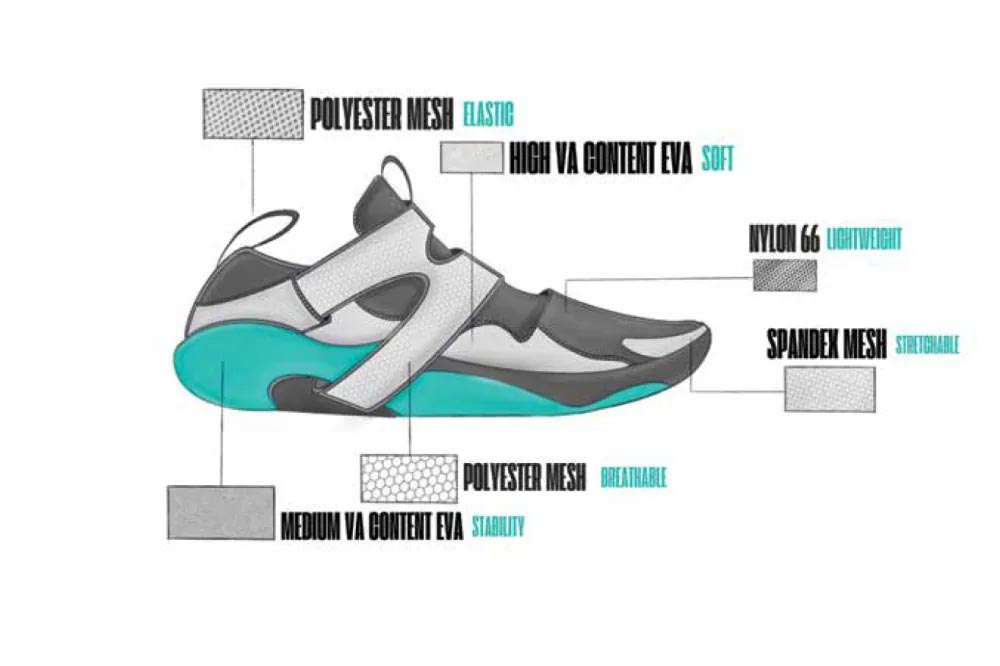
There are some interesting ideas. For example, student Edison Mao has designed a “post-workout shoe.”
The Post-Workout Shoe is a shoe that not only provides superior comfort and support for individuals recovering after exercise but is also versatile enough for daily wear. A shoe designed for both training and relaxation. Two parts for two needs – support when you move, comfort when you rest.
Here’s one for Cary Sherburne: Nicholas Cha’s Indigo Stool:
A seat with soul crafted from layers of recycled denim, each Indigo Stool carries the visible history of worn jeans, reimagined into sculptural function. Bound together with eco-friendly bioresin, the stool is lightweight, durable, and one-of-a-kind….Through its soft texture and rich indigo hues, this piece invites us to reconsider waste as a resource and to see everyday materials as vessels of memory and meaning.
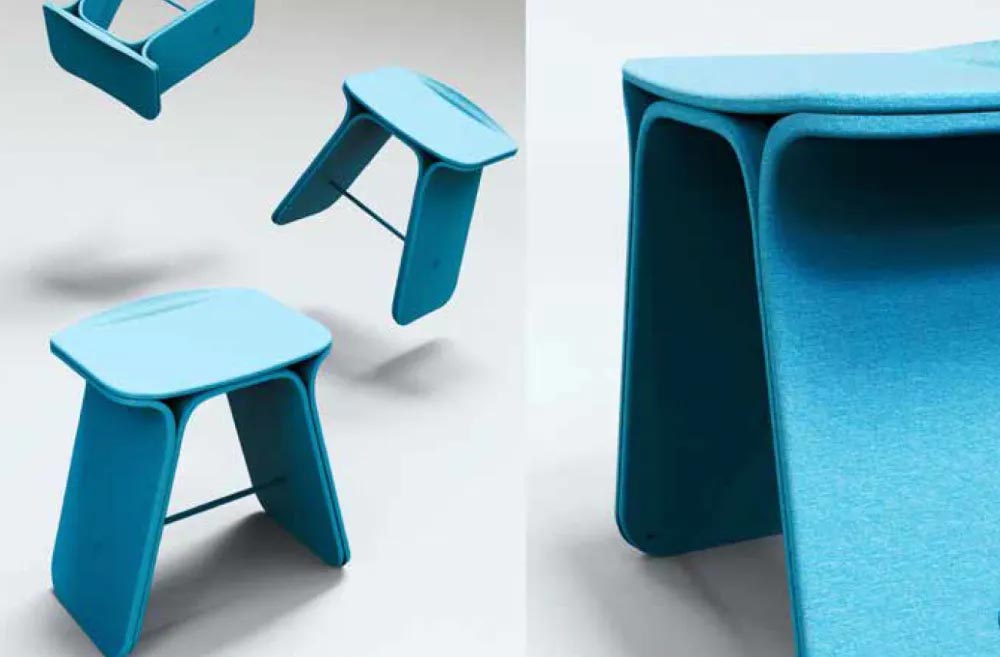
Be sure to click through to find out what the future may look like.
ASCII Anything
“ASCII art” is a form of graphic design in which individual letters, numbers, and other keyboard characters are used to create illustrations, so-called because of its reliance on the 95 printable characters defined by the ASCII Standard. But, before there was ASCII, there was the typewriter, and, via Core77, a tale of two “typewriter artists,” separated by nearly a century but using the same M.O.
Paul Smith was an American artist. Born in 1921, he had severe cerebral palsy, a condition that made it impossible for him to draw or paint with conventional implements such as pencils or brushes. However, he discovered that, if he used one hand to steady the other, he could press typewriter keys. Ergo, he created art on a manual typewriter. And even though his “palette” was limited to the symbol keys above the numbers, he could still type some highly detailed images.
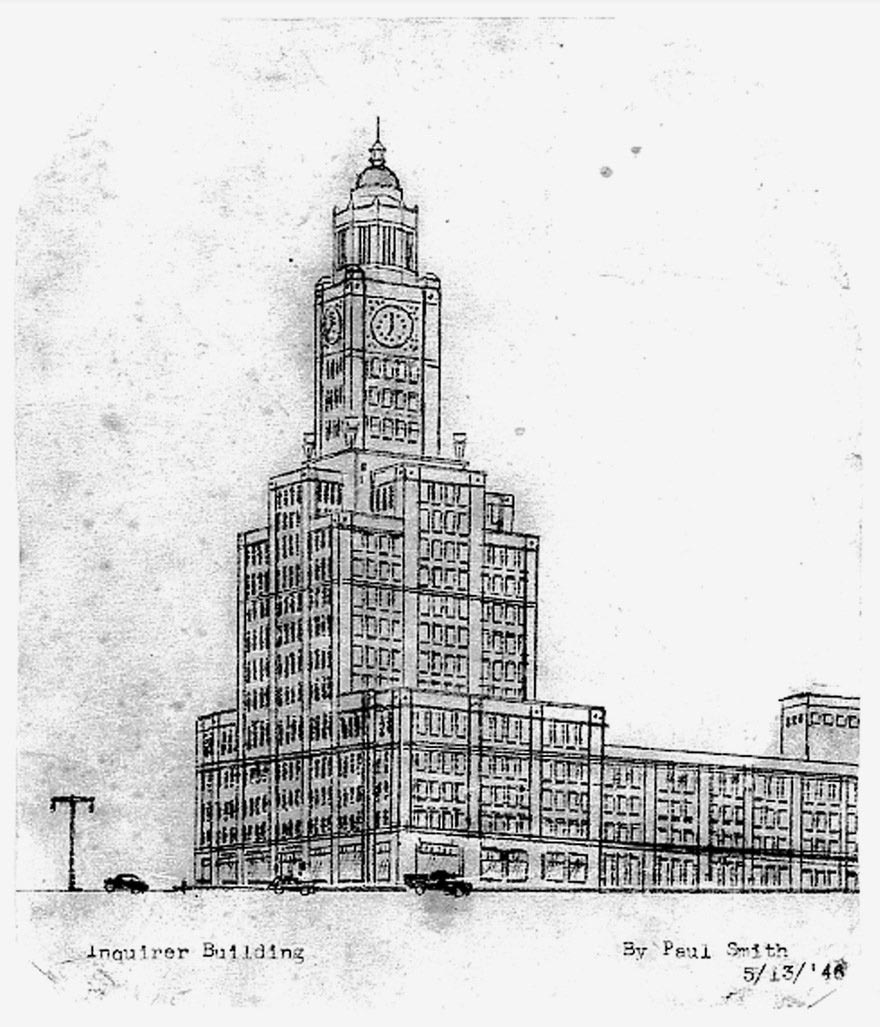
Smith began his artworks when he was a boy in the 1930s, and you can check out his work here.
A couple generations later comes James Cook—no, not the famous British naval captain and explorer—but rather a current-day Brit who describes himself as a “full-time typewriter artist.”
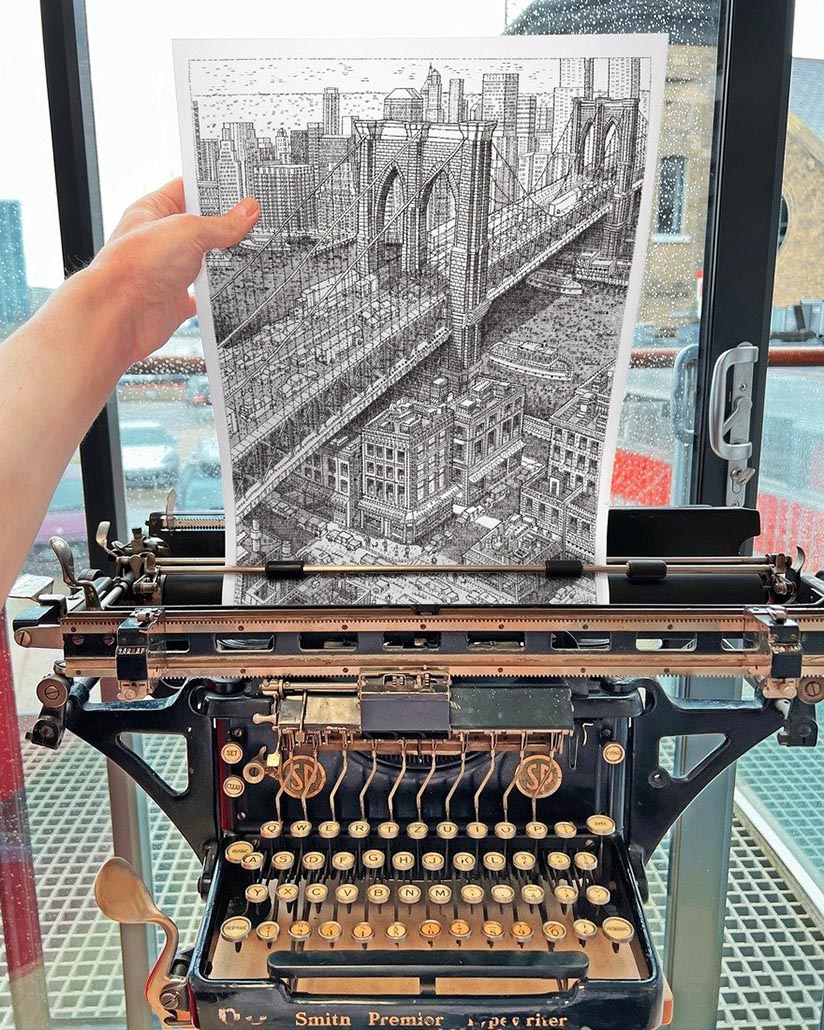
He has a much bigger palette than Smith did, and he also changes the ribbon to add other colors (mostly red). You can check out and purchase prints of his work here.
Skin Deep
For years, we often wondered at what point would wide-format equipment vendors develop a human-sized flatbed printer for automated digital tattooing. Well, it may not be too long a wait. Via Core77, Austin-based startup Blackdot has developed a “robotic tattooing machine.”
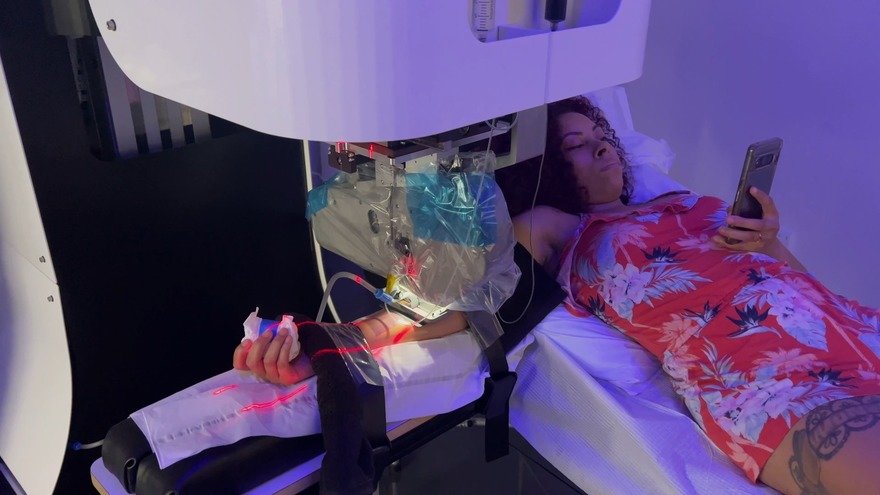
The device was created with the help of Yan Azdoud, a medical device engineer with expertise in "hyper-elastic surfaces," and its surgical precision has a startling payoff: Because its tattooing process only penetrates as deeply as necessary, the company claims that it's more comfortable to undergo and has never caused bleeding nor scarring in the 90-plus people who volunteered as guinea pigs.
Or indeed the guinea pigs that volunteered to be tattooed. And Blackdot has preemptively addressed the potential blowback:
Rather than replacing human tattoo artists, the company’s intent is to allow them to license their work: The company is setting up an arrangement where the tattoo artist creates the design, the machine does the work at a Blackdot studio, and the tattoo artist gets a cut.
As it were.
Sock It to Me
Here’s a phrase to be conjured with: “battery-powered socks.” And, yes, we are aware that there are such things. But Fieldsheer Apparel Technologies had launched a pair of high-tech self-warming socks that, alas, worked all too well. Says Boing Boing:
For the bargain price of $80-130, customers got to participate in an impromptu science experiment testing the interaction between heat, friction, moisture, and human flesh. Spoiler alert: flesh lost.
The socks have since been recalled by the U.S. Consumer Product Safety Commission, citing customers who suffered “burns and blisters.”
And, yes, because we live in a dystopian nightmare, the socks came with their own app because who among us doesn’t want to control their socks via their phone?
RIP HD
If you use an Apple Macintosh computer, you know that one desktop icon that has scarcely changed in decades is the hard drive.
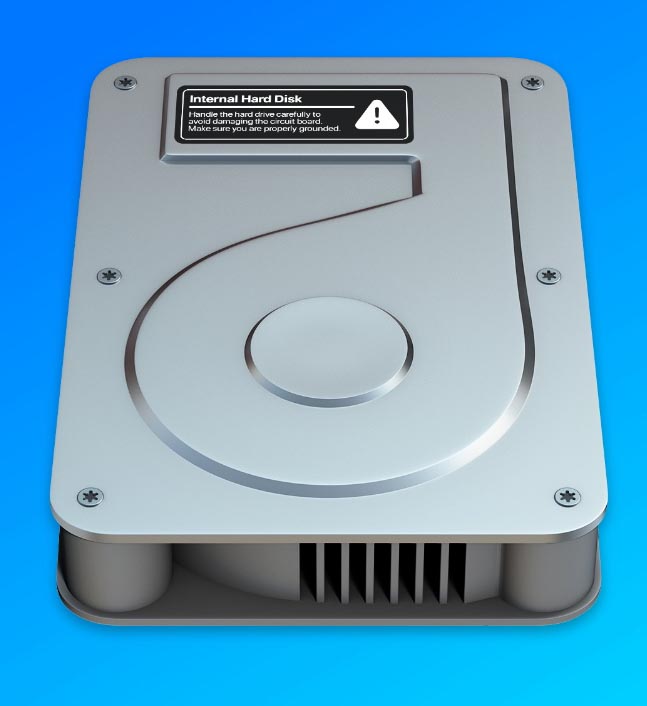
Introduced when Apple launched its major OS upgrade Mac OS X in 2000, the image of the old spinning hard drive inadvertently became a bit retro over the years as the internal drive Apple actually used was a solid-state drive (SSD). But, as Ars Technica reports:
Apple released a new developer beta build of macOS 26 Tahoe today, and it came with another big update for a familiar icon. The old Macintosh HD hard drive icon, for years represented by a facsimile of an old spinning hard drive, has been replaced with something clearly intended to resemble a solid-state drive (the SSD in your Mac actually looks like a handful of chips soldered to a circuit board, but we'll forgive the creative license).
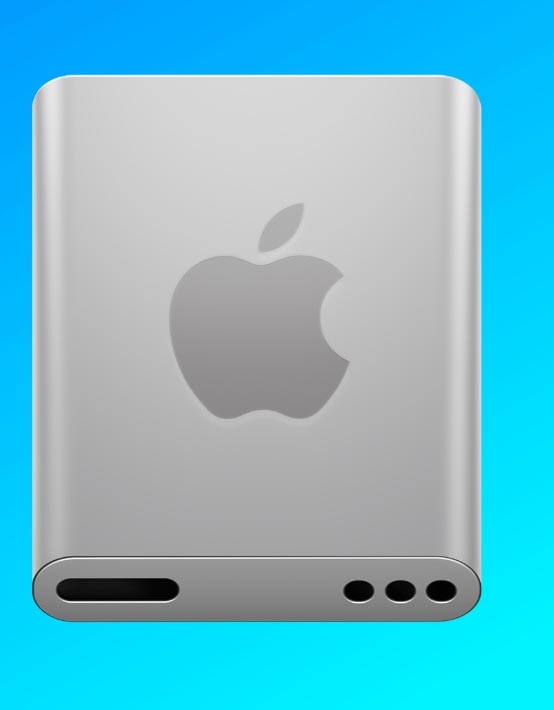
The Macintosh HD icon became less visible a few years back, when new macOS installs stopped showing your internal disk on the desktop by default.
Not the most momentous technological change in the world, but for those of us who have been using Macs for at least 25 years (or actually much longer than that) it was a refreshingly familiar, if a tad inaccurate, icon.
Escape Claws
Fiddler crabs and known—by people attuned to crabs—for having one claw that’s significantly larger than the other. Because nature seeks to be as ridiculous as possible, fiddler crabs not only wave their large claws to attract mates, but hold competitions during mating season in which females choose the males whose claws are biggest and wave the fastest. Crabologists have known about this behavior—and how they can study it without bursting into hysterics is a mystery—but they wondered how male crabs specifically react to rivals. So, via Futurism, researchers at the UK’s University of Exeter conducted an experiment with “Wavy Dave,” a 3D-printed, Bluetooth-controlled crab-bot programmed to wave at other crabs.
Initially, the males left Dave alone, possibly because his larger claw was bigger — and therefore more likely to win the attention of females or pose a threat — than their own. At some point, however, “the females realized [the robot] was a bit odd,” Wilde said, which led some of the male fiddlers to confront him.
In the end, it did not go well for Wavy Dave.
“One male broke Wavy Dave by pulling off his claw,” the lead author wrote. “We had to abandon that trial and reboot the robot.”
Print business owners take heed.
“If you own a shop and your rivals start selling things really cheaply, you might have to change how you run your business,” the researcher explained. “The same might be true for males signaling to attract females — and our study suggests males do indeed respond to competition.”
So if you have one press that is bigger than another—watch out.
Graphene Can See the RealMe
Was it a good week for graphene news? It’s always a good week for graphene news! RealMe’s new smartphone features graphene cooling technology. From (who else?) Graphene-Info:
Mobile phone brand Realme has launched the GT 7 Dream Edition in South Africa, created in collaboration with the Aston Martin Formula One team, which makes use of IceSense graphene technology.
… The Realme GT 7 Dream Edition is also equipped with a 7,000mAh battery and 120W fast charging. The smartphone can reach 50% charge in 14 minutes and a full charge in 40 minutes. The smartphone features IceSense Graphene technology, also found in various electronics such as Huawei foldable phones, to offer higher thermal conductivity, 360° heat dissipation,
Cool.
High-Carb(on) Diet
Here’s a cool way to reduce CO2 and boost your cholesterol: butter made from atmospheric carbon dioxide. Via Boing Boing:
A Batavia, Illinois company called Savor has figured out how to turn carbon dioxide drawn from the atmosphere and hydrogen from water into fat that is molecularly identical to the butterfat in sticks from the dairy aisle. The product browns, melts, and tastes like the real thing, the company says, and its ingredient label is short: the lab-made fat, water, sunflower lecithin, and natural flavor and color, reports CBS News.
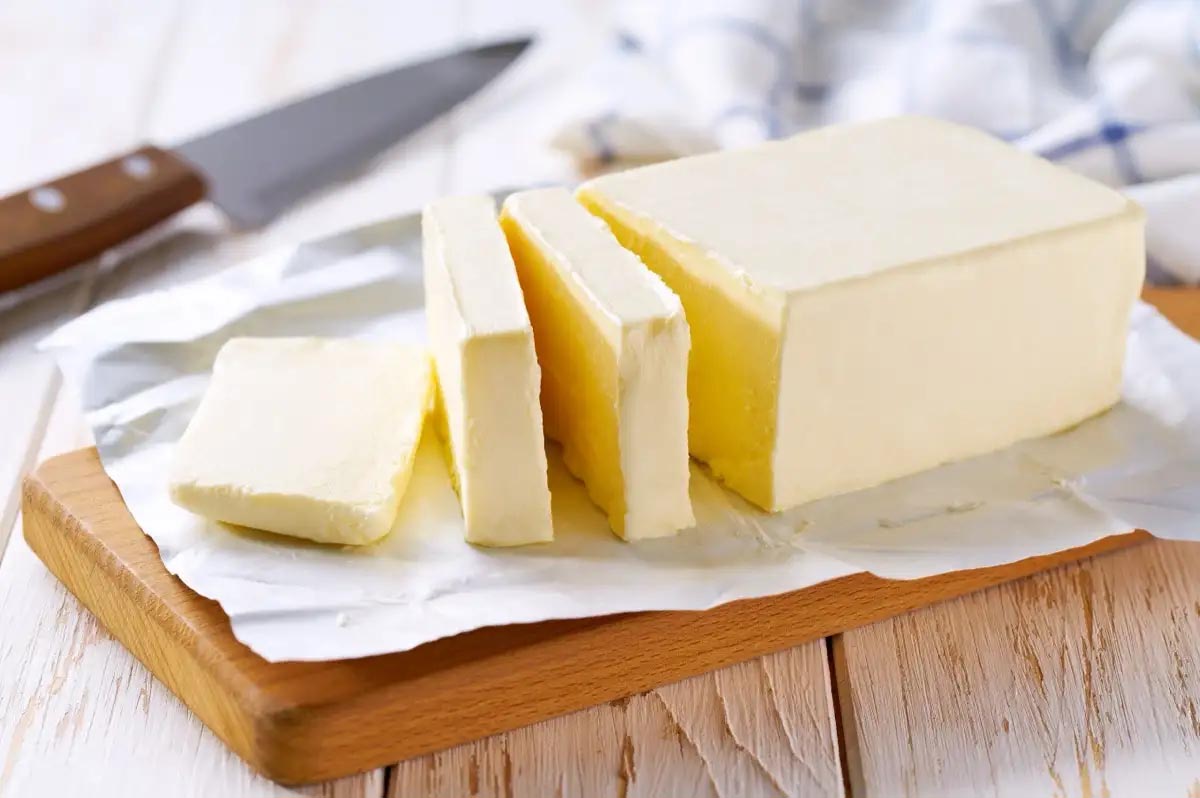
Traditional production of fats and oils is responsible for roughly 7 percent of global greenhouse-gas emissions. Savor's process, according to its published life-cycle analysis, releases no greenhouse gases and needs about one-thousandth of the land used by conventional agriculture.
The company says it will be launching chocolates made with its CO2 butter this coming holiday season and will bring a consumer butter product to market by 2027.
Inca Roads
In email and other online communications, we often refer to multi-message conversations as “threads,” but the ancient Incas actually used threads for creating documents—that is, a string-based “writing” system called khipu made of materials such as cotton, alpaca wool, and human hair. Says IFLScience:
While little is known about Inca khipu production, colonial-era reports suggest that only males from elite families were educated in the creation of these ancient documents, which used a series of tassels and knots to record information. Often, these upper-class khipukamayuqs would “sign” their khipus by weaving a few strands of their own hair into the main cord.
One assumption researchers had made regarding khipus was that they were only used by high-ranking, elite Incas. But a recent discovery showed that the lower classes also “pulled the strings.”
A 500-year-old Inca document made of alpaca wool and human hair was made by an unknown individual of low social status, shattering the common belief that only high-ranking imperial officials knew how to produce these strange thread-based records.
They have had to make some assumptions about khipus.
However, because most known examples of Inca-era khipus come from graves that were looted before archaeologists had a chance to excavate them, it’s currently impossible to link these relics to any specific khipukamayuqs – or khipu makers. As a result, historians remain largely in the dark over who produced the stringy objects or how to read them.
Interestingly, the evidence for lower-class khipukamayuqs came from evidence that one particular khipukamayuq did not drink beer.
The study authors therefore decided to perform isotopic analysis on a 104-centimeter (41-inch) long human hair that was incorporated into the khipu. In doing so, they expected to find evidence that this individual consumed a high-status diet consisting of meat washed down with copious amounts of maize beer – or chicha.
They seem bizarrely incredulous:
“It is difficult to imagine a scenario where an official khipukamayuq could have refrained from consuming large amounts of maize in the form of beer,” write the study authors.
Seems like a bit of a slam. What, they weren’t drunk off their butts all the time?
“I was stunned when I got the results back,” said Hyland. “I said, ‘What? This person's eating potatoes and legumes?!’”
Jeez, diet-shame the Incas, why don’t you?
Ultimately, these findings show that whoever made this khipu was a lowly commoner, proving that this intricate form of record-keeping was not exclusive to the elites of Inca society. According to Hyland, the level of detail and intricacy in the woven threads suggests that this particular individual was clearly highly skilled, despite his or her lack of political clout.
And we’re just gonna end that there without comment.
Play that Funky Moosic
The BBC asks a question for the ages: “Why are farmers playing jazz music to cows?” Simple enough: for the animals’ welfare and perhaps to improve milk quality. Or maybe to soften the blow of the news about “carbon butter.” Initially, it was to drown out some of the unpleasant noises of modernity.
“We installed a robotic milking system and there was a lot of new harsh sounds and noises, so we wanted to drown that out and give them a constant sound.
“This was about 10 years ago and somebody suggested the cows like classical music - that was the trend back then - so I put a classical radio station on for the cows to listen to and it just helps them relax a little bit.”
It makes sense the cows might prefer Beethoven’s Pastoral Symphony… Anyway, the current trend is away from classical and more toward jazz. And…wait for it…
The trend has gone viral on TikTok,
Of course it has.
with videos - from across the world - fetching millions of views. Charles Goadby, a dairy farmer based in Nuneaton, Warwickshire, has embraced the new trend…
They could also try Henry Cow, which would be appropriate, or maybe even Pink Floyd’s Atom Heart Mother. Although, as much as we like the Jazz Butcher, the name would probably be a little uncomfortable for the cows.
Moa’s Ark
Remember the “dire wolves”? No, it was not the band that had a hit with “Money for Nothing,” but rather a supposedly “de-extincted” creature from the last ice age. While the results came under no small degree of criticism (wasn’t what they “created” simply a modern gray wolf with some dire wolf-like characteristics?), Colossal Biosciences has announced their next de-extincting project: the giant moa, a huge, flightless bird that once inhabited New Zealand and went extinct—basically, it’s no moa—about 600 years ago, just after humans first arrived on the islands. Says CNN:
Genetic engineering startup Colossal Biosciences has added the South Island giant moa — a powerful, long-necked species that stood 10 feet (3 meters) tall and may have kicked in self-defense — to a fast-expanding list of animals it wants to resurrect by genetically modifying their closest living relatives.
Such as? The moa’s closest relative is believed to be a small terrestrial South American bird called the tinamou, which—unlike the bulky moa—can fly. Previously, the kiwi, the emu, and the cassowary were thought to be have been closely related to moa.
The project would initially involve recovering and analyzing ancient DNA from nine moa species to understand how the giant moa (Dinornis robustus) differed from living and extinct relatives in order to decode its unique genetic makeup, according to a company statement.
The moa joins the woolly mammoth, the dodo and the thylacine (aka the Tasmanian tiger) on Colossal Biosciences’ de-extincting wish list. We question the judgement of bringing back extinct creatures unless their original ecosystem can be reproduced, and it seems kind of mean to just put them in a zoo. But then we question whether they are really de-extincting anything, so perhaps it’s a moot point.
Krafty
If you ever attended college, you know that there are (were?) two basic food staples, at least for freshmen: pizza and Kraft Mac & Cheese. (That may have changed in the past 40 years but it was true at one point.) There was the economy of Mac & Cheese and the convenience of pizza delivery. Now, Kraft is combining the two—and in ways you might not expect. Via (who else?) Food & Wine:
On Tuesday, Kraft Mac & Cheese announced the launch of its newest limited-edition flavor, Pizza, for fans to try. "With bold, savory notes of garlic and classic Italian spices, Kraft captures the essence of a classic slice in every bite, bringing pizza-y goodness to its signature mac & cheese," the brand shared
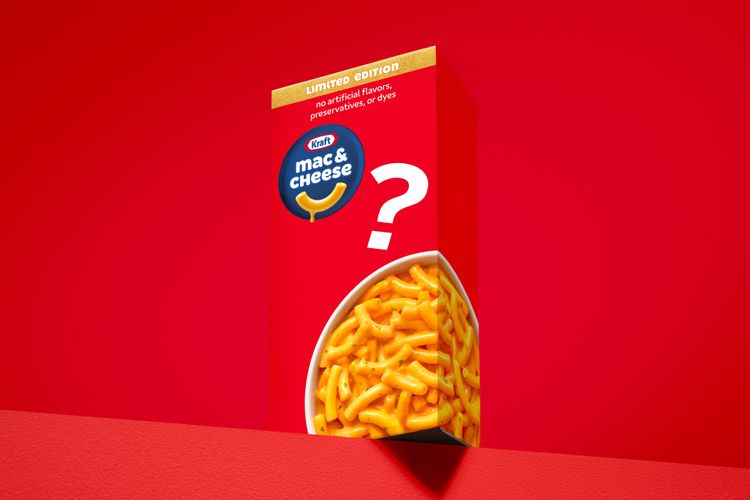
And it’s not just the taste of pizza, but delivery. Huh?
Kraft is also making sure it honors the top pizza cities in the U.S. — New York City, Chicago, and Detroit — by delivering a new flavor right to people's doors, just like a fresh pie. And yes, it will be delivered in as little as "fifteen minutes" in a custom Kraft Mac & Cheese pizza delivery box when fans order via Gopuff starting Friday, August 1. Naturally, the product will only be available while supplies last, so place your order early.
If the idea of having a box of Mac & Cheese delivered seems weird to you, or you don’t live in any of those cities (or both), not to worry, as the new flavor will be available in stores throughout the US “throughout the back-to-school season.” So consider yourselves warned.
This Week in Printing, Publishing, and Media History
August 11
1942: Actress Hedy Lamarr (not Hedley) and composer George Antheil receive a patent for a Frequency-hopping spread spectrum communication system that later became the basis for modern technologies in wireless telephones and Wi-Fi.
1946: American journalist and author Marilyn vos Savant born.
1950: Apple co-founder Steve Wozniak born.
August 12
1865: Joseph Lister, British surgeon and scientist, performs the first antiseptic surgery.
1887: Austrian physicist and Nobel Prize laureate Erwin Schrödinger born.
1949: Scottish-English singer-songwriter, guitarist, and producer Mark Knopfler born.
1960: Echo 1A, NASA’s first successful communications satellite, is launched.
1964: English spy, journalist, and author, creator of James Bond Ian Fleming dies (b. 1908).
1981: The IBM Personal Computer is released.
August 13
1756: English caricaturist and printmaker James Gillray born.
1888: Scottish engineer and inventor of the television, John Logie Baird, born.
1889: William Gray of Hartford, Connecticut is granted United States Patent Number 408,709 for “Coin-controlled apparatus for telephones.”
1899: Director Alfred Hitchcock born.
1946: English novelist, historian, and critic H. G. Wells dies (b. 1866).
August 14
1457: Publication of the Mainz Psalter, the first book to feature a printed date of publication and printed colophon.
1885: Japan’s first patent is issued to the inventor of a rust-proof paint.
1888: An audio recording of English composer Arthur Sullivan’s “The Lost Chord,” one of the first recordings of music ever made, is played during a press conference introducing Thomas Edison’s phonograph in London. (Now available on iTunes.)
1945: American actor, comedian, musician, producer, and screenwriter Steve Martin born.
1951: American publisher and politician, founded the Hearst Corporation William Randolph Hearst dies (b. 1863).
1950: Cartoonist Gary Larson (The Far Side) born.
1956: German poet, playwright, and director Bertolt Brecht dies (b. 1898).
1963: American director, playwright, and screenwriter Clifford Odets dies (b. 1906).
1965: American producer, director, and screenwriter Brannon Braga born.
1975: The Rocky Horror Picture Show, the longest-running release in film history, opens in London.
August 15
1843: Tivoli Gardens, one of the oldest still intact amusement parks in the world, opens in Copenhagen, Denmark.
1912: Bon appetit! American chef and author Julia Child born.
1914: The Panama Canal opens to traffic with the transit of the cargo ship SS Ancon.
1915: A story in the New York World reveals that the Imperial German government had purchased excess phenol from Thomas Edison that could be used to make explosives for the war effort and diverted it to Bayer for aspirin production.
1939: The Wizard of Oz premieres at Grauman’s Chinese Theater in Los Angeles, Calif.
1965: The Beatles play to nearly 60,000 fans at Shea Stadium in New York City, an event later regarded as the birth of stadium rock. This would lead to...
1969: The Woodstock Music & Art Fair opens in upstate New York.
August 16
1858: U.S. President James Buchanan inaugurates the new transatlantic telegraph cable by exchanging greetings with Queen Victoria of the United Kingdom. However, a weak signal forces a shutdown of the service in a few weeks.
1930: The first color sound cartoon, called Fiddlesticks, is made by Ub Iwerks.
1954: The first issue of Sports Illustrated is published.
1977: American singer, guitarist, and actor Elvis Presley dies (b. 1935)—or so they said.
August 17
1549: The Prayer Book Rebellion is quashed in England.
1607: French lawyer and mathematician Pierre de Fermat born.
1807: Robert Fulton’s North River Steamboat leaves New York City for Albany, N.Y., on the Hudson River, inaugurating the first commercial steamboat service in the world.
1908: Fantasmagorie, the first animated cartoon, created by Émile Cohl, is shown in Paris, France.
1932: Trinidadian-English novelist and essayist, Nobel Prize laureate V. S. Naipaul born.
1945: George Orwell’s novel Animal Farm is first published.
1970: Venera 7 launched. It will later become the first spacecraft to successfully transmit data from the surface of another planet (Venus).