The Pencil Is Mightier Than The Sword
Charles Fraser-Smith may not be a household name, but he is thought to have been Ian Fleming’s inspiration for the character who has come to be known as “Q,” the purveyor of James Bond’s fancy and clever spy gadgets. Fraser-Smith was an agent in Britain’s military intelligence arm during World War II, and indeed invented a number of gadgets for soldiers and airmen during the War. Via Atlas Obscura, one of those gadgets was a pencil designed to be used by British prisoners of war to help them escape—the pencil had a secret compartment that contained a map and a compass. To help develop it, Fraser-Smith turned to the Cumberland Pencil Company, which had been creating writing implements since 1832.
If you’re ever in the Lake District of England, be sure to stop by the Derwent Pencil Museum, which has the full story of Fraser-Smith’s super-secret pencils. They also have the world’s largest colored pencil: it’s 26 feet long and weighs just under half a ton.
Lost In Everything But Translation
Looking for a good movie for the weekend? Well, we don’t know about “good” but if you’re looking for something a little outré, why not try the 1966 horror film Incubus. It starred William Shatner and was, as far as we know, one of only two films made entirely in the invented language Esperanto. (And you can decide which of those is an advantage, and which a disadvantage.) And while technically all languages are invented, Esperanto was deliberately invented. Via Quartz:
Created in 1887 by Polish ophthalmologist L.L. Zamenhof, Esperanto was meant to ease communication between people who did not share a common language in order to foster peace around the world. Today, it has only a handful of native speakers, but 2 million people across more than 100 countries are believed to be fluent. Popular language-learning app Duolingo offers a free course in it.
Anyway, back to Incubus. It was directed by Leslie Stevens, who was the creator of the classic sci-fi anthology series The Outer Limits, and used Esperanto solely because “the filmmakers thought it sounded creepy.” As for the plot:
The film is set in an imaginary village where travelers come to use a magic well with mysterious healing properties. It’s there where Shatner, playing a wounded soldier, meets and falls in love with a succubus.
As one does.
Shatner and the film’s other actors were not Esperanto speakers. They learned their lines phonetically in just a few weeks, and filmed them without an Esperanto expert on set. Unsurprisingly, the film was slammed by actual Esperanto speakers when it debuted at the San Francisco Film Festival in 1966.
Yeah, but no one had any idea what they were saying.
The most horrific thing about the film, however, is what happened to its cast after shooting wrapped. Ann Atmar, who played one of the film’s succubi, committed suicide; Milos Milos, who played the titular incubus, murdered the estranged wife of comedian Mickey Rooney and then killed himself; the daughter of another actress in the film was kidnapped and murdered; and very little good came of anyone else who worked on the film. Seems like only Shatner came out unscathed, making his debut as Captain Kirk on Star Trek only a few months after the movie wrapped, although he believed mad Esperantists cursed the movie and thus he sought to destroy every print he could find (he’d have been better off trying this with White Comanche).
Incubus was released on DVD in 2001. It’s available via Amazon, for some reason, or, better yet, in its entirety on YouTube.
AI-Yi-Yi, Part the Ongoing: If You Can’t Beat ’Em, Join ’Em
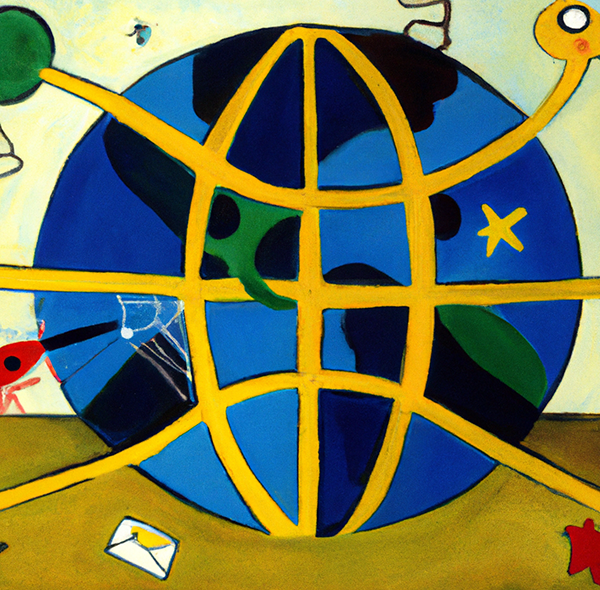
At the moment, at least among the creative community, two camps are emerging via-à-vis AI: complete acceptance and utter rejection. However, via Print magazine, a middle ground appears to be developing: integrating AI into the design process without “relinquishing authorship.”
Projects like Dream Recorder by design studio Modem, the Poetry Camera by Kelin Zhang and Ryan Mather, and O0 Design Studio’s generative floral wallpapers for Microsoft’s Pride campaign illustrate a more nuanced relationship with the technology. These creators aren’t asking AI to replace their vision; they’re using it to extend it, and the result is work that’s both deeply human and technologically enhanced.
Indeed:
More than a productivity tool, AI is becoming part of the creative palette, inviting new forms of authorship that feel experimental, intimate, and alive.
Take, for example, the Dream Recorder by Modem.
By speaking their dreams aloud into a glow-in-the-dark, open-source bedside device, users trigger an AI model that translates their narrative into surreal, ultra-low-definition visual reels, rendered in the aesthetic of their choice. Developed in collaboration with creative technologist Mark Hinch, industrial designers Ben Levinas and Joe Tsao, and illustrator Alexis Jamet, the project blurs the boundaries between dream journaling, art therapy, and speculative technology. A poetic artifact that preserves the ephemeral and explores how AI can visualize our most intangible inner worlds.
It could explain how Incubus was made.
Heading to Montana Soon
For those of us who still find value in vaccines—but have issues with needles—a less intrusive vaccine delivery method may be on the way: dental floss. Says Discover magazine:
Publishing their findings in Nature Biomedical Engineering, a research team tested the vaccine-coated dental floss on animals, introducing the vaccine through the gums and other tissue in the mouth. The study results indicated that this helped produce antibodies in the mucosal surfaces of the lungs and nose.
So, researchers added a peptide flu vaccine to unwaxed dental floss and then flossed mice’s teeth. They then compared the antibody production to that in mice that had received the vaccine via nasal spray and drops under the tongue.
“We found that applying vaccine via the junctional epithelium produces far superior antibody response on mucosal surfaces than the current gold standard for vaccinating via the oral cavity, which involves placing vaccine under the tongue,” said Rohan Ingrole, first author of the paper and Ph.D. student under Gill at Texas Tech University, in a press release. “The flossing technique also provides comparable protection against flu virus as compared to the vaccine being given via the nasal epithelium.”
The mice also had the best dental checkups of their lives.
One of the drawbacks the researchers identified—at least when it comes to potential human use—is holding vaccine-saturated floss during the flossing process. Thus, they determined that using floss picks—those small thingamajigs that use a short piece of floss strung between two prongs—would be the most efficacious way for dental floss to be used to administer vaccines.
They may be ready to head to clinical trials, although questions remain.
“We would need to know more about how or whether this approach would work for people who have gum disease or other oral infections.”
Still, beats a jab.
Proud as a…
Peacock feathers are oft-desired for their bright iridescent colors and general showiness, but did you know that they can emit laser beams? OK, to be clear, you don’t find peacocks strutting about zapping people or things at random—although that would make for a unique horror movie…certainly better than Incubus, we would think. It’s all spelled out in a paper published in the journal Scientific Reports; essentially, it’s the first example of a “biolaser cavity in the animal kingdom.” Huh? Via Ars Technica:
the bright iridescent colors in things like peacock feathers and butterfly wings don't come from any pigment molecules but from how they are structured. The scales of chitin (a polysaccharide common to insects) in butterfly wings, for example, are arranged like roof tiles. Essentially, they form a diffraction grating, except photonic crystals only produce certain colors, or wavelengths, of light, while a diffraction grating will produce the entire spectrum, much like a prism.
Peacock feathers are similar…but different.
It’s the regular, periodic nanostructures of the barbules—fiber-like components composed of ordered melanin rods coated in keratin—that produce the iridescent colors. Different colors correspond to different spacing of the barbules.
Apparently, random laser emissions are not unheard of, and they have been stimulated in everything from stained bovine bones and blue coral skeletons to insect wings, parrot feathers, and human tissue, as well as salmon iridiphores. “The authors of this most recent study were interested in whether they could produce similar laser emissions using peacock feathers and hopefully identify the specific mechanism.” Because, well, why not?
They cut away any excess lengths of barbs and mounted the feathers on an absorptive substrate. They then infused the feathers with common dyes by pipetting the dye solution directly onto them and letting them dry. The feathers were stained multiple times in some cases. Then they pumped the samples with pulses of light and measured any resulting emissions.
And?
The team observed laser emissions in two distinct wavelengths for all color regions of the feathers' eyespots, with the green color regions emitting the most intense laser light. However, they did not observe any laser emission from feathers that were only stained once, just in sample feathers that underwent multiple wetting and complete drying cycles. This is likely due to the better diffusion of both dye and solvent into the barbules, as well as a possible loosening of the fibrils in the keratin sheath.
There is an end goal for all of this:
their work could lead to the development of biocompatible lasers that could safely be embedded in the human body for sensing, imaging, and therapeutic purposes.
And, of course, it would just be cool.
Table Talk
You know how it is: you’re in a rush to leave for the office in the morning so you neglect to check the traffic either via the local news or your phone and—bam!—you’re stuck in horrible traffic. What to do? Well, if work from home is an option, there’s an idea. Or, if you can’t be bothered to look at a news broadcast or a phone app do what Cincinnati-based YouTuber Michael Rechtin did: build a coffee table with a live traffic map integrated into it. Via Boing Boing:
The map was created using a photo of the city's major roads, which he then imported into CAD and traced, and then cut the map using a CNC router. He then painstakingly painted the roadways black. The Ohio River features prominently on the map, and for this, he cleverly used UV-cured blue 3D printing resin. The channels for the LEDs, which represent the highways, are 3D printed and required thirty feet of LEDs.
There were some problems:
including a limit on API calls to pull the traffic information for free, and finicky 3D printing resin. And then there was all the repetitive coding and soldering; however, in true Maker fashion, he powered through and the end result is really cool.
Capturing Lightning In a Camera
One of the most important images in the history of photography was taken on September 2, 1882, by Philadelphia photographer William N. Jenkins, which was the first photograph of lightning—and it proved that artists had been drawing lighting all wrong for centuries. Via Boing Boing:
His photos showed that lightning doesn't form the simple zig-zag pattern seen in artwork — instead, it creates complex, branching forks across the sky.
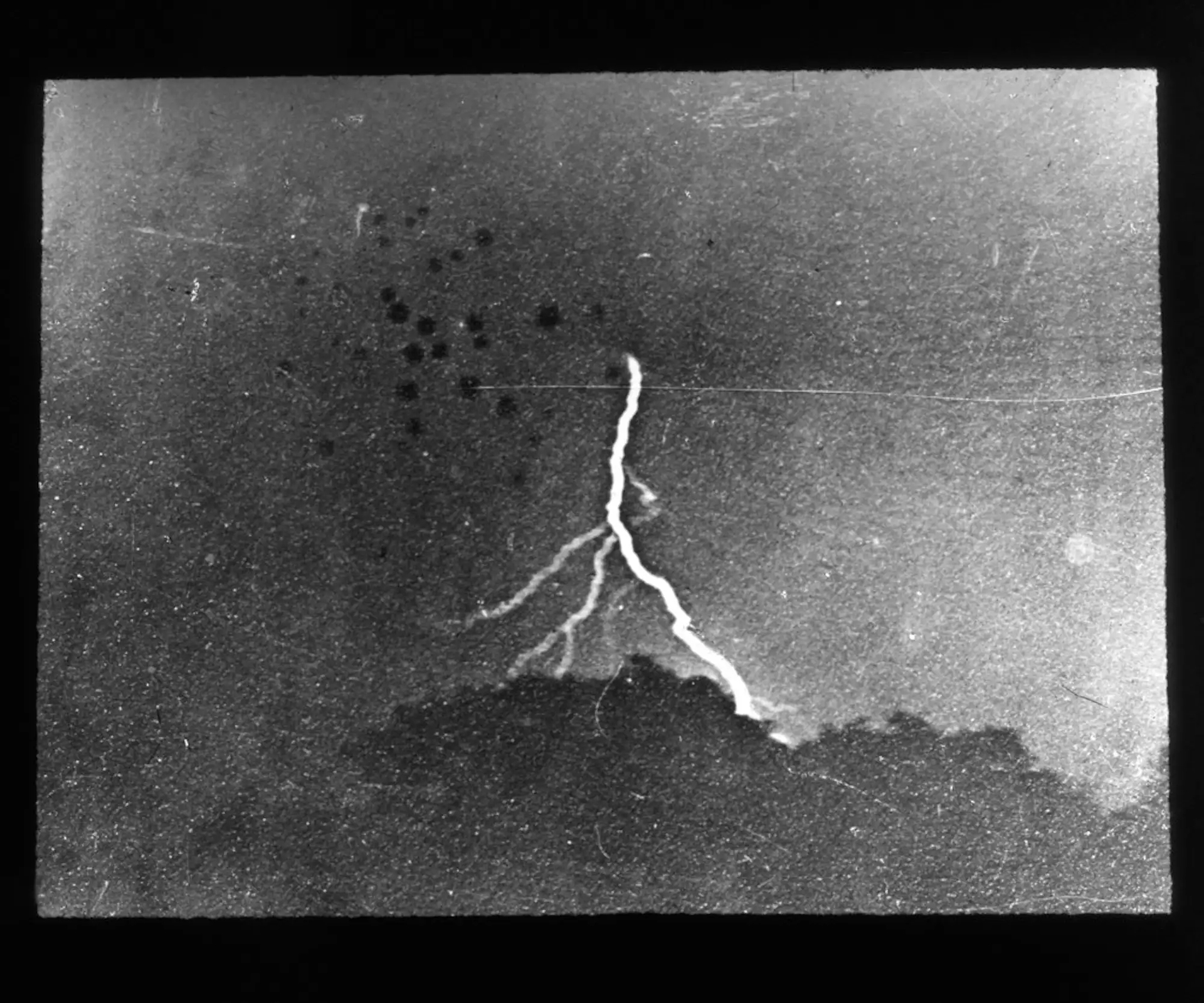
Jenkins was a member of the Franklin Institute, and he would go on to create the first system for classifying different types of lightning. In the field of photography itself, he would—appropriately—help in the development of the photographic flash.
Graphene Scores in the Paint
Was it a good week for graphene news? It’s always a good week for graphene news! An innovative graphene paint capable of generating heat through electrical power. BeDimensional’s heat-generating graphene paint can be used to create a thin, easy-to-use radiant heating system without mechanical components. From (who else?) Graphene-Info:
The graphene paint, once applied and connected to simple copper electrodes, generates heat through the Joule effect. The system, which silently and uniformly radiates heat, ensures stable thermal distribution without stratification. Emission occurs through long-wave infrared radiation, a low-energy, non harmful form of heat that doesn’t warm the air but instead acts directly on the body, creating a comforting sensation of thermal well-being.
And who doesn’t want a sensation of thermal well-being? Anyway it is applied like proper paint and adapts to common building materials, from drywall to sandwich panels. Even better, it can offer significant energy consumption reduction of up to (on average) 40% compared to electric radiators.
He Helps You to Understand
For most of the country, this has been a pretty brutally hot summer, and those of us fortunate to have A/C see the downsides of it every month when the utility bill comes. But folks in other parts of the world—where air conditioning is less common because it is not required 99% of the year—are a bit stuck. But here’s one idea, via the BBC, that may provide a less expensive home cooling option: smearing yogurt on your windows. No, really.
Dr Ben Roberts, a senior lecturer in healthy buildings at Loughborough University, said applying yoghurt to the outside of windows could lower the temperature by up to 3.5C.
He has conducted experiments:
In May, Dr Roberts and PhD student Niloo Todeh-Kharman conducted an experiment on two identical test houses at Loughborough University by putting yoghurt on the windows of one, but not the other.
The experiment found the indoor temperature of the house with yoghurt on the windows was on average 0.6C cooler, but up to a maximum of 3.5C cooler when it was "hot and sunny".
According to Dr Roberts, the yogurt forms a thin film on the window and, since it is a light color, reflects some of the incoming solar radiation back outward, which means less of it enters through the window. Wouldn’t slathering yogurt all over one’s window(s) stink after a bit? According to Dr. Roberts, it does for about 30 second while drying, but is odorless when it dries. Also, you put it on the outside of the window, which would be tricky on upper floor windows but would give the neighbors a bit of entertainment.
Still, the yogurt effect is comparable to other light-blocking mechanisms.
He added when they carried out experiments with tinfoil - which blocks "pretty much" all of the incoming sun's heat - they saw a maximum temperature drop of 5C to 6C, so he was "pleasantly surprised" with the results from the yoghurt experiment.
We’d put tinfoil over our windows but we’re not that conspiracy-minded.
House in Motion
Have you ever had the desire to live in a round house? No, nor have we, although it would be difficult to ever get cornered. But what about a round house…that rotated? Why would one want this? Core 77 takes a look at such a concept called the Micro House with Rotatable Mechanism by Taiwanese architecture firm Supra Simplicities. The company’s logic behind the concept is thus:
“In an effort to optimize the living quality, this micro-house project aims to re-interpret the meaning of household living via condensing all kinds of programs into 3 fundamental scenes(or rooms), sleeping(bedroom), dining (kitchen & dining place) and washing(shower & toilet), which are compactly encapsulated on a revolving-stage mechanism for transition from one to another.”

Looks like some kind of outpost from an episode of Star Trek: The Next Generation.
It works like this:
aside from the rectilinear projection, the house is essentially a Lazy Susan divided into thirds—allowing you to only access one space at a time. The three spaces are a bedroom, a kitchen and a bathroom, and there is no way to pass from one space to the other. Instead you must step off of the turntable, and wait for the house's motor to rotate the desired space into position.

Although this appears to have been the design for 90% of the locations featured in Scooby-Doo, we do question the functional benefit. This, for example, seems a bit impractical unless a) one showers in their underpants or b) one is an exhibitionist.

Here’s the question, though: is it constantly moving and you have to jump in and out depending what room you want to access (kind of like a horizontal, less terrifying paternoster lift), or do you press a button (or pull a candle, remove a book, etc.) to get it to spin? Could be fun for pranking housemates…
It’s Heeeeere!
Looking for an “adventure holiday”? Or perhaps something unique to do this Halloween? Well, if you’re a fan of the 1982 Tobe Hooper-Steven Spielberg movie Poltergiest, you can stay in the perhaps iconic “Poltergeist House” which is now an AirBnB. Says Gizmodo:
in the grand tradition of movie-themed stays past, the Freeling home is now available for booking on Airbnb, complete with a massive old TV set broadcasting static (if you dare) and clown doll (if you know, you know).
It’s located in Simi Valley—north of LA—and is a bit pricey.
It sleeps up to eight guests (there are four bedrooms and 2.5 bathrooms), so if you can get a group together, that would make the $800 starting price per night a little more manageable. It also has amenities galore, including a pool (skeleton-free, from the looks of it) and hot tub.
There are also other…amenities.
According to the Airbnb page, your stay can include “custom curated experiences with static-lit portraits, tours, movie screenings, or a night that feels… watched.” Why not conduct a paranormal investigation while you’re at it?
Why not indeed?

Woe, Nelly
It’s Halloween in July for Wendy’s, which is tying in with the release this week of the second season of the Netflix horror comedy Wednesday. Ergo, the limited-time “Meal of Misfortune” features a 10-piece nugget meal, fries, and two “Dips of Dread" sauces.
To be honest, every fast food meal we have ever had was a “meal of misfortune.” But we digress… It also includes a “Raven’s Blood” Frosty with Vanilla or Chocolate base and cherry sauce, “served in Wednesday Addams-themed packaging with a ‘Spoon of Gloom.’”
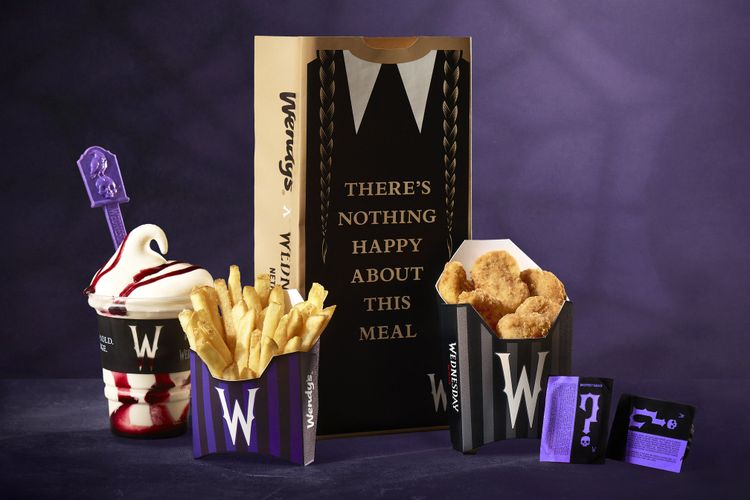
Beyond the meal, customers in the U.S. also have a chance to win $10,000 by signing into the interactive game experience, “Escape from Wednesday’s Woe,” on the Wendy’s app.
Consider yourselves warned.
This Week in Printing, Publishing, and Media History
August 4
1693: Date traditionally ascribed to Dom Perignon’s invention of champagne.
1792: English poet and playwright Percy Bysshe Shelley born.
1821: The Saturday Evening Post is published for the first time as a weekly newspaper.
1834: English mathematician and philosopher John Venn, inventor of the Venn diagram, born.
1875: Danish novelist, short story writer, and poet Hans Christian Andersen dies (b. 1805).
August 5
1735: New York Weekly Journal writer John Peter Zenger is acquitted of seditious libel against the royal governor of New York, on the basis that what he had published was true.
1850: French short story writer, novelist, and poet Guy de Maupassant born.
1914: In Cleveland, Ohio, the first electric traffic light is installed.
1930: American pilot, engineer, and astronaut Neil Armstrong born.
1957: American Bandstand, a show dedicated to the teenage “baby-boomers” by playing the songs and showing popular dances of the time, debuts on the ABC television network.
2019: American author, Pulitzer Prize winner, and Nobel laureate Toni Morrison dies (b. 1931).
August 6
1809: English poet Alfred, Lord Tennyson, born.
1926: In New York City, the Warner Bros.’ Vitaphone system premieres with the movie Don Juan starring John Barrymore.
1956: After going bankrupt in 1955, the American broadcaster DuMont Television Network makes its final broadcast, a boxing match from St. Nicholas Arena in New York in the Boxing from St. Nicholas Arena series.
1991: Tim Berners-Lee releases files describing his idea for the World Wide Web. WWW debuts as a publicly available service on the Internet. (Too bad it never caught on.)
August 7
1834: French weaver and inventor, inventor of the Jacquard loom Joseph Marie Jacquard dies (b. 1752).
1926: American puppeteer, voice actor, and singer Stan Freberg, born.
1928: Canadian-American magician and author James Randi born.
1944: IBM dedicates the first program-controlled calculator, the Automatic Sequence Controlled Calculator (known best as the Harvard Mark I).
1959: The Lincoln Memorial design on the U.S. penny goes into circulation. It replaces the “sheaves of wheat” design, and was minted until 2008.
1981: The Washington Star ceases all operations after 128 years of publication.
August 8
1876: Thomas Edison receives a patent for his mimeograph.
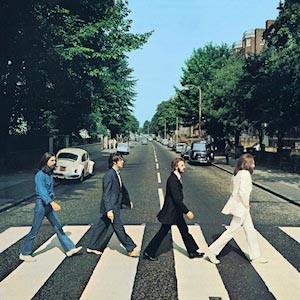
1969: At a crosswalk in London, photographer Iain Macmillan takes the photo that becomes the cover image of the Beatles' album Abbey Road, leading to nearly five decades of Beatles fans nearly being run down on that same crosswalk trying to imitate it.
August 9
1776: Italian physicist and chemist Amedeo Avogadro born. (We’ve got his number.)
1854: Henry David Thoreau publishes Walden.
1892: Thomas Edison receives a patent for a two-way telegraph.
1930: Betty Boop makes her cartoon debut in Dizzy Dishes.
1944: The United States Forest Service and the Wartime Advertising Council release posters featuring Smokey Bear for the first time.
1962: German-born Swiss poet, novelist, and painter, Nobel Prize laureate Hermann Hesse dies (b. 1877).
1967: English author and playwright Joe Orton dies (b. 1933).
August 10
1793: The Musée du Louvre is officially opened in Paris, France.
1846: The Smithsonian Institution is chartered by the United States Congress after James Smithson donates $500,000.
1889: American game designer and creator of Monopoly Charles Darrow born.
1948: Smile! Candid Camera makes its television debut after being on radio for a year as Candid Microphone.