Inkjet Presses
LabelExpo 2023 was a great opportunity to kick the tires of many inkjet devices currently being sold into the label market. Almost all major vendors had a booth, most with presses running and samples at hand.
While pureplay inkjet presses certainly took the lead in the number of devices presented, toner presses were on the show floor as well, complemented by hybrid inkjet and flexo presses, and pure analog presses. Remarkably, a good number of Chinese flexo press vendors exhibited, although I am not sure that the latter are readily available in Europe or North America.
Standalone inkjet press news
Despite the four-year hiatus caused by the pandemic, in contrast to the normal two-year show cycle, LabelExpo 2023 was not the launch-fest some had hoped for. It seems that the pandemic slowed development programs, while drupa 2024 might cast its shadows onto 2023. Still, there were some interesting inkjet press announcements from Bobst, Epson, Screen and Dantex.
Bobst announced the Digital Expert 340 at LabelExpo, although without having the device at the booth. The Digital Expert is a straightforward roll-to-roll machine with the same digital print engine as the modular Digital Master 340, which was launched in 2022. The main differences are, that the base model of the Digital Expert starts with a maximum running speed of 65 m/min at 1200 dpi resolution, which can be upgraded to the same 100 m/min speed, also at 1200 dpi. Furthermore, only a 340 mm web width is available and the Digital Expert is not modular or extendable, with only one flexo unit for preprint or priming possible, while a basic Digital Master roll-to-roll configuration can be extended. This results in a fairly standardised product with a lower investment cost for the machine. The Digital Expert can be configured with up to six colours plus two white channels. This allows customers to add orange and violet to achieve a wider gamut. The Digital Expert 340 replaces the older Mouvent LB702 inkjet press that Bobst launched back in 2017. Bobst still offers the Mouvent LB701, a narrow 170mm wide press. Bobst has not yet decided if this will be discontinued as well. The Digital Expert 340 will become fully available in 2024.
Epson launched a new generation of their aqueous inkjet, entry-level, model the SurePress L-4733AW, now in its 4th generation. The base specs are essentially unchanged but improvements were made in print quality, automation, and ease of maintenance. Also, an improved ink set has been launched. The press was shown for the first time at a major show and included the optional AS-4000 inline spectrometer for real-time measurements and easy colour matching.
[caption id="attachment_6760" align="aligncenter" width="466"]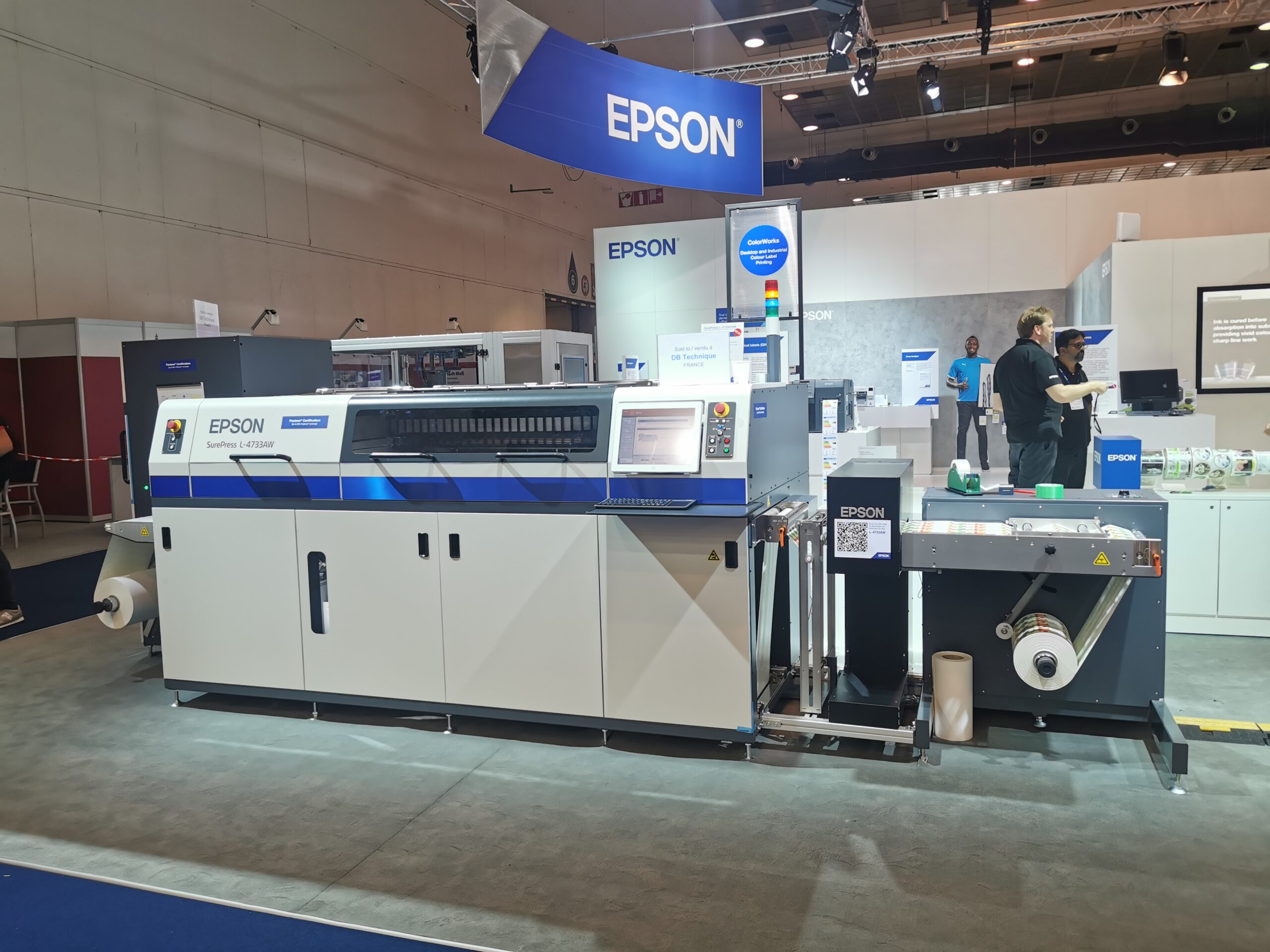 Epson SurePress L-4733AW with AS-400 inline spectro[/caption]
In addition, Epson is offering a handheld spectrophotometer, the SD-10. As a compact and easy-to-use device, the SD-10 can not only help printers, it would also be a good addition for designers and brand owners to ease colour data communication.
Epson’s UV, mid-volume label printer, the SurePress L-6534VW did not receive an upgrade (at least yet) but Epson demonstrated a very promising new application now possible on the printer: lenticular print. Lenticular images are attention-grabbing and very popular among consumers, however, they are difficult to produce, requiring special materials and processes. Epson demonstrated lenticular prints made on the L-6534 without any special equipment. When equipped with clear ink, the lens portion of the print can be printed using the clear ink. The image and the lens are printed in the same run but next to each other and then sandwiched with a 3mm gap afterward. This could make producing lenticular prints considerably easier.
[caption id="attachment_6759" align="aligncenter" width="510"]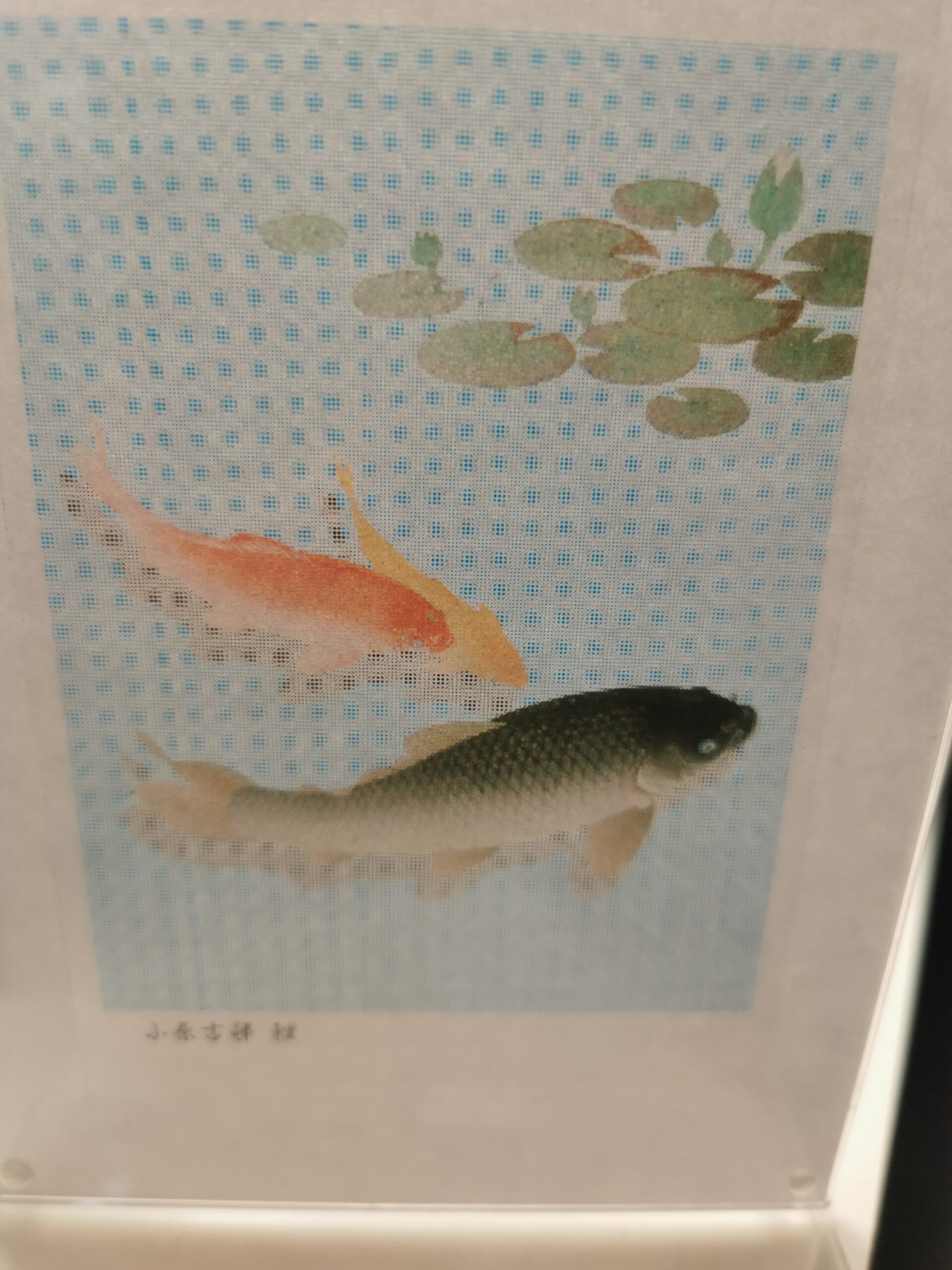 Sample of lenticular print on SurePress L-6534VW[/caption]
Screen showcased their latest updates to their well-established Truepress L350UV Label Press line. With a jettable primer, adhesion and wetting on demanding substrates can be improved. This helps density and print resistance as well. With an additional first print bar the primer is jetted and pinned directly afterwards. The primer can even create texture effects. It is available from January 2024, unfortunately only for newly installed devices with no upgrade path for existing Truepress L350UV users.
Dantex, a supplier of flexo plates, plate-making equipment, and inkjet label presses based in the UK, displayed their PicoJet 1200 at the show. As latest improvements, the device features an option for violet ink and a semi-rotary die-cutter in the hybrid configuration. Additionally, the HD-version of the PicoJet was introduced. Counterintuitively the HD-version is a lower specced model, available in a roll-to-roll configuration and 250 mm web width only. It prints up to 50 m/min and has only a white option, while the Picojet 1200 can print up to 75 m/min.
Hybrid label press news
The distinction between stand-alone inkjet printers and hybrid systems is fluid. Some standalone printers can include flexo units and some finishing. Hybrid presses however have a lot more options in adding multiple flexo or other analog units as well as multiple finishing and embellishment modules. Some hybrid models are designed with inkjet in mind from the start, while others simply can integrate an inkjet module as an additional unit. Finally, existing label presses can be upgraded with a retrofit inkjet module. All major analog label press manufacturers offer a hybrid model nowadays.
A new hybrid solution emerged that combines Screen's top of the line model, the Truepress Label 350UV SAI with Nilpeter's FA-Line flexo platform. The Truepress Label 350UV SAI S can be integrated as a full unit within Nilpeter's platform-based FA-Line, which offers flexo print, embellishment technology and finishing units. To ensure good inkjet ink adhesion, the 350UV SAI S module includes the new primer unit. Working without a buffer, the line can be very compact.
[caption id="attachment_6756" align="aligncenter" width="638"]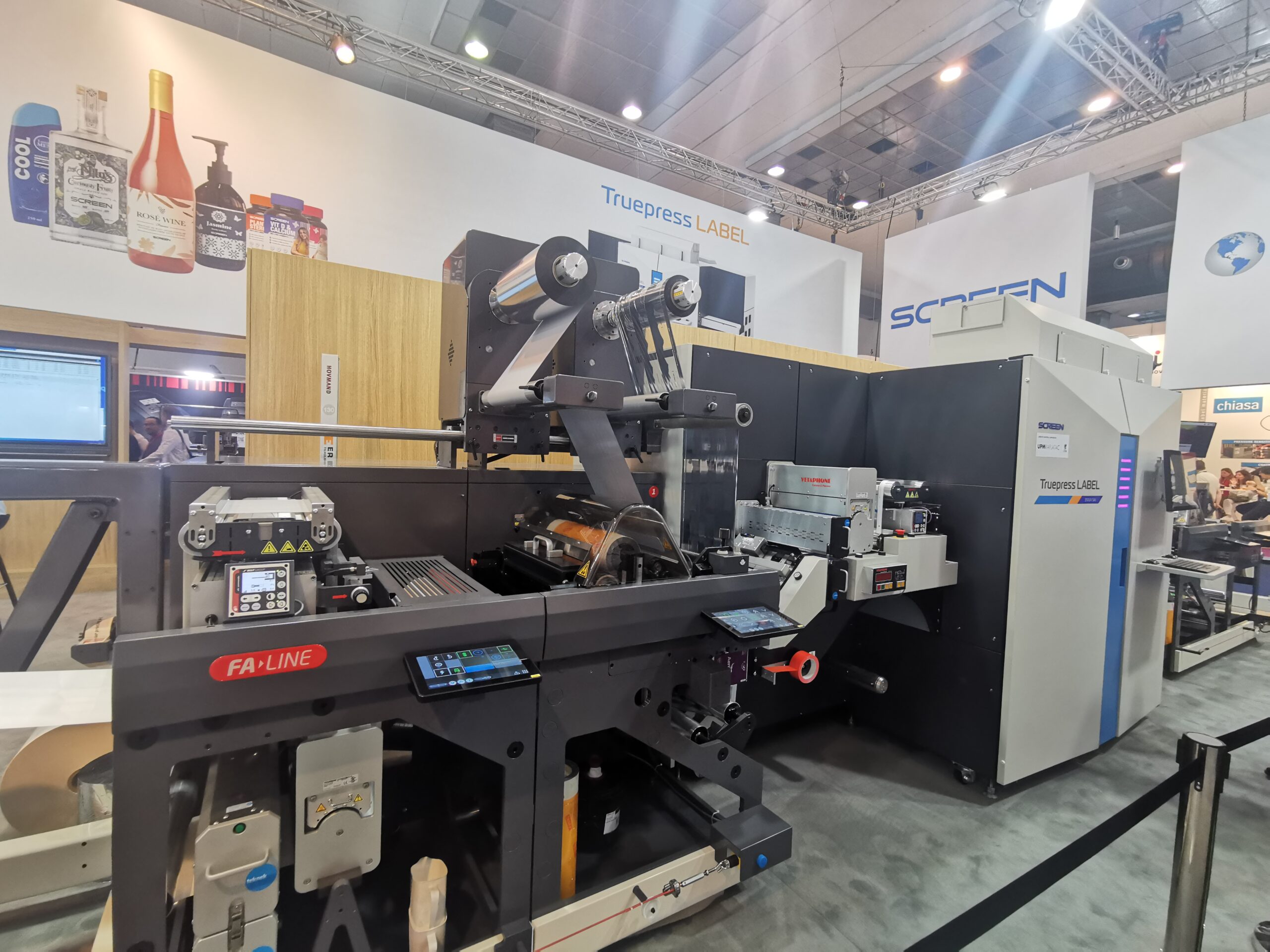 Screen – Nilpeter Hybrid[/caption]
A major change for the Durst-Omet XJet hybrid press is the new distribution model. Durst will be the sole sales & service channel in the future and also take care of future developments with a dedicated development team. This allows Durst to solely guide developments as the company expects good growth in hybrid label print. Omet remains the exclusive partner for all analogue hardware.
[caption id="attachment_6761" align="aligncenter" width="532"]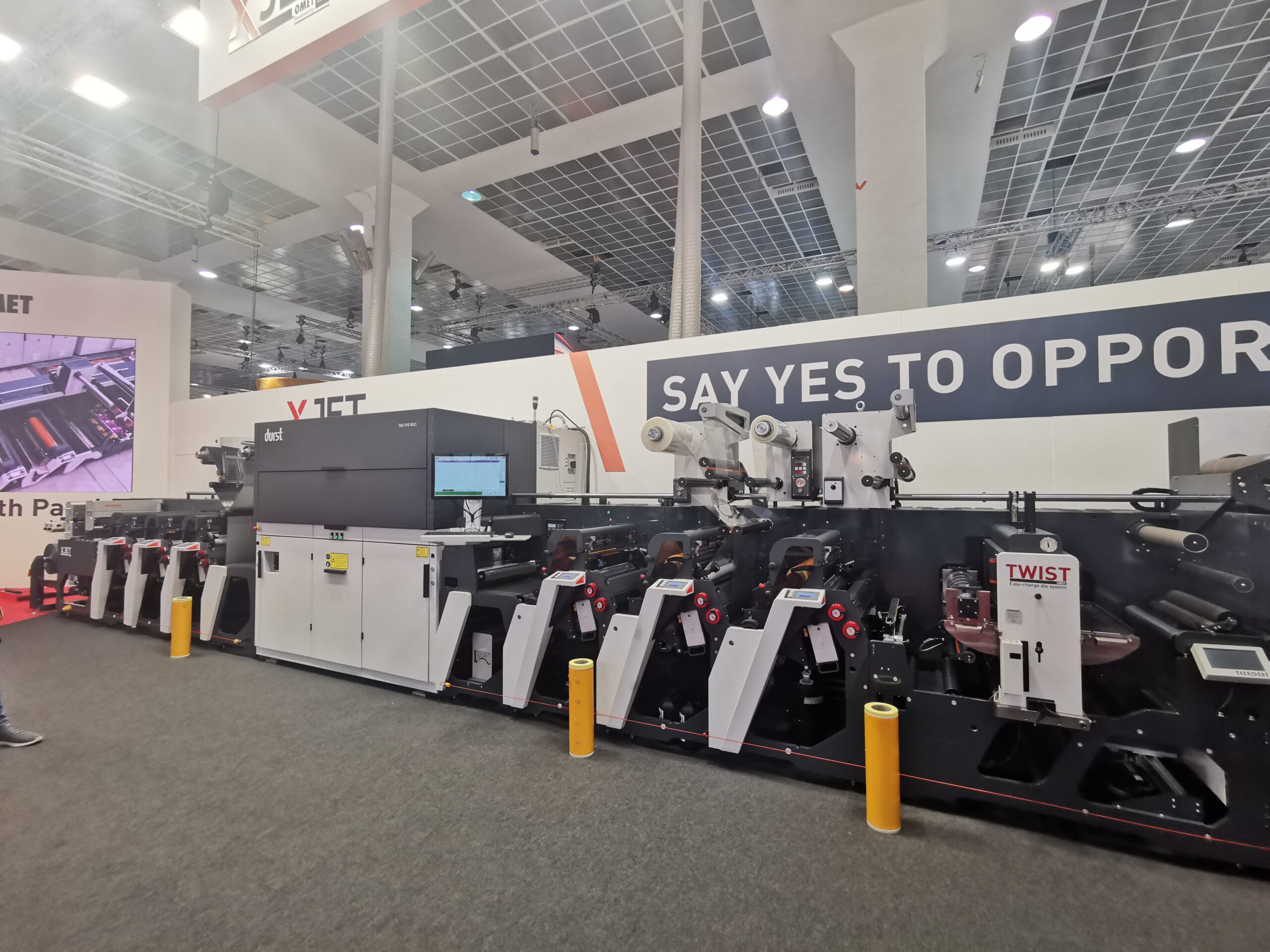 XJet Line at the Omet booth[/caption]
A different take on hybrid has SEI Laser from Italy. SEI is an Italian manufacturer of laser cutting and finishing lines. The company now added an inkjet printing engine for inline printing and laser cutting of labels. The KYOJET 3500 printer specs are fairly typical for a mid-volume inkjet printer. It uses Epson heads and allows for up to nine colours with an UV ink set. Max resolution is up to 600 x 1,200 dpi. The max speed reaches up to 55 m/min (180 fpm) although it is planned to move to 75 m/min. The print width is 330 mm. While the KYOJET is available in a roll-to-roll configuration, the close combination with laser cutting is making the system unique. The claim is to go from PDF to shipping-ready labels without setup and waste. Shown at LabelExpo was a prototype and the company expects the KYOJET to be available soon. The full line is expected to cost around €800k.
[caption id="attachment_6755" align="aligncenter" width="525"]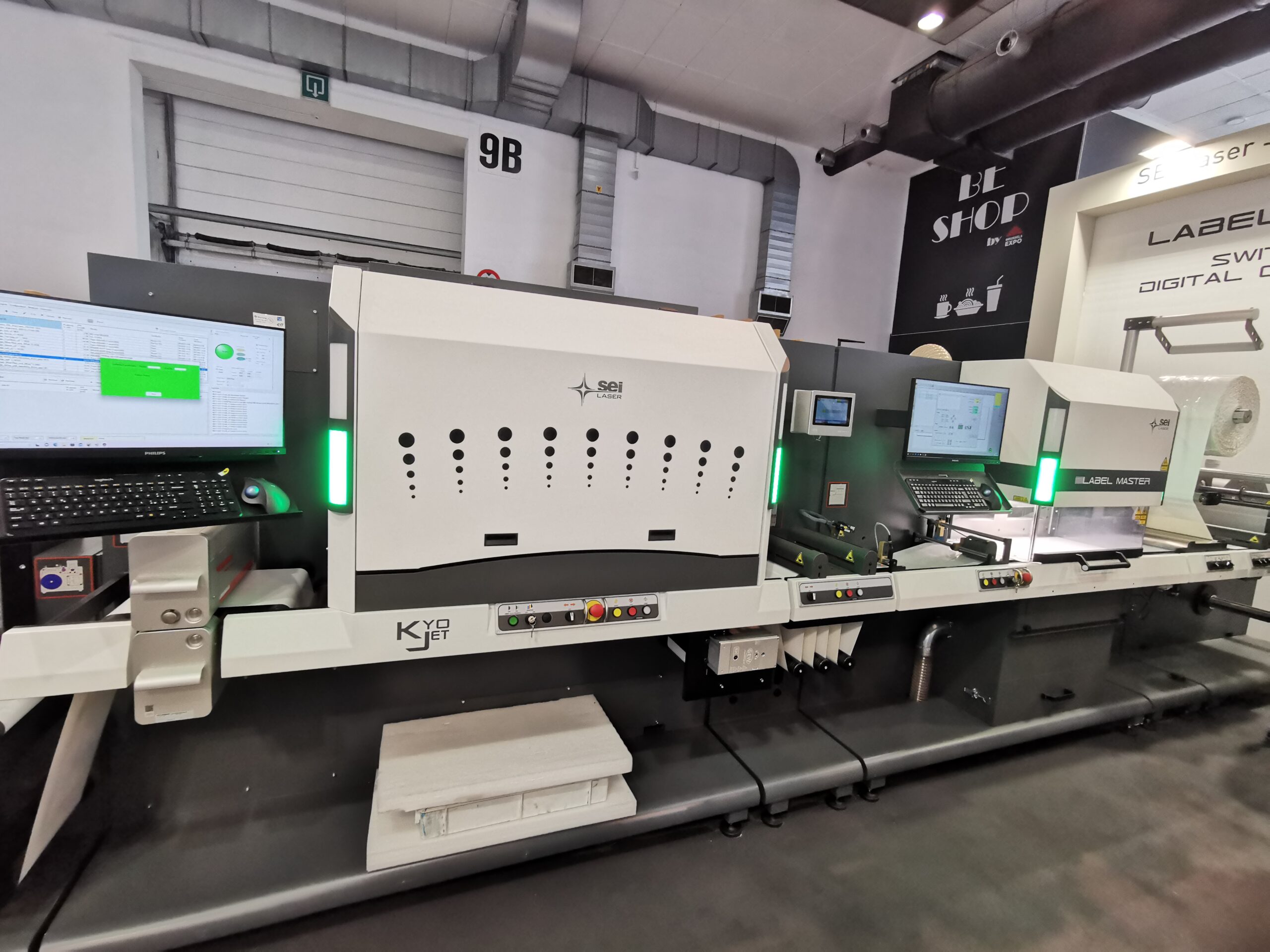 SEI Laser Kyojet – print & cut line[/caption]
Domino is not exactly offering a hybrid press, but offers two integration modules based on their N610i and N730i label printers. At LabelExpo Domino launched the N610i-R retrofit inkjet module for analogue presses in addition. The module is based on the N610 label press, which is the older label press model Domino currently offers. Accordingly, it sports a 600 dpi resolution and a max speed of 70 m/min, or 50 m/min when printing white. The web width can range from 200 mm to 340 mm. Exhibited on a Mark Andy platform at the show, the module can be integrated in a number of analog press lines from different manufacturers and it is available now.
[caption id="attachment_6762" align="aligncenter" width="537"]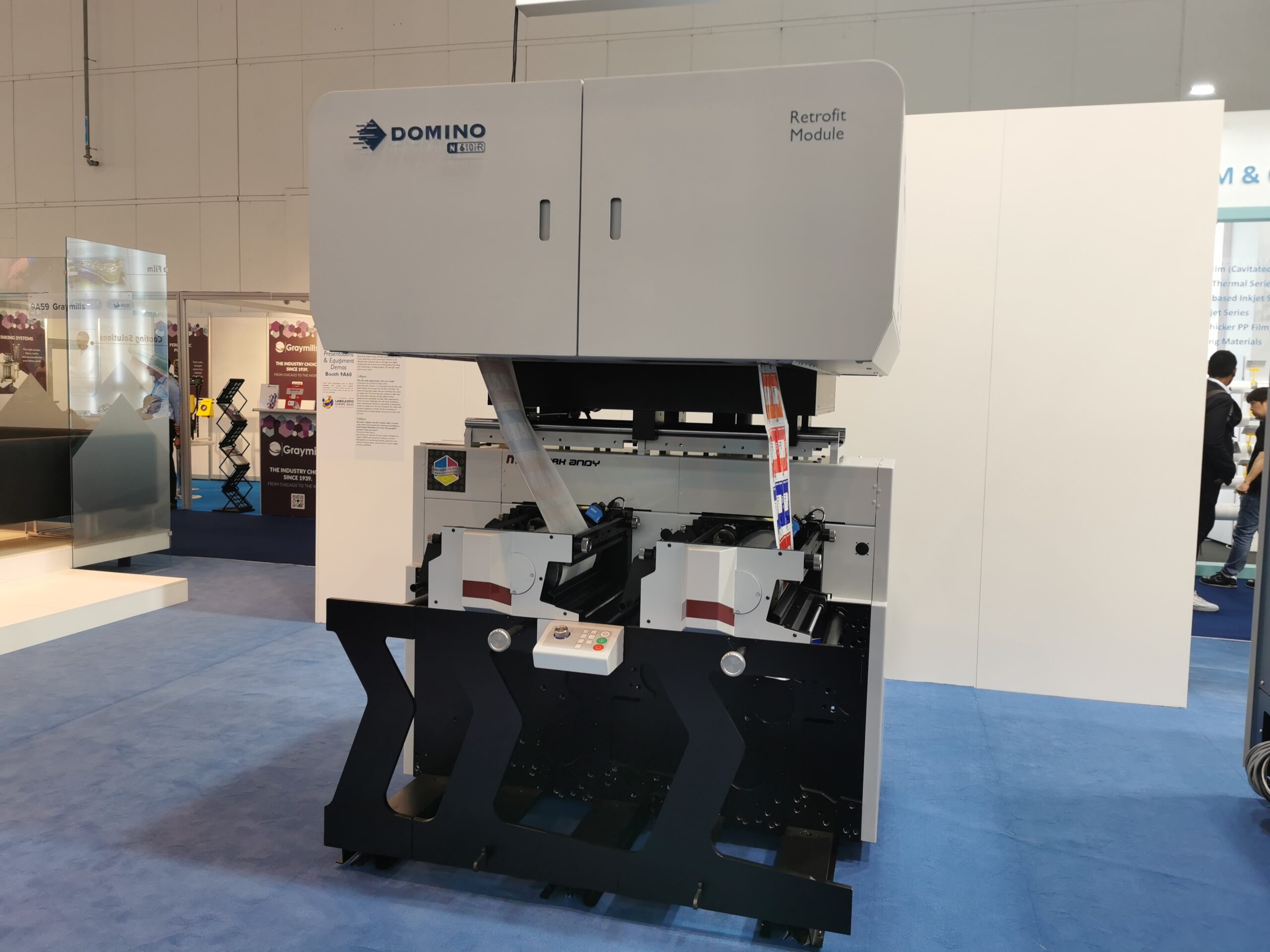 Domino N610i-R retrofit module[/caption]
Flexible packaging inkjet presses
Eagerly awaited are flexible packaging inkjet presses to offer short-run printing options in this market as well. Especially the Jet Press FP790 from Fujifilm and the Screen’s Truepress PAC 830F have been previewed several times and were supposed to hit the market this summer. Both vendors are inching closer to the market introduction, although LabelExpo was not the breakthrough we hoped for. Fujifilm had a live link for five daily demos to their first European beta site – which is still unnamed. The customer will be named in January and the FP790 is planned to be exhibited at drupa 2024. Screen plans a full release of the Truepress PAC 830F (for printing on film) in October this year, with more details and naming the first installation to come. The Truepress PAC 520P for fibre-based flexible packaging substrates was shown printing at the booth (as it was at Hunkeler innovationdays in March already). It is still in the development phase with a first beta site foreseen to be in the field by March/April 2024 and full commercialisation expected by Drupa 2024.
A big surprise was the unveiling of the NS Flexpack 6 by MTEX. MTEX is an equipment manufacturer based in Portugal, known for producing OEM equipment marketed by other companies. The NS Flexpack 6 is an entry-level flexible packaging printer using aqueous inks and HP inkjet heads. With an 800 mm roll width, a 642 mm print width is possible, although a wider model with a 1070 mm print width is about to launch as well. The speed is modest with 9 m/min at full 1,200 x 1,200 dpi resolution. A second print bar and lower resolution can push this to 27 m/min. This is a far cry from the Fujifilm and Screen presses, but with an investment of around €200k MTEX plays in a different ballpark. The very small footprint and ease of use would allow an installation in almost any environment as well. This is owed to leaving out a drier, which in turn requires inkjet-optimised media. The NS Flexpack is not the solution for established flexible packaging printers planning to shift shorter runs to an inkjet device. It rather offers an opportunity for start-up companies to move into flex pack or for other printing companies, e.g. online printers, to offer low-volume prints. A cold laminator is integrated and larger roll handling and a slitter are optional. The device is planned to be released in Q4.
[caption id="attachment_6757" align="aligncenter" width="510"]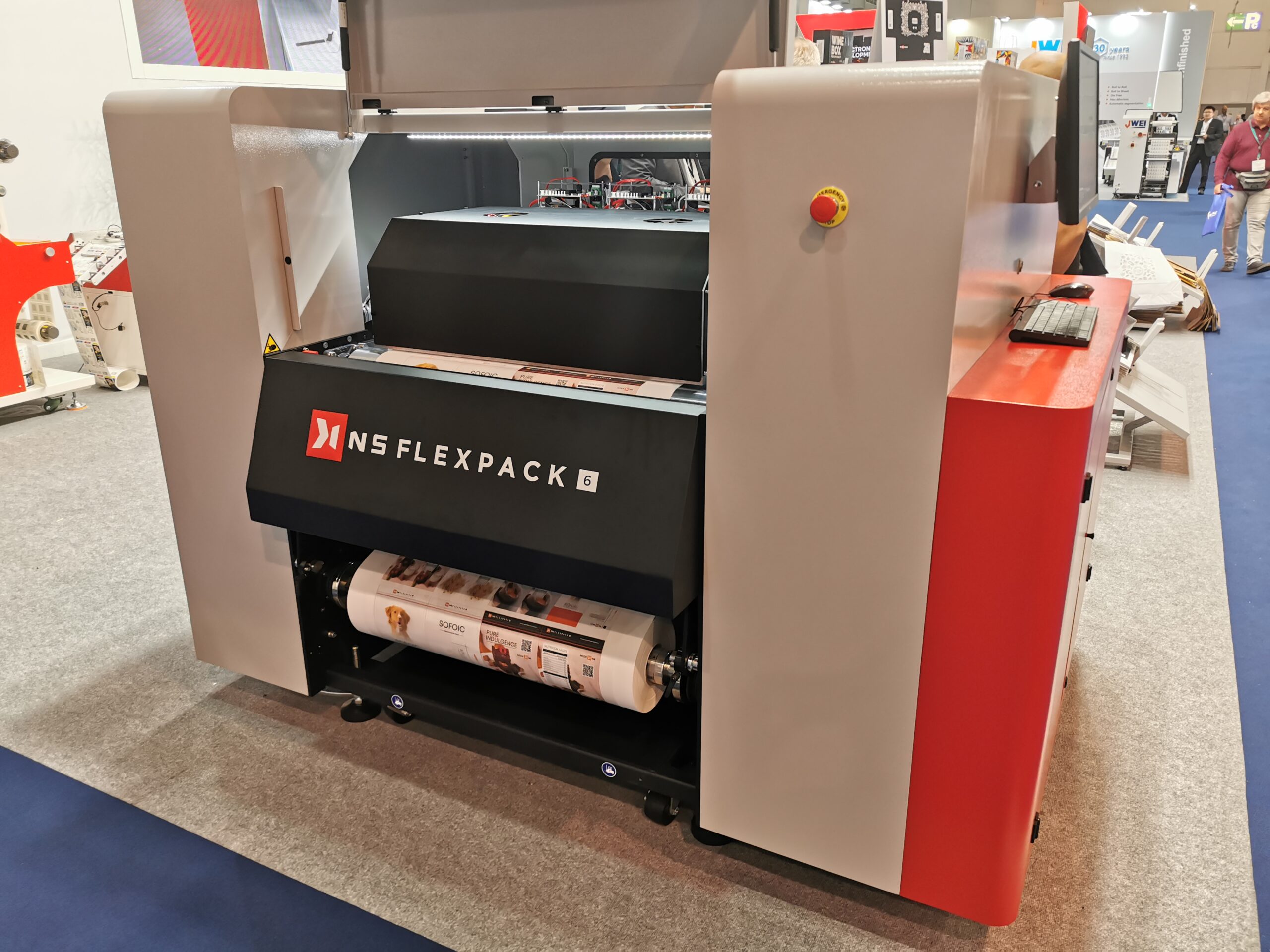 MTEX NS Flexpack 6[/caption]
Konica Minolta displayed the PKG-1300 digital printer at the booth, a device designed for short-run, on demand corrugated and box printing. It is OEMed from MTEX and has the same base print engine as the NS Flexpack. While the PKG-1300 was launched in spring, it was presented for the first time at a big show. In a similar vein, it can be very attractive to low-volume producers rather than large plants for corrugated.
[caption id="attachment_6758" align="aligncenter" width="496"]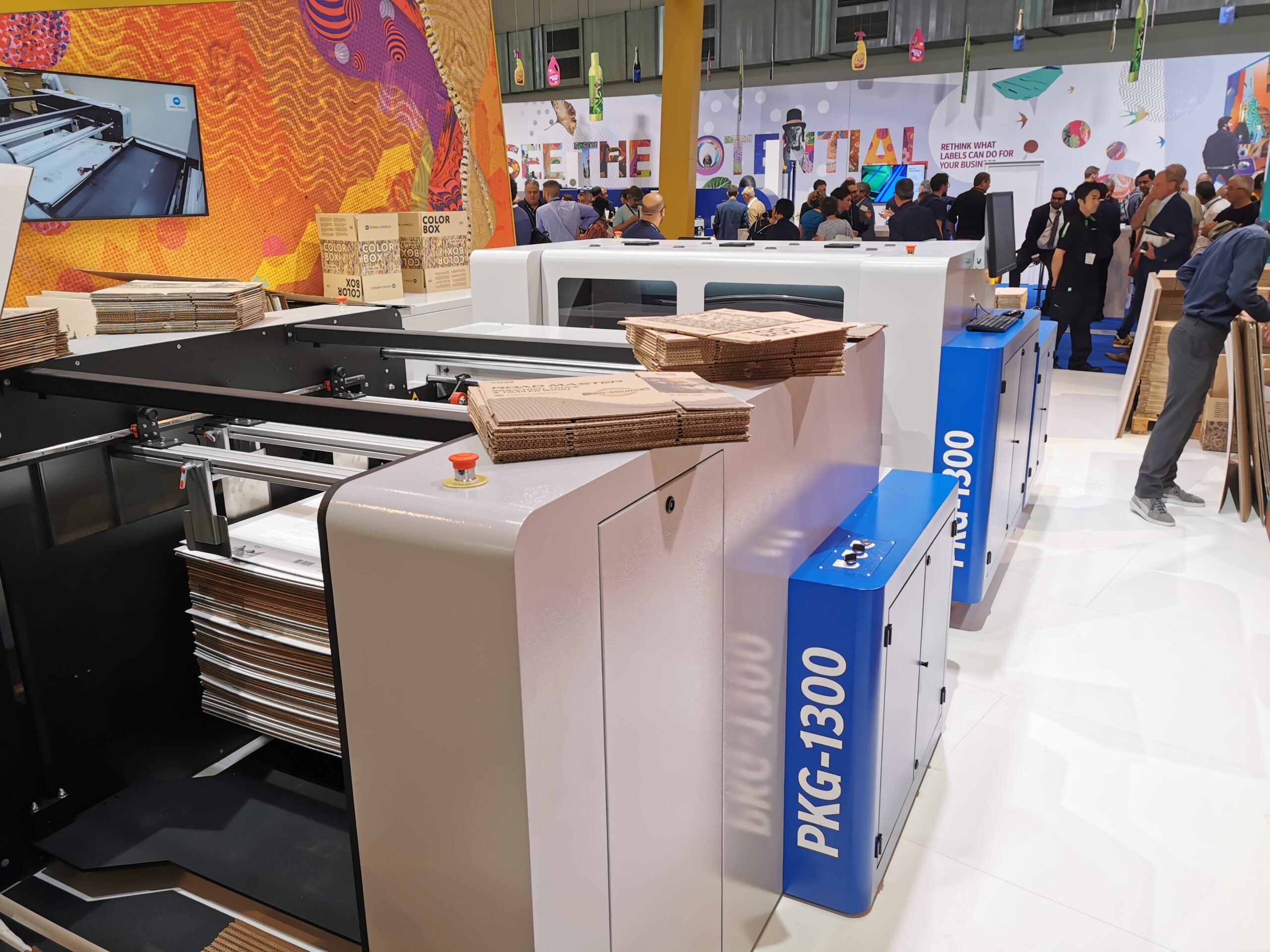 Konica Minolta PKG-1300 for corrugated with automated stacker[/caption]
The report on news and trends at LabelExpo 2023 will be continued soon with a second part on ancillary equipment, embellishment, inks and general observations.