Market Introduction and Entry level presses
Digital print is an established technology in label printing. Labels proved to be a fertile ground for digital print due to:
- Smaller formats than other package prints – which is easier to achieve with digital printers
- A higher portion of shorter runs than in other packaging markets, as labels are often used in niche markets or where other types of packaging print have prohibitive set-up costs
- A substrate that is generally easier to handle than other types of packaging materials
According to expertmarketresearch, the total label market reached 60.3 billion square metres in 2020 and is expected to grow at 4.5% per year. There are many types of labels, from simple secondary to elaborate primary labels. Applications range from wet-glue, to pressure-sensitive, shrink sleeve, in-mould, and other, specialty types of labels. Pressure-sensitive labels account for more than half of the volume and this is also the main focus for digital print.
Pressure-sensitive labels can be produced by almost any digital printer. However, feeding by sheet is time-consuming, the substrate choice is limited and further processing is more complicated – making this approach generally not very efficient. Accordingly, most label volume is produced on dedicated roll-fed label printers. Excluding entry-level presses, I.T. Strategies reckons in their “Digital Production Label Market – Review of 2020” report that there were almost 4,000 dedicated digital label printers in use by the end of 2020. Despite the ongoing investments in label presses, the total share of all pressure-sensitive labels printed digitally is still relatively small, amounting to just over 6% of all prints. The longer-established, toner printing technologies took the lead in digital volumes with inkjet still in the process of catching up.
There is no shortage of dedicated label printing press vendors. More than 30 players offer label printers, often with multiple models in the line-up. Compared to other packaging markets, this range of choice can be bewildering. In this article we break down the market into manageable categories, consider key requirements and provide an overview of 11 entry-level inkjet label presses.
[restrict paid="true"]
Defining market tiers for inkjet label presses
Inkjet label printers range from the small desktop models to full-blown, hybrid production lines, making a comparison difficult. To simplify the process, we defined four categories of devices, although placing devices into a certain segment is not always clear-cut. What might be described by one vendor as a high-volume device, another would classify as low-volume. Especially in the 50 to 100 meters per minute range (mid and high-volume) a lot of overlap exists. That is why we will cover both of those segments together in Part 2 of this Shopping Guide. Pure desktop printers are omitted from our coverage.
Table 1: Categories of inkjet label presses
|
Segment |
Technology |
Characteristics |
User types |
|
Entry Level |
Mostly Aqueous Inkjet |
Often Memjet inkjet head based Speed mostly up to 20 m/min Typically CMYK only Compact footprint Invest up to $250k Not designed to run multiple shifts |
Small printshops and distributed print |
|
Mid-volume |
UV inkjet |
Speed: 50 to 70 m/min Typically offer white, sometimes additional colours 200 to 360 mm web width (approx. 10” to 13”) Designed for 2 shift use |
Small to mid-size printshops |
|
High-volume |
UV Inkjet |
Speed up to 100 m/min 330 to 360 mm web width (around 13”) Offer white, often additional colours available Occasionally integrated finishing available 2 or more shift use |
Mid to large printshops |
|
Hybrid |
UV Inkjet and flexo |
CMYK inkjet + flexo or other analog processes Often integrated finishing available. Usually as standalone inkjet printer available Often wider web widths available as option 2 or more shift use |
Larger printing plants |
Inkjet or Electrophotographic?
Electrophotographic (EP) presses started to address the label market already in the 1990s, either as liquid toner or dry toner technologies. Accordingly, the technology had a head start and while the technology developed, only a few players offer full production EP printers to this date. Inkjet label printers reached the market less than 20 years ago and, despite a slower start, the number of models and vendors increased rapidly. Still, inkjet accounts for only 20% of the digital printing label volume, according to IT Strategies, although that share is expected to increase.
Originally inkjet grew on compact press designs and fast printing speeds, while offering a lower quality. The quality has improved considerably in recent years. In general, inkjet still offers higher speeds, although lately HP regained the speed crown with Indigo V12 press, reaching 120 m/min, while inkjet label presses top out at 100 m/min today. However, the Indigo V12 is a massive investment.
Some considerations when selecting the imaging technology are:
- Inkjet has noticeably faster printing speeds for similarly priced equipment.
- EP tends to have finer details and smoother blends, especially when compared to 600 dpi inkjet. With the use of higher-resolution inkjet heads the differences are small.
- UV inkjet has a glossy appearance, which might be desirable for some applications, but can be objectionable for others.
- UV inkjet creates a raised surface, which can create a tactile effect, while aqueous and toner prints are essentially level.
- Inks are more abrasion and chemical resistant than toner (with the exception of Xeikon’s new UV-hardening TITON-toner)
- UV inkjet can be unwanted in food packaging and can make further finishing steps (e.g. a barrier layer) necessary. This does not apply to aqueous inks.
- Inkjet presses have an easier build and tend to require less maintenance than toner presses.
Comparing ink versus toner costs can be a contentious issue. Some EP presses have click models, while inkjet ink is usually charged by consumption. Yet, comparing ink prices by the litre is not helpful as ink consumption for a given image can differ by device. In the end, it will be necessary to assemble a basket of typical motifs and make a calculation based on the ink consumption and extrapolated costs.
Finally, substrates play a major role. Some substrates work better with toner, some better with inkjet. Again, specs can be a first indicator, but trials are necessary to confirm the suitability.
In any case, there is no best technology and it is all about the application requirements. Several printing companies are using both technologies already to offer the best solution for their customers.
Special note on printing white
Almost all mid, high and hybrid presses offer white, either as standard or as an option. There are plenty of flavours of how white is being printed, however. Sometimes the print speed needs to be reduced. Sometimes double hits of white are needed or recommended, which can drive up costs. When investing in a press, it is strongly recommended to get samples of white prints on the substrates you need, stating under which conditions the white has been printed.
An overview of Entry level printers
Entry level, or low volume, devices have a very small footprint. They are not designed to run 24/4, rather are for occasional prints. This makes them suitable for small shops or distributed printing. The latter is done at the site where the label is needed (and are not necessarily operated by a printing company).
Most solutions are aqueous inkjet-based, often using Memjet inkjet heads as print engine. Colours are typically limited to CMYK, only Epson and Dantex offer white as well. Quality can be good, but the range of substrates is typically more limited. Engines prices in this tier start below $100k, moving up to $250k
Especially in this category print speeds should be taken with a grain of salt. Reaching the maximum print speed in this device class often results in a reduced resolution and can be substrate dependent as well.
The range of vendors is quite diverse with many smaller suppliers using Memjet heads. There are other choices as well, with Allen Datagraph using HP heads on the upcoming SnapPress and Epson using their own on the SurePress.
Also, larger providers of printing equipment like Konica Minolta offer a Memjet entry model to complement their toner models. Another large provider of production printing equipment, Xeikon, recently launched a lower spec UV printer to fall into the upper end of this tier.
Table 2: Entry Level Inkjet Label Printers (Alphabetically by Vendor)
|
Vendor & Model |
Max Print width & speed |
Inkjet imaging technology |
Resolution & Number of colours |
Max Print width & Substrate thickness |
Printer length |
Availability |
|
Afinia DLP-2100
|
||||||
|
up to 18 m/min (60 fpm) |
Aqueous inks on Memjet inkjet heads |
up to 1600 x 1600dpi CMYK |
216 mm print width |
2.3 m |
North America, Europe |
|
|
Arrow Systems ArrowJet Aqua 330R 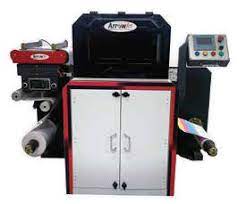 |
||||||
|
up to 45.7 m/min (150 fpm) |
Aqueous inks on Memjet inkjet heads |
up to 1600 x 1600dpi CMYK |
324 mm print width 50 –- 350µ thickness |
1.2 m |
global |
|
|
Allen Datagraph Systems SnapPress 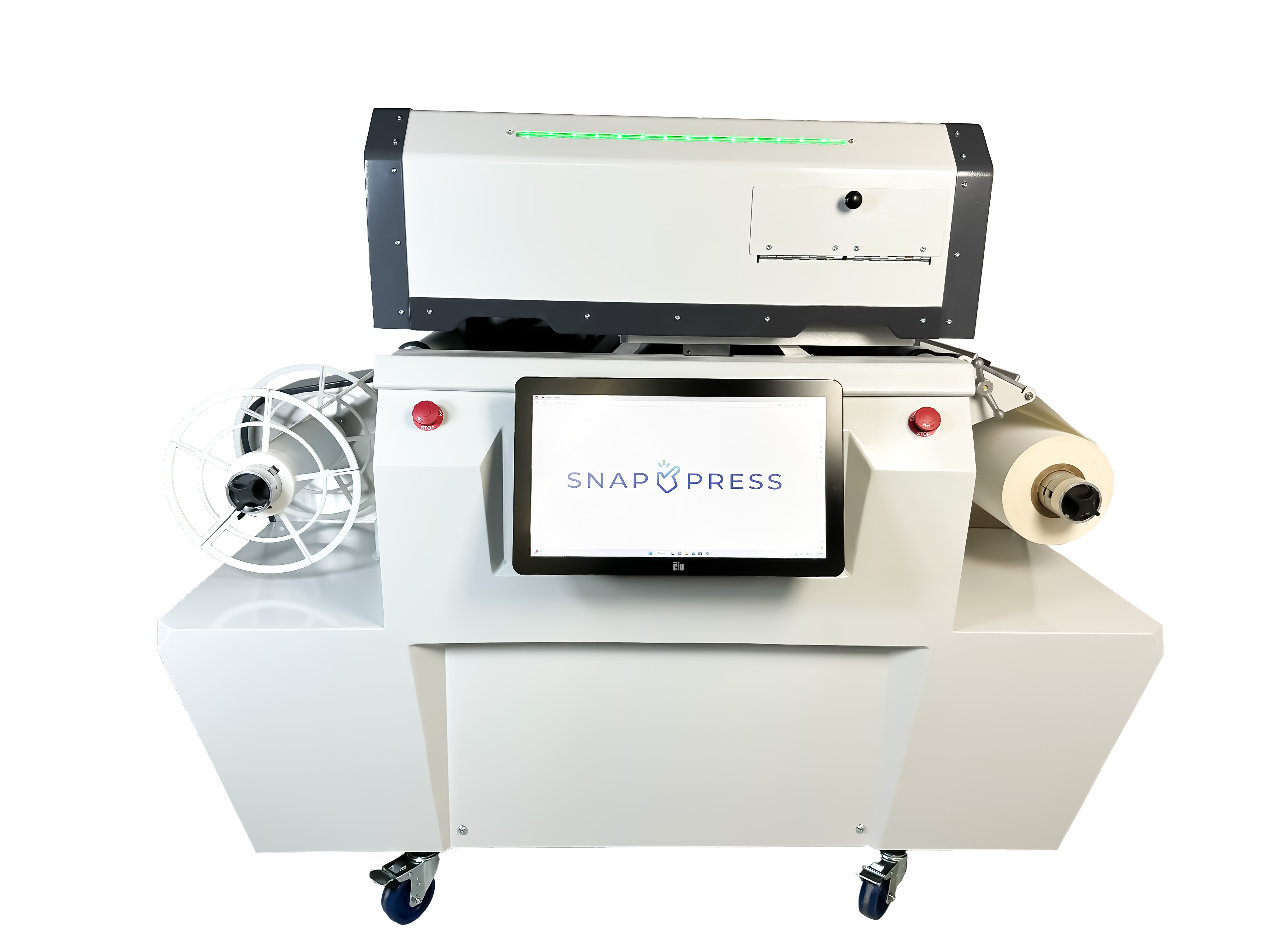 |
||||||
|
up to 27.4 m/min (90 fpm) |
Aqueous inks on HP inkjet heads |
up to 1200 x 1200dpi CMYK |
297 mm print width 35 –- 120µ thickness |
1.4 m |
From October in North America |
|
|
Coaso iCueLabel 420 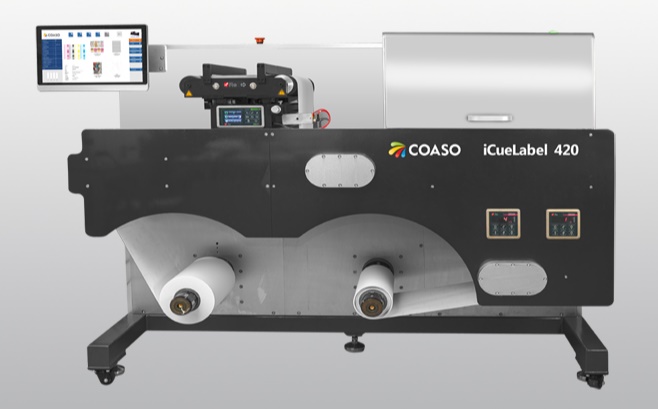 |
||||||
|
up to 45.7 m/min (150 fpm) |
Aqueous inks on Memjet inkjet heads |
up to 1600 x 1600 dpi CMYK |
324 mm print width |
1.9 m |
Asia-pacific region |
|
|
Dantex PicoColour II 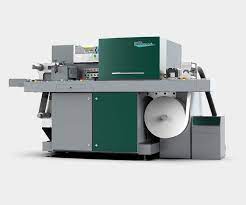 |
||||||
|
Up to 35 m/min (115 fpm) |
UV inkjet |
? dpi CMYK plus white |
210 mm /9.84” print width 100-300µ thickness |
US and several European countries |
||
|
Epson SurePress L-4733A/AW 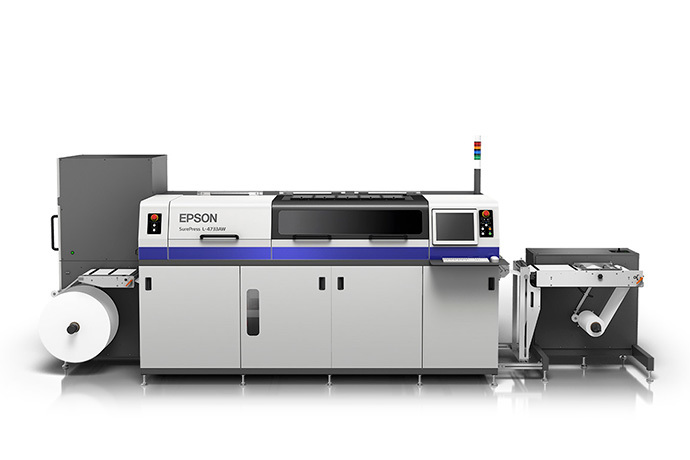 |
||||||
|
Up to 5 m/min (16.4 fpm) |
Aqueous inks on Epson inkjet heads |
Up to 720 x 1440 dpi 6 colours plus white |
334 mm /13.1” print width 80-320µ thickness |
3.8 m |
Global |
|
|
JETSCI ColorAqua 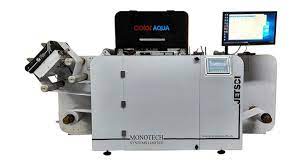 |
||||||
|
Up to 60 m/min (60 fpm) |
Aqueous inks on Memjet inkjet heads |
up to 1600 x 1600 dpi CMYK |
226 mm / 12.8” print width 100-300µ thickness |
India and select countries |
||
|
Konica Minolta / Muratec PLS-475i 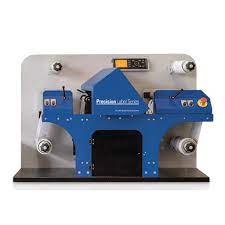 |
||||||
|
Up to 18 m/min (60 fpm) |
Aqueous inks on Memjet inkjet heads |
up to 1600 x 1600 dpi CMYK |
222 mm print width 100-300µ thickness |
1.4 m |
Global |
|
|
New Solution NS PRO 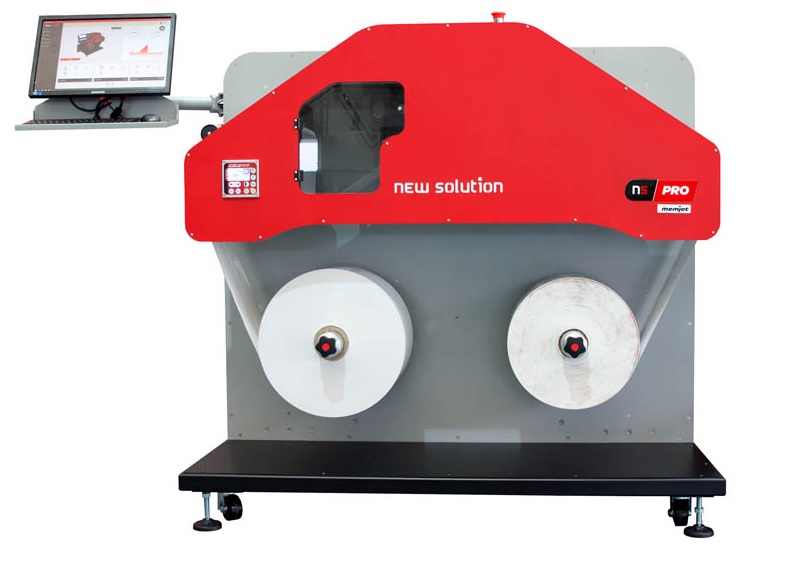 |
||||||
|
Up to 18 m/min (60 fpm) |
Aqueous inks on Memjet inkjet heads |
up to 1600 x 1600 dpi CMYK |
223 mm print width |
Select countries in Europe |
||
|
Trojan T2  |
||||||
|
Up to 18.3 m/min (60 fpm) |
Aqueous inks on Memjet inkjet heads |
up to 1600 x 1600 dpi CMYK |
223 mm print width 100-300µ thickness |
1.5 m |
Global |
|
|
Xeikon Discovery Panther 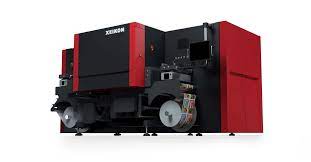 |
||||||
|
50 m/min (165 fpm) |
UV inks on Kyocera inkjet heads |
600 x 600 dpi 4 grey levels CMYK |
200 mm print width 40-350µ thickness |
4.16 m |
Global |
|
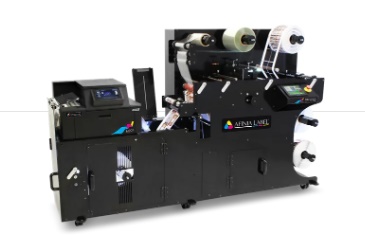
As you can see there is a wide range of speed, resolution and productivity options among these entry level presses. Some can cross over to the mid-level category if assessed on speed alone. Mid-level, High-volume and hybrid inkjet label presses will be covered in an upcoming article on Inkjet Insight.