In our first two articles in our 2023 inkjet integration series, we described the interplay between the different technology components enabling inkjet development before talking about the evolving and emerging printhead technology. In this article we focus on the chemistry side of things and the ink innovations enabling industrial inkjet innovation.
Editor’s Note: this is a highly technical article intended for inkjet developers and consultants.
Ink as the Application Enabler
In manufacturing applications ink becomes an integral part of the product being made, rather than just the informative or graphic content decorating the surface. Therefore, the materials properties are central to the success of the implementation. For this reason, many of us experienced in industrial inkjet talk about the importance of the “ink first” approach: Determine the chemistry that works and then and only then work out how to deliver it reliably to the part in a process that meets the throughput requirements.
For 3D printing and other mechanically functional additive uses of inkjet, it remains advantageous to work at higher target viscosity (> 20cP), and this is where the traditional “bulk” PZT heads are continuing to contribute. In contrast, in production printing and other high-speed applications we see continuous inkjet such as Kodak Stream, thermal printheads like Memjet, HP TIJ and Si-MEMS and other piezo DoD heads. Here the trend is <10cP or it becomes tricky to refill the chamber fast enough.
Thus, we see a bifurcation of the development in inks that mirrors the printhead trends. Let’s look more closely at new and emerging chemistry at each end of the spectrum and what it is looking to achieve.
[caption id="attachment_6444" align="aligncenter" width="645"]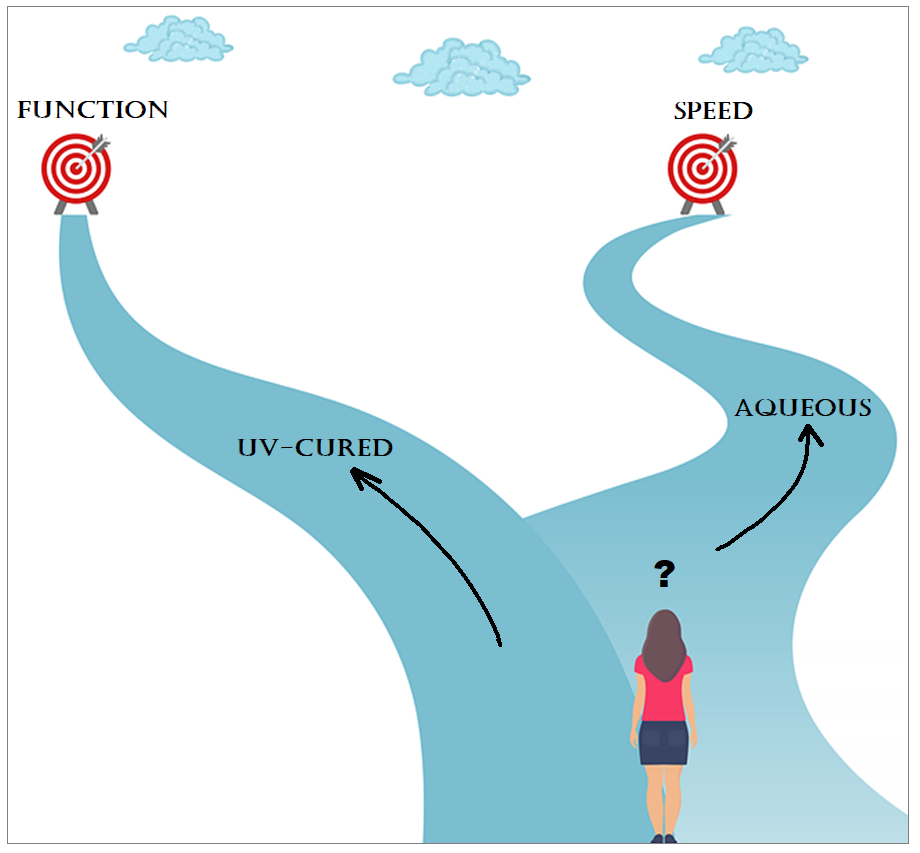 Figure 1 – Specific function and applications needs often define the ink approach.[/caption]
Functional Printing & UV
When trying to print parts with functional properties, the inkjet developer is often looking to convert deposition away from technologies such as pad print or screen printing in order to introduce the well-proven benefits of versioning, personalization and reduced inventory.
However, screen printing usually involves much higher viscosity (resistance to flow) ink than inkjet, as well as some intentional shear rheology property that allows the printability to be optimized whilst the final printed pattern is preserved prior to cure. For inkjet, effects like shear thinning can lead to unpredictable firing. For stability, we tend to aim to formulate inkjet inks for the highest viscosity we can predictably jet with rheology as near-Newtonian* as we can make it.
The 2.5D glass printing we described in a previous article is a good example of something traditionally screen printed, but which allows for great versatility when using inkjet. In this market the incumbent ink technology is often UV-curable, although it can also be solvent based using inorganic materials that have to be fired. Taking the UV case as our demonstrative example for 2+ dimensional applications, the desirable properties of mechanical and environmental resistance are achieved using mixtures of monomers/diluents and oligomers/polymers.
It is the oligomers and polymers that impart the key properties due to the ability to tune their molecular weight and molecular structure to achieve properties such as stiffness, breaking strength, and UV light resistance (outdoor aging control).
[caption id="attachment_6443" align="aligncenter" width="339"]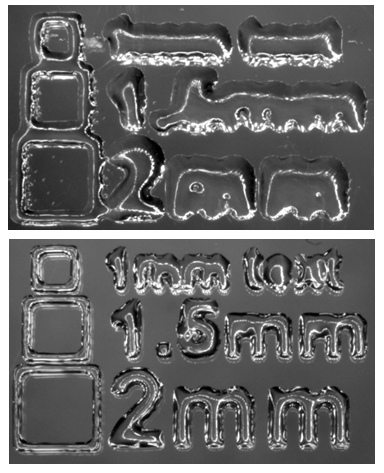 Figure 2 – Tuning of ink property and process for feature definition on glass[/caption]
In contrast, the smaller molecules permit viscosity to be managed within acceptable tolerance for the printing. The solubility and/or miscibility of the polymer is important for the complex rheology of the system. The elasticity of the resulting ink can be particularly important to maintain jetability for inkjet and minimize issues such as satellites and misting, as the ink comparison below demonstrates. The red arrows delineate the trailing satellites caused by droplet break-up and the second ink is much worse than the first, which correlates to some differences seen with an advanced rheometer.
[caption id="attachment_6442" align="aligncenter" width="559"]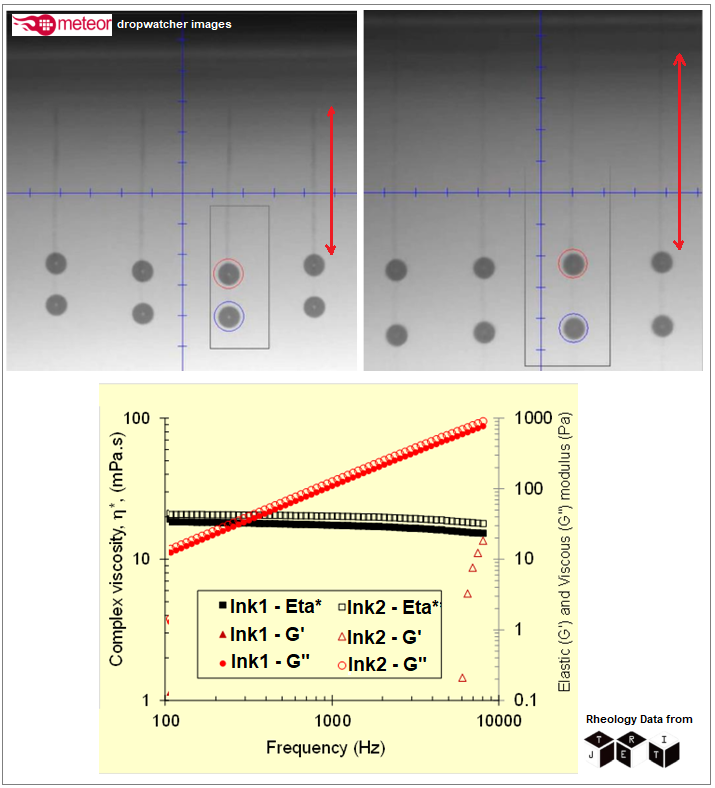 Figure 3 – Increased functionality for inks can often create rheology/jetting challenges.[/caption]
Such considerations apply similarly to acrylate formulations and to those using epoxide polymers and reactive or solvent diluents.
Fast Printing & Aqueous
Although the functional applications of inkjet are growing at an incredible rate, it is the traditional CMYK-based graphics printing that currently accounts for the majority of the sales of inkjet printers and the associated consumables and printed output. As well as the core single-pass production inkjet on paper at which Inkjet Insight was originally targeted, we have also wide-format graphics as a mature market, and packaging and textiles as the fastest growing newer fields (for which Inkjet Insight now has dedicated departments.)
In most of these areas, water-based inks are either already dominating or being touted as the future alternative to UV inks in response to growing sustainability concerns, as well as application-specific regulations. The development in each area shares many core requirements but the devil is in the detail of what the ink needs to be able to deliver in terms of functionality.
[caption id="attachment_6441" align="aligncenter" width="718"]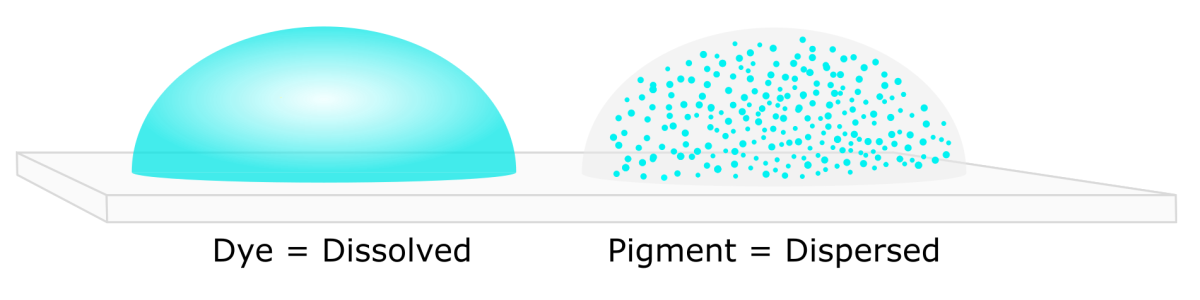 Figure 4 – A simple schematic reminder of the difference between pigment and dye[/caption]
For example, inks currently used for paper and textiles are a mixture of both dye and pigment, although the specific chemistry of the dyes differs. In both cases, however, there is a shift towards the greater application promise of pigmented inks, related to maximizing the number of different substrates that can be tackled with a single ink.
For production inkjet this is encapsulated in the coated “offset” paper suitability that has been the subject of so many R&D dollars over the last 10+ years. The process solution has traditionally been a combination of some kind of surface coating (primer) and pigment dispersion that is sensitive to a specific material in the primer. Typically, this is a cationic salt and anionic resin, respectively. The example below gives an idea using a photo paper as the comparison point. As can be seen by comparing the text features with the density steps, it is crucial to get just the right ink spread to avoid streaks. Printed at 1200dpi, the text shown is just 0.4mm (~1/60th inch) tall.
[caption id="attachment_6440" align="aligncenter" width="852"]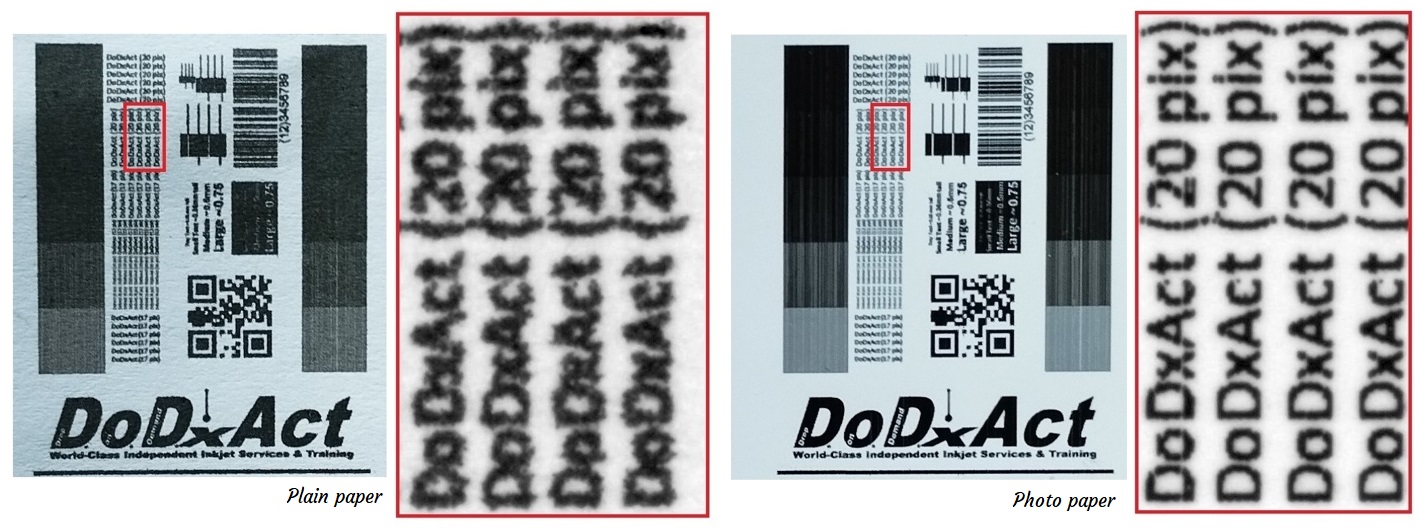 Figure 5 – A simplified substrate dependent example using photo paper versus office paper[/caption]
In modern printers both materials are jetted, thus removing the need for an analog process. However, the holy grail has long been to have an ink that performs without such priming. On certain substrates this is possible, but only within a tightly controlled process that keeps ink bleed within acceptable print quality tolerances.
In textiles the ink story is similar. Pigment inks are often touted as the “universal” ink for inkjet applications, but the performance compared to dyes remains deficient, particularly on very tactile materials like polyester and silk. This is due to the build of the polymer binder that supports the pigment. Here the solution has generally been highly optimized polyurethane polymer dispersions that are cross-linked by the drying process. Probably the most well-known of these are the Artistri range from Dupont. Even then, a specific chemistry of pre-treatment may be required to get a good bond between the fabric fibers and the binder.
Inks for packaging are also dependent on polymers to get the pigment to bind to the surface for good color and resistance property. The specific requirements vary whether required for corrugated or for cartonboard or plastic flexible packaging but the principle remains the same, ink films have to be resilient, easily converted (printed/dried) and yet the ink materials should not put the head at significant risk of clogging. The resolubility of a formulation is an important factor, meaning that the printhead can be maintained successfully.
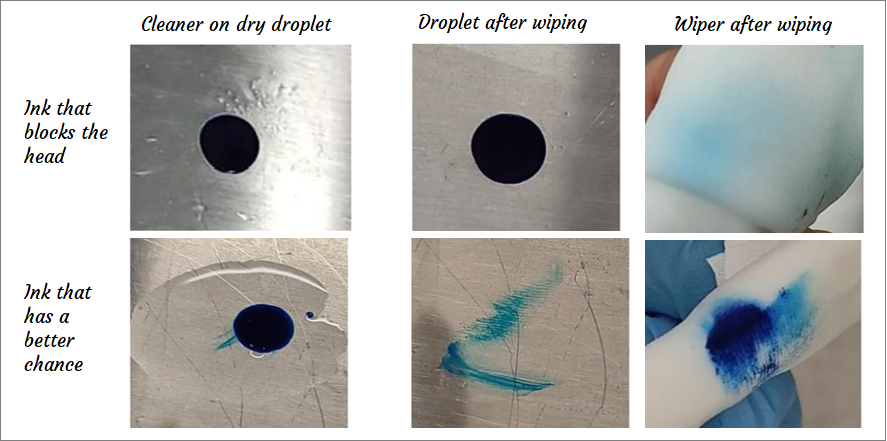
Therefore, a lot of work has gone specifically into developing binder resins that can deliver the functionality being sought and integrating those into inks that can dry fast enough to enable print speeds > 1000ft/min (>300m/min). Companies like Allnex, Lubrizol, DSM, BASF are all very active in this area, supporting the major ink suppliers in their race to formulate the best inks for the newly emerging printers.
Ink is such a broad topic that whole books are written about it. Hopefully we’ve given some idea materials as well as the crucial usage factors influencing the inks being formulated today. We’ve also linked to some of the existing knowledge base content for those wanting further examples. For the next installment in our integration series, we will consider the topic of head to substrate positioning.
* Newton's law relates the stress to the strain rate via a constant of proportionality, called viscosity. For Newtonian fluids, the viscosity is constant.