My first job was in R&D with a major printing press manufacturer, next to the plant for web-fed offset presses. By proximity, I learned some bits about web offset presses. It was a no-brainer that all web offset presses had an auto-splicer or similar mechanism for delivering a steady paper supply. Moving into continuous feed inkjet all was different. Changing a roll (in-feed or rewind) meant stopping the line, producing waste and downtime as auto-splicers were essentially non-existent. For a transaction print line, running the same paper at moderate speed with only a few peak production days a month, the cost of an auto-splicer proved not enough of a payback.
With inkjet moving into high quality, commercial print the prerequisites changed. Also, faster speeds trigger more roll changes. Frequent paper changes and high productivity requirements call for automated solutions.
Non-stop unwinder and rewinder solutions have several advantages: The time to change paper is effectively zero, compared to 10 to 20 minutes of downtime for a manual change. It offloads the operator from heavy, and potentially hazardous work. Also the quality of the splice is improved. Finally, it avoids large amounts of unprinted paper at the start of a new roll, especially if the inkjet heads can be briefly lifted to let the splice pass. This allows for making good use of rest reels as well. Sean Smyth provided more details on the benefits in an article last year “What have autosplicers ever done for us.”
A growing array of solutions
Today several models of auto-splicers for continuous feed inkjet presses are available. All have a buffer (or festoon) for non-stop operation as the rolls need to stop briefly when applying the splice. See below for a comparison of OEMs, solutions, origins and approaches (in alphabetical order.)
Contiweb
Contiweb is a long-established manufacturer of non-stop unwinding equipment, especially for web offset presses, with the first products launched in 1978 and 1000s of units installed.
With the CD-N series the company made its foray into inkjet non-stop unwinder and rewinder in 2015. Paper reels can be loaded into two lift arms with the splice section in the middle. The CD-N has a lap splice as standard with butt splice being optional. The splice can be made at all reel diameters. The lift arms of the Contiweb equipment can move up and down, allowing the reel to be loaded from the ground.
There are several versions of the CD-N auto splicer available, with maximum paper widths ranging from 560 mm to 1550 mm.
Contiweb has about 60 installations of the CD-N already in the market, serving about 40 print lines (some use a nonstop rewind). Contiweb offers a payback-calculator on the website to estimate the ROI.
[caption id="attachment_6384" align="aligncenter" width="623"]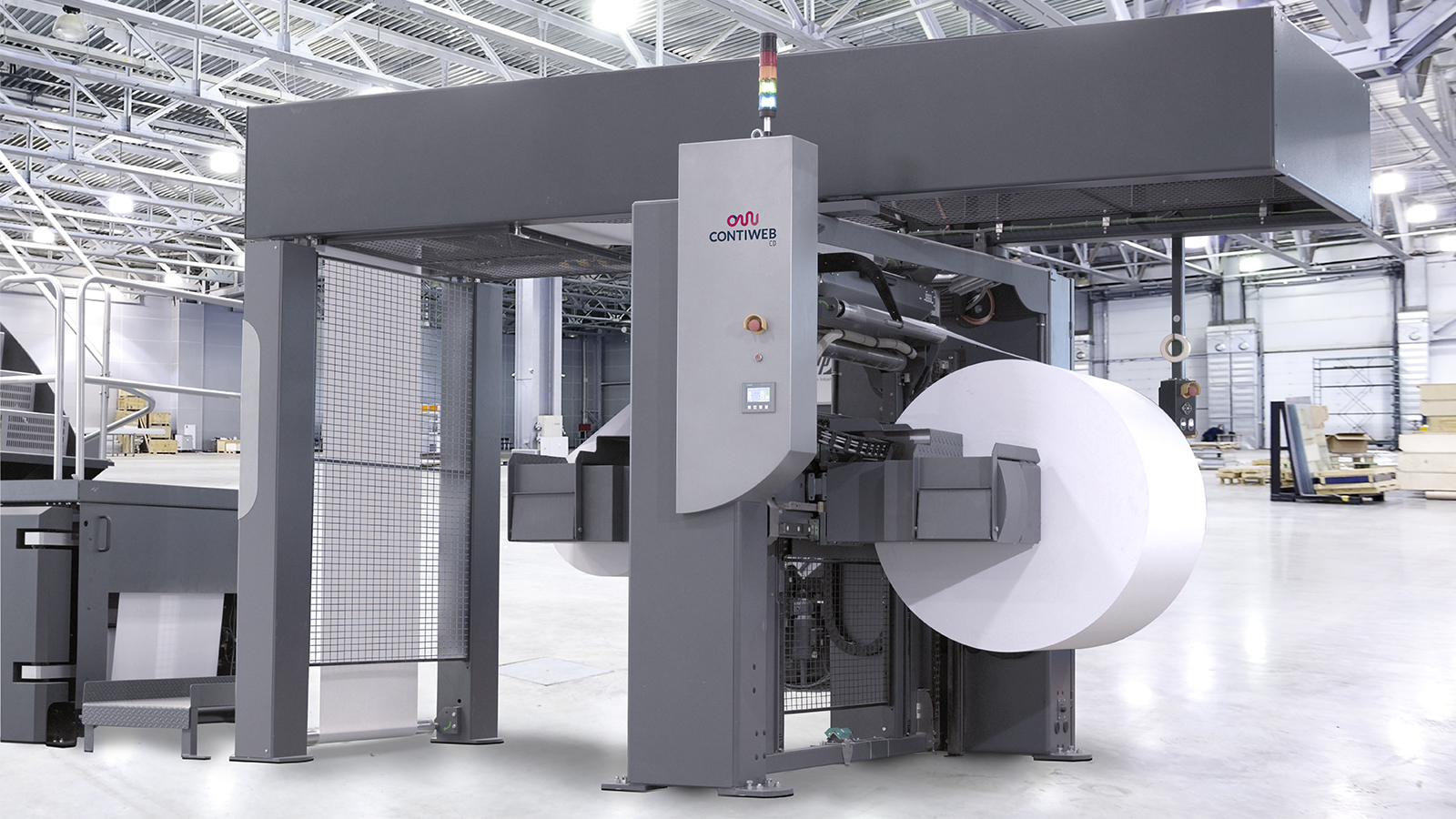 Contiweb CD-N auto-splicer[/caption]
With the CD-S, Contiweb offers a semi-automatic model as well. Using two reel holders, the second roll can be prepared while the press is running. Although the time is greatly reduced the press has to stop for the splice.
Contiweb CD-N auto-splicer[/caption]
With the CD-S, Contiweb offers a semi-automatic model as well. Using two reel holders, the second roll can be prepared while the press is running. Although the time is greatly reduced the press has to stop for the splice.
Hunkeler
At the Hunkeler innovationdays 2023 the media changer RX8 was publicly presented for the first time. The device was developed during the pandemic and is shipping for 18 months now. Already 10 installations have been made.
Not too long ago, in 2019, Hunkeler introduced the roll splicer RS8 and the turret rewinder TR8. The new media changer RX8 has some important improvements. Most visible is the side loading of the rolls, allowing for easier logistics. Overall operator friendliness and safety have been improved, for example with cabinets for the roll and splice sections, a step-by-step on-screen operator guide when preparing rolls, and easy access to the splice area. The old turret rewinder was only able to reload after a roll reached less than 39” diameter – now any diameter is possible. The RX8 can also process different papers.
There are two versions available, the RX-500 for speeds up to 152 m/min (500 fpm) and the RX8-800 for up to 250 m/min (800 fpm). A buffer is integrated and the RX8 offers butt splicing. Preparing the splice takes about one minute, however, an automatic tape preparation will be available as an option in the future.
The RX8 is a non-stop unwinder and for non-stop rewinding aTR8 is required. The turret splicers remain in the portfolio as a solution for non-stop operation on the same paper.
At the 2023 innovationdays the RX8 was shown with a Hunkeler finishing line for a quick change of finishing jobs, which would be an additional application area.
[caption id="attachment_6385" align="aligncenter" width="623"]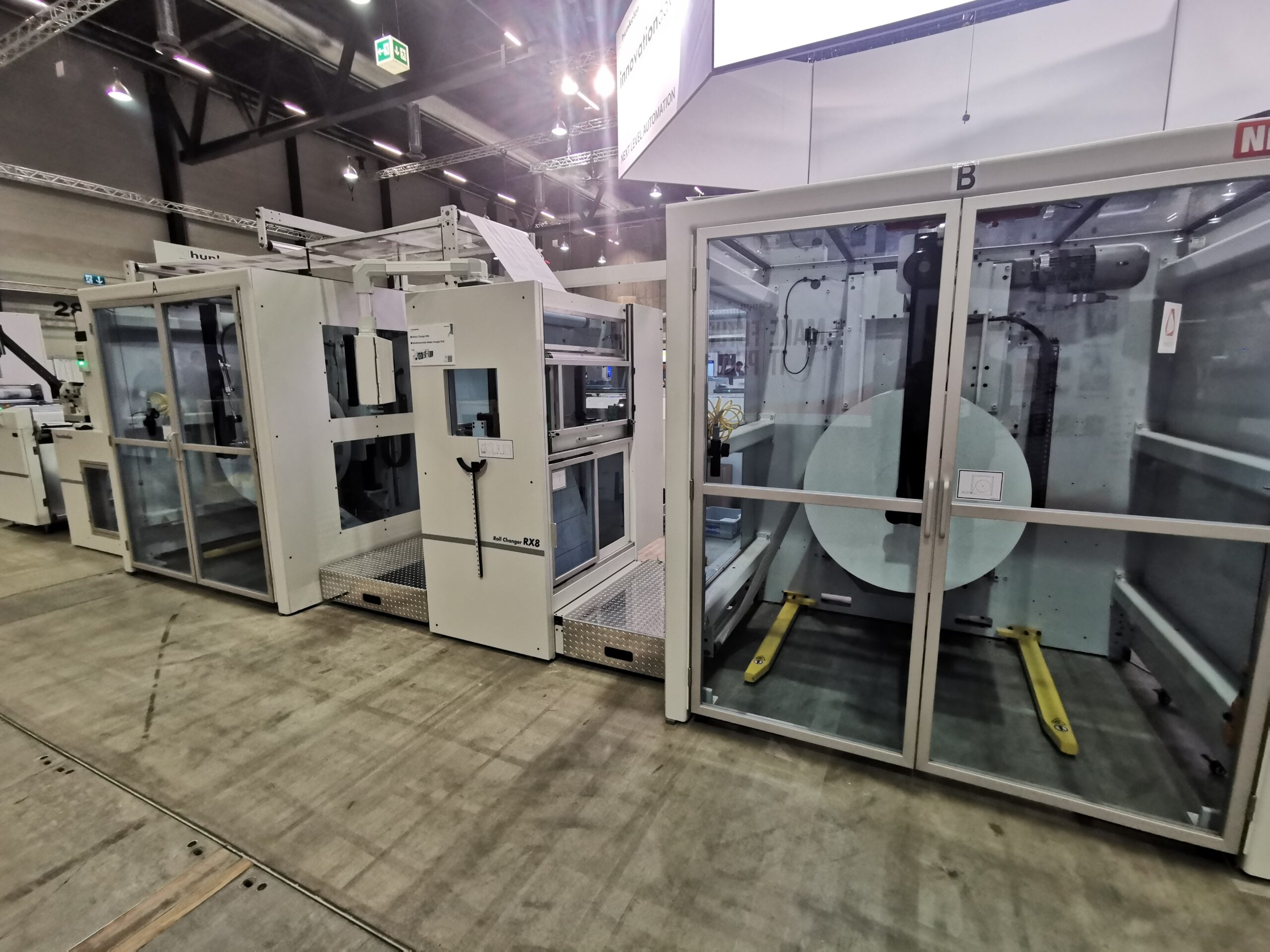 Hunkeler RX8 at Hunkeler innovationdays[/caption]
Tecnau
After acquiring Lasermax Roll Systems in 2011, Tecnau is offering a range of unwinding and rewinding options. The Italian manufacturer of finishing equipment announced the auto splicer u40 originally in 2014. Most recently the speed has been lifted to 180 m/min and the maximum paper weight has been extended to 300 gsm.
The device essentially consists of two unwinders with a splicer unit in the middle. The u40 has a lap splice. Unlike the other solutions, 90° turnbars are used to feed the paper into the splicer. The device allows for mixing paper grades and web widths between rolls.
[caption id="attachment_6387" align="aligncenter" width="623"]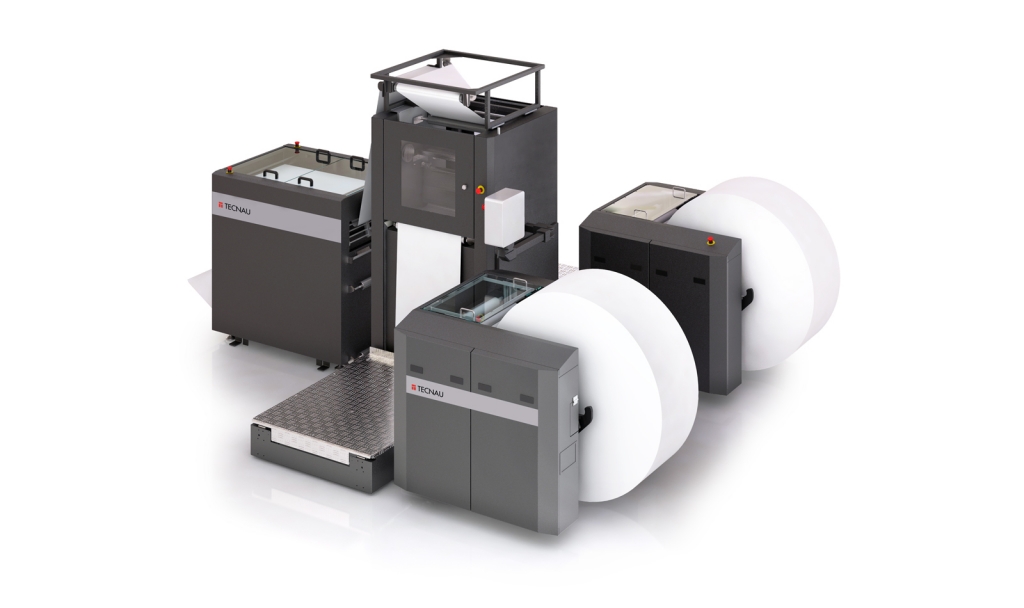 Tecnau Splicer u40[/caption]
Auto-splicer Overview – technical specifications
|
Manufacturer |
Contiweb |
Hunkeler |
Hunkeler |
Tecnau |
|
Model |
CD-N |
RX8 |
RS8 |
u40 |
|
Speed |
Up to150 m/min (500 fpm) for 560 mm width 330 m/min(1080 fpm) for wider models |
2 models: up to 152 or 250 m/min |
Up to 243 m/min |
Up to 180 m/min (590 fpm) |
|
Web width |
Versions for 560 / 770 / 1100 mm |
406 – 572 mm |
127-558 mm |
200 – 558 mm |
|
Paper weight range |
40 – 250 gsm (up to 350 gsm optional) |
50 – 300 gsm |
60 to 300 gsm |
|
|
Max roll diameter |
1270 mm |
1270 mm |
1270 mm |
1320 mm |
|
Max roll weight |
800 kg – 1600 kg (depending on web width) |
907 kg |
800 kg |
Usage today
Despite the offerings available, the uptake of auto-splicers has been low, especially among the popular 2-up inkjet presses. This is beginning to change. While previously an auto-splicer was believed to be an exotic add-on, many companies do consider an investment now when looking into inkjet presses.
HP banked on auto-splicers early on, also due to the fact that for the wide inkjet presses a splicer is especially advantageous. Kris Albee, Global Business and Strategic Marketing Master, HP PageWide Industrial Presses, states that HP essentially sells auto-splicer with almost every T300/T400-Series installation, and the shares for 2-up presses (T200s/Advantage) are on the rise. She adds “When integrating auto splicers with a PageWide web press, HP customers are not only improving their productivity, often characterized in the 20%-30% range based on the thickness of stock, but they also are realizing a return-on-investment (ROI) in the 1-2 year horizon.”
Canon improved the handling of auto-splices recently at the Hunkeler innovationdays as well. Canon’s web-presses can lift the heads with the web running to let a splice pass. With the brand-new ProStream 3000 Series an asymmetric lift was introduced, which allows letting one engine print while the splice is passing through the other, hence reducing waste considerably. This feature will be retrofittable for older ProStreams.
The payback
An important consideration when investing in a non-stop solution is how the printer can handle the splice. The latest devices can temporarily lift the heads when the splice is passing through the press – triggered by a signal from the auto splicer. The first inkjet presses are available that allow operation and control of the splicers from the press DFE, which can make operation easier. Ideally splices in the rolls supplied by the paper mills should be detected and handled automatically as well.
It is worth checking whether the auto-splicer offers lap or butt splice. With a butt-splice, a tape holds the ends of both webs together, without the papers overlapping - resulting in a lower splice thickness. This can be critical for some presses to avoid damaging heads or other components.
[caption id="attachment_6386" align="aligncenter" width="717"]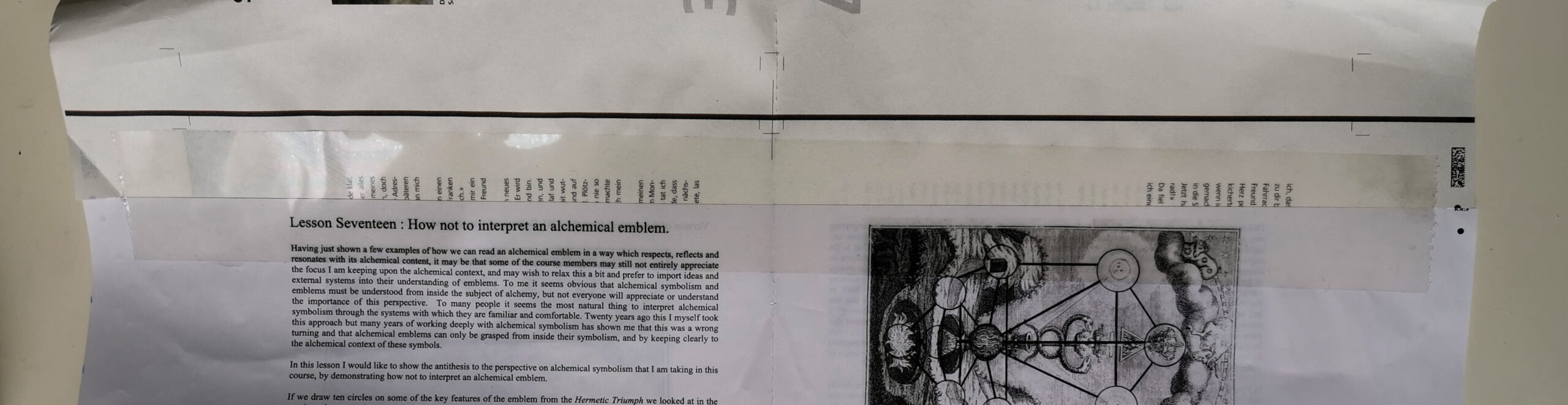 Butt splice with Hunkeler RX8[/caption]
While all auto-splicers can switch between paper grades and widths (to some extent), handling those changes in press and finishing can be more complicated. Different papers need different ink profiles, and settings for drier, cooler, and re-moisturiser. Also, the post-press equipment needs to be adjusted to a different paper. While some changes can be done electronically (at least theoretically) in a very short time, adjustments e.g. in a drier usually take time and would require slowing or stopping production. It pays to check how quick the print and finishing units can adapt when planning for frequent paper type changes on an auto-splicer. To make sure a splice can be handled across the full production line it can be worthwhile to have unwind, finish and press auxiliary equipment from one hand. Still there might be limitations on the degree of paper type or width changes.
Higher productivity, less waste and better usage of reels are the benefits of an auto splicer. A manual change often takes 15 minutes of downtime. With one change per hour and a press operating 2 shifts, five days a week, a total of 20 production hours can be gained. Hunkeler states that compared to manual reel splicing, up to 30 % higher line productivity can be achieved, depending on print speed and paper weight. It should be kept in mind that printers might need to stop nevertheless for a purge and wipe cycle. Usually, this is performed during a paper change without the operator noticing. When running non-stop, the build-up of ink and fibres on the heads still needs to be removed from time to time to ensure good print quality and a better lifetime of the heads.
The biggest driver is however savings in personnel, especially for sites with multiple lines. But even with single lines an advantage exists as the operator can prepare the splice at any time, not only when the roll change is imminent.
An auto-splicer will set you back about €150 to 250k ($160 - $275k). Based on the savings and productivity gains, an ROI in one to two years is realistic according to the device vendors. (To see the impact on your own bottom line, try the Inkjet Insight Downtime Calculator.) However, it does require keeping the whole production line in mind and making sure that most of the planned paper changes can be handled automatically across all production steps.