An emerging market
Full graphics inkjet printing has barely made inroads into flexible packaging markets so far. Although flexible packaging is a huge market, the challenges are also big. UV inks are undesirable for food packaging, a major area for flexible packaging. For aqueous inks, being able to print with water on plastics is challenging. Additionally, the print results need to perform well in the subsequent finishing steps, in laminating and pouch making. Finally, offering white is important, while a large gamut can be desirable as well.
The leading digital print technology so far is electrophotography. HP with the Indigo Press 20000 and 25k has by far the biggest number of installations. Short-run flexible packaging start-up ePac has ordered about 100 devices alone for its various production sites. Also, Xeikon offers models for flexible packaging and with the recently launched Titon toner, the company added a solution especially for paper-based flexible packaging. EP presses are comparably slow however with a web speed of 31 m/min for the HP Indigo 25k in four-colour mode. Running in EPM (CMY-colour mode) would bring the speed up, but using white, especially in multiple hits, or other extra colours does reduce the speed again.
Ventures into flexible packaging inkjet printing have been limited so far. Fujifilm presented the 540WV EUCON UV inkjet press at drupa 2016. Developed for the Japanese market it has not been sold in Europe or North America. The press was based on a collaboration with Miyakoshi. The UV inks jetted are cured under a nitrogen atmosphere, which should reduce UV ink odour and help in curing, however, this has little market acceptance in the US and Europe.
In the meantime, several new inkjet presses have been announced, all based on aqueous inkjet, but few made it to the market – or to beta stage - so far. Achieving high-volume production capabilities for demanding customers proved to be challenging and the pandemic in between did not help either. This is about to change however.
The overview below is based on models available or expected to become available soon. Flexible packaging materials are quite varied, therefore we did not get into substrate details in the list. It will be required to test desired materials on printability and quality. Also testing the quality after the necessary converting and packing processes is advisable.
The presses offered tend to have a high imaging resolution. Web widths range from 520 to 1,350 mm, with the majority around 800 mm. Most presses are designed to complement existing flexo lines in established flexible packaging printing sites for shorter runs. Start-up sites will need to have sufficient volumes to make good use of these productive presses.
Flexible Packaging inkjet presses
|
Comexi D4 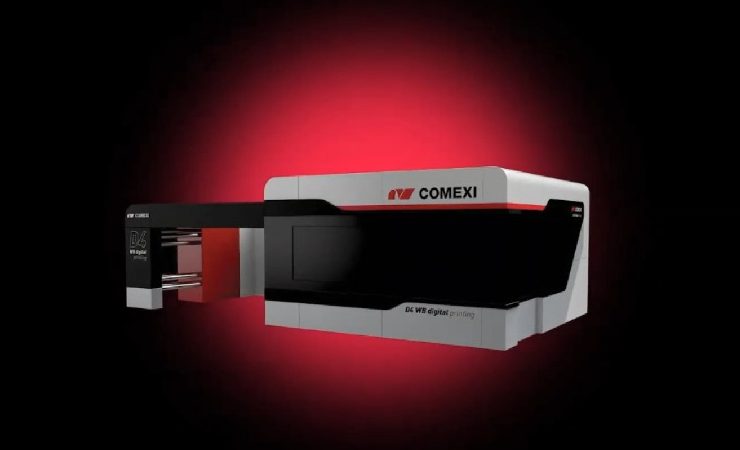 |
|
|
Max web width: 762 mm Aqueous inks: CMYK + OGV + white Resolution: up to 1.200 dpi Speed: 75 m/min or 150 m/min |
Spanish flexo press manufacturer Comexi announced the D4 at virtual drupa 2021. It is a water-based inkjet digital press configurable with up to eight (CMYK+OGVW) colours. This press is 762mm wide and will print at 75m/min at 1200 x 1200dpi or 150m/min at 1200 x 600dpi. The D4 uses Fujifilm Samba print heads and Comexi works with Sun Chemical on inks for the new press. No details on future availability have been made public so far. |
|
Fujifilm Jet Press FP790 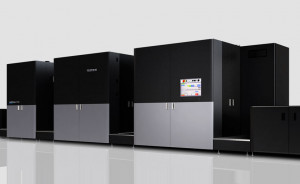 |
|
|
Max web width: 790 mm Aqueous inks: CMYK + 2 white Resolution: 1,200 dpi Speed: up to 50 m/min |
After bringing a flexible packaging press using UV-inkjet to the market (540WV), Fujifilm announced the Jet Press FP790 in 2021. Not only is the press wider, it also sports aqueous inks, including a double white. The press runs at 50 m/min in full 1,200 x 1,200 dpi resolution. The press has been developed in cooperation with Miyakoshi. For the inkjet heads, inks and other fluids Fujifilm can rely on its own development and manufacturing expertise. The FP790 is designed to fit into mainstream production and being compatible with existing production processes. Fujifilm is also building an eco-system, including workflow, around the press to optimise the productivity. Fujifilm is now in the final stages of internal testing and is about to enter beta testing. General availability is planned for end of 2023. |
|
Landa W10 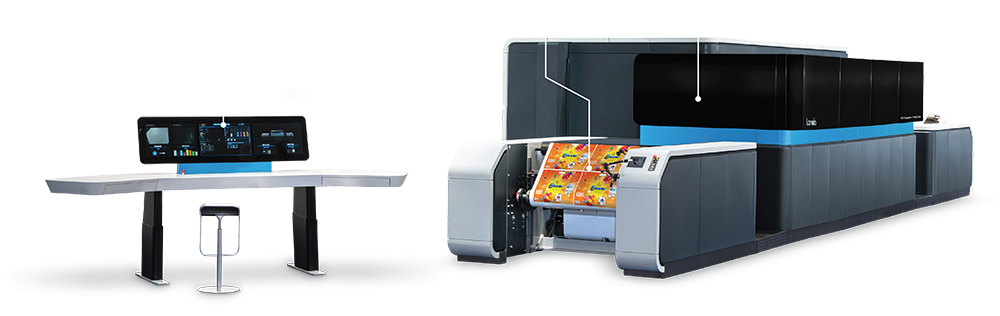 |
|
|
Max web width: 1,050 mm Aqueous inks: 4 to 8 Resolution: 1,200 dpi Speed: 100 m/min |
Announced at drupa 2016 the Landa W10 has been in the making for some time. With a 100 m/min web speed and 1,050 mm width, the W10 aims at high productivity. The big difference from other inkjet approaches is the drying process and ink transfer. Unlike the other models the Landa technology uses an intermediary (blanket) on which the inks are jetted. The ink is (almost) dried on the blanket and transferred as a tacky film. This avoids having to dry the ink directly on the substrate, which can overcome wetting problems or heat issues. The downside is that an extra process step and consumable (blanket) is added, and some alignment or stitching issues can arise. The availability of the press has been moved several times and there are no beta sites yet. Given the latest statements from Landa, the company is focusing on the sheet-fed models for now and the W10 launch is unlikely to take place in 2023. A high speed option with 200 m/min has been originally announced but this seems to be even further out. |
|
Miyakoshi MJP30AXF 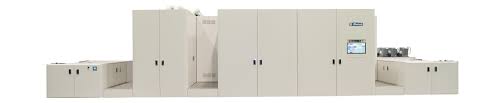 |
|
|
Max web width: 790 mm Aqueous inks: CMYK + double white Resolution: 1,200 dpi Speed: up to 50 m/min |
The MJP30AXF has been announced in 2020 as Miyakoshi’s first water-based press for flexible packaging printing. Unlike its predecessor, the MJP30AXF it is using aqueous inkjet. The MJP30AXF has a print width of 750mm and is capable of running at 50 m/min (164 ft/min). The press uses 1,200 dpi heads from Kyocera for CMYK and double white printing. A first installation already took place at Kanaoka Packaging,a leading Japanese flexible packaging printer, in 2022. The company so far used conventional presses only, but built a new site to focus on digital printing. Miyakoshi plans to sell the press outside of its home market Japan as well. |
|
Rigoli MVZ 1000 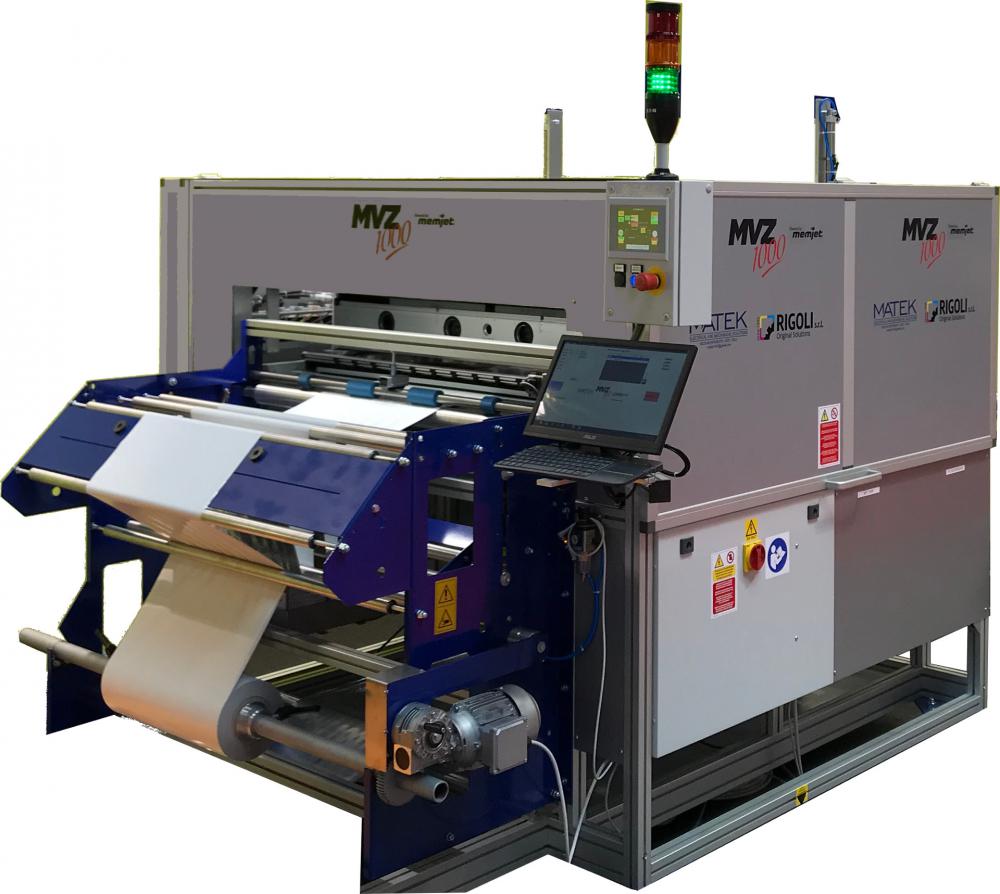 |
|
|
Max web width: 1067 mm Aqueous inks: CMYK Resolution: up to 1,600 dpi Speed: up to 18 m/min 9 m/min at full res |
Italian manufacturer Rigoli s.r.l. provides with the MVZ 1000 a wider web solution for flexible packaging based on Memjet inkjet technology. Rigoli manufactures a range of wide format printers and ancillary equipment. Accordingly, the MVZ 1000 is based on a 1m / 42” wide format printer, which was adjusted by Rigoli for flexible packaging. As commonly found with Memjet technology, the press has several speed settings, with the max speed of 18 m/min using 800 x 1,600 dpi or 9 m/min at full resolution. With the Memjet heads CMYK print is offered, including a double black channel. The inks are dye-based and safe for indirect food contact. Being smaller and more compact than the other devices, the MVZ 1000 is a cost-efficient solution for smaller volumes. However, the productivity and break-even against flexo is lower. The MVZ1000 is available in Europe and there six installations in operation. |
|
Screen Truepress PAC830F 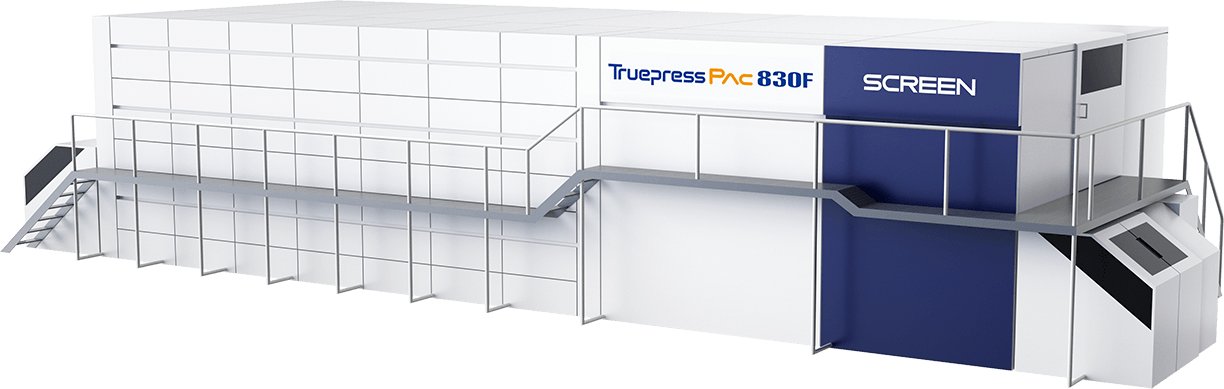 |
|
|
Max web width: 830 mm Aqueous inks: CMYK + white Resolution: 1,200 dpi Speed: Up to 75 m/min |
Screen has a long track record in continuous-feed inkjet printers. In 2021 the company announced its first venture into flexible packaging inkjet with the Truepress PAC830F. Featuring a web width of 830 mm and a speed of 75 m/min, the Truepress PAC830F is a flexible packaging printer with an industrial level of productivity and is intended to complement flexo installations for lower run lengths. The press is using water-based inks for CMYK and white, with a new technology that promises opaque white in one hit. The inks are food compliant. The press is in the final stages of development. Beta sites and the official launch are expected for 2023. |
|
Screen Truepress PAC520P 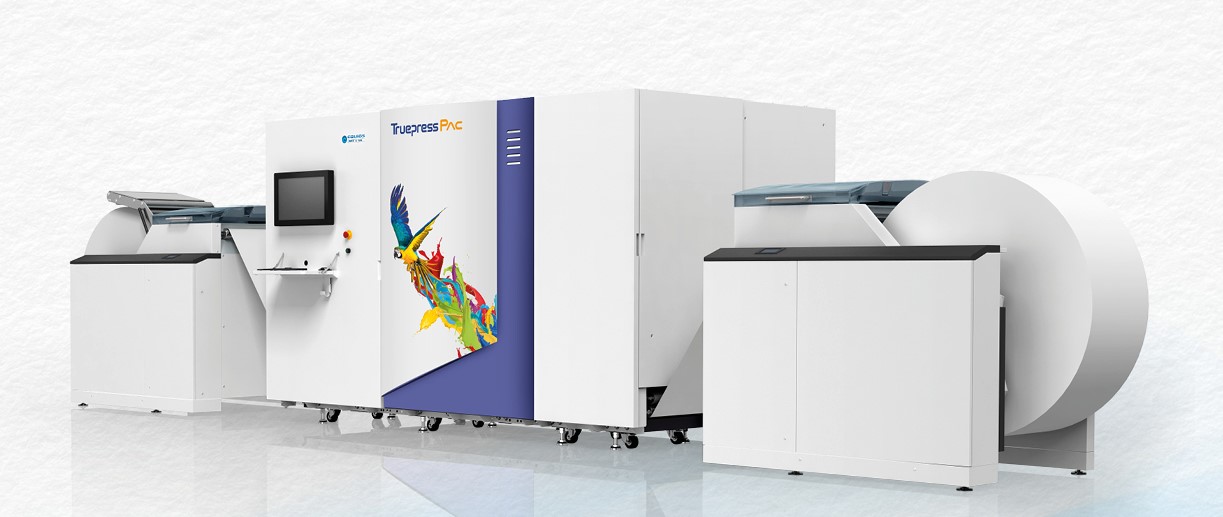 |
|
|
Max web width: 520 mm Aqueous inks: CMYK Resolution: up to 600 x 900 Speed: 80 m/min or 120 m/min |
Announced in September 2022 Screen added a second model for the flexible packaging market. The 520P is targeted at paper-based flexible packaging, however. The press is based on the tried & tested Truepress NX platform, although it is a single engine device and has been modified to be used in flexible packaging. It features specially developed inks that are food compliant. So far only CMYK is available but plans for an extended gamut exist. Lacking white ink is not an issue for fibre-based substrates. The press is at the prototype stage and Screen is busy testing papers. Availability is expected for late 2023. |
|
Uteco/Kodak Sapphire EVO M 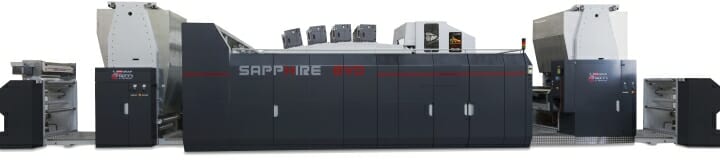 |
|
|
Max web width: 660 mm Aqueous inks: CMYK Resolution: 600 x 900 dpi Speed: up to 200 m/min |
The EVO M was developed by the Uteco Group in partnership with Kodak and utilizes Kodak’s Stream heads and water-based inks. The system is sold by Uteco. The Sapphire Presses are designed for printing on flexible film and paper substrates. The press can also produce promotional materials (envelopes, signage), industrial packaging and home décor. The Sapphire EVO M is targeted at monthly production volumes from 300k m² to 600k m² per month, for 1 shift operation in 5 days. Recently the EVO has successfully satisfied FDA and EuPIA requirements for reverse print applications with solventless and solvent adhesive systems. Also, hybrid printing configurations are possible, enabling in-line printing with spot colours and OPV varnishes. There are three early user installations in operation. The Sapphire EVO M is in controlled sales/service for US, Eastern/Western Europe geographies. |
|
Uteco/Kodak Sapphire EVO W 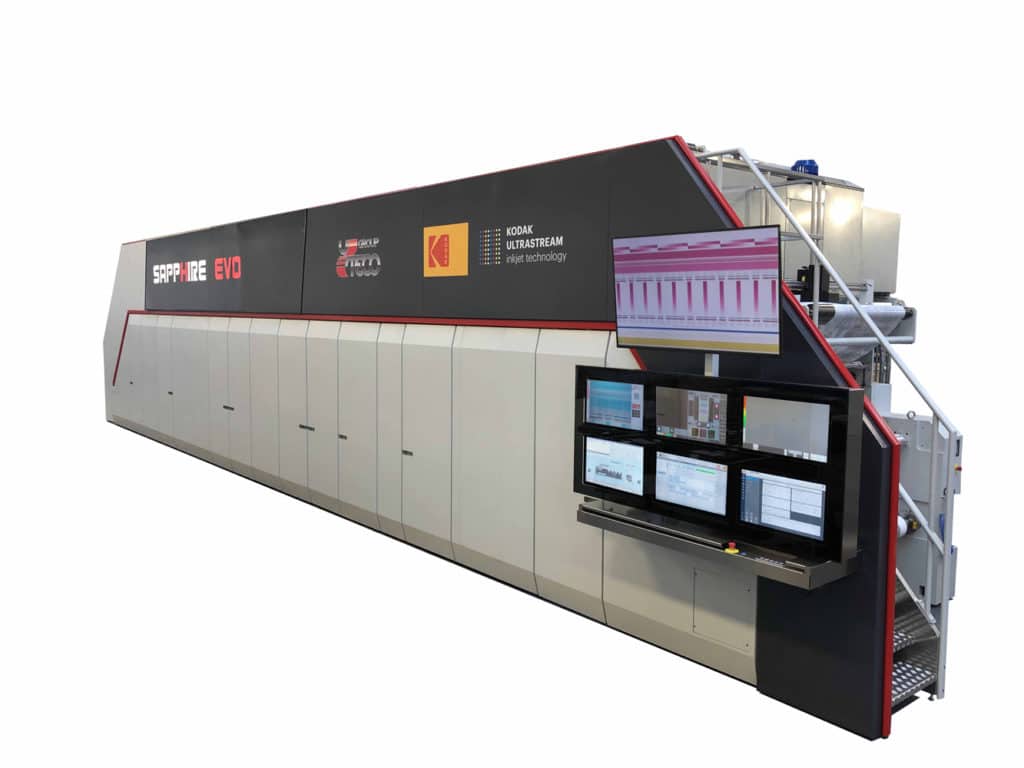 |
|
|
Max web width: 1,350 mm UV inks: CMYK Resolution: 600 x 1,800 dpi Speed: up to 150 m/min |
Another result of the Uteco/ Kodak partnership is the Evo W, which has been announced in 2020. The “W” refers to “wide” since this press has a 1260 mm (49”) print width and 1350 mm web width. It is the first press to be powered by Kodak ULTRASTREAM continuous inkjet technology. The Sapphire EVO W is targeted at monthly production volumes over 500K m² to 1.2 million m² per month, based on 1 shift, 5 days. Given speed and width, the EVO W is the most productive inkjet line proposed so far. Options are a primer unit, white preprint and varnishing unit. The Sapphire EVO W is at first adopter sales stage for US, Eastern/Western Europe. There is one beta installation in operation already. |
For industrial-scale production, no alternatives to the devices listed exist, as flexible packaging has distinct requirements setting it apart from general-purpose inkjet presses. There are options for imprinting, however. Comexi originally announced the Digiflex imprinting UV-inkjet bar for flexo presses at virtual drupa 2021. The concept was altered to an offline printer for adding variable information to flexo printed rolls, however in single colour and not in graphics quality.
There are some low-volume inkjet printers based on Memjet technology, that are suitable for smaller packs and volumes but not as a complement to existing flexo presses. They also feature narrow web widths. Products available are the Afinia FP-230 from Afinia Label, launched in 2020, the T2-L from AstroNova, and from ArrowJet the Aqua 330R. In 2022, the i-Jet2800 from Inkjet Solutions was added to the market. From V-shapes even a complete print & pack solution exists. The concept combines a Memjet DuraFlex print engine with a single-portion sachet forming line for small sachet sizes from 40 x 50 mm up to 100 x 100 mm and a filling range from 0.2 to 30 ml. The only wide-web printer with Memjet technology is manufactured by Rigoli and is listed above.
Compared to electrophotography, inkjet can reach wider widths, higher speeds and lower running costs. Likewise, low-end inkjet solutions with a small footprint and investment can cater for the low-volume market. Accordingly, many more business approaches will become possible. The technical hurdles for inkjet are high, however, as the substrates are difficult to print on with aqueous inks and the converting processes have to be considered as well.
This Shopping Guide is intended to give a high-level overview of flexible packaging presses available or announced. More details on the products can be found in the Inkjet Insight Device Finder and in previous coverage of some models. Stay tuned for more shopping guides from Inkjet Insight.