Sustainability makes headlines daily and the print industry is no exception. SunChemical released its latest Sustainability report. Heidelberg recently announced a commitment to become climate neutral by 2030. Smithers published two different reports covering sustainability topics during 2021: The Future of Green Printing to 2026 and The Future of Bio-based Inks and Coatings to 2026. Despite all the activity, the printing industry has yet to agree on a common definition for sustainability. This article explores considerations for what makes an inkjet ink sustainable.
See our additional coverage on plant-based inks.What Is Sustainability
Part of the challenge in determining what makes an inkjet ink sustainable is the lack of a standard definition for sustainability. The United Nations’ developed a framework of 17 interlinked Sustainable Development Goals (SDGs) that a growing number of companies are referencing to develop their own sustainability strategies. While these goals have been influencing brand strategies, they are also influencing the sustainability strategies of ink manufacturers.
HP President and CEO Enrique Lores, sums up sustainability well, “At this moment in history, and from this point forward, companies will be judged by more than the profits they generate. They will be measured by the value they create for society.” This article explores how four manufacturers of inks including inks for inkjet printing are embracing sustainability beyond just a product.
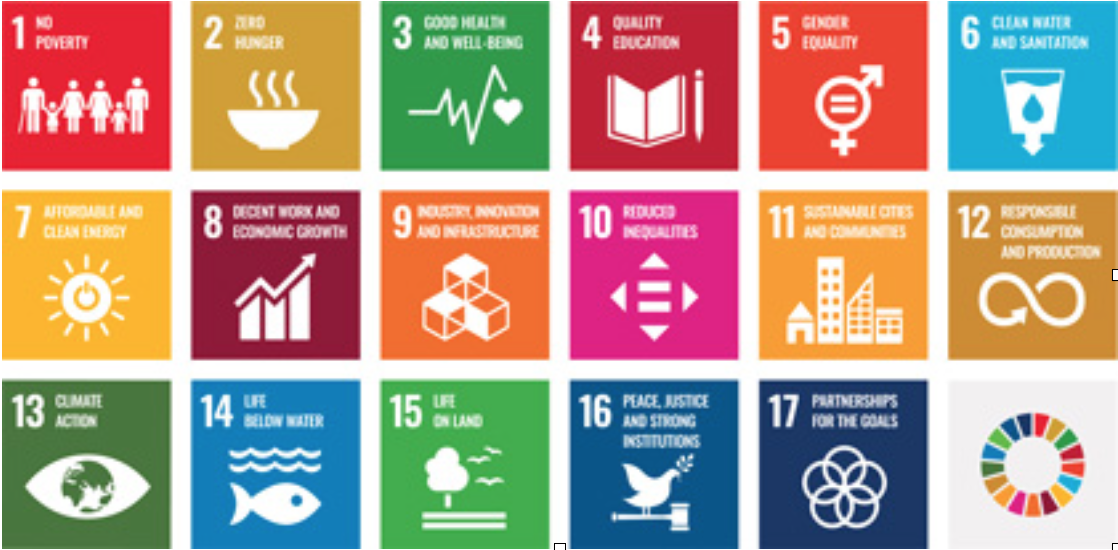 Source: United Nations
Considerations for Sustainability
Climate action is often top of mind when it comes to sustainability. For decades, the print industry has looked for ways to reduce volatile organic compounds (VOCs). Some examples include the move from solvent-based inks to soy-based inks in the publishing space or the move to water-based inks for textiles and other market sectors.
All four ink manufacturers are taking action with regard to climate action. Sun Chemical, a member of DIC Corporation and the world’s largest ink company released its latest global sustainability report in November 2021. Referencing the SDGs, the focus is carbon neutrality with a commitment to achieve net zero CO2 emissions by 2050. This is an aggressive revision of the prior goal to reduce CO2 emissions by 50% from the fiscal year 2013 level by fiscal year 2030.
Carbon neutrality is defined as the state in which the greenhouse gases going into the atmosphere are balanced by removal out of the atmosphere, according to NetZeroClimate.org, an interdisciplinary research initiative based in the University of Oxford’s fifteen years of research on climate neutrality. The organization and a growing number of companies and governments believe it to be the key metric to achieve in order to stop global warming. All four manufacturers have set carbon neutrality goals.
The 5 Rs: Reuse, Reduce, Renew, Recycle, Redesign
The Ellen MacArthur Foundation encourages companies to commit to a circular economy where every aspect of how we design, make and use products is improved to tackle climate change. This goes well beyond the chemistry of a given ink and is another way companies can view operations to achieve carbon neutrality.
The 5Rs, reuse, reduce, renew, recycle and redesign, is an approach that organizations can reference to establish their own best practices and to assess and compare supplier operational and innovation processes. As an example, if companies design for end-of-product life during new product development, there will be an outlet for the product when its useful life for its original purpose has ended and the product will avoid being landfilled or further contributing to CO2 emissions.
Reuse can include recovery of energy from waste streams and diverting them from less desirable options such as landfills.
Reduce is a way to mitigate waste, energy or emissions.
Renew may include utilizing new renewable resources for energy.
Recycle can include recovery of solvents or other critical raw material streams.
Redesign refers to optimizing operations to improve efficiencies and performance.
Human Rights
All four manufacturers also commit to improving human rights. INX addresses product safety, stating “we are a leader in regulatory, compliance and sustainability issues, safeguarding that new developments are not only good for the environment but also do not pose any risks for human health.” HP cites the need to improve cultural diversity as a key sustainability metric and commits to achieving a 50/50 gender equality in HP leadership and ensuring at least 30% of the workforce in technical and engineering roles is comprised of women by the year 2030. Epson commits to ensuring responsible supply chains as well as improving productivity through digitization and automation. Sun Chemical commits to continue to lower VOCs, but also to reduce food waste and improve human health and comfort.
What Sustainability Means for Inkjet Inks
The inkjet printing process has the potential to positively impact sustainability as described in the SDGs and in the strategies of the four major ink suppliers discussed. In one example, digital textile printing can help reduce carbon emissions. Over 90% of digital inks for textile printing are water-based whereas the majority of rotogravure inks are solvent based, says Smithers. This means digital printing can lower VOC emissions that contribute to carbon footprint. Pigment printing is expected to grow in the digital printing for textiles segment as the process does not require post-print processing such as steaming and washing, thereby contributing to the “reduce” section of the 5 Rs by reducing the amount of water and energy used in the print process.
Yet, other substrates such as films used in flexible packaging and labels may require more energy to get the water out and achieve desirable ink performance. A life cycle analysis can be a helpful resource to consider all aspects of the printing process to determine not just the ink, but how the total process will impact the printed product and the ability for inkjet ink manufacturers to deliver on their sustainability promises.
Print-on-demand business models enabled by cost-effective short-run inkjet printing have the potential to significantly reduce unused inventory as products can be sold and then quickly produced, thereby reducing waste across a number of industries. The automated nature of a print-on-demand business supported by easy and safe to operate printers supports a commitment to human health and wellness in the workplace.
There are a number of ways inkjet ink manufacturers are delivering on sustainability goals. Key to each manufacturer’s approach is a focus on understanding human needs and ensuring the supply chain is posed to deliver on those needs.
Sources:
https://www.sunchemical.com/sustainability/
https://netzeroclimate.org/what-is-net-zero/
https://h20195.www2.hp.com/v2/getpdf.aspx/c05179523.pdf
https://global.epson.com/SR/csr_initiative/sdgs.html
https://www.inxinternational.com/sustainability
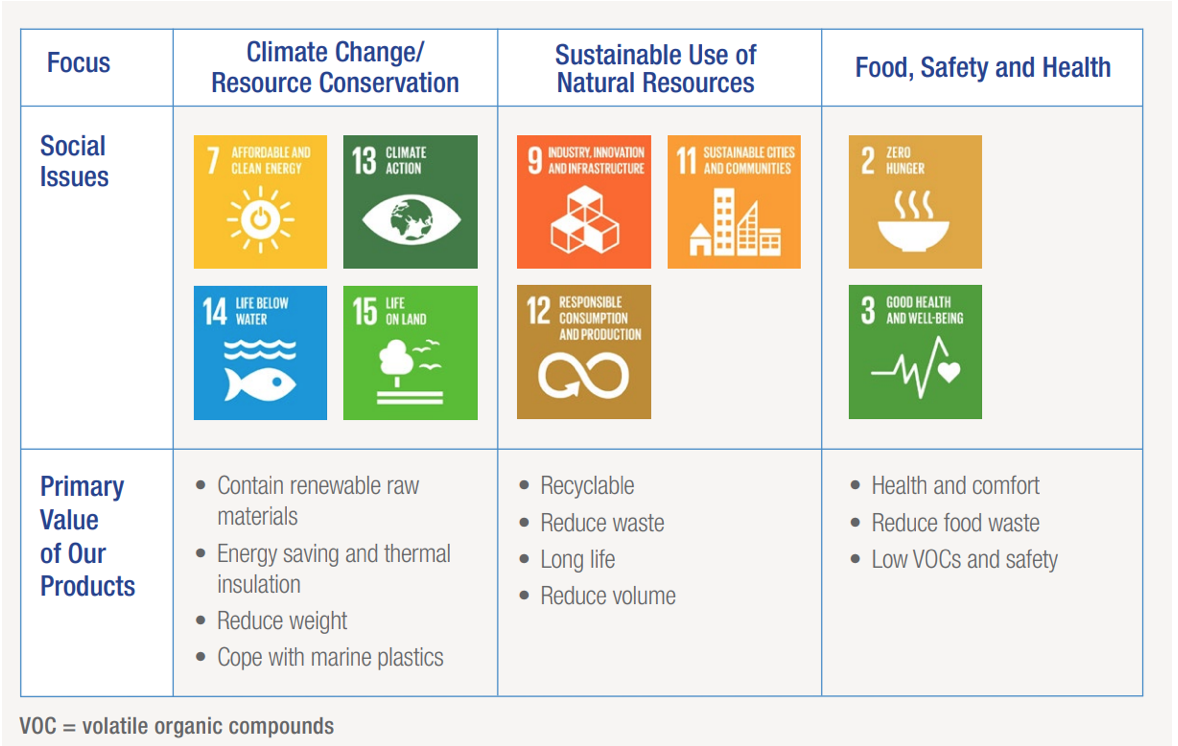
Caption: Sun Chemical references 9 of the 17 United Nations’ Sustainable Development Goals (SDGs) in its 2021 Sustainability strategy when discussing how its products make an impact.
Source: Sun Chemical Sustainability Report
[caption id="attachment_5173" align="alignnone" width="900"]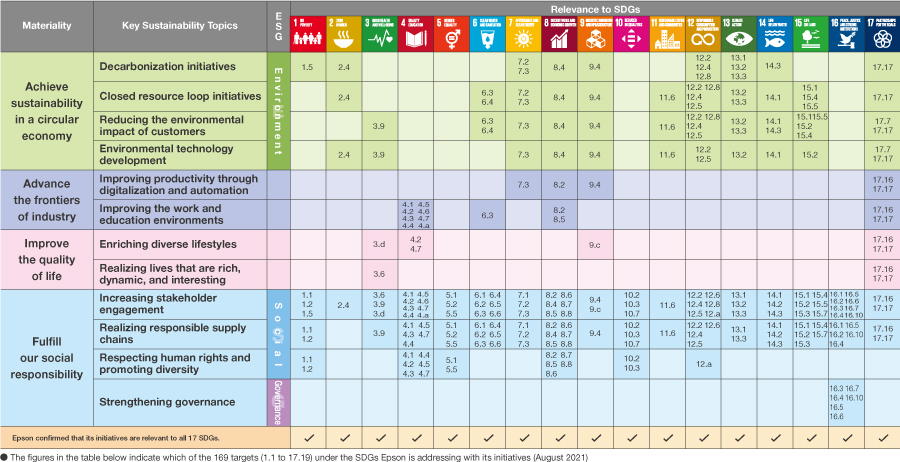 The above chart shows how Epson is contributing to all 17 SDG goals through its sustainability strategy.[/caption]
Source: Epson https://global.epson.com/SR/csr_initiative/sdgs.html