 By controlling the rate of re-crystallization through reheating, the film property can be adjusted. It is also possible to flatten the drops by ‘fusing’ them, like in toner printers. This is the approach used in certain Xerox printers, where the ink is initially applied to a drum. Hot-melt inks can also be made more resistant by adding UV curing.
UV-Curable
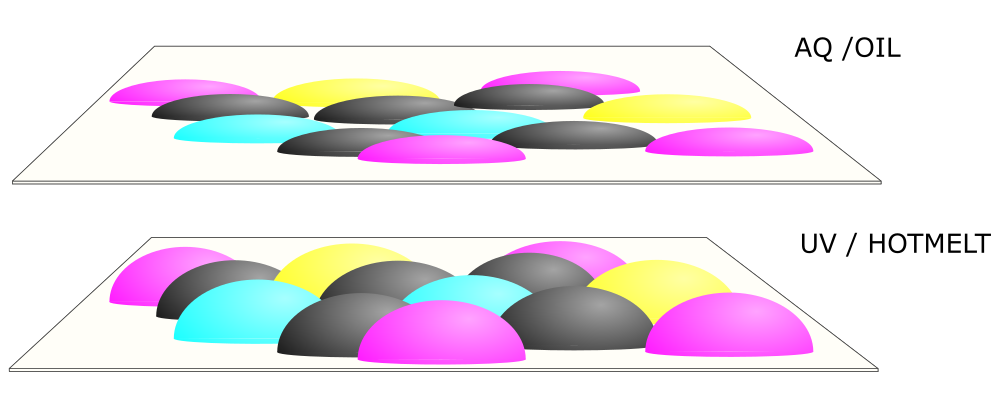
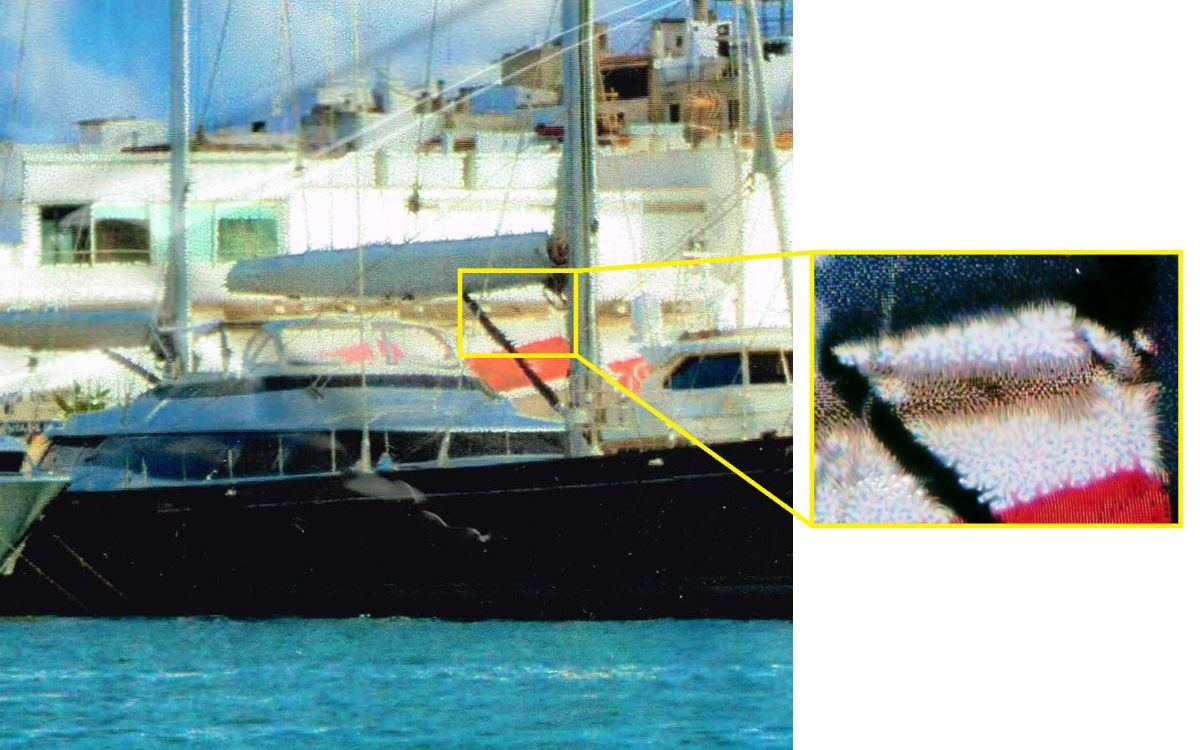
This ink type is the basis for the explosion of inkjet in the wider industrial sector due to its relatively ‘easy’ handling and wide gamut of available materials already used in traditional printing, such as flexo and screen. In the main type being used in inkjet, known as free radical curing, the building blocks are acrylate ‘monomers’. Monomers are quite small molecules with one or more reactive groups that tend to be liquids at room temperature. By including a suitable ‘photointiator’ in the mix, and setting off the reaction with UV light, the ink turns solid instantaneously. Applying UV ink successfully to paper has always been the difficulty. However, since the absorption of un-cured ink into uncoated paper prevents the subsequent cure, leaving unsafe levels of un-cured monomers hanging around can allow drops to dive too quickly in the Z direction with the paper fiber. Since the color is dispersed into the ink’s monomeric base, the color tends to be lost too. In contrast, on higher hold out -coated papers the ink wetting can be challenging and without proper curing, such as UV-LED pinning, the ink bleed and coalescence which happens in the X and Y direction of the coated paper surface can be severe, as in the example below:
By controlling the rate of re-crystallization through reheating, the film property can be adjusted. It is also possible to flatten the drops by ‘fusing’ them, like in toner printers. This is the approach used in certain Xerox printers, where the ink is initially applied to a drum. Hot-melt inks can also be made more resistant by adding UV curing.
UV-Curable
This ink type is the basis for the explosion of inkjet in the wider industrial sector due to its relatively ‘easy’ handling and wide gamut of available materials already used in traditional printing, such as flexo and screen. In the main type being used in inkjet, known as free radical curing, the building blocks are acrylate ‘monomers’. Monomers are quite small molecules with one or more reactive groups that tend to be liquids at room temperature. By including a suitable ‘photointiator’ in the mix, and setting off the reaction with UV light, the ink turns solid instantaneously. Applying UV ink successfully to paper has always been the difficulty. However, since the absorption of un-cured ink into uncoated paper prevents the subsequent cure, leaving unsafe levels of un-cured monomers hanging around can allow drops to dive too quickly in the Z direction with the paper fiber. Since the color is dispersed into the ink’s monomeric base, the color tends to be lost too. In contrast, on higher hold out -coated papers the ink wetting can be challenging and without proper curing, such as UV-LED pinning, the ink bleed and coalescence which happens in the X and Y direction of the coated paper surface can be severe, as in the example below:
 UV ink is more commonly used in industrial inkjet printing than high speed inkjet as it requires slower production speeds to allow proper curing and jetting. UV chemistry can be customized or tuned for adhesion and wetting onto a range of different materials by tweaking the chemistry. Like hot-melt above, by sitting right at the surface with a controlled amount of drop spread, controlled by the paper temperature, then gives it a beautifully controlled resolution, gloss and color.
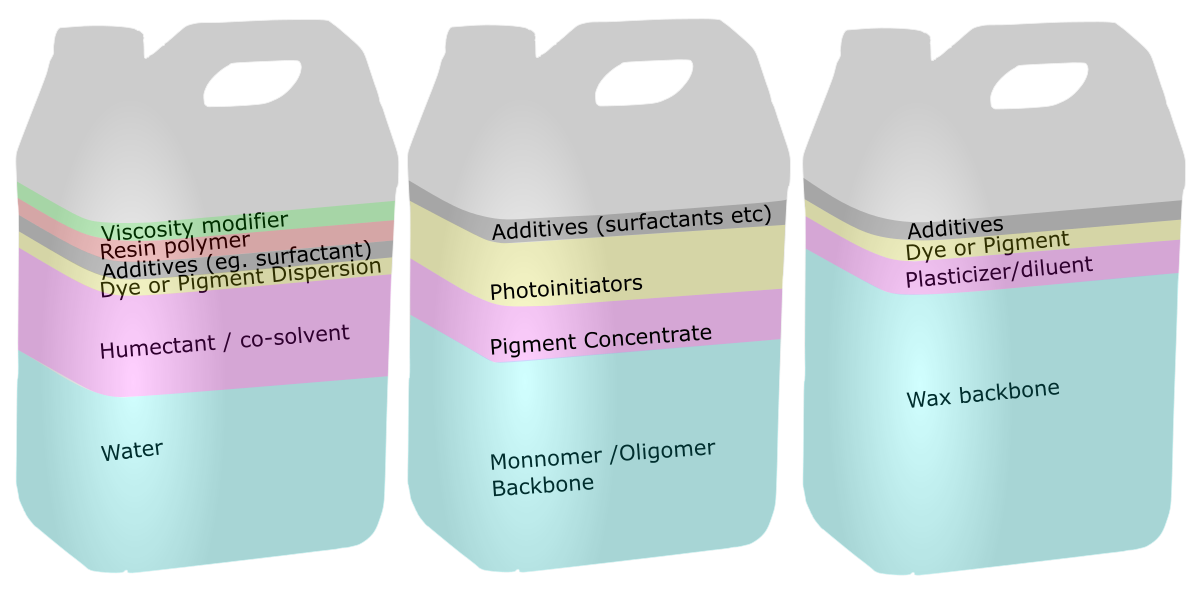
We can most easily summarize the different components discussed that go into our different ink types in the image below:
UV ink is more commonly used in industrial inkjet printing than high speed inkjet as it requires slower production speeds to allow proper curing and jetting. UV chemistry can be customized or tuned for adhesion and wetting onto a range of different materials by tweaking the chemistry. Like hot-melt above, by sitting right at the surface with a controlled amount of drop spread, controlled by the paper temperature, then gives it a beautifully controlled resolution, gloss and color.
We can most easily summarize the different components discussed that go into our different ink types in the image below:
 An ink’s carrier is an important piece of the compatibility to the print process. In our next article, we will dive deeper into the most commonly used ink, Aqueous.