What is Optical Density?
Measured with a densitometer or other color hand held instruments, density is the measurement of reflected or absorbed light being pulled into the printed surface. Density measurement is described as the portion of light that is reflected from the substrate and the ink. The higher the density number, the more light absorbs into the print surface and the darker the shade. Lower density percentages mean more light is reflecting resulting in lighter shades.*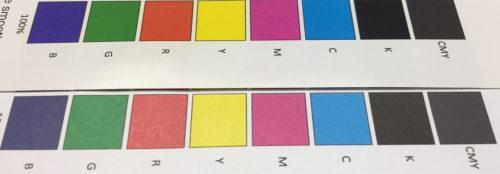
Lower density numbers can make colors appear flat.
Density measurement is commonly used for process control, plotting a curve of lightness or darkness for a particular ink color (its ability to mask out a substrate). Offset printing as an industry is slowly substituting density measurements with LAB color measurements, but 100% density control remains an important measure in the inkjet world. Unlike aqueous inkjet, offset ink has a high viscosity (thick) and highly pigmented. It creates a film-like surface resembling colored honey which lays on top of the paper. This allows the ink to be more opaque, easily blocking out the paper white. For aqueous inkjet, achieving high density is more challenging and small improvements drive noticeable quality differences. Jetting aqueous ink does not create an ink "thickness" like offset because its base component, water, has a very low viscosity (thin). The ability to apply more aqueous ink depends on many factors:- Ink Chemistry: Water-based inkjet ink colorants and chemistry are different for each print head and machine combination. Each device-specific ink contains different levels of colorant and water which will respond to paper formation and surface differently.
- Ink Opacity: An ink's opacity is based on the amount of colorant used and the colorant's ability to stay higher on the surface of the paper. The amount of colorant on the surface determines how much of the reflection from the paper is blocked.
- Final Ink TAC: The levels of TIC and TAC are determined by paper surface chemistry, weight of paper, finishing and press speed.
- Ink to Paper Migration: An ink's chemistry and level of viscosity determine how quickly the carrier of the ink (water) will evaporate and/or absorb into a paper surface. This speed determines the maximum TAC at which a paper can productively run through an inkjet device and finishing. TAC (Total Area Coverage) sometimes called TIC (Total Ink Coverage) describes the total amount of ink which is jetted onto a paper.
- Print Head Design: Multi-level or grayscale print heads jet varying drop volumes, or combine fixed size drops mid-flight, to create drops which can contain multiple levels of colorant. Binary print heads print a fixed level of colorant because they are limited to jetting one drop volume.
- Paper Manufacturing Values: Inkjet is jetted onto media in a dither pattern, meaning the drops are jetted closer or farther apart to create ink shade differences. This is quite different than an offset rosette pattern. This dither pattern is intended to allow more or less of the paper show through to reproduce a particular shade. Color management estimates the paper's shade, brightness and whiteness when printing to create varying visual halftone values using paper "show through." If a paper shade is too bright, it can cause an ink to look washed out.
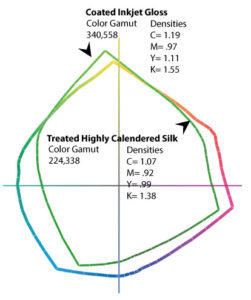 Figure 1. Sample Density Measures[/caption]
To understand how density directly affects printed color reproduction, sample densities are supplied in Figure 1. Sample printed papers were printed with different top end values of process inks reflecting in different densities, and resulting in different color gamuts produced. Note that density, as mentioned above is not the only item which reflects a reduction in color gamut, but including a visual helps in understanding one of the many variables which impact print quality.
Tracking density should be a part of any press benchmarking or inkjet quality tracking methods as it helps an operator diagnose whether an issue is due to paper formation, coating, primer or the inkjet heads themselves.
Measure twice. Print nice.
Mary
Editor's Note:
Optical Density (OD) is measured on a logarithmic scale where:
Figure 1. Sample Density Measures[/caption]
To understand how density directly affects printed color reproduction, sample densities are supplied in Figure 1. Sample printed papers were printed with different top end values of process inks reflecting in different densities, and resulting in different color gamuts produced. Note that density, as mentioned above is not the only item which reflects a reduction in color gamut, but including a visual helps in understanding one of the many variables which impact print quality.
Tracking density should be a part of any press benchmarking or inkjet quality tracking methods as it helps an operator diagnose whether an issue is due to paper formation, coating, primer or the inkjet heads themselves.
Measure twice. Print nice.
Mary
Editor's Note:
Optical Density (OD) is measured on a logarithmic scale where:
- OD of 0 means that no light is absorbed and 100% of light is transmitted
- OD of 1 means that 90% of light is absorbed and 10% of light is transmitted
- OD of 2 means that 99% of light is absorbed and 1% of light is transmitted