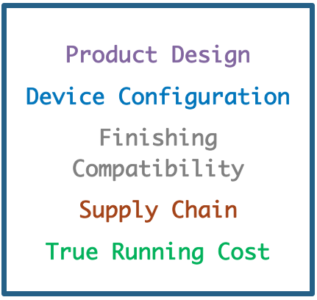
It’s natural to think that paper evaluation is all about the printer you are using, but finishing compatibility is also a very important consideration. The amount of ink used, paper saturation and the weight of the paper all play into success or frustration in sheeting, folding and inserting. Before you start any paper trials, know what you’re finished product goals will be and design your trial around them. In fact, paper evaluation needs to consider a broad array of issues beyond compatibility with a specific device. If you don't consider the big picture, you can waste a lot of time testing papers or miss out on opportunities to save money and improve quality.
Defining Production Requirements
Consider the entire path to a finished print product. Will it be cut, scored, bound, folded, inserted or glued? What other devices are needed to finish the final product?
Do you require a particular grain direction for your project or finishing needs? Cutting along the paper grain can save blades, and folding with the grain can avoid paper cracking and deliver smooth flat folds. The grain direction of your paper and how it will be finished can determine job imposition or print direction decisions up stream in prepress. Discuss grain direction requirements with potential paper suppliers before spending time on testing.
Is your finishing process inline or offline from the inkjet device? In many cases, in line finishing speed requirements to the press place constraints on the paper weight options. This is of particular concern with inline finishing where jams can down the entire print production print workflow.
Of course the paper you test also has to be compatible with the type of printer you are using. There are many paper grades that have various treatments for dye, pigment or compatible with both. There are also devices emerging that are promoted as supporting untreated stocks, either natively or using a pre-coating, spot-coating or post-coating process in-line with the printer. These print and finishing considerations, along with the application type and level of coverage you anticipate supporting should narrow the range of papers for testing.
Supply Chain Considerations
In addition to production, there are other compatibility and supply chain requirements to discuss. Does the selected inkjet paper need to match with components produced on other inkjet or non-inkjet devices?
Do you have existing supplier or merchant relationships that will be impacted by a shift in your paper choices? Factor that into your overall cost calculations rather than just focusing on the cost of an individual sheet.
Once you have defined your requirements in terms of print, finishing, printed product characteristics, compatibility with other platforms and impact on other buying relationships, it’s time to build a list of papers to consider. You can start by sending your requirements out to mills and merchants, or you can visit our
Paper Finder app to build a list before contacting mills and merchants. When you do reach out to suppliers, there are a few more key criteria:
- Make sure there enough inventory of the prospective paper available in your region and in your format (rolls/sheets) to meet your expected demand.
- If the paper is manufactured abroad, understanding where the converting will be completed and get familiar with the capabilities and reputation of potential converters. You may have options on where the final converting is done and that may impact your supply chain effectiveness.
- You also need to understand how much inventory you will need to hold in order to ensure stable supply and whether you will have to pay for the full inventory in advance, or if the supplier offers a consignment program that will defray your carrying costs. It doesn’t make sense to spend time testing paper that will not be consistently available.
After going through the exercise of narrowing the field by applying multiple levels of requirements to your search, you are likely to be down to a relatively short list of papers that meet those requirements. We recommend that you wait to finalize cost boundaries until you have narrowed the field based on all of the other considerations or may end up with no list at all. Paper pricing varies based on location, converting, quantity and overall buying relationship. There is also often an inverse relationship between the cost of paper and the cost of ink utilization. Naturally you can’t consider a paper that puts the cost of the finished piece outside of the range that your customers will pay, but often it is difficult to tell what the true running cost of a paper will be before performing testing.
Thinking through all of these requirements will help you narrow the field to papers that are worth the investment of production downtime and resource necessary to fully evaluate and compare papers.
Stay tuned for tips on planning and managing your paper evaluation efforts.