Business As Unusual
As you can tell from this week’s look at printing shipments, this is shaping up to be a…turbulent year—and not just for the printing industry. Economists are biting their nails wondering what the tariffopolooza will do to the economy in general, and many are waiting for some kind of signs in the data (so far so good, save for Q1 GDP.). Unfortunately, this watching and waiting is perhaps a bigger problem than an actual economic meltdown. What businesses and markets hate above almost anything else is uncertainty. How do you strategically invest or plan when you have no idea what your costs might be, or what the market for print (etc.) will be? Print magazine has an interesting article by Emily Cohen and Hunter Vargas of Casa Davka, a consultancy that helps graphic design firms evolve their business strategies and practices.
The current state of the world is undeniably affecting our industry. Projects are being scaled back, delayed, or canceled entirely, and clients are hitting pause until the situation becomes more stable. But this isn’t the first time our industry has faced uncertainty, and we’ve always found a way forward. There is hope and untapped potential, especially in new business development areas that we often overlook—but should be doubling down on, whether times are tough or not.
They advise creative businesses—and we would include printing companies in, or at least adjacent to, that category—to focus less on “sales” and more on “relationship-building,” especially in uncertain times.
Being recognized as the go-to expert with our clients and prospects is one of the most effective ways to build authentic relationships and attract new business opportunities. However, to be known as an expert, we need to stop thinking of ourselves and, more importantly, acting as service providers. Instead, we should position ourselves as the strategic partners we are—experts who provide invaluable insight to move the needle on our clients’ businesses. And we should do so with prospective clients and existing clients alike.
With prospects, this can come to life by asking good, strategic questions throughout the relationship-building process. We should provide expert guidance, feedback, and, when needed, insightful counterpoints and alternative strategies that, while not giving away tangible deliverables for free, better align with the client’s business goals and relationship objectives.
WhatTheyThink has been advising this for decades, but it’s perhaps more important than ever.
The Best Thing Since Sliced Bread?
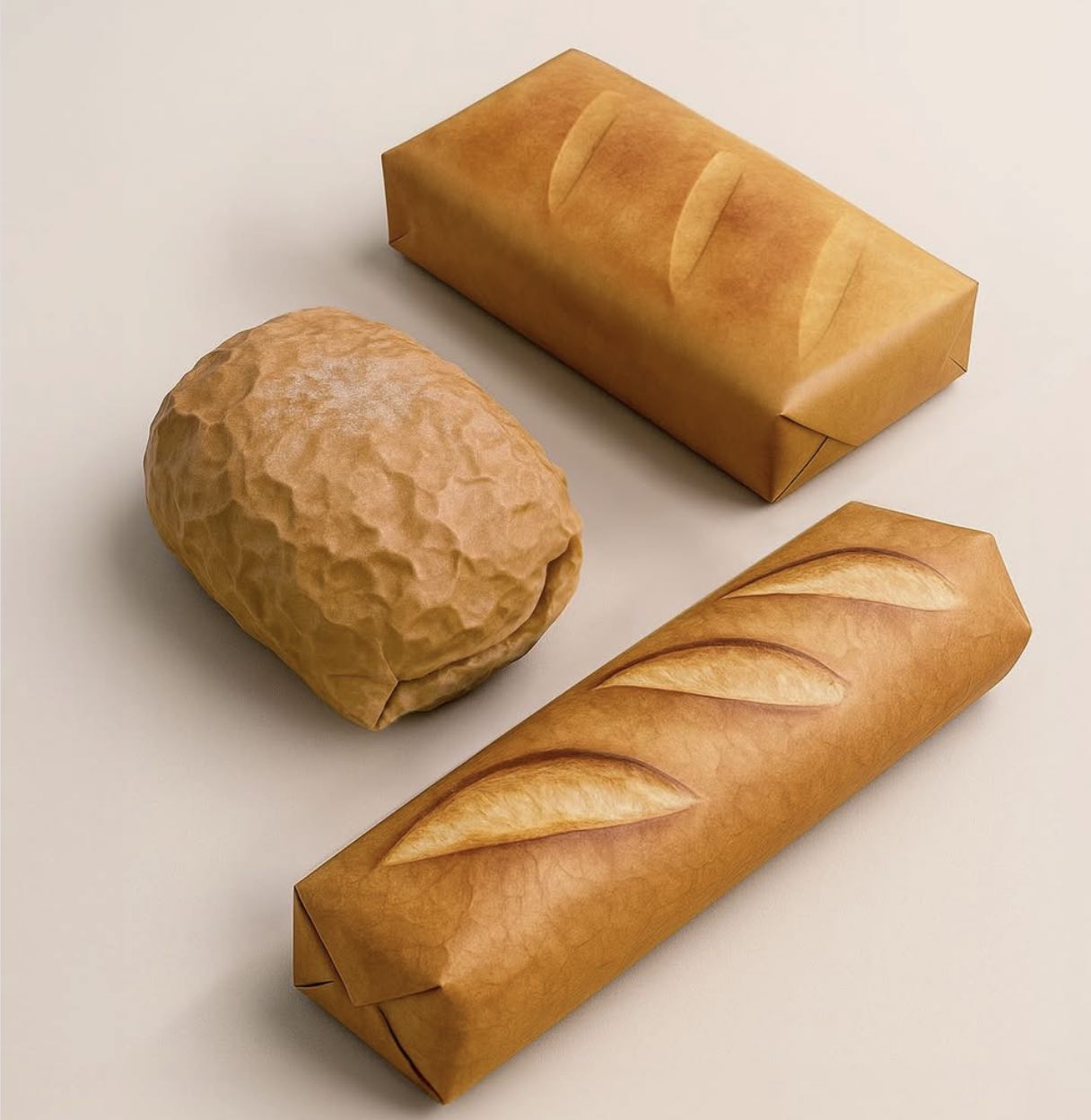
Looking for a way to distinguish your birthday or Christmas presents? Try this clever wrapping paper that makes gifts look like bread. Via Laughing Squid, it is the work of Japanese designer Ippei Tsujio of Toal and comes with three bread options: baguette, ciabatta, or classic sandwich bread.
Hardy Boy
Are you a fan of British author Thomas Hardy? Are you fascinated by Stonehenge? If so, then good news! Via The Guardian, head out to Salisbury international arts festival where the life and work of Hardy is being showcased at the mysterious monument that fascinated him.
The performers, including Anton Lesser, best known for appearances in Game of Thrones and The Crown, will be reading from Hardy and depicting scenes from his life in front of the stones as the audience listens through headphones.
An orchestra will play music, ranging from the sort of folk tunes Hardy may have been familiar with to pieces by Gustav Holst and Peter Warlock.
Lesser said A Beautiful Thread: Thomas Hardy in Words and Music was full of “love, life and laughter”, and said it meant he could say he had done a gig with “the Stones”, though not the rolling ones.
Bugged
This is “No Mow May,” a month during which homeowners are encouraged to refrain from mowing their lawns to help endangered pollinators. To further our tribute to pollinators of the insect variety, books about bugs—be they pollinators or not—have a distinguished history. Robert Hooke’s 1665 book Micrographia was a pioneering work in the field of entomology (the study of insects), even if he did resort to getting ants drunk on brandy so they would stay still long enough for him to draw them.
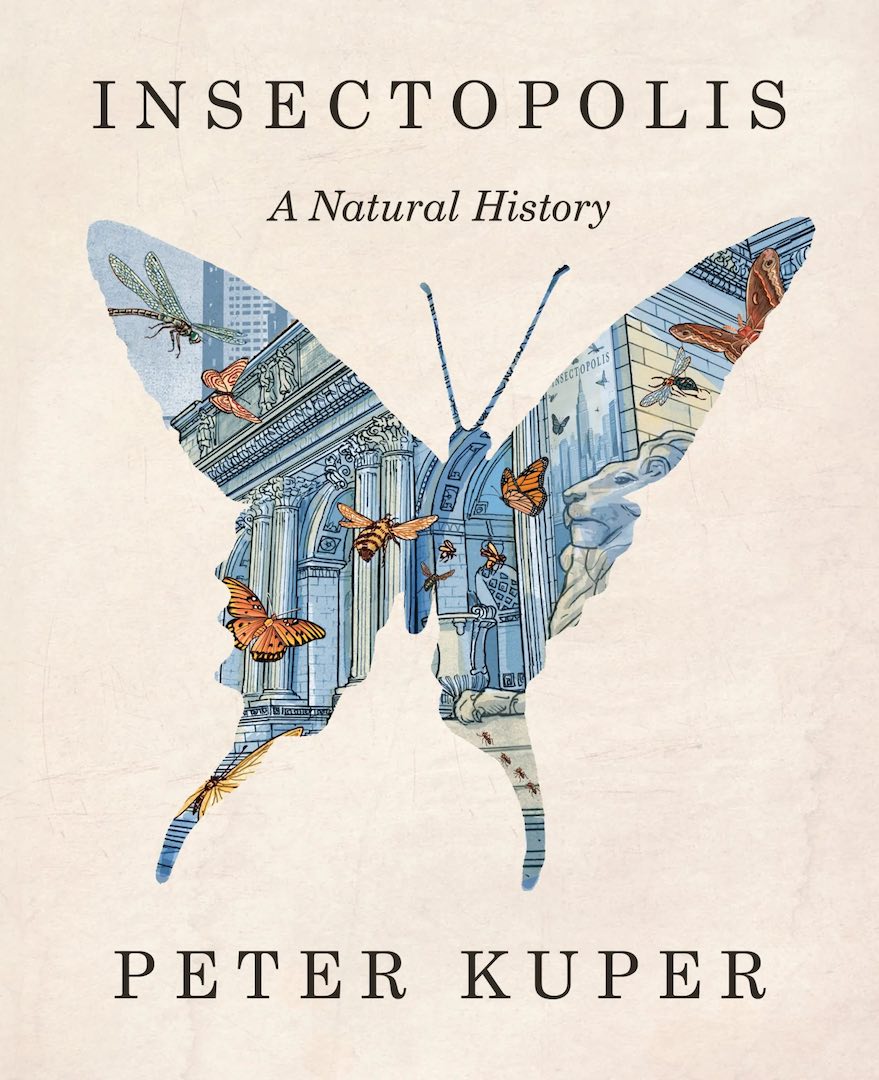
Now, 350 years later, bug books are still fascinating, and via Print magazine, Steven Heller chats with Peter Kuper, author of the recent book Insectopolis: A Natural History and the 2002 INterSECTS exhibit at the New York Public Library. The book is a masterwork of history, science, and design.
Why are some insects more appealing than others?
Color would be a big reason—butterflies are mind-blowingly exquisite to look at; also, they don’t sting. Stinging weirdly puts some people off—go figure.
I’m at a point where they are all beautiful to me in some way. One of my goals with Insectopolis is to make people who outright hate them to reconsider.
If you like, say, chocolate, coffee, fruits, honey, the shine on apples and M&M’s, etc., you should at least appreciate insects. The second biggest pollinator after bees? Flies.
Old Shushing
What’s the oldest public library in the Americas? The New York Public Library? Maybe Harvard University’s library? Nope; it’s the Biblioteca Palafoxiana, built in 1646 in Puebla, Mexico. It was founded by bishop Juan de Palafox, who donated 5,000 of his own books to the Catholic seminary he created. Says Atlas Obscura:
In his donation certificate, Palafox stated he wanted there to be a public library where all kinds of people, not only clergy, could devote themselves to the study of liberal arts and science.
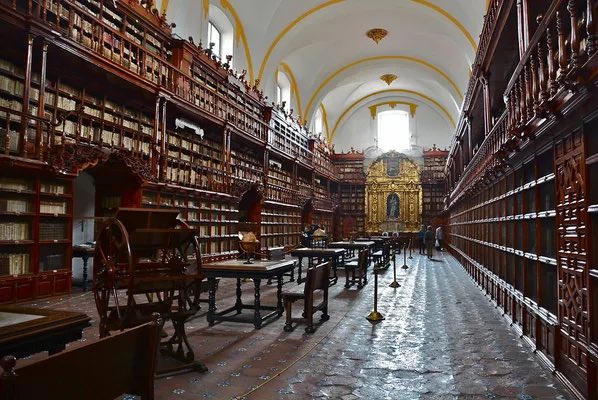
The Biblioteca Palafoxiana is now a book museum as well as a research library with more than 45,000 books that are kept in lavish baroque bookshelves under an arch vaulted ceiling. The library owns nine incunables (books printed in Europe before 1500) and eight of Mexico’s earliest printed books, from the 16th century. Some of its oldest, rarest, and most valuable volumes include The Nuremberg Chronicle, printed in Nuremberg in 1493; Andreas Vesalius' De humani corporis fabrica, printed in Basel in 1543; and two different editions of the Malleus Maleficarum, from 1596 and 1669.
Toasted
The Internet of Things has kind of lost its cachet lately as everyone is now more interested in AI, but IoT still exists, and you can still get things like smart toasters, for reasons passing understanding. Asks Popular Mechanics, “is a smart toaster worth it?”
Unlike most traditional toasters, which ask you to pick a setting, push a lever down, and hope for the best, smart toasters let you select what kind of bread you’re toasting, along with your preferred level of doneness. They then heat it at the temperature and for the length of time needed. While you may not technically need all those extra features, smart toasters are great at giving you exactly what you want from a piece of toast.
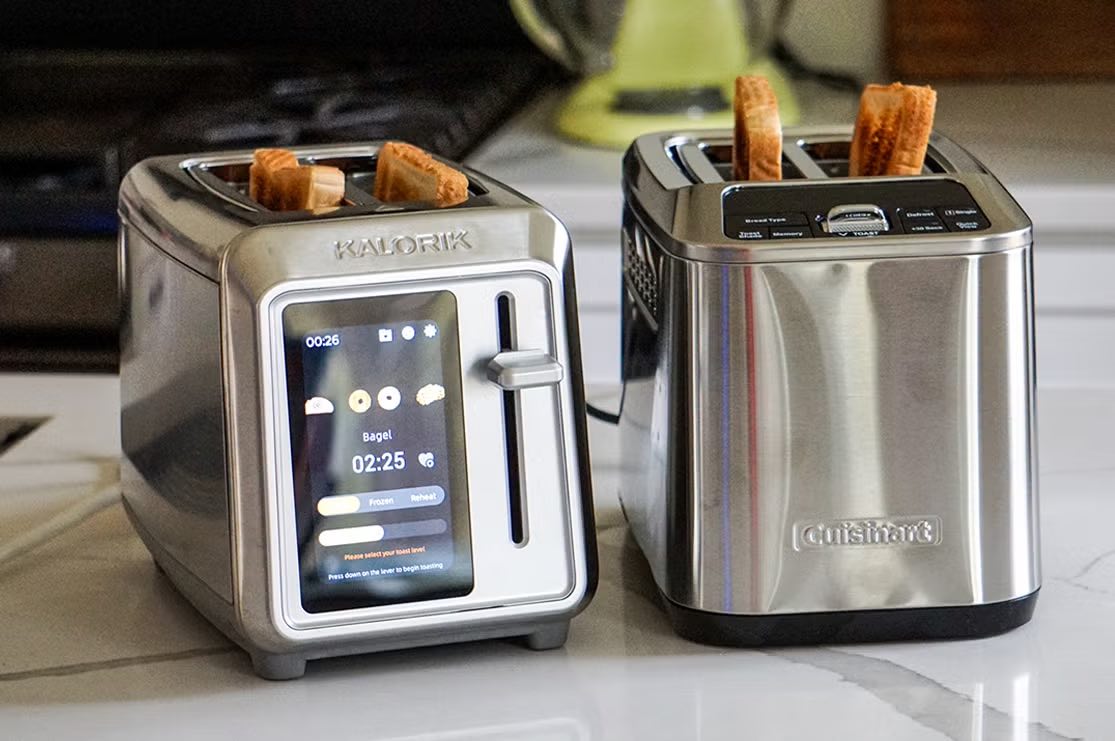
They then proceed to compare the Kalorik Vivid Touch Smart Toaster and the Cuisinart CPT-520 Motorized Digital Toaster.
The upshot?
With the Kalorik toaster, there was noticeably less guesswork due to the automatically configured settings, and the doneness shading also proved to be accurate. However, this wasn’t quite the case with the Cuisinart toaster, as you have to adjust everything manually. In a few cases, the bread needed a little extra time, so the "add 30 seconds" button came in handy.
Choose wisely.
Purrfect AI
Do you want to know what your cat is saying, assuming it’s something more nuanced than “feed me” or “get out of my seat”? Well, via Futurism, Dutch data journalist Wouter van Dijke is turning to AI and has created (oy) CatGPT.
CatGPT, as its name suggests, allows you to ask a "pawtifurcial intelligence" pretty much anything you'd want to ask a real-life cat.
Oh, this is gonna be painful.
“CatGPT uses a purr-al network and an advanced hairballgorithm to come up with natural-sounding responses,” van Dijke wrote in his pun-laden documentation.
Does it really return actual catty comments?
"Not really though, it just returns random meows," van Dijke admitted.
Ah. So…like a cat, essentially.
Your Guide to Graphene
Was it a good week for graphene news? It’s always a good week for graphene news! A comprehensive graphene handbook. Says (who else?) Graphene-Info:
Interest in graphene has been on the increase over the past few years, and graphene is expanding into new applications, in a wide range of areas, from electronics and energy storage to automotive, aerospace, thermal management, composites, and construction.
So, to help navigate the rapidly expanding graphene market, The Graphene Handbook is now available.
In it, you’ll find:
- The properties of graphene
- Different production methods
- Possible graphene applications
- The latest graphene research
- The current market for graphene materials and products
- The main graphene challenges
- Other promising 2D material
We also note that Cary Sherburne’s birthday is coming up later this summer.
Robot Rumpus
We suppose we’ll be seeing a lot more of this as time goes on. Via Boing Boing,
In footage posted initially to X-Twitter, a Unitree H1 robot is seen flailing its arms wildly and seemingly attacking two workers. The video, purported to be CCTV footage of a training session, shows the robot, billed by Unitree as a "full-size universal humanoid robot," suspended from a crane by a cable before the violent outburst. One of the workers pulls the crane back, and once suspended in the air, the robot stops moving.
Horsing Around
Do you like to play the ponies? Are you heading up to Saratoga this summer and are looking for good tips on horses on which to bet? Who (or what) better to offer thoroughbred betting options than another race horse? Say what? Via Boing Boing:
I'd trust a boxer's opinion on a boxing match, after all, so the opinion of Wintervale the horse is probably one worth taking into account. This scheme could, of course, only be thought up by inveterate silly person Max Fosh, and represents a bold new step in the art of gambling. Wintervale was taken to a horse-friendly betting parlor (because supposedly such things exist) to see if Max could at least recoup the cost of renting him out by placing bets on the horse's peers that the horse himself selected.
And, oddly enough, it worked.
The Bream’s Gambit
Not into making your gifts look like bread? How about a chess set whose pieces resemble sushi? Via Boing Boing,
While most know engineer ForgeCore as the helpful 3D-printed plants guy, everyone contains multitudes. Take, for instance, this really cool sushi chess set, complete with tatami mat board and bento box storage case. That old meme about eating your opponent's chess pieces would probably come true for me when faced with this, unfortunately.
Although it’s not sushi (or, as far as we know, even edible), that the knight isn’t a seahorse is kind of a missed opportunity.
Pac Man Fever
Holy moly, has it been that long? Apparently, the classic arcade game Pac-Man is celebrating its 45th anniversary this year, and Krispy Kreme is on it. Via (who else?) Food & Wine:
On Monday, the North Carolina-based doughnut chain announced its new "a-maze-ing collaboration" with the video game giant Bandai Namco Entertainment America to honor Pac-Man's 45th anniversary.
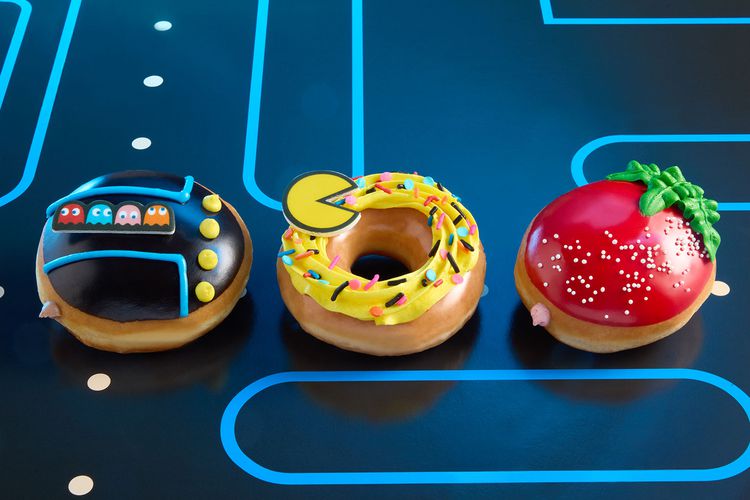
The partnership includes three new doughnuts all meant to induce plenty of video game nostalgia, including the Pac-Man Party Doughnut, which Krispy Kreme explained is an Original Glazed Doughnut "piped with yellow buttercreme flavored icing, sprinkled with celebration sprinkles and topped with a Pac-Man piece."
There is no truth, we hope, to the rumor that they are celebrating the anniversary of Space Invaders by dropping doughnuts on top of unsuspecting customers.
This Week in Printing, Publishing, and Media History
May 12
1593: London playwright Thomas Kyd is arrested and tortured by the Privy Council for libel.
1812: English poet and illustrator Edward Lear born.
1828: English poet and painter Dante Gabriel Rossetti born.
1846: The Donner Party of pioneers departs Independence, Mo., for California, on what will become a year-long journey of hardship and cannibalism.
1937: American comedian, actor, and author George Carlin born.
1941: Konrad Zuse presents the Z3, the world's first working programmable, fully automatic computer, in Berlin.
May 13
1842: English composer Arthur Sullivan born.
1907: English novelist and playwright Daphne du Maurier born.
1922: German graphic designer and typographer Otl Aicher born.
1937: American author and poet Roger Zelazny born.
1944: American author, screenwriter, and actor Armistead Maupin born.
1954: The original Broadway production of The Pajama Game opens and runs for another 1,063 performances. It will later receive three Tony Awards for Best Musical, Best Performance by a Featured Actress in a Musical, and Best Choreography.
May 14
1925: Virginia Woolf’s novel Mrs Dalloway is published.
1944: George Lucas born. (May the 14th be with you....)
1952: Singer-songwriter, producer, and actor David Byrne born.
1993: American journalist and publisher William Randolph Hearst, Jr. dies (b. 1908).
May 15
1813: Danish philosopher, author, and poet Søren Kierkegaard born.
1856: American novelist L. Frank Baum born.
1858: The present Royal Opera House in Covent Garden, London, opens.
1886: American poet and author Emily Dickinson dies (b. 1830).
1905: Las Vegas is founded when 110 acres, in what later would become downtown, are auctioned off.
1905: American businessman, amateur photographer, and creator of the “Zapruder film” Abraham Zapruder born. (Funny, he never made another movie after that.)
1923: American photographer Richard Avedon born.
1926: English playwright and screenwriter; works included Equus and Amadeus Peter Shaffer born.
1928: Walt Disney character Mickey Mouse premieres in his first cartoon, “Plane Crazy.”
1948: English singer-songwriter, keyboard player, and producer Brian Eno born.
May 16
1866: The United States Congress establishes the nickel.
1888: Nikola Tesla delivers a lecture describing the equipment which will allow efficient generation and use of alternating currents to transmit electric power over long distances.
1891: The International Electrotechnical Exhibition opens in Frankfurt, Germany, and will feature the world’s first long distance transmission of high-power, three-phase electric current (the most common form today).
1929: In Hollywood, the first Academy Awards ceremony takes place.
1946: English guitarist, songwriter and producer Robert Fripp born.
1960: Theodore Maiman operates the first optical laser (a ruby laser), at Hughes Research Laboratories in Malibu, Calif.
May 17
1792: The New York Stock Exchange is formed under the Buttonwood Agreement.
1875: Aristides wins the first Kentucky Derby.
1900: L. Frank Baum’s The Wonderful Wizard of Oz is first published in the United States.
1902: Greek archaeologist Valerios Stais discovers the Antikythera mechanism, an ancient mechanical analog computer.
1949: English drummer, songwriter, and producer Bill Bruford born.
1977: Nolan Bushnell opens the first Chuck E. Cheese’s in San Jose, Calif.
1983: The U.S. Department of Energy declassifies documents showing world's largest mercury pollution event in Oak Ridge, Tennessee (ultimately found to be 4.2 million pounds), in response to the Appalachian Observer’s Freedom of Information Act request.
May 18
1048: Persian mathematician, astronomer, and poet Omar Khayyám born.
1593: Playwright Thomas Kyd’s accusations of heresy lead to an arrest warrant for Christopher Marlowe.
1822: American photographer and journalist Mathew Brady born.
1872: British mathematician, historian, philosopher, and Nobel Prize laureate Bertrand Russell born.
1912: The first Indian film, Shree Pundalik by Dadasaheb Torne, is released in Mumbai.
1931: American cartoonist Don Martin born. (Splork!)
1949: English progressive rock keyboardist and songwriter Rick Wakeman born.