Bound to Be Found
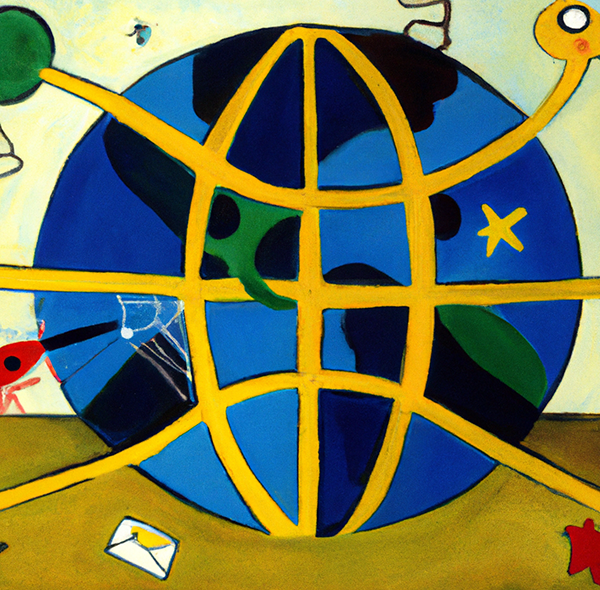
Here’s something that may make you go investigate all your real estate documents a bit more closely (well, probably not). Via Gizmodo, scholars have found that a prosaic 16th-century collection of property records concealed in its binding an extremely rare 750-year-old text on the legends of King Arthur and Merlin. In 2019, scholars at Cambridge University Library discovered:
A fragment of the fragile manuscript had been repurposed in the binding of a 16th-century property record, making it almost impossible to study the medieval text without dismantling and certainly damaging the record’s cover. Almost impossible—but not completely.
So they used a little trickery that Merlin might have been proud of.
An interdisciplinary team of scholars from the University of Cambridge used various advanced imaging techniques to create a virtual copy of the binding, allowing them to digitally unfold the rare text without having to damage it or the property record. This ground-breaking approach also preserves the artifact as an example of 16th-century archival binding practice, which is “a piece of history in its own right,” Irène Fabry-Tehranchi, a French Specialist in Collections and Academic Liaison at Cambridge University Library who was involved in the project, explained in a university statement.
In addition to common tools such as mirrors, magnets, and prisms, Fabry-Tehranchi and her colleagues used cutting-edge imaging techniques to photograph every facet of the folded fragment, make the text more readable, and create a highly detailed 3D model of the artifact to understand the structure of the binding without having to take it apart. Hundreds of images were then pieced together like a puzzle to create a digital version of the cover, which researchers can now unfold and study as if they were holding the real thing.
The technique also allowed them to study not just the text but the bookbinding process itself—and a way to study other manuscripts.
“this project was not just about unlocking one text—it was about developing a methodology that can be used for other manuscripts,” Fabry-Tehranchi concluded. “Libraries and archives around the world face similar challenges with fragile fragments embedded in bindings, and our approach provides a model for non-invasive access and study.”
Watch the text unfold:
End of Advertising?
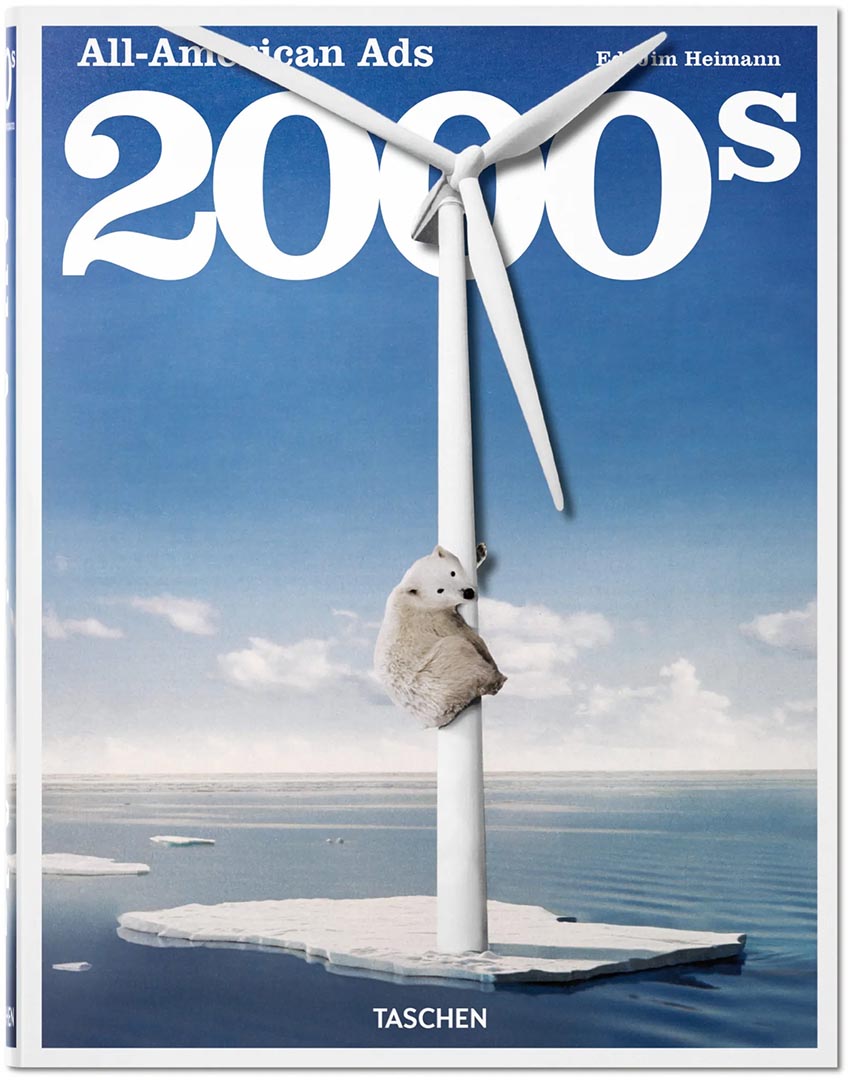
Via Print magazine’s Steven Heller, Taschen’s All-American Ads series is an interesting history of 20th-century America, with each volume in the series looking at the ads of a single decade. Specifically, the style and content of ads and how they have changed show how American society and its tastes have changed.
What Americans have been inspired and seduced to desire, no less require, over time has changed radically, and advertisements show an evolution of everything from fashion to food, from liquor to tobacco, from lifestyle to life’s necessities, technology and beyond. The current (and probably final) book in the series that starts with 1900-1920 ends on a note of cautious optimism. The targets of American advertising have demographically shifted from clear-cut segments of the population to a melting pot in which high end and low end often meet in the middle.
The latest edition looks at the 2000s—and how the decline of print advertising coincided with the decline of creativity in the ad business.
the industry began its creative decline in the early 2000s. Here are several indicators to support this claim: For one, the traditional print outlets for advertisements, notably magazines and newspapers, sharply declined in numbers (some turning to digital-only) during the late 1990s and early 2000s. Major advertisers were cutting print budgets and earmarking creative talent for television work. TV had already plucked away many of the most imaginative ad-people during the preceding decades, and print slipped lower down on the hierarchical ladder. Furthermore, some of the best campaigns produced and published during the early 2000s were originally conceived (and became iconic) during the preceding decade.
One might argue that the first decade of the 2000s was a last gasp before traditional advertising across all media transformed into something “other.” It was just prior to what would become the first juggernaut of social media and artificial intelligence, which has forever changed advertising’s form, content, distribution and reception (influencers, anyone?).
We will have to check out the whole series.
What Light through Yonder Window Cleaner Breaks?
Interesting headline from the BBC: “Window cleaner in quest to confirm priceless Shakespeare portrait.”
Steven Wadlow is a British window cleaner who grew up with a portrait hanging in the family living room. He was not always a fan of it.
“It used to scare me. Wherever you are in the house, it’s looking at you. It always used to remind me of those portraits on Scooby Doo,” he remembered.
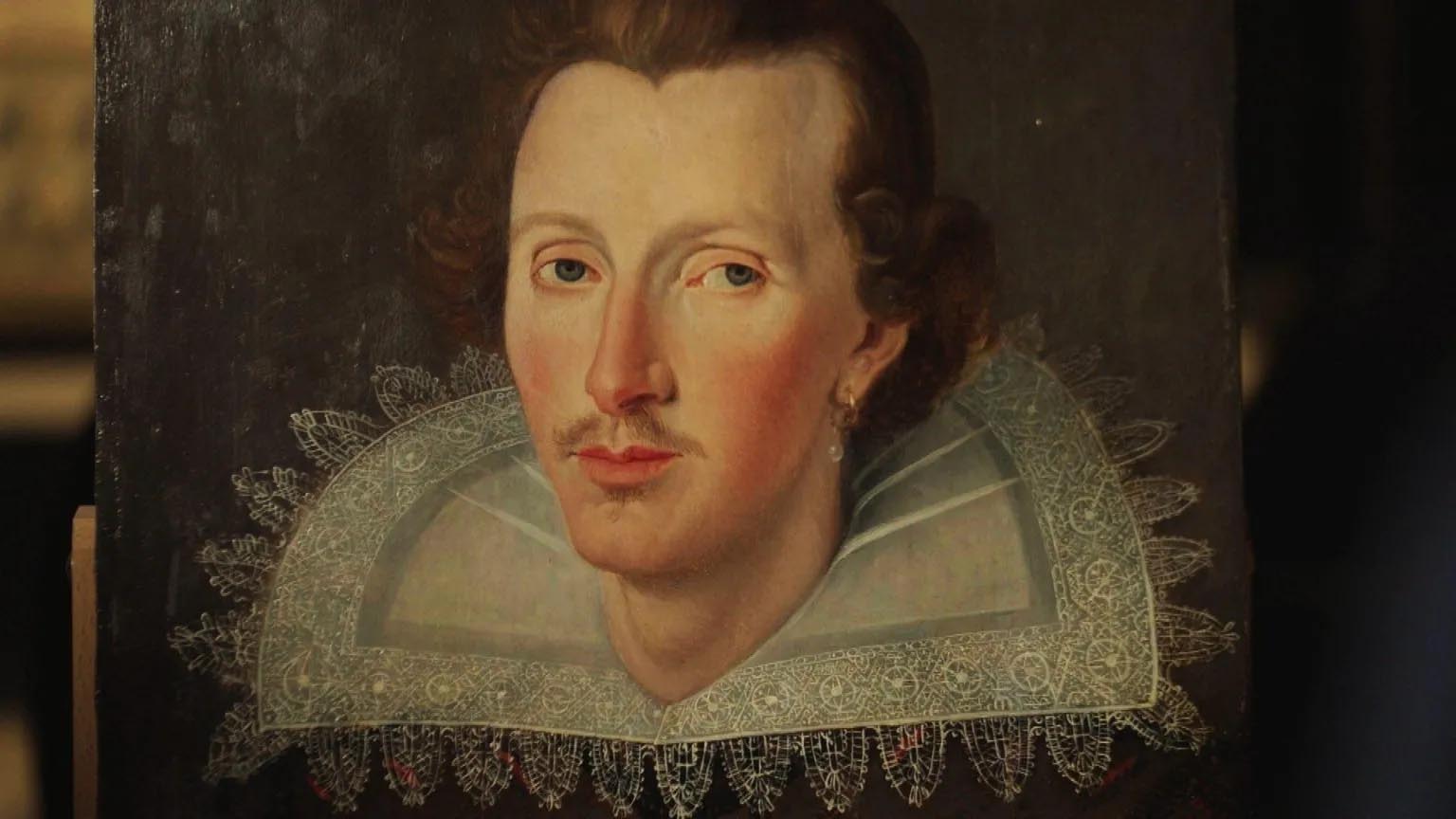
Then his father had a visitor over, one who happened to be an English and art lecturer who “suspected there was more to the picture”: that it was a portrait of William Shakespeare.
The portrait appears to depict a youthful Shakespeare at the age of 31 with hair and no beard - an image not seen in historical depictions of the bard. A mysterious coat of arms was hidden beneath layers of overpainting, suggesting that the sitter's identity had been deliberately concealed. Steven, originally from Tring, Hertfordshire, even turned to facial recognition technology to compare the portrait to other well-known images of the playwright. The technology revealed the painting was closer to the engraving than any of the other portraits traditionally attributed to Shakespeare.
Trouble is, there aren’t that many portraits of Shakespeare to begin with. The painting went through a number of tests, and it was conclusively determined that it dated from the time of Shakespeare. But is it him? One big point of resistance is that he has no beard, which seems odd because it’s generally the case that for most people who have beards there was a time when they didn’t have a beard. But Wadlow soldiered on.
A breakthrough came when Lumiere Technology in Paris, which is known for its work with iconic masterpieces like the Mona Lisa, conducted multispectral analysis. The firm’s chief executive officer, Jean Penicaut, believes Mr Wadlow's portrait could depict Shakespeare as an actor, possibly even playing one of his own characters.
So while Penicaut is firmly on Team Shakespeare, the jury remains out, but Wadlow’s story is now the subject of the Netflix documentary The Stuff of Dreams.
Wearing Away
We’re surprised Cary Sherburne or Debbie McKeegan hasn’t written about this. Via Core 77, industrial design student Juliette Masson, as part of her diploma program at ECAL, launched the Avants project which explores the use of more environmentally-friendly materials for “technical clothing”—garments worn during hiking and other outdoor sports.
“Synthetic fibers are now a common feature of sportswear, including in the hiking world. These are popular for their technical properties: lightness, elasticity, low absorbency, and wrinkle resistance, among others. However, the environmental impact of these materials is significant, both during manufacture and throughout their life cycle.”
Instead, Avants has proposed alternative hiking gear made from natural materials.
“Linen, selected for its thermo-regulating and hypoallergenic properties; waxed cotton, known for its durability and water-repellent qualities, chosen to provide protection against rain and abrasion.”

“The design of these outfits drew inspiration from historical garments and their fastening systems, while being adapted for contemporary and functional use.”
Pretty neat.
Now That’s a Bookmark
Ah, the bookmark. Those of us who still buy and read printed books have a big stash of bookmarks. Last month, we looked at some AI-based bookmarks that provide summaries of books. But how about a three-foot-tall marble bookmark?
Via Core77, British designer Paul Cocksedge has created the White Marble Bookmark which is 11.8 x 8.7 x 35.4 in. and weighs 242.5 lbs. Needless to say, it’s less a reading convenience and more a piece of furniture.
“The Marble Bookmark is everything a bookmark is not: heavy to lift, difficult to carry, and bigger than the book itself. The work alters the power balance between page keeper and book, tethering it to its place on lamp can create long or wide shapes, and be adapted to fit into various interior spaces.”
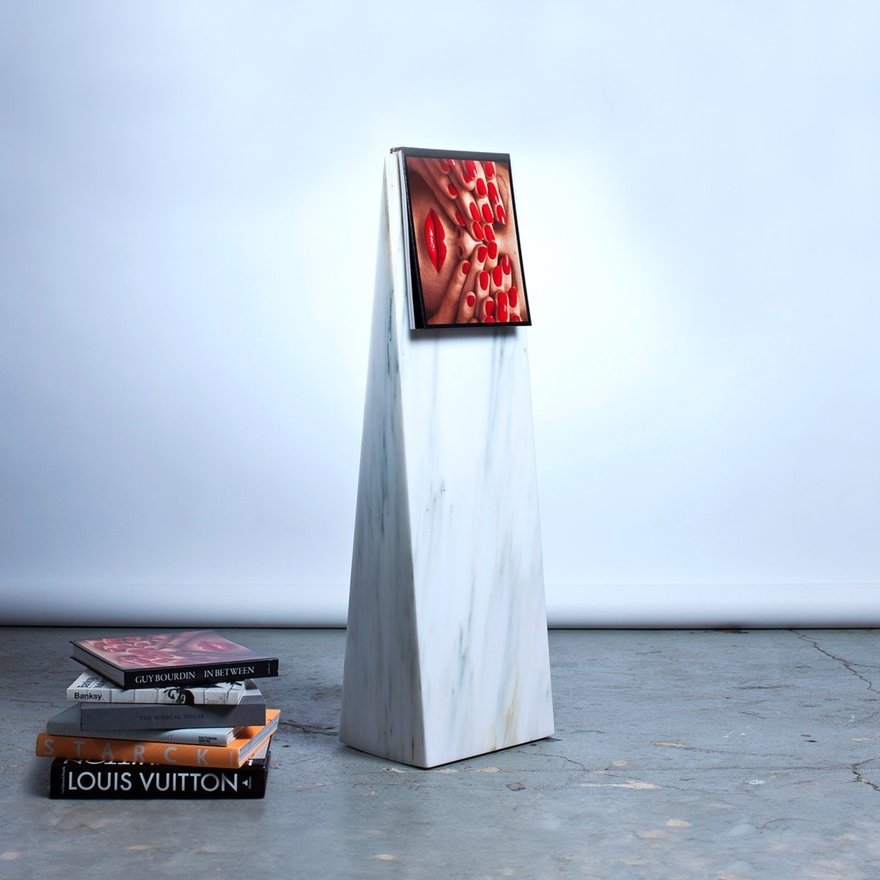
It could also be turned on its side and used as a doorstop if you have a really big door you need to prop open.
Forever Graphene
Was it a good week for graphene news? It’s always a good week for graphene news! Upcycling hazardous chemicals into graphene. From (who else?) Graphene-Info:
Researchers from Rice University and US Army Engineer Research and Development Center have developed an innovative solution to a pressing environmental challenge: removing and destroying per- and polyfluoroalkyl substances (PFAS), commonly called “forever chemicals”. The team's method not only eliminates PFAS from water systems but also transforms waste into graphene.
…“This dual-purpose approach is a game changer”, said graduate student Phelecia Scotland. “It transforms waste into a resource while providing a scalable, cost-effective solution to an urgent environmental issue.”
Precious
Wearable technology is now a thing, thanks to smartwatches, and while the wrist has been conquered, what about the finger? The smart ring has yet to take off. But is it imminent? Via Core77, it’s not for lack of trying.
By our count at least six companies have attempted to launch a smart ring that would allow gesture control, dating as far back as 2009. The Loop Pointer, the Nod Ring, the Padrone Ring, the Tap Strap, the AirPoint Ring; have you heard of any of them? And the Mycestro ring from 2013 failed at spectacular cost, garnering $354,000 in pledges before struggling to deliver and eventually evaporating.
But hope springs eternal, and now a startup called Ring Mouse has launched a Kickstarter a smart ring that “happens to control your entire digital universe,” says the company. Wasn’t there an entire book (and movie) trilogy based on why such a thing was bad idea? Anyway, what do they mean?
Offered in stainless steel or titanium alloy, the Ring Mouse is offered in sizes 4 thru 15. It features a swipeable touchpad for scrolling, and two buttons for tapping, zooming, advancing, etc.
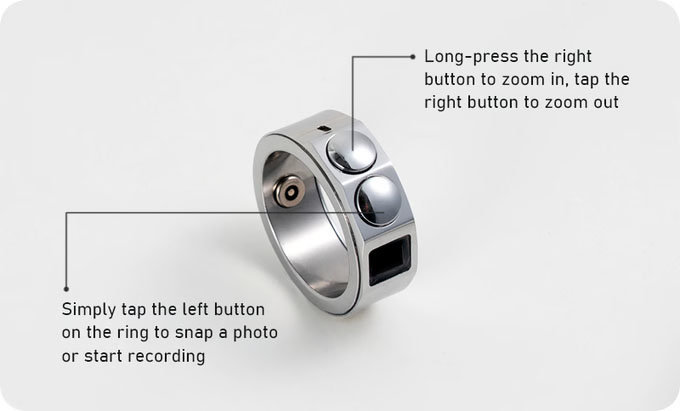
The idea is that you can use it for interacting with apps or media while you're doing other things, like washing, cooking, exercising or strolling around a presentation stage.
It’s been successfully Kickstarted and is expected to ship in June. A steal at $89.
Love Shack
Some of you may remember a time when Radio Shacks dominated the retail landscape. Time was, it seemed that virtually every mall had a Radio Shack, offering not only electronic gizmos like tape players, phones, and even a line of computers, but all manner of parts and components for electronics hobbyists. They even inspired a 2007 Onion story headlined, “Even CEO Can't Figure Out How RadioShack Still In Business.” The company peaked in 1999, with 8,000 locations in North America and even in Europe (sometimes also going by Tandy, the name of the parent corporation).
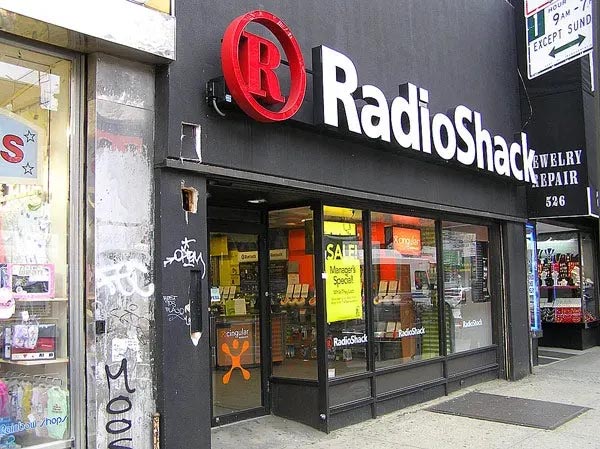
But the 21st century was not kind to Radio Shack. In 2015, they declared bankruptcy and the brand changed hands a number of times and today is owned by El Salvador-based Unicomer Group and operates primarily in Central and South America and the Caribbean.
But, via Boing Boing, it turns out that there are still a few independently-owned Radio Shack franchises. If you find yourself in the northern part of the Alaska Panhandle, check out the tiny town of Haines, home to one of the last Radio Shacks—located in an actual shack.
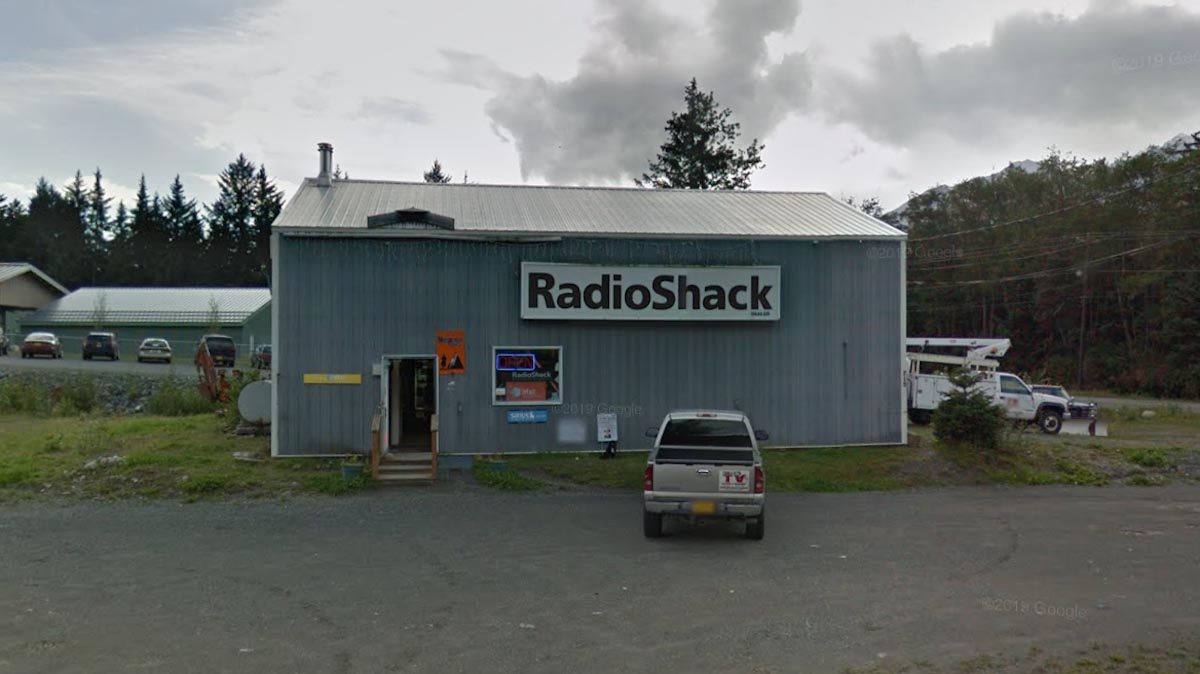
Yes, they still maintain a selection of individual electronic components for the tinkerers in the Haines area. The site also houses a cable TV dealer, aptly named Haines Cable TV.
Be warned, though, that they are closed on Sundays and have shortened hours on Saturdays.
Toying with Breakfast
Some of you may remember a time when breakfast cereals came with toys—or “free prizes,” they used to be called. And siblings used to fight over who got the prize in any given box. Or you collected some number of box tops and could send away for a prize. (British sitcom fans may recall the great 1970s show The Good Life—called Good Neighbors in the US—where Tom Good was a cereal toy designer. Fed up with the rat race, he quits his job and he and his wife attempt to be self-sufficient and turn their home into a farm, much to the chagrin of their suburban neighbors.)
Anyway, back to the toys. They seem to have been discontinued sometime after the 1990s. What happened to them? And why did cereal makers start adding toys to cereal boxes to begin with? Mental Floss has a look in the box.
Needless to say, it was marketing-driven—and the original “prizes” were targeted at adults. As long ago as 1905, Quaker Oats would send consumers bowls of fine china in exchange for box “tokens.”
Obviously, Quaker wasn’t stuffing fragile dinnerware into boxes of oatmeal: You had to send away for the bowls. But before long, prizes were included in the package itself. In the 1930s, General Mills began enticing kids with paper airplanes and trading cards packed inside cereal boxes. In the 1940s, Army buttons could be dug out of Pep cereal. In the 1950s, Kellogg’s began inserting tiny submarines and scuba-diving frogmen into their products. (The submarines could be filled with baking soda that allowed them to plunge and resurface in bathwater.)
What really helped these products take off were advances in plastic production.
As plastic injection molding made toymaking easier, companies began outsourcing creative toy ideas to marketing companies, who would then try to bid for cereal contracts. The toys had to meet exacting specifications for size and weight. The item couldn’t have any loose parts, because a tiny figure’s broken arm or head could become a choking hazard. (That problem was never fully resolved: In 1988, Kellogg’s recalled 30 million tiny flutes and binoculars that were included in boxes of Corn Pops and Rice Krispies that could break into smaller, airway-obstructing pieces.)
And these prizes were often “marketing tie-ins” with movies or TV shows—think Star Trek in the 1960s and 70s, and when Star Wars came out in 1977, little fluorescent light saber spoons came with boxes of Apple Jacks. Sometimes we switched our cereal allegiances depending on the toy. Kids are a fickle bunch.
So when and why did all this start to fade away?
The most significant change to the industry was the Children’s Food and Beverage Advertising Initiative, a voluntary pledge announced in 2005 that curbs advertising less-nutritious food to kids. Cereal makers like Post, General Mills, and Kellogg’s (under the company name Kellanova) are all participants. Since toys are certainly going to catch a kid’s eye, there may have been some reluctance to stuff them into sugary cereals. Instead, companies began including pedometers in boxes to encourage physical activity.
Then there was the plastic itself.
Environmental concerns were also in play, with companies recognizing that the mass production of plastic items likely to be discarded isn’t exactly a public relations win.
But cereal incentives still do exist (Kellogg’s offered Bowl Buddies in boxes in 2021) but now boxes feature QR codes that link to online games. Kind of a bummer. What kid gets excited by a QR code?
Meals on Wheels
We’re linked often to stories about the Oscar Mayer Wienermobile, the Planters Nutmobile, and other forms of food-based vehicles. But, via Atlas Obscura, these “food trucks” have been around since the advent of the automobile. Even the Wienermobile was launched in 1936.
A number of these giant vehicles are venerable enough to have ended up in museums. The Henry Ford Museum has a 1952 Wienermobile on display, while the Hershey’s Kissmobile Cruiser can be viewed at a transportation museum in Pennsylvania. But this spring, a new giant food-shaped vehicle has rolled out of the shop. Blue Diamond, which processes a vast number of the world’s almonds in Northern California, recently took their new “Nutty Cruiser” on the road.
There is no truth to the rumor that Reese’s is going to crash the Hershey’s Kissmobile into the Planters Nutmobile for an updated version of its old “You got your peanut butter in my chocolate…” slogan. (Hmm…come to think of it, that would be a cool stunt.)
But the Blue Diamond Nutty Cruiser—a 20-foot-long almond on wheels—sounds like it was designed for wartime.
“The concepting phase of it went in multiple directions. I love where we landed. It’s more of a rugged look to an almond,” explains Ralph Failla, the VP of experiential and production at Inspira Marketing Group, the company that created the 10,600-pound fiberglass almond for Blue Diamond. Part of that ruggedness, adds Failla, involves the cannon. “We added a cannon that shoots almonds out of the front,” he boasts. “We have our little parachutes on order. So once we launch [them], the almonds will come down in a little parachute.”
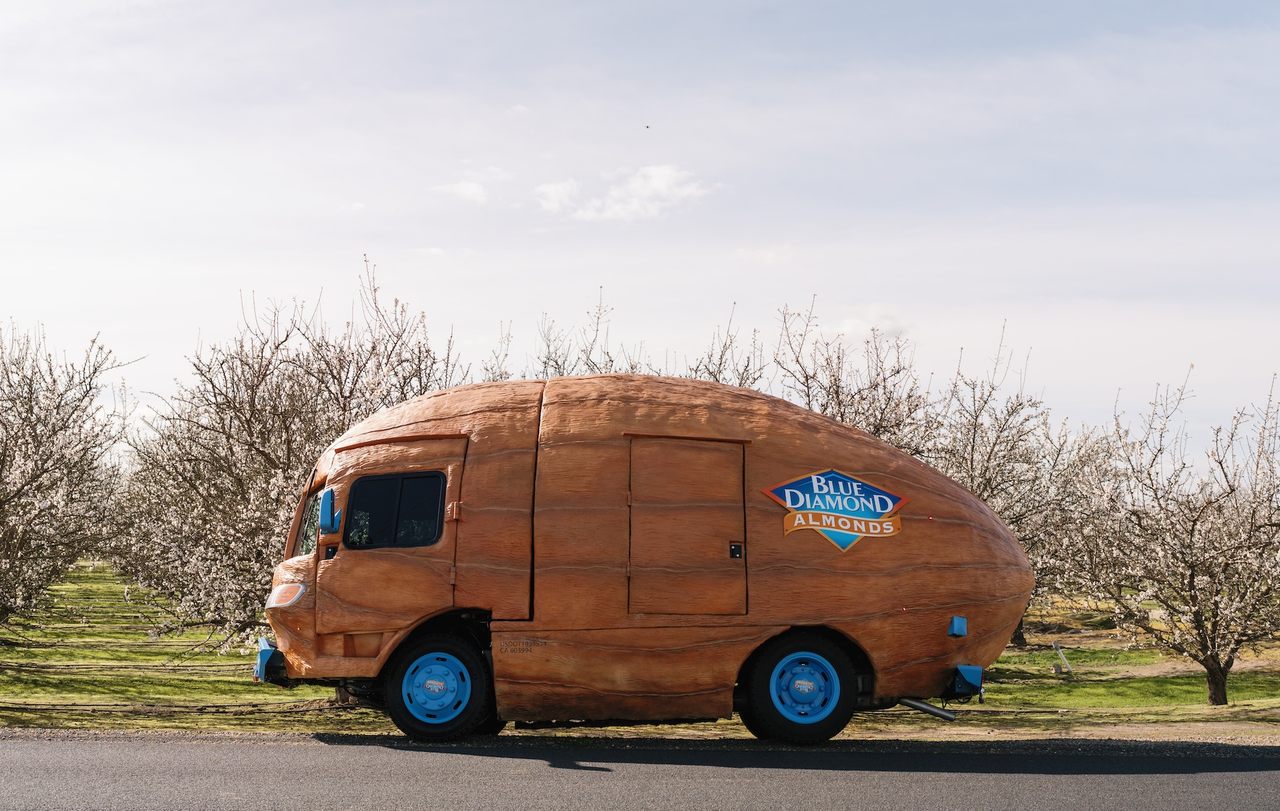
Looks like emergency rooms are going to be seeing some very strange cases.
Seven Sticks
Boing Boing points us to a mashup from 1978 from a San Francisco band called Little Roger & the Goosebumps—they essentially set the lyrics to the Gilligan’s Island theme song to “Stairway to Heaven.” (We remember hearing this sometime in the early 1980s—a friend had a copy of it, somehow.)
The band wrote the song in 1977 as “material to pad the last set of the grueling 5 nights a week/4 sets a night routine,” recorded it in March 1978, and released it as a single in May 1978 on their own Splash Records label.
Needless to say, Led Zeppelin were not happy.
Led Zeppelin’s management threatened a copyright infringement lawsuit against the label, its attorneys demanding that all copies be destroyed, and the band withdrew the song, seeing their legal resources as inadequate.
Technically, parody versions fall under “fair use” (“Weird Al” Yankovic technically doesn’t need to get permission to do parodies of songs, although as a courtesy he does.) On the other hand, Bob Denver was a fan.
This version of the lyrics is from the first season’s theme song. What’s the difference? The original song refers to the Professor and Mary Ann as “the rest.” According to the Gilligan's Island Wiki, Bob Denver (“Gilligan”) secretly lobbied for the theme to be re-edited for the second season with all of the characters mentioned by name.
Rare Book?
We couldn’t help notice that April Fool’s Day seems to have fallen somewhat out of fashion. (Yes, what was once a yearly edition that we—if no one else—always looked forward to, the WhatTheyThink April Fool’s Edition is likely a thing of the past.) In fact, we saw very few if any April Fool’s Day PR announcements, in our own newsfeed or anywhere else.
We mention this because one brand has taken what started out as an April Fool’s joke and made it reality. Omaha Steaks is releasing a romance novel. Says (who else?) Food & Wine:
The direct-to-consumer food company’s debut novel, Certified Tender, is set to be published on April 1 as a hardcover and ebook. What initially started as an April Fool’s prank about Omaha Steaks pivoting to publishing has turned into a carnal-themed literary product.
The romance novel serves as promotional material for the company’s new Meat Cute Collection — a $99 date night-themed box that includes filet mignon, fries, and Cabernet Sauvignon.
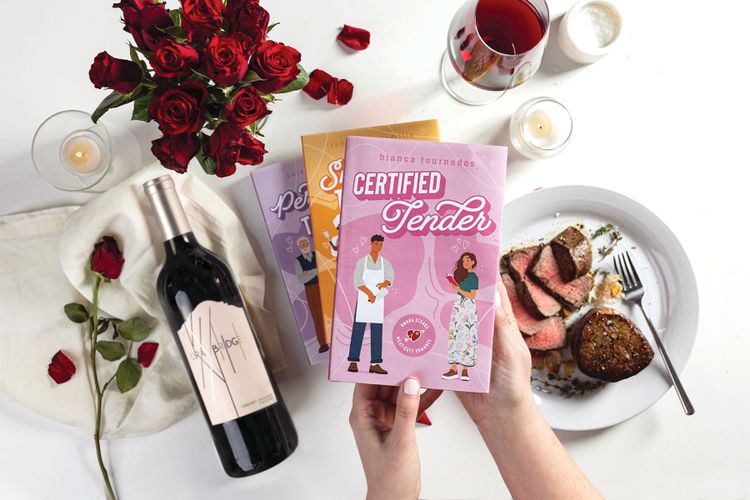
Certified Tender was credited to Bianca Tournedos, a pen name referencing a French filet mignon dish called tournedos Rossini, but was in fact written by Omaha Steaks’ in-house creative team—and they stress that no AI was involved. (A1, probably, but not AI.)
No word on whether Impossible Food is working on a vegan alternative.
This Week in Printing, Publishing, and Media History
March 31
1596: French mathematician and philosopher René Descartes born. (Apparently he thought.)
1631: English lawyer and poet John Donne dies (b. 1572).
1685: German organist and composer Johann Sebastian Bach born.
1732: Austrian pianist and composer Joseph Haydn born.
1809: Ukrainian-Russian short story writer, novelist, and playwright Nikolai Gogol born.
1855: English novelist and poet Charlotte Brontë dies (b. 1816).
1889: The Eiffel Tower is officially opened. (Not everyone in France was a fan; author Guy de Maupassant ate lunch every day at the tower’s base restaurant, because, he said, “inside the restaurant was one of the few places where I could sit and not actually see the Tower!”)
1906: The Intercollegiate Athletic Association of the United States (later the National Collegiate Athletic Association) is established to set rules for college sports in the United States. (Before that it was all just madness...)
1918: Daylight saving time goes into effect in the United States for the first time and, unfortunately, not the last.
1930: The Motion Picture Production Code is instituted, imposing strict guidelines on the treatment of sex, crime, religion and violence in film, in the U.S., for the next 38 years.
1951: Remington Rand delivers the first UNIVAC I computer to the United States Census Bureau. (And they’re still using it today.)
2016: Scottish comedian, actor and screenwriter Ronnie Corbett dies (b. 1930).
April 1
1854: Charles Dickens’ novel Hard Times begins serialization in his magazine Household Words.
1960: The TIROS-1 satellite transmits the first television picture from space.
1976: Apple Inc. is formed by Steve Jobs, Steve Wozniak, and Ronald Wayne in Cupertino, Calif.
2004: Google announces Gmail to the public.
April 2
1800: Ludwig van Beethoven leads the premiere of his First Symphony in Vienna.
1805: Danish novelist, short story writer, and poet Hans Christian Andersen born.
1840: French novelist, playwright, journalist Émile Zola born.
1872: American painter and academic, inventor of the telegraph and Morse code Samuel Morse dies (b. 1791).
1902: “Electric Theatre,” the first full-time movie theater in the United States, opens in Los Angeles.
1941: American radio host Dr. Demento born.
1956: As the World Turns and The Edge of Night premiere on CBS. The two soaps become the first daytime dramas to debut in the 30-minute format.
1973: Launch of the LexisNexis computerized legal research service.
April 3
1783: American short story writer, essayist, biographer, historian Washington Irving born.
1774: Irish novelist, playwright and poet Oliver Goldsmith dies (b. 1728).
1860: The first successful United States Pony Express run from St. Joseph, Mo., to Sacramento, Calif., begins.
1895: The trial in the libel case brought by Oscar Wilde begins, eventually resulting in his imprisonment on charges of homosexuality.
1898: American publisher, and co-founder of Time Magazine Henry Luce born.
1949: English singer-songwriter and guitarist Richard Thompson born.
1955: The American Civil Liberties Union announces it will defend Allen Ginsberg's book Howl against obscenity charges.
1973: Martin Cooper of Motorola makes the first handheld mobile phone call to Joel S. Engel of Bell Labs.
1981: The Osborne 1, the first successful portable computer, is unveiled at the West Coast Computer Faire in San Francisco.
2010: Apple Inc. released the first generation iPad, a tablet computer.
April 4
1581: Francis Drake is knighted for completing a circumnavigation of the world.
1768: In London, Philip Astley stages the first modern circus.
1818: The United States Congress, affirming the Second Continental Congress, adopts the flag of the United States with 13 red and white stripes and one star for each state (20 at that time).
1928: American memoirist and poet Maya Angelou born.
1975: Microsoft is founded as a partnership between Bill Gates and Paul Allen in Albuquerque, N.M.
April 5
1710: The Statute of Anne receives the royal assent establishing the Copyright law of the United Kingdom.
1908: American actress Bette Davis born.
1929: English songwriter and producer Joe Meek born.
1954: American singer-songwriter and guitarist Stan Ridgway born.
April 6
1483: Italian painter and architect Raphael born.
1861: First performance of Arthur Sullivan’s debut success, his suite of incidental music for The Tempest, leading to a career that included the famous Gilbert and Sullivan operettas.
1892: American journalist and author Lowell Thomas born.
1895: Oscar Wilde is arrested in the Cadogan Hotel, London, after losing a libel case against the Marquess of Queensberry.
1947: The first Tony Awards are presented for theatrical achievement.
1992: American science fiction writer Isaac Asimov dies (b. 1920).