Finnishing Equipment
What is the future of packaging? Via Print magazine, a Finnish papermaking company may hold the answer.Metsä has taken sustainable production to the next level, from their regenerative forestry program that sustainably manages local forests from which they source fibers to their 90% fossil-free energy production of coated white kraftliners globally—and their goal is to achieve zero CO? by the end of 2030. And their Äänekoski-based headquarters produces 2.4 times as much energy as it consumes—all sans fossil fuels.
Metsä uses only five native tree species commercially out of Finland’s 30. Every tree felled is replaced by four new ones. The company uses a soil inverting process it developed to foster seedling growth. The stump of a cut tree is left in the forest, where it decays and plays a role in fostering other life—like, say, mushrooms. Decaying and dead trees are retained as habitats. As Lehesvirta detailed to me later, “We want to be in a leadership position in the systemic change to maintain and enhance the biodiversity and ecosystem services such as pollination, water [quality] and carbon sink as well as recreational values.”
… “Our paperboards are high quality, but they are found in people’s everyday lives—not only in luxurious end uses but, for example, in cereals, pasta, biscuits, tea as well as pharmaceutical packaging end uses,” Ritva Mönkäre detailed to me later.
Like many packaging producers, they’re not all that eager to talk about specific clients, but:
the one thing Metsä can discuss is that Crumbl Cookies boxes are largely on their board. In recent years, Metsä Board’s growth has been fastest in the U.S.—and there’s a good chance that if you haven’t laid hands on one of their products yet, you are very likely to in the near future.
The question remains is:
Why? Why go to these lengths? Yes, there are governmental body mandates and targets—and reps for Metsä have sent me lists of the company’s adherence to various standards, and their sustainability benchmarks at large. But at the center of such operations is usually a wildly passionate and charged individual with utter conviction for what they’re doing. But here, it’s business as usual. Straightforward. I take Mönkäre aside after we leave the mill and fish for quotes, for clues.
When it comes to sustainability, “It’s just part of everything that we do,” she says.
Semiquincentennial and Celebration
2025 will mark the 250th birthday of Jane Austen (December 16, 2025, specifically), so if you’re a fan, the BBC has a handy guide to all the various “literary festivals, reenactments and Regency balls designed to pay tribute to the author.” Although the towns of Bath and Chawton are more commonly associated with Austen (the former has the Jane Austen Centre and the latter the Jane Austen House), her birthplace was the town of Steventon, home of the Jane Austen Society which is planning no small number of commemorative events.
Steventon has organised lively events for June, July and December. Visitors can attend the Jane Austen's Words and Music Chamber concert on 8 June at her family's chapel or join a country fair on 6 June held in the same pump field where the Austen's parsonage home once stood. Then, in remembrance, the church will hold a special Thanksgiving Service for Austen on her birthday on 16 December.
Regency balls are a staple of Austen novels, so if you’re up for it:
wearing Regency-era attire, attending a ball is the ultimate tribute to Austen. This year’s calendar is packed with options, from a Regency Week Ball in Alton this June to a Yuletide Birthday Ball in Bath come December. However, Pinsent recommends the Brighton Royal Grand Pavilion Ball on January 25, which he is rganizing and has already drawn attendees from 16 countries.
Click through for even more Austen options.
Talking Cursive
Speaking of semiquincentennials, 2026 will mark the United States’ 250th anniversary of the signing of the Declaration of Independence. There are no doubt many celebrations and other events planned, but, via Good News Network, one way to get involved now is the Citizen Archivist project, in which the National Archives is inviting volunteers to help transcribe and digitize historical documents—written in cursive.
The Archives contains millions of documents that have never been transcribed into modern typeface. Written in longhand, many Americans today might have trouble reading them since cursive has fallen out of favor as a topic in schools.
One of its current goals is to transcribe and digitize handwritten documents pertaining to the pensions earned by soldiers during the Revolutionary War.
The Revolutionary War Pension Project is a collaborative effort between the National Park Service and the Archives to transcribe more than 2.3 million pages of pension files from the nation’s first veterans and their widows.
So far, more than 4,000 volunteers have transcribed 80,000+ pages of pension files, with somewhere around 2,300 records completely transcribed.
Interested?
All you have to do to contribute to the project is visit the Citizen Archivist project website and sign up. Once you sign up, just pick a document that hasn’t been transcribed, and follow the Archives’ instructions.
Signs of the Times, Part the Ongoing: Tenth Aisle Freeze Out
For reasons passing understanding, five years ago Walgreens decided to replace transparent freezer doors with digital displays that would…show what was in the freezer. The idea was to use additional tech to track buyer behavior, target advertising, etc., rather than just let people see what was in the freezer and buy it. Gizmodo details Walgreens’ ongoing screen saga:
The digital door debacle has been something of an ongoing cold war for the pharmacy giant that most consumers probably didn’t notice, save for the pitch-black screens that blocked out their view of what was in Walgreens fridges. It all started when Walgreens tried to pull out of its 10-year contract early—and for a pretty legit reason. Instead of reliably displaying items that were in stock in the fridge, the screens reportedly regularly flickered, crashed, showed the wrong products, and occasionally caught on fire. (You know what *does* reliably show what is in stock without concerns of spontaneous combustion? Regular glass doors.)
The contract was with a company called Cooler Screens that manufactured the screen doors and managed the content. Naturally, they fought back.
According to Bloomberg, the company intentionally cut the feeds to screens located at more than 100 Walgreens locations, leaving them blacked out and forcing consumers to have to open every single door to try to find what they were looking for.
Our mantra here in the Around the Web Bunker is that any new technology has to provide a better experience than what it is intended to replace. We’re not sure that flaky digital displays are a better option than transparent glass doors. After all, you probably wouldn’t replace your living room window with a digital display that shows the scene outside. Would you?
Bard Game
Via The Verge, the Royal Shakespeare Company is partnering with iNK Stories, a New York-based studio, to develop Macbeth as a video game. Called Lili, it’s done in a neo-noir style where “you’ll have access to a modern-day Lady Macbeth’s personal devices.” OK…
“Players will be immersed in a stylized, neo-noir vision of modern Iran, where surveillance and authoritarianism are part of daily life,” the release says. “The gameplay will feature a blend of live-action cinema within an interactive game format, giving players the chance to immerse themselves in the world of Lady Macbeth and make choices that influence her destiny.”

Look for it to launch “sometime in 2025.”
Let Your Feet Do the Walking
Since the advent of the smartphone, the scourge of cities has been people texting (or whatevering) while walking and occasionally plowing into things, both human and inanimate. Via Core77, a study is underway in Canada to investigate the ability to control mobile apps with one’s feet while walking. The inspiration for the study was to solve a decidedly first-world problem.
“Waterloo professor of computer science Daniel Vogel, frustrated by having to stop and use his phone with cold fingers while walking to get coffee, wondered if there could be a way to place orders without pausing.”
Honestly, if we ever find ourselves too busy to stop for two minutes to order a coffee, please just kill us.
As for the research, is it goofy? You bet!
The researchers are thus using an AR headset to detect specific gait patterns. The idea is that you can navigate apps by altering your footfall, turning your foot one way or the other as you walk.
Core77’s Rain Noe is not sanguine.
We already have a problem with people walking around cities with their noses buried in their phones. On YouTube you can see disturbing compilations of people heedlessly walking into traffic, with predictable results. The idea that what we need is a new way to interact with our phones while walking is, I think, wrongheaded.
Still, we can see it becoming useful for the Ministry of Silly Walks.
Getting the Point
Here’s a phrase we rarely come across: luxury pencil sharpener. It’s probably a safe bet that most of you have not used a pencil sharpener since high school (if even then, for some of the younger folks out there), but designers, draftspeople, architects, etc., still often use pencils and, thus, need to occasionally sharpen them. Via Core 77, the Rolls Royce of pencil sharpeners is Swiss company Caran d’Ache, also known for its premium pencils. They were founded in 1915 and launched their first pencil sharpener in 1933—and it’s still being made.
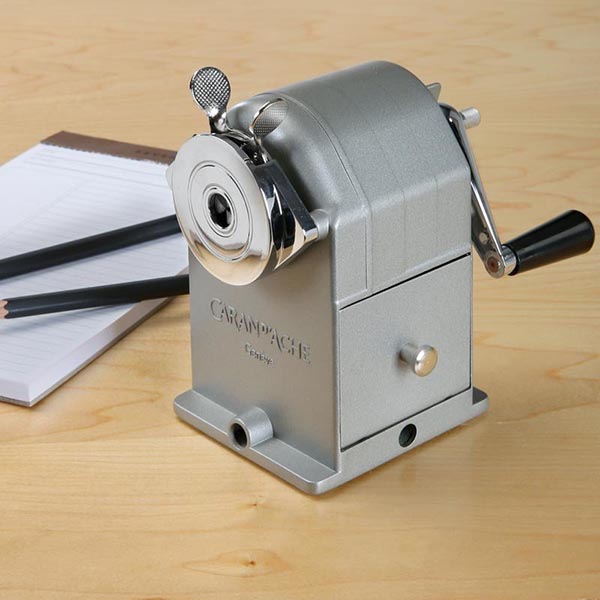
The company also now offers a limited “collector’s edition” called the Cosmic Blue Sharpening Machine, finished in pearlescent dark blue with gold accents.
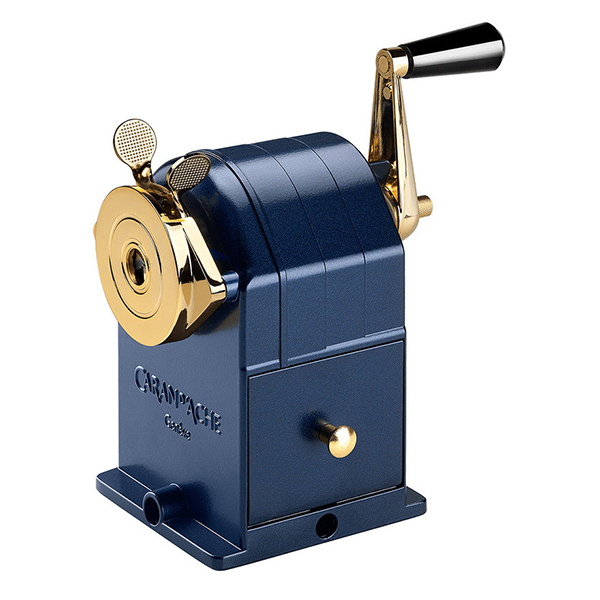
A steal at—yikes—$295. (But then the original goes for $195.)
Honestly, though, if we were in the market for pencil sharpeners, we could get a four-pack for $4 at Amazon.
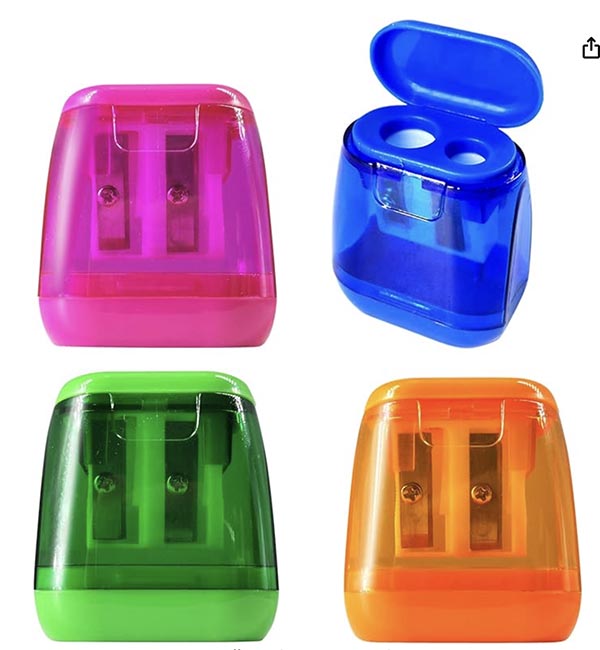
Now, as for that solid gold paper clip caddy…
Nano Noodles
Here’s a term we’ve never heard before: “nanopasta.” Scientists have created a strand of pasta that is invisible to the human eye—and is in fact 200 times thinner than the width of a human hair (what about the width of angel hair?). The perfect diet for those who love pasta, perhaps? Actually, via Food & Wine, the idea is not to eat it but rather to use it as a bandage.
Nanopasta is an almost unfathomably thin strand of tungsten disulfide, with each measuring in at just 370 nanometers wide, which equates to about two hundredths the width of a human hair. It's so thin that an individual strand is invisible to the naked eye. In fact, it's even challenging for a standard microscope to see, which is why you'd need an electron microscope to discern each strand. It's made with a mixture of formic acid and flour, almost like regular pasta is with water and flour, only, rather than kneading it and cutting by hand, the authors explained, they used an electrospinning technique to thread the flour through the top of a needle with an electric charge.
To the best of our knowledge, normal pasta does not contain tungsten disulfide, unless you’re at one of the more disreputable Italian restaurants.
According to researcher Beatrice Britton, the nanofibers made from starch are promising for the field of medicine as they "could be used in bandages to aid wound healing, as scaffolding for bone regeneration and for drug delivery." However, Britton noted that because the fibers rely on starch that is extracted from plant cells and purified, it requires a great deal of energy. "A more environmentally friendly method is to create nanofibers directly from a starch-rich ingredient like flour, which is the basis for pasta," Britton added.
It would be an improvement over taping a ravioli over a large wound, or those rigatoni-based stents.
Graphene Turns Up the Heat
Was it a good week for graphene news? It’s always a good week for graphene news! A graphene-based radiator launches on SpaceX Falcon 9. From (who else?) Graphene-Info:
SmartIR, a University of Manchester spinout, has announced that graphene-based adaptive radiator has launched aboard SpaceX’s Falcon 9 Transporter-12 as part of Mission 2, a collaboration with Hydra Space and Alba Orbital.
This mission addresses a critical challenge in the space sector: the need for cost-effective thermal management solutions. Current low-orbit satellites often rely on heaters, which increase power consumption, while long-orbit satellites utilize heavy and bulky systems such as thermal louvres. SmartIR’s graphene-based radiator offers a solution to this problem, enabling satellites to flexibly manage thermal energy. The technology fully vents heat from all surfaces when in Earth’s shadow and selectively shields only the side exposed to the sun during orbit
We could have used a graphene-based radiator—or, better yet, several—in the Northeast this week.
Bone to Be Wild
If you ever find yourself in Pocantico Hills, N.Y. (in Westchester County near Sleepy Hollow and 7–8 miles northwest of White Plains) be sure to dine at Blue Hill at Stone Barns, a farm-to-table restaurant committed to locally sourced, seasonal organic ingredients—and that even includes the dishware. Says Atlas Obscura:
Handcrafted by Pennsylvania artist Gregg Moore, the dishware is made from the bones of Stone Barns’ own cows. “I think that more than the majority of people don’t realize that bone china is made with real bone,” Moore says. “They think maybe it’s describing the color, that it’s the same shade as bone, or that it has to do with the product’s fragility. But it’s not, and it’s kind of an ‘ah-ha’ moment when you realize that.”
How does the process work? Well, after the bovine bones no longer have any culinary applications they are cleaned by boiling them at high temperatures and then fired in a kiln to remove all substances except for calcium and phosphorus.
At this point, Moore collects the bones and brings them to his studio where he mills them into a fine powder known as bone ash. He prefers femurs due to their density and the fact that they offer the most material after the process.
Moore then adds the bone ash into a liquid clay base that he casts to make bone china. In order for a porcelain to be labeled as bone china, it must contain at least 30 percent bone ash.
The “recipe” he uses was developed in the late 1700s by Josiah Spode, a potter credited with inventing today’s modern bone china. The cow’s diet affects the quality of the china.
Moore found that the bones of grass-fed cows are pure hydroxyapatite, a chemical compound of calcium and phosphorus that gives the bone, and thus the bone china, its whiteness and strength. The bones of the factory-farmed and grain-fed cows contained high levels of whitlockite, a marker of metabolic bone disease. This impurity results in bone china that is of lower quality: tinted yellow, less translucent, and more fragile.
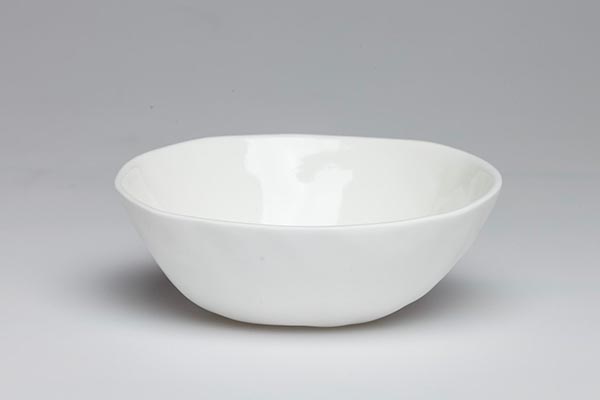
And if the dishware breaks, which can happen, especially in a restaurant, it’s no big deal.
And that’s one of the things that Barber really likes about it. “When Gregg’s bone china breaks, it can be ground up and recycled into new plates and cups, so it can be infinitely upcycled. It truly respects and makes use of every part of the animal—and does so in a way that reflects the land and farming practices that produced it. The plates literally give continued life.”
When the Planets Align…
Next month on February 28, skywatchers will be able to observe a rare phenomenon: a “great planetary alignment,” as seven planets—Saturn, Mercury, Venus, Jupiter, Mars, Uranus, and Neptune—will line up across the sky. Says Discover:
The alignment will generally be visible from anywhere on Earth, although ideal viewing times differ based on location. Most of the planets will be visible with the naked eye, except for Neptune and Uranus, which require binoculars or a telescope to get a better view.
Be sure to check it out!
Souper Deal
When we heard the phrase “soup drops,” we automatically thought about those occasions when we accidentally dropped a bowl of soup. Which happens. However, via (who else?) Food & Wine, Progresso has just introduced Soup Drops, which are kind of like cough drops but made of soup. Basically, it’s dry soup that you suck.
Progresso's Soup Drops, the company explained, delivers the same taste as its Chicken Noodle Soup, all contained in a tiny hard candy. "It will have soup fans feeling like they just slurped a spoonful of Progresso’s iconic Chicken Noodle Soup that they know and love," it added. "It’s like broth, savory veggies, chicken, soft egg noodles, and a hint of parsley have all been stirred up in a surprising way that’s sure to wow your taste buds."
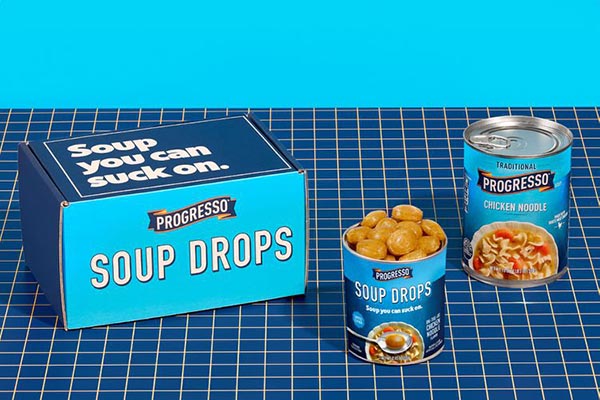
Not sure about that tagline… Thankfully, they’re only available for a limited time.
And if you want the soup drops, you need to act fast, as they will only be available for a limited time for the rest of National Soup Month, aka January.
Go to ProgressoSoupDrops.com. They’re sold out at present, but they said to check back next Thursday. Nah; we’ll drop it.
This Week in Printing, Publishing, and Media History
January 13
1888: The National Geographic Society is founded in Washington, D.C.
1898: Émile Zola’s J’accuse…! exposes the Dreyfus affair.
1910: The first public radio broadcast takes place; a live performance of the operas Cavalleria rusticana and Pagliacci are sent out over the airwaves from the Metropolitan Opera House in New York.
1941: Irish novelist, short story writer, and poet James Joyce dies (b. 1882).
2009: Irish-American actor, director, and producer Patrick McGoohan dies (b. 1928). Be seeing you.
January 14
1896: American novelist, poet, essayist, and playwright John Dos Passos born.
1898: English novelist, poet, and mathematician Lewis Carroll (né Charles Dodgson) dies (b. 1832).
1952: NBC's long-running morning news program Today debuts, with host Dave Garroway.
1967: The Human Be-In takes place in San Francisco, California’s Golden Gate Park, launching the Summer of Love.
1973: Elvis Presley’s concert Aloha from Hawaii is broadcast live via satellite, and sets the record as the most watched broadcast by an individual entertainer in television history.
January 15
1759: The British Museum opens.
1876: The first newspaper in Afrikaans, Die Afrikaanse Patriot, is published in Paarl.
1892: James Naismith publishes the rules of basketball.
1936: The first building to be completely covered in glass, built for the Owens-Illinois Glass Company, is completed in Toledo, Ohio.
1941: American singer-songwriter, musician, and artist Captain Beefheart (né Don Van Vliet) born.
1962: The Derveni papyrus, Europe's oldest surviving manuscript dating to 340 BC, is found in northern Greece.
1967: The first Super Bowl is played in Los Angeles. The Green Bay Packers defeat the Kansas City Chiefs 35–10.
2001: Wikipedia, a free wiki content encyclopedia, debuts online.
January 16
27 BC: Gaius Julius Caesar Octavianus is granted the title Augustus by the Roman Senate, marking the beginning of the Roman Empire.
1492: The first grammar of the Spanish language (Gramática de la lengua castellana) is presented to Queen Isabella I.
1605: The first edition of El ingenioso hidalgo Don Quijote de la Mancha (Book One of Don Quixote) by Miguel de Cervantes is published in Madrid, Spain.
January 17
1706: Benjamin Franklin born.
1867: German-born American film producer and co-founder of Universal Studios Carl Laemmle born.
1904: Anton Chekhov’s The Cherry Orchard receives its premiere performance at the Moscow Art Theatre.
1929: Popeye the Sailor Man, a cartoon character created by E. C. Segar, first appears in the Thimble Theatre comic strip.
January 18
1873: English author, poet, playwright, and politician, Secretary of State for the Colonies Edward Bulwer-Lytton dies (b. 1803).
1882: English author, poet, and playwright A. A. Milne born.
1936: English author and poet, Nobel Prize laureate Rudyard Kipling dies (b. 1865).
1993: Martin Luther King, Jr. Day is officially observed for the first time in all 50 states.
January 19
1729: English playwright and poet William Congreve dies (b. 1670).
1736: Scottish-English chemist and engineer James Watt born.
1764: The world’s first mail bomb severely injures the Danish Colonel Poulsen, residing at Børglum Abbey.
1809: American short story writer, poet, and critic Edgar Allan Poe born.
1829: Johann Wolfgang von Goethe’s Faust: The First Part of the Tragedy receives its premiere performance.
1853: Giuseppe Verdi’s opera Il trovatore receives its premiere performance in Rome.
1883: The first electric lighting system employing overhead wires, built by Thomas Edison, begins service at Roselle, N.J.
1915: Georges Claude patents the neon discharge tube for use in advertising.
1940: You Nazty Spy!, the very first Hollywood film of any kind to satirize Adolf Hitler and the Nazis, premieres, starring The Three Stooges, with Moe Howard as the character “Moe Hailstone” satirizing Hitler.
1953: Almost 72% of all television sets in the United States are tuned into I Love Lucy to watch Lucy give birth.
1983: The Apple Lisa, the first commercial personal computer from Apple Inc. to have a graphical user interface and a computer mouse, is announced.
1986: The first IBM PC computer virus is released into the wild. A boot sector virus dubbed (c)Brain, it was created by the Farooq Alvi Brothers in Lahore, Pakistan, reportedly to deter unauthorized copying of the software they had written.
2038: The 32-bit Unix time will overflow at 03:14:07 UTC.
January 20
1894: American cartoonist and creator of Little Orphan Annie Harold Gray born.
1920: Italian director and screenwriter Federico Fellini born.
1920: American actor DeForest Kelley born.
1929: In Old Arizona, the first full-length talking motion picture filmed outdoors, is released.
1937: Franklin D. Roosevelt is sworn in for his second term as U.S. President, the first Presidential Inauguration to take place on January 20 following the ratification of the 20th Amendment.
1954: In the United States, the National Negro Network is established with 40 charter member radio stations.
1986: In the United States, Martin Luther King, Jr. Day is celebrated as a federal holiday for the first time.
January 21
1535: Following the Affair of the Placards—an incident in which anti-Catholic posters appeared in public places in Paris and in other major French cities, including one on the bedchamber door of King Francis I—French Protestants are burned at the stake in front of the Cathedral of Notre Dame de Paris. Don’t underestimate the power of display graphics!
1789: The first American novel, The Power of Sympathy or the Triumph of Nature Founded in Truth by William Hill Brown, is printed in Boston.
1924: English actor, singer, and screenwriter Benny Hill born.
1950: British novelist, essayist, and critic George Orwell dies (b. 1903).
1953: Co-founder of Microsoft Paul Allen born.
1971: The current Emley Moor transmitting station, the tallest free-standing structure in the United Kingdom, begins transmitting UHF broadcasts.
2020: Welsh actor, director, and screenwriter Terry Jones dies (b. 1942).
January 22
1573: English poet John Donne born.
1788: English poet and playwright Lord Byron (né George Gordon Byron) born.
1889: Columbia Phonograph is formed in Washington, D.C.
1898: Russian director and screenwriter Sergei Eisenstein born.
1927: Teddy Wakelam gives the first live radio commentary of a football match anywhere in the world, between Arsenal F.C. and Sheffield United at Highbury.
1947: KTLA, the first commercial television station west of the Mississippi River, begins operation in Hollywood.
1984: The Apple Macintosh, the first consumer computer to popularize the computer mouse and the graphical user interface, is introduced during a Super Bowl XVIII television commercial.
2018: American sci-fi and fantasy novelist Ursula K. Le Guin dies (b. 1929).
January 23
1546: Having published nothing for 11 years, François Rabelais publishes the Tiers Livre, his sequel to Gargantua and Pantagruel.
1656: Blaise Pascal publishes the first of his Lettres provinciales.
1783: French novelist Stendhal (né Marie-Henri Beyle) born.
1832: French painter Édouard Manet born.
1919: American actor, game show host, and TV pioneer Ernie Kovacs born.
1957: American inventor Walter Frederick Morrison sells the rights to his flying disc to the Wham-O toy company, which later renames it the “Frisbee.”
1998: Netscape announced Mozilla, with the intention to release Communicator code as open source.
January 24
1670: English playwright and poet William Congreve born.
1947: American singer-songwriter Warren Zevon born. Life’ll kill ya.
1984: Apple Computer places the Macintosh personal computer on sale in the United States.
January 25
1507: Swiss printer Johannes Oporinus born.
1759: Scottish poet Robert Burns born.
1783: English-American businessman and philanthropist and founder of Colgate-Palmolive William Colgate born.
1858: The Wedding March by Felix Mendelssohn is played at the marriage of Queen Victoria's daughter, Victoria, and Friedrich of Prussia, and becomes a popular wedding processional.
1881: Thomas Edison and Alexander Graham Bell form the Oriental Telephone Company.
1882: English novelist, essayist, short story writer, and critic Virginia Woolf born. Who’s afraid?
1915: Alexander Graham Bell inaugurates U.S. transcontinental telephone service, speaking from New York to Thomas Watson in San Francisco.
1937: The Guiding Light debuts on NBC radio from Chicago. In 1952 it moves to CBS television, where it remains until September 18, 2009.
1947: Thomas Goldsmith Jr. files a patent for a “Cathode Ray Tube Amusement Device,” the first ever electronic game.
1949: The first Emmy Awards are presented; the venue is the Hollywood Athletic Club.
1960: The National Association of Broadcasters reacts to the "payola" scandal by threatening fines for any disc jockeys who accept money for playing particular records.
1961: In Washington, D.C., President John F. Kennedy delivers the first live presidential television news conference.
1961: 101 Dalmatians premieres from Walt Disney Productions.
1964: Blue Ribbon Sports is founded by University of Oregon track and field athletes, which would later become Nike.
1996: American playwright and composer Jonathan Larson dies, in far too untimely a fashion (b. 1960).
January 26
1918: American author Philip José Farmer born.
1926: The first demonstration of the television by John Logie Baird.