WhatTheyThink

Premium Commentary & Analysis

Corrugated Growth and Challenges Part 1: If It Was Easy, Everyone Would Be Doing It

The potential opportunities in corrugated packaging are significant, but like any other process, if it was easy, everyone would be doing it. In this article, we will look at some of the technical challenges.

Tuesday, October 13, 2020

I wrote about the future of corrugated in January of 2020 prior to COVID-19 and the changes that it brought. Demand for corrugated is still looking bright, with a 4.1% CAGR increase in global sales during the period ending 2025, according to Smithers. However, what is even more interesting is that the growth of corrugated print produced by inkjet is projected to grow at 19.85% CAGR during that same period, with a mix of both preprint laminate and postprint. Now don’t get too excited, since that still only brings corrugated inkjet production up to approximately 3.9% of the total corrugated production volume.

However, there is no doubt that digital corrugated production is growing and will continue to gain market share from analog, primarily flexo preprint laminate. Postprint corrugated growth is increasing as well, as consumer purchasing habits continue to shift from in-store retail to online and big box stores. Both of these trends had started prior to COVID-19 and have since accelerated. Currently, there are fewer than 100 single-pass postprint production inkjet presses installed globally, and while many of them have only been in production for less than two years, they are starting to reach their capacity. To support this increasing growth, there have been quite a few corrugated production inkjet press introductions this year to add to the previously released presses discussed in the previous article. In some cases, the new introductions are enhanced versions of existing presses like the Hanway Glory re-envisioned as the Xeikon IDERA and the Sun Automation Corrstream re-envisioned as the Domino X630i. Production inkjet technologies will continue to support this growth as a key component of analog print displacement and increase of print as a part of manufacturing processes. 

Production inkjet requirements vary based on the application and can also require significant manipulation and control of the electronics that drive the printhead to accommodate different printing conditions, all challenging and time-consuming for inkjet press manufacturers, and, ultimately, end users. One of the companies at the forefront of addressing these challenges is Global Graphics. Their RIP technology dates back to 1986, and their Harlequin Host Renderer is recognized as the most powerful RIP in the marketplace today, an important factor in packaging production. Although, while having a fast RIP is important, inkjet packaging print is still not easy and corrugated postprint brings many additional challenges. 


Continue reading your article
with a WhatTheyThink membership.

WhatTheyThink Annual Membership

Less than $4/week.

Get unlimited access to in-depth commentary and analysis covering the latest trends, emerging technologies, operational strategies, and key events across every segment of today's printing industry.

Stay informed. Stay competitive. Stay ahead.
WhatTheyThink Day Pass

$5 for 24 hours

Unlimited access to all of WhatTheyThink. Get your Day Pass

Already a member?
Sign In

About David Zwang

David Zwang travels around the globe helping companies increase their productivity, margins and market reach. He specializes in production optimization, strategic business planning, market analysis, and related services to companies in the vertical media communications market. Clients have included printers, manufacturers, retailers, publishers, premedia and US Government agencies. He can be reached at [email protected].

Recent Articles from David Zwang

Canon: Continued Production Inkjet Development and Growth

Canon: Continued Production Inkjet Development and Growth

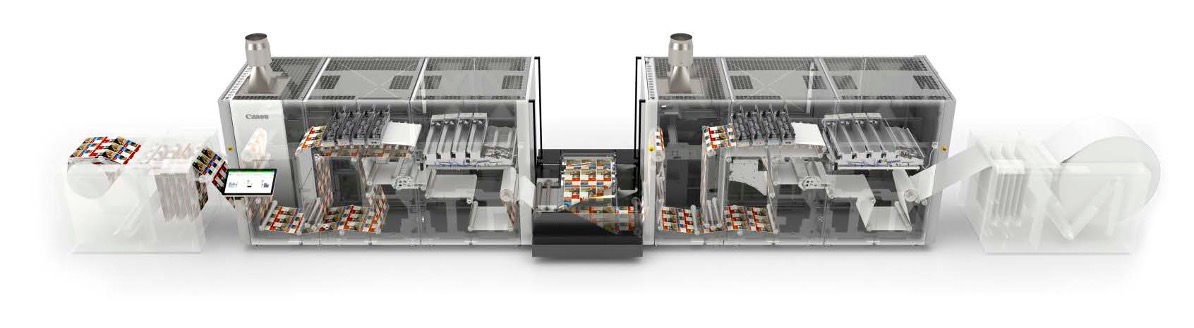
With more than 2,000 ColorStream units delivered worldwide, Canon has introduced the new 7000 series for mid-range production. To say that Canon has been broadening their portfolio of production printers is probably an understatement. There are new developments in the ProStream platform and the new iV7 B2+ cut sheet press is about to hit the street. Read More
Kodak Keeps on Growing!

Kodak Keeps on Growing!

Coming out of three consecutive quarters of year-over-year growth, Kodak has been delivering on their promise to rebuild and transform the company. In this Business Update video, David Zwang talks with Jim Continenza, Eastman Kodak Chairman and CEO. Read More

The Start-Up Chronicles: dappas—Next Level E-Commerce Packaging Intelligence

The Start-Up Chronicles: dappas—Next Level E-Commerce Packaging Intelligence

The ultimate goal of dappas is to help facilitate design and eliminate the entire prepress production, so all the converters who are working with them get a stream of work that is ready to go to press and converting. Read More
Labels and the Connected Supply Chain

Labels and the Connected Supply Chain

You can think of this very competitive connected supply chain landscape in four layers: material suppliers, label converters/printers, hardware OEMs, and software/platform players. The connected supply chain has changed from moving things hand-to-hand or through email to more full-featured automated systems. The good news is that, as a converter, after you decide where you would like to start, there are so many options for you to select from. Read More

Direct-to-Object: Challenging Labels and Tags or Offering New Opportunities?

Direct-to-Object: Challenging Labels and Tags or Offering New Opportunities?

Print is a very adaptive technology and direct-to-object (DTO) is another area where it can offer new opportunities for PSPs and product manufacturers. Today, most of the product and packaging decoration (i.e., labels and tags) that exists is handled by a label converter. It is a well-established process that probably won’t disappear. However, it can and will be challenged by inline DTO printing solutions, offering new opportunities. Read More