WhatTheyThink

Premium Commentary & Analysis

Watch Out Inkjet: Toner Appears to Be Poised to Make a Comeback

Now that production inkjet has finally reached the offset quality barrier, some believe that it is the death knell for toner. Although as Mark Twain said, “The reports of my death are greatly exaggerated” and based on recent developments in toner technology I believe that is the case here as well.

Tuesday, September 01, 2020

After electrophotographic (toner) copiers became printers and then production printers in the mid 1990s, there was a realization and a push to find ways to use them as a replacement for offset printing. The adoption and growth started slowly, as expected with any new technology, but as the technology improved, the industry found ways to help drive the growth. Fast forward to drupa 2008, which was to be the “inkjet” drupa, where there was some emerging technology shown but not really ready to compete head-to-head with toner or offset printing. Some of those companies that showed their production inkjet technology have become the leaders in today’s inkjet press marketplace. Now that production inkjet has finally reached the offset quality barrier as well, some believe that it is the death knell for toner. Although, as Mark Twain said, “The reports of my death are greatly exaggerated” and, based on recent developments in toner technology, I believe that is the case here as well. Toner presses have led the move from analog offset, flexo, and gravure to digital over the last few decades, initially by leaps and bounds but over time the toner technology evolution seemed to slow. Inkjet and even digitized offset started to develop a beachhead against toner growth.

According to the recent Smithers “Future of Digital vs. Offset Printing to 2024” report, “offset litho print will grow modestly from $183.7 billion in 2014 to $192.6 billion in 2024. In stark contrast to offset litho, the digital print sector grows strongly from $103.1 billion in 2014 to $180.9 billion in 2024. Within digital, inkjet printing drives all the forecast growth between 2019–2024, as electrophotography revenues plateau in this period.”

While toner press speeds haven’t grown significantly over the last decade, production handling and embellishment features along with better DFE and finishing integration added to productivity gains. A good example of that is the recently announced Canon ImagePRESS C10010VP. It operates at 100 ipm (images per minute) but offers increased overall productivity and versatility. Some of these enhancements include the inclusion of larger and interchangeable paper drawers, auto paper feeding of 13 x 30-inch sheets of media. Media up to 400 gsm and the ability to bond to synthetic papers without having to manually tweak the machine, in part as a result of a new PRISMAsync controller. The updated paper database including advanced automated color characterization makes achieving and assigning G7 quick and easy on any new media entry.


Continue reading your article
with a WhatTheyThink membership.

WhatTheyThink Annual Membership

Less than $4/week.

Get unlimited access to in-depth commentary and analysis covering the latest trends, emerging technologies, operational strategies, and key events across every segment of today's printing industry.

Stay informed. Stay competitive. Stay ahead.
WhatTheyThink Day Pass

$5 for 24 hours

Unlimited access to all of WhatTheyThink. Get your Day Pass

Already a member?
Sign In

About David Zwang

David Zwang travels around the globe helping companies increase their productivity, margins and market reach. He specializes in production optimization, strategic business planning, market analysis, and related services to companies in the vertical media communications market. Clients have included printers, manufacturers, retailers, publishers, premedia and US Government agencies. He can be reached at [email protected].

Recent Articles from David Zwang

Canon: Continued Production Inkjet Development and Growth

Canon: Continued Production Inkjet Development and Growth

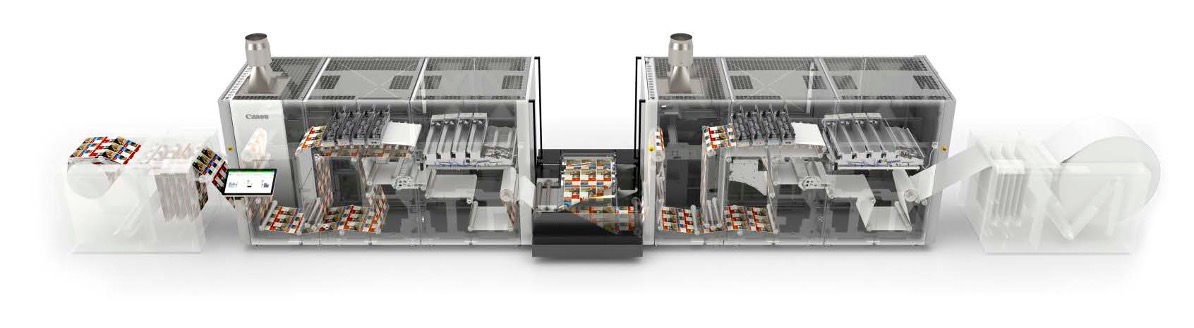
With more than 2,000 ColorStream units delivered worldwide, Canon has introduced the new 7000 series for mid-range production. To say that Canon has been broadening their portfolio of production printers is probably an understatement. There are new developments in the ProStream platform and the new iV7 B2+ cut sheet press is about to hit the street. Read More
Kodak Keeps on Growing!

Kodak Keeps on Growing!

Coming out of three consecutive quarters of year-over-year growth, Kodak has been delivering on their promise to rebuild and transform the company. In this Business Update video, David Zwang talks with Jim Continenza, Eastman Kodak Chairman and CEO. Read More

The Start-Up Chronicles: dappas—Next Level E-Commerce Packaging Intelligence

The Start-Up Chronicles: dappas—Next Level E-Commerce Packaging Intelligence

The ultimate goal of dappas is to help facilitate design and eliminate the entire prepress production, so all the converters who are working with them get a stream of work that is ready to go to press and converting. Read More

Labels and the Connected Supply Chain

Labels and the Connected Supply Chain

You can think of this very competitive connected supply chain landscape in four layers: material suppliers, label converters/printers, hardware OEMs, and software/platform players. The connected supply chain has changed from moving things hand-to-hand or through email to more full-featured automated systems. The good news is that, as a converter, after you decide where you would like to start, there are so many options for you to select from. Read More

Direct-to-Object: Challenging Labels and Tags or Offering New Opportunities?

Direct-to-Object: Challenging Labels and Tags or Offering New Opportunities?

Print is a very adaptive technology and direct-to-object (DTO) is another area where it can offer new opportunities for PSPs and product manufacturers. Today, most of the product and packaging decoration (i.e., labels and tags) that exists is handled by a label converter. It is a well-established process that probably won’t disappear. However, it can and will be challenged by inline DTO printing solutions, offering new opportunities. Read More