
WhatTheyThink contributor Mary Schilling rounds up some software applications and other tools that caught her eye at recent trade events.
Spencer Metrics
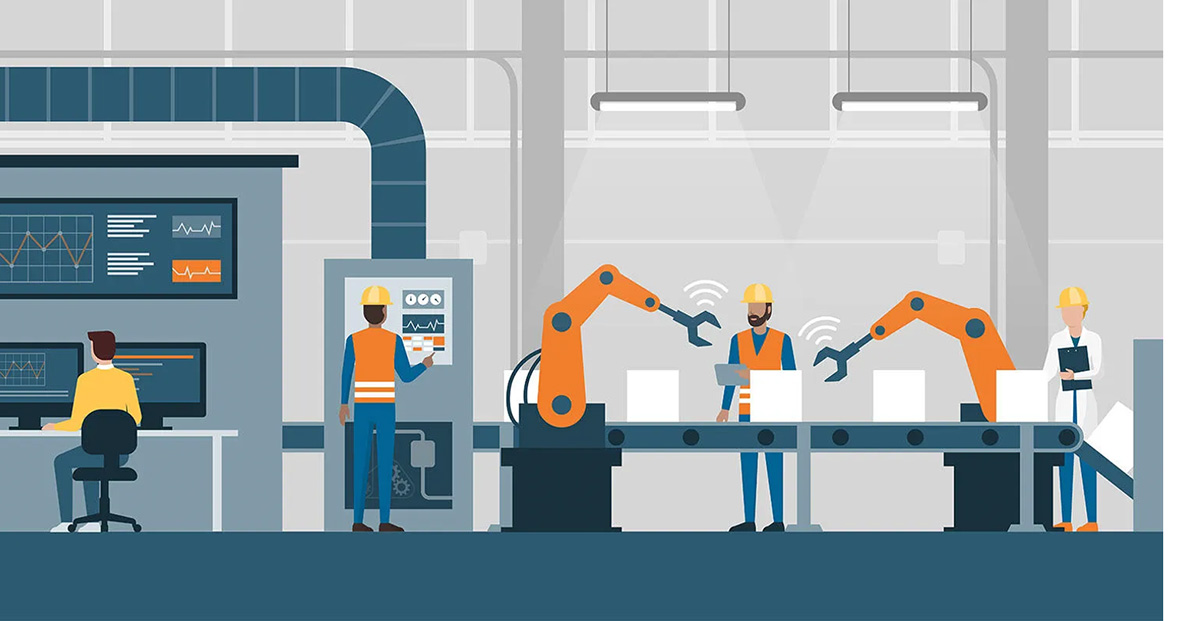
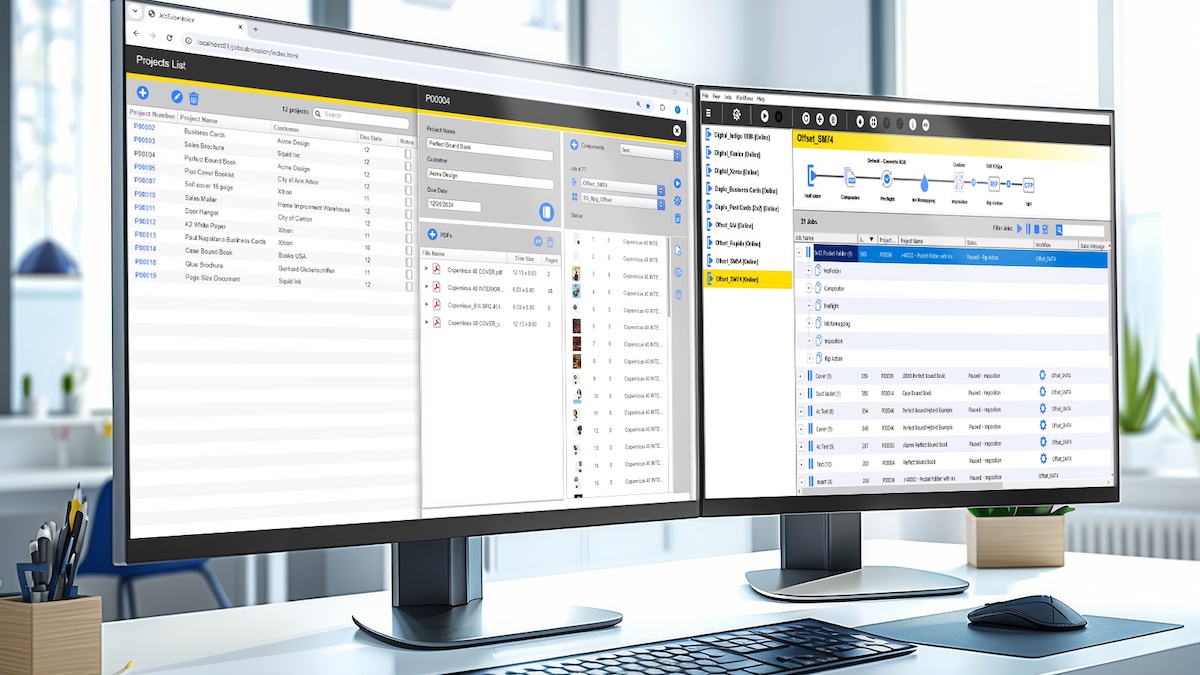
Spencer Metrics collects real-time analytic data for production to ensure that the production line and everyone involved understands where the bottlenecks lie. There is a lot of data that can be collected; how can it all be organized that so it actually makes sense to the end user? The software collects data from multiple sources. The most basic data source is production machines. “It is a multi-vendor platform, so we can connect to a variety of different production machines that are on the floor,” said Vishal Sahay, Executive VP of Spencer Metrics. The software can also collect data from a MIS, ERP, or other prepress management systems. “All this information is gathered and we sort of seamlessly integrate that in background so that you have a complete picture of what’s going on to put things into context,” said Sahay.
Adobe Stock
While Spencer Metrics’ background is in commercial printing, they also have customers in packaging. “We are growing pretty significantly there,” said Sahay. They also have customers in printing and packaging-adjacent markets. “We have customers that do just die cutting, there are customers that are suppliers to the industry.” Spencer Metrics can monitor any machine. “So it doesn’t have to be a print or a packaging machine,” said Sahay.
How does Spencer Metrics integrate all these machines? Via software called Connect. “Our go-to is to develop intelligent integration with manufacturers so that we can harness the rich data set that is already available from the machines,” said Sahay. “All this new digital production equipment has a lot of information about what jobs are running, accounts, material type, material consumption and all that. If we can get all that information from it, we develop software that will pick that information up.” But as any printer can tell you, there is an awful lot of analog equipment out there. In that case, Spencer Metrics can use its “edge” technology through which they can install sensors, encoders, and barcode readers to facilitate data collection, bring it into their platform where they can add logic to make it smarter and easier to analyze that.
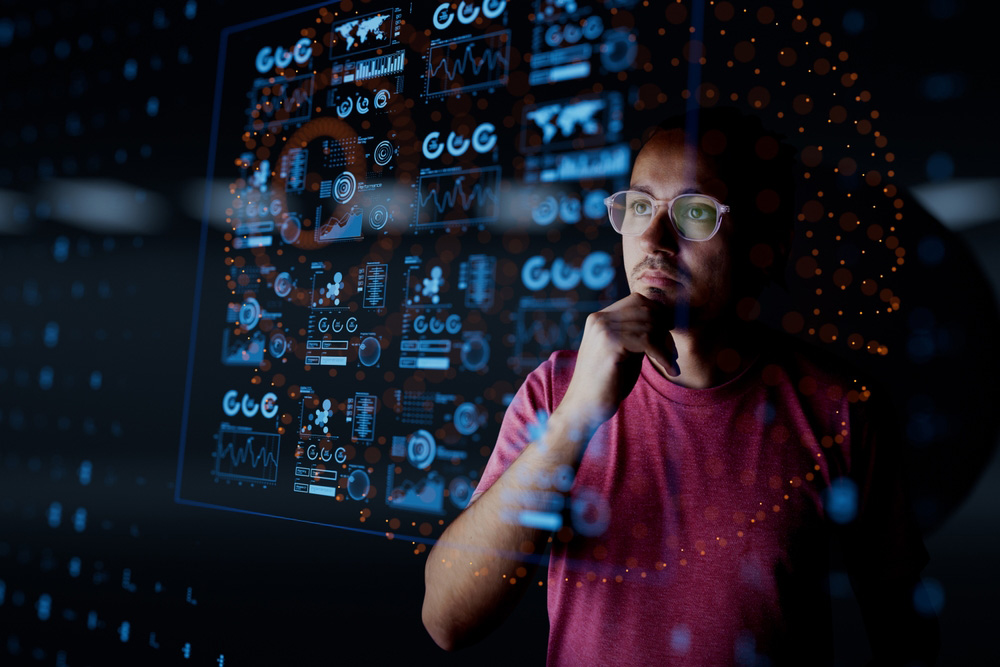
The software is dashboard-driven, and once the system has information, it can provide a variety of visualizations. A real-time production dashboard monitors live production. “That shows you what’s happening right now so that the production team can be more proactive in the way they manage it,” said Sahay. All the data gets uploaded to the cloud. “So now you have the historical analytics and trends that can allow you to understand various things, such as where are your downtime issues, operator efficiency, job level tracking, and such,” he said.
“We have also found that a lot of people collect data, but they don’t have a way to actually utilize it,” he added. “Our focus is to take away the effort that goes in data collection and make users focus on using that information. We can send out reports, we can visualize it in many ways, and now we are also working on the next-generation experience where we can have AI-powered analytics running in the background that can then produce insights that will allow users to comprehend this information in a much faster way.”
(Watch the entire interview here.)
Neos
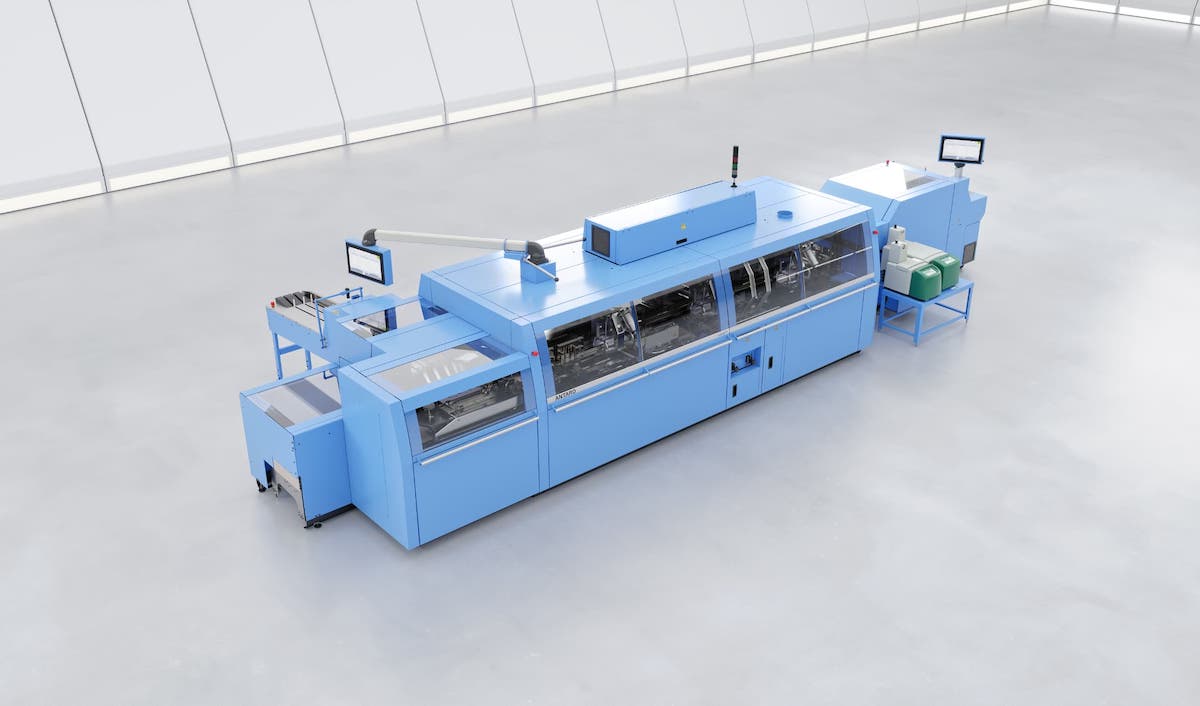
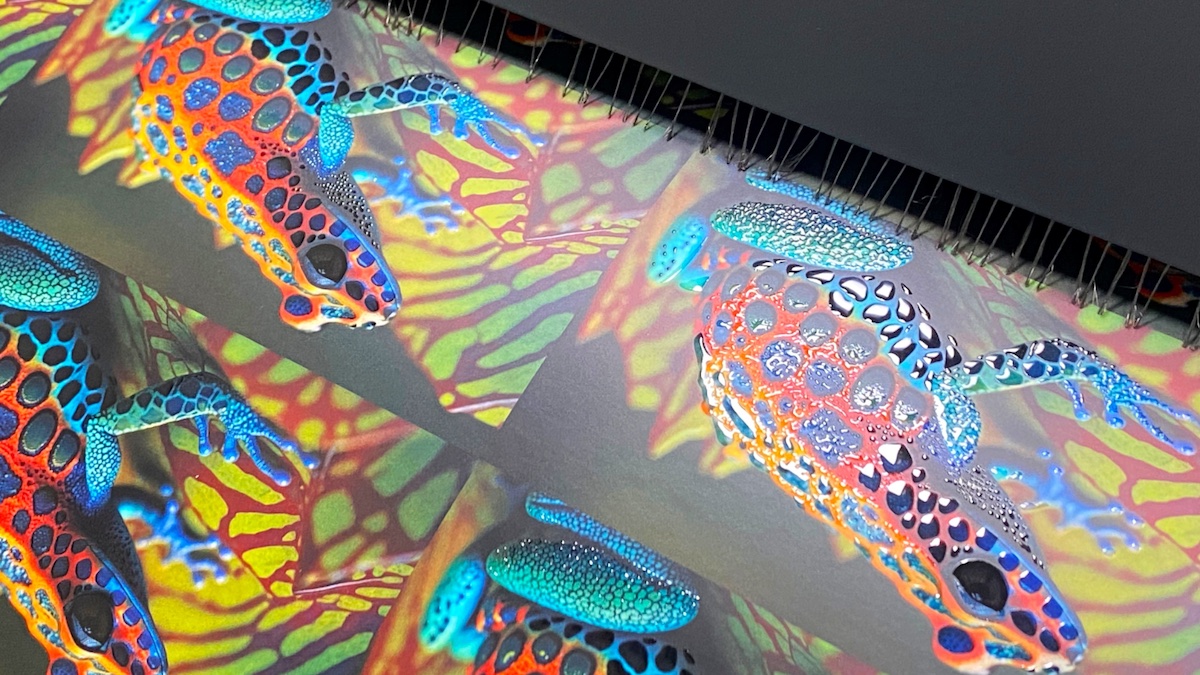
On the hardware side, Neos is an integrator for specialty inkjet solutions, tailoring their bespoke machines to serve the specific needs of the end customer. “We adapt to the requirements of the customers by using different printhead technologies, different ink types, and varying widths,” said Frank de Jonge, Commercial Director for Neos. “We print on web, we print on sheet, we have a very flexible way of addressing the different requirements depending on the customer needs.”
Not only do Neos machines print on different papers, but also on different media types—sometimes quite different than paper. “A good example is metal sheets, where we have a cooperation with Koenig and Bauer Metal Print Organization. We integrate our inkjet technology into their coating and transport lines.” Other examples are plastic films, and Neos has built printers more than two meters wide for printing on flexible packaging.
They have built printers for wallpaper, not just paper-based, but also non-woven, or even PVC-based materials. Printers for printing on metal are typically sheetfed, while the others are roll-to-roll. “We’re also independent on the transport mechanism and adapt to the requirement of the process,” said de Jonge.
The company also makes equipment for inkjet printing flooring materials, where the quality and color consistency are set at a very high standard with no tolerance for errors caused by, say, missing jets. “And no missing jets means we installed two print bars per color and compensate a missing jet with a second bar,” de Jonge added. It identifies missing jets using a camera system directly behind the print unit and adapts accordingly. “We’re trying to find a solution to every challenge,” said de Jonge.
A critical part of printer manufacturing process is the system used for drying. “You have to understand the absorption characteristics of your pigments, of the colors that you use in your inks,” said de Jonge. “You have to match the drying process to those absorption characteristics. We like using NIR technology in combination with a warm airflow for mass transport. We like to get the humidity away from the substrate as soon as we can, and we like to initiate the water molecule as efficiently as we can. And the trick is, the shorter you do this, the less you’re heating up the substrate.”
As inkjet grows, it moves into more things. It’s for wallpaper, it’s for furniture, it’s for flooring. Even a lot of the windows that are printed in these new buildings or the facade on the sides of the buildings are inkjet.
(Watch the entire interview here.)
OFS
OFS (Operations Feedback Systems) has been in business for 19 years that, said General Manager Jonathon Newton, helps companies “produce more with less.” They service 40 different industries, including food, beverage, pharmaceutical, engineering, and, of course, printing. “We get data out of machines, or we put new sensors onto machines,” he said. OFS also offers a tool for data collection, and earlier this year launched a new AI solution called Mayvn.
For print production, OFS “takes the pulse” of a sheet or linear meter that goes through a press, evaluating every second of that machine’s performance—how it’s running, is it running running slowly, etc.—and organizing and creating visualizations that so that everyone in the business can have insight into how the machine is running and how everyone can help improve performance. “We organize data in a very simple and easy-to-use manner, so that the operators can perform at their best,” said Newton, “as well as all the supporting functions, whether it’s engineers, electricians, prepress operators, warehouse—they can all support the line and maximize the output.” And it’s not just the press. OFS can look at all the assets in the business—a sheeter, a rewinder, folder, gluer, etc. Ultimately, said Newton, “if there’s a production line, OFS can provide value, which means that we have to be very adaptable and get our signals from all sorts of different places.”
At the most basic level, they add a sensor to a production line which could be counting every time a sheet or a booklet goes by or every time a linear meter goes over a cylinder. At the more complex end, there is an Internet of Things (IoT) gateway, which is part of a network. “Our advanced customers have network machines. We can put an IoT ref file [reference file] on there and it can start getting all those signals from the machines, which could be machine states or fault codes,” said Newton. “And we can bring those into OFS automatically and visualize that for the operators and also the people around the business.” In the middle of those two extremes they can use a simple programmable logic controller (PLC) to obtain an electronic pulse. “All we need is a reliable signal that the business trusts is accurately counting a linear meter or other unit, and we can do the rest in our software configuration,” added Newton.
The data that OFS collects can be sliced and diced in any number of ways, depending on who is using the data and what they want to use it for. An engineer may want to know the mean time between failures or mean time between repairs, or how many times does the machine stops because of a mechanical problem. On the other hand, a supervisor may want to be able to compare the performance of different shifts. How does the night shift compare to the day shift? What’s the average speed of each shift or the output of each shift?
“it's all about giving feedback to the management and the business about what's happening,” said Newton.
(Watch the full interview here.)