Calling the changes in labels and packaging “significant” barely scratches the surface. Supply chains remain in constant flux, shaped by regulation, compliance, sustainability, and shifting demand. Recruiting and retaining skilled labor is tougher than ever. Converting operations are built for high volume at low cost, but long-term success still hinges on meeting customer expectations for price, product, and service.
The Reality Today
On the shop floor, the strain is clear. Lean crews cover long shifts, and a single absence can disrupt schedules. Customers avoid large runs that risk obsolescence, preferring smaller runs tied to campaigns or promotions. This mix stretches traditional workflows. Make-ready erodes margins, inventory is harder to manage, and deadlines slip. Digital printing brings flexibility for converters—and, more importantly, their customers. It lightens the load on production floors while delivering the responsiveness today’s market demands.
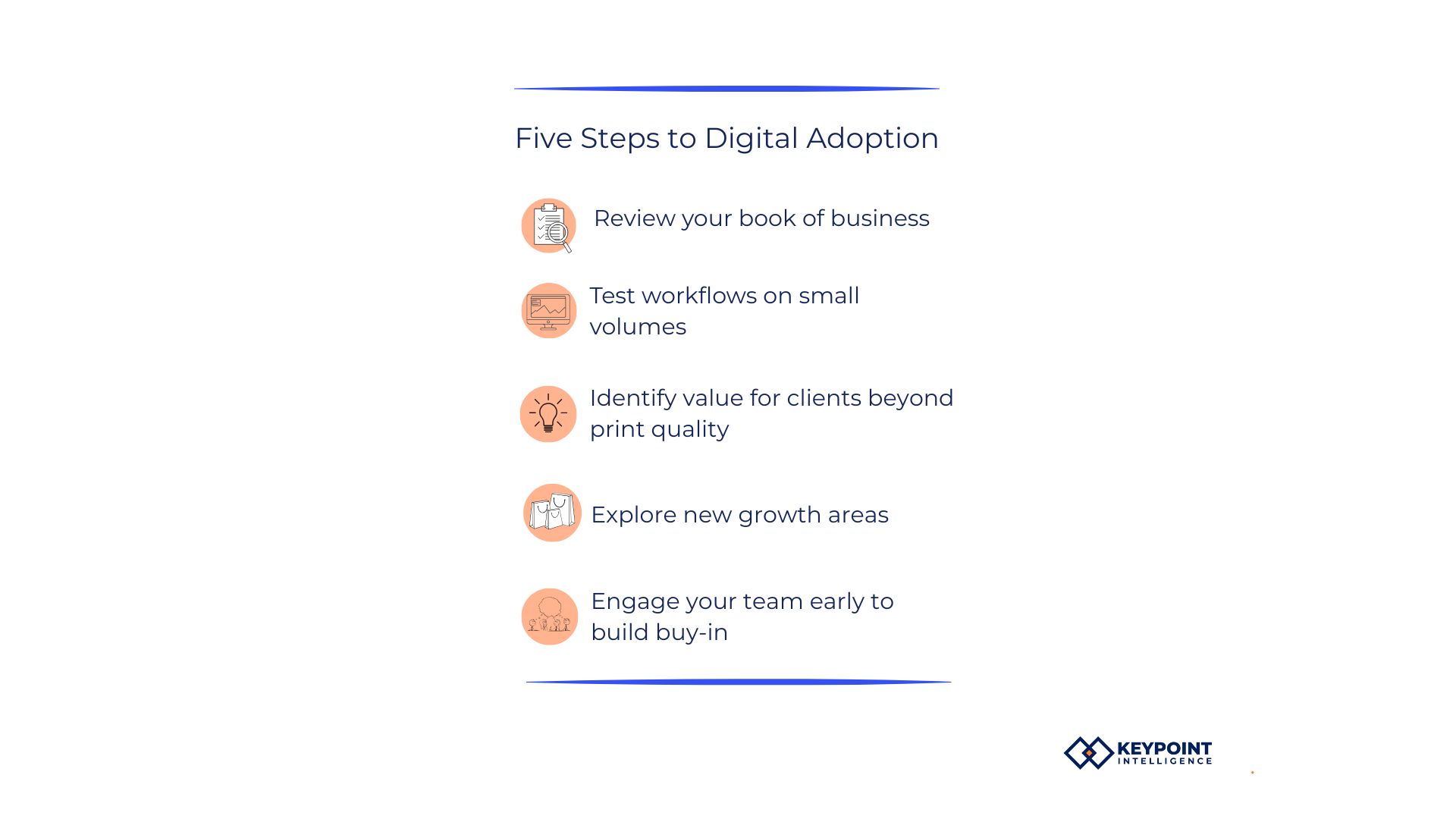
Still, some converters continue to hesitate. Cost, complexity, and uncertainty can slow adoption. These hurdles are manageable with a clear plan, starting with an honest review of current work.
Steps to Digital Adoption
Rethink Operations
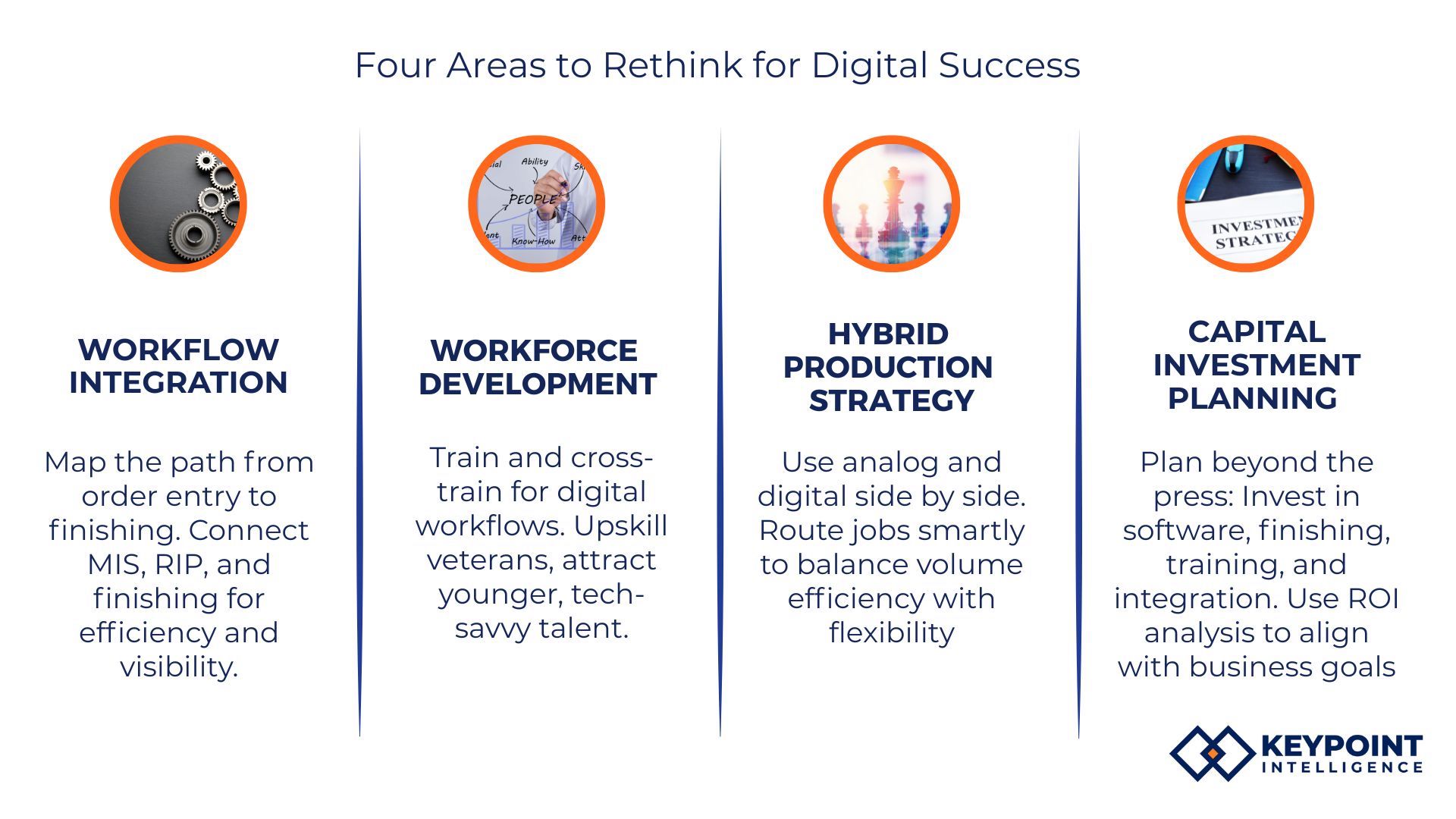
Digital transformation (DX) is not as simple as buying a press. Success requires aligning technology, people, and processes.
Retaining Customers
Brands measure converters differently now. Quality still reigns but the differentiator is agility. Customers expect the freedom to order both full runs and small test batches, they want them fast, and digital makes that possible. Short runs are economical, changes don’t stall production, and personalization is efficient. This agility builds loyalty. “Converters can’t just compete on print quality anymore—that’s a baseline says Jeff Wettersten, Vice President of Labels & Packaging Service at Keypoint Intelligence. What brands are really buying is agility: the ability to handle short runs today, a last-minute design change tomorrow, and a full production order next week. Digital makes that level of responsiveness possible.”
New Niches
Digital is creating access to markets once impractical for traditional presses. Small brands want packaging that stands out in shorter runs. Premium product makers want highly customized folding cartons that elevate their brand. These markets may be smaller in volume, but they’re higher in value. Converters that target them compete on creativity and service, not price.
Hybrid Advantage
High-volume jobs are not disappearing. “The future isn’t digital versus analog—it’s both,” says Wettersten. “The most resilient converters will be those who balance the efficiency of flexo and offset with the flexibility of digital, routing work where it makes the most sense. That hybrid approach is how converters protect margins, retain customers, and stay competitive.”
Flexo and offset remain the most efficient for millions of impressions, but relying on analog alone carries risk. The most resilient converters run hybrid operations, using both digital and traditional presses as well as routing jobs strategically. Digital also reduces manual oversight, easing labor constraints while helping maintain steady throughput and stronger profitability.
The Environment
Sustainability has become a compliance obligation. Regulations in Europe, new rules in North America, and brand-driven targets are pushing change across supply chains. Digital supports these goals by cutting waste and aligning output to demand. For buyers, real progress is what wins the next contract.
Bringing It Together
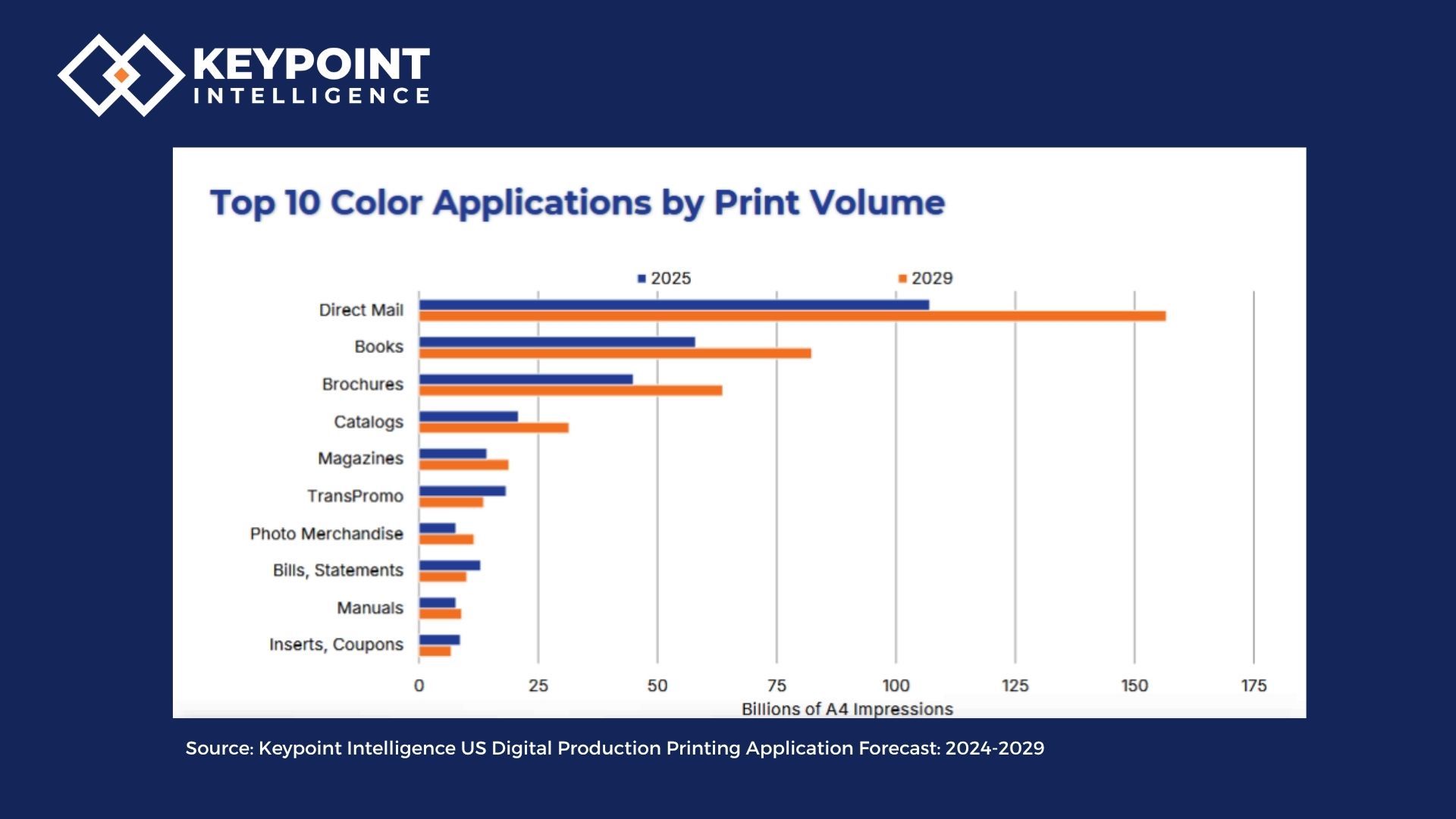
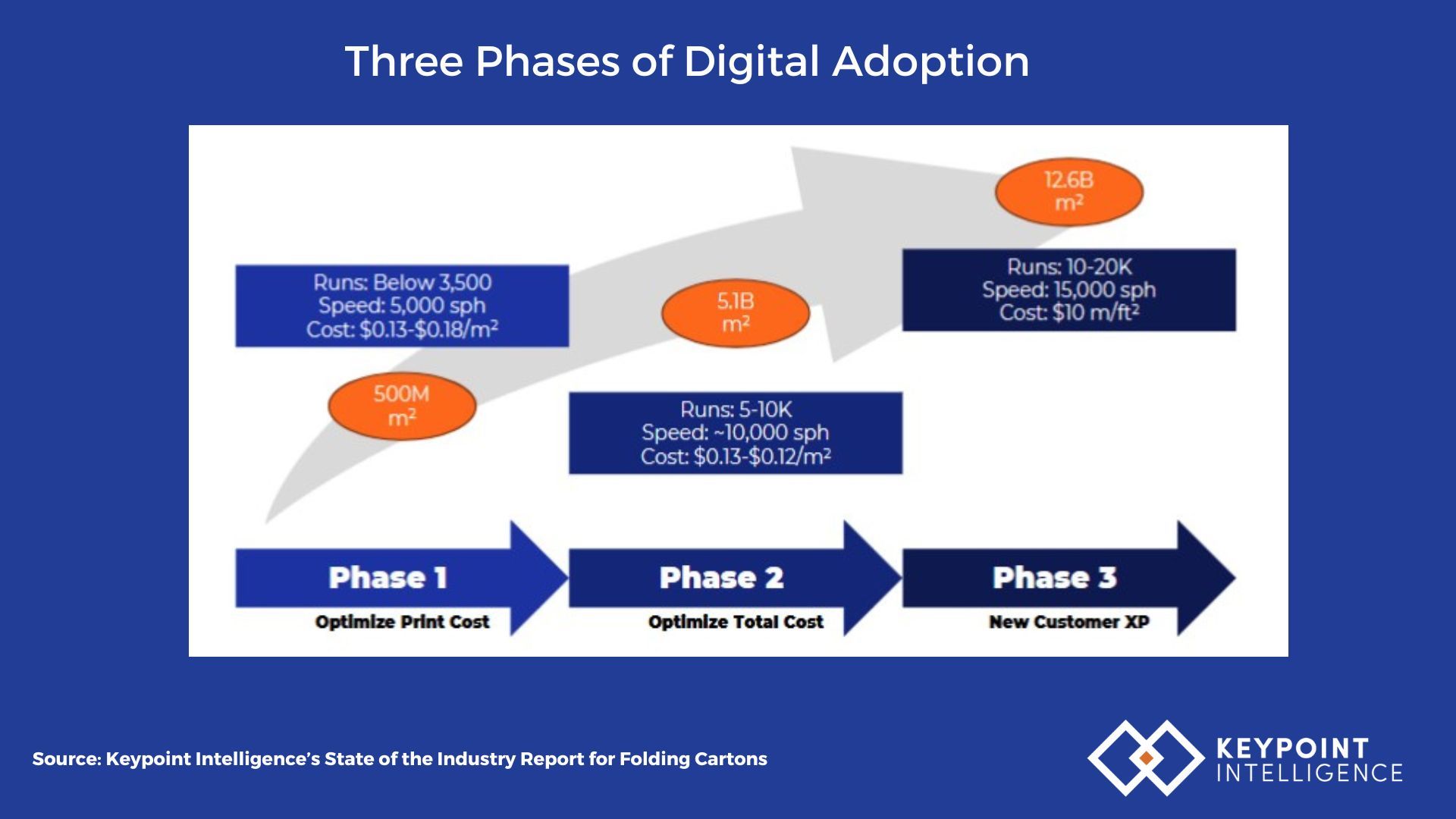
Research shows digital’s share of packaging will continue to climb while traditional volumes flatten. The shift is slow but steady. Each year, more work that once defaulted to analog migrates to digital. Leaders will be those who align investment with where the market is heading—because digital adoption is not just an equipment choice, it’s about resilience and growth. Converters that adapt to shifting orders, labor shortages, and sustainability demands will hold onto customers and win new ones.
Conclusion
The demand around packaging is not shrinking. What is changing is how it presents itself, and how converters must respond. Those who balance the efficiency of long-run analog with the agility of digital will be best positioned to thrive. At Keypoint Intelligence, our role is to provide the insight that helps converters move with confidence, turning market change into lasting advantage.