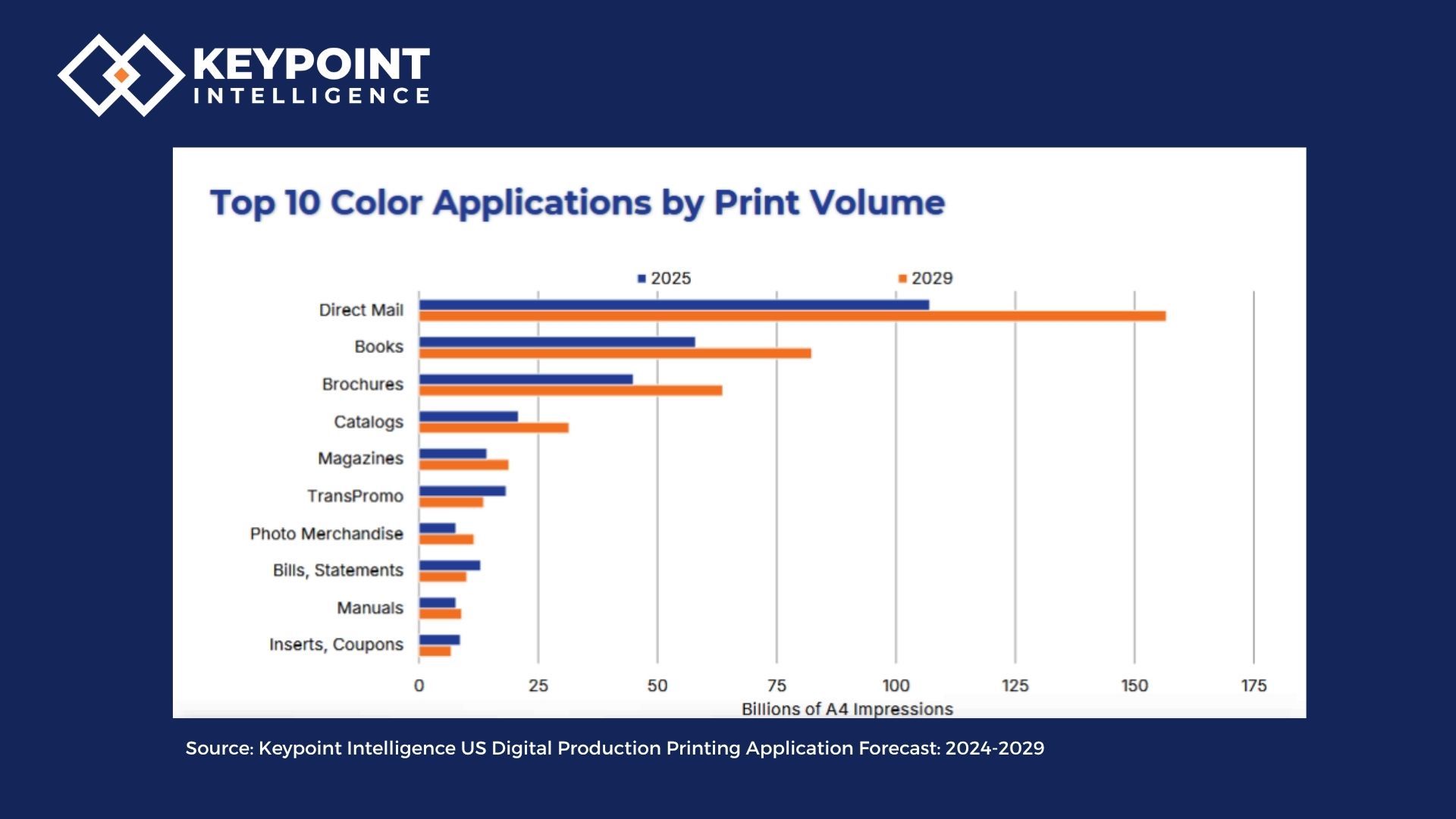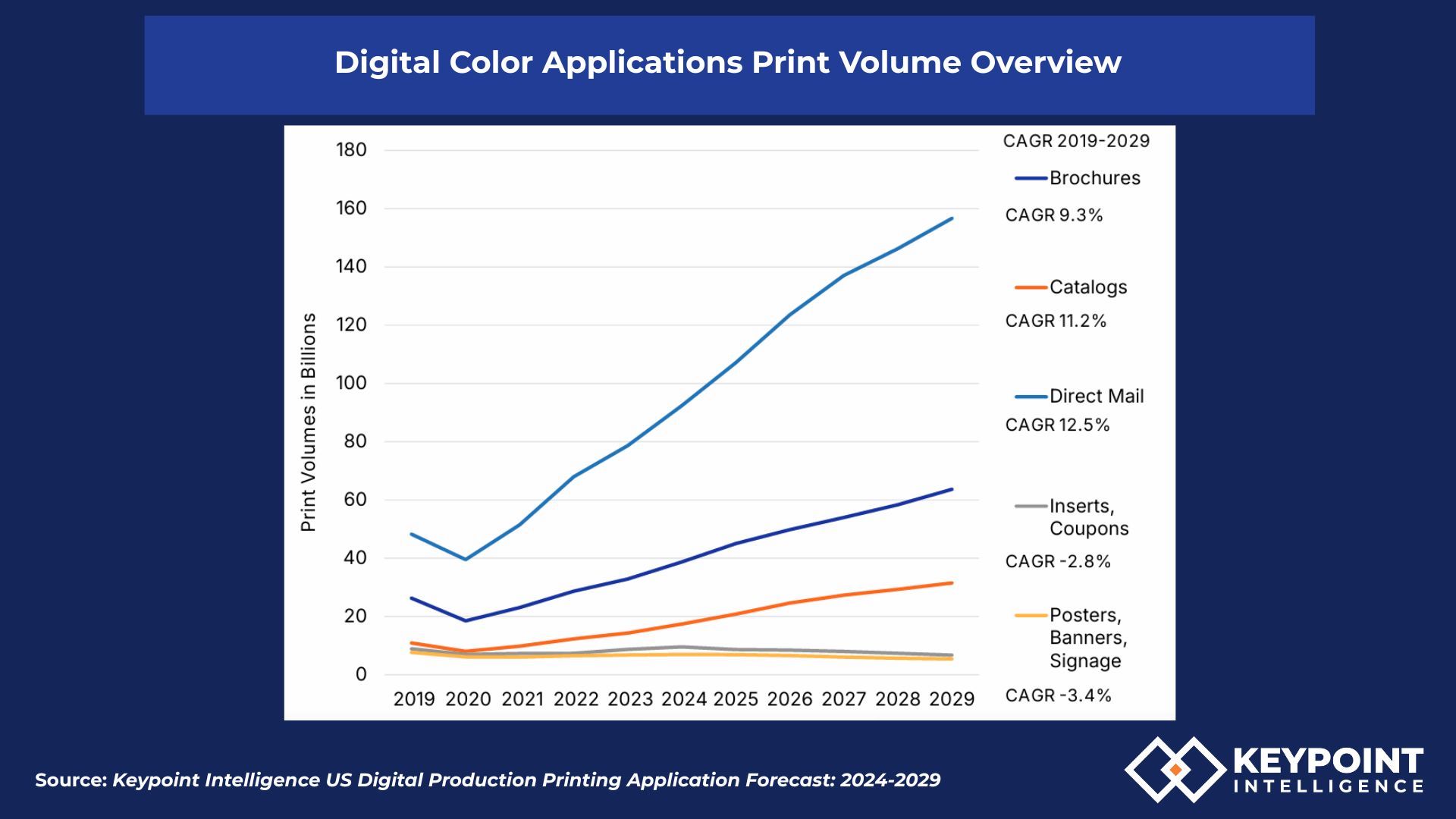
In recent years, marketers have been shifting their budgets into digital channels. But as inboxes overflow, internet displays are ignored, and cookies disappear, a familiar/traditional option is gaining new relevance: direct mail. Even though overall direct mail is expected to decline, Keypoint Intelligence’s US Digital Production Printing Application Forecast (2024–2029) projects that digital printing direct mail volumes will grow at an 12.5% compound annual rate, making it one of the fastest-rising areas in print.
“Marketers are realizing that in a digital-first world, where the market is very saturated, the physical mailbox has become a premium channel,” says German Sacristan, Principal Analyst for Production Printing Services at Keypoint Intelligence. “It offers the tactile impact and trust of print without the clutter or privacy concerns of digital-only channels.”
Why Direct Mail Works Now
- Digital fatigue: Consumers are deleting e-mails and blocking ads, which makes physical mail more noticeable.
- Privacy rules: With the decline of cookies and third-party tracking, direct mail delivers personalization while staying compliant.
- Offset-to-digital shift: Rising costs and shorter run lengths are pushing more work onto digital presses, making direct mail more flexible and cost-efficient.
- Integration with digital: QR codes, NFC, and augmented reality are turning print into a gateway for digital experiences.
Sacristan explains: “This isn’t about replacing digital marketing. It’s about using the right channel(s) that help marketers achieve the best ROI based on their target audience and strategy. Print often works best when it is fully integrated into the marketing mix. Direct mail might deliver its strongest results when it connects to the larger omnichannel plan.”
A Broader Print Opportunity
Direct mail’s resurgence is part of a bigger shift: print volumes are steadily moving from offset to digital printing. As production digital printing total cost of ownerships (TCOs) come down and buyers demand shorter, more targeted runs, digital presses are becoming a growth engine.
Specialty print applications such as metallic inks, textured finishes, foils, and other high-value embellishments are expected to grow in demand. These give brands fresh ways to stand out and elevate their brand, helping PSPs to differentiate themselves and boost profits.
Nearly 95% of print buyers surveyed in Keypoint Intelligence’s 2022 Marketers Study said they are interested in specialty applications within the next 2 years and beyond. Customization, e-connectivity, special design, unique substrates, finishing, and embellishments all work well with direct mail, helping marketers achieve campaign objectives such as capturing attention, elevating brand perception, remaining relevant, and making it easier for consumers to buy.
The New Role of the Print Provider
Quality, productivity, and cost are still imperative in production print, but they are no longer the only factors that determine success. What makes a PSP standout today is enabling marketers to achieve their campaign goals. Providers who ask strategic questions (such as Who is the audience? What is the message? What is this campaign trying to accomplish? How was the communication done before?) will position themselves as true partners.
“Direct mail’s effectiveness, relevance, and growth in the digital printing space proves that print is not just surviving but evolving,” Sacristan says. “Providers who show how and where print strengthens the marketing strategy—not just how it fills an order—will be the ones who lead in the years ahead.”
And the evolution continues. With AI now helping drive predictive insights, automate personalization, and optimize timing, print is becoming smarter and adding more value to the broader communication mix. That means the right message, in the right format, delivered at the right time.
Print remains a holistic channel, and its value only increases when used strategically. When it shifts from product to performance tool, print proves why it still belongs at the center of modern marketing.
For additional information or to review other market trends, click here.