Small and mid-sized print service providers don’t get much attention, but they’re shaping the future of wide-format printing in real ways. These companies typically have fewer than 100 employees and operate with lean teams, modest space, with fewer resources and limited scale. Despite that, they’re finding new ways to grow, especially by offering faster service, more customization, and applications that bigger shops can’t handle efficiently.
Our latest study, Beyond the Big Shops, focuses on this group. We interviewed SME owners and managers across North America to understand how they operate, what they invest in, and where the business is heading.
Throughput Drives Equipment Strategy
Limited space, lean teams, and a wide mix of jobs greatly influences an SME’s choice of equipment. SME’s must maximize the use of every piece of their equipment. The machines they invest in have to must match the reality of their day-to-day operations.
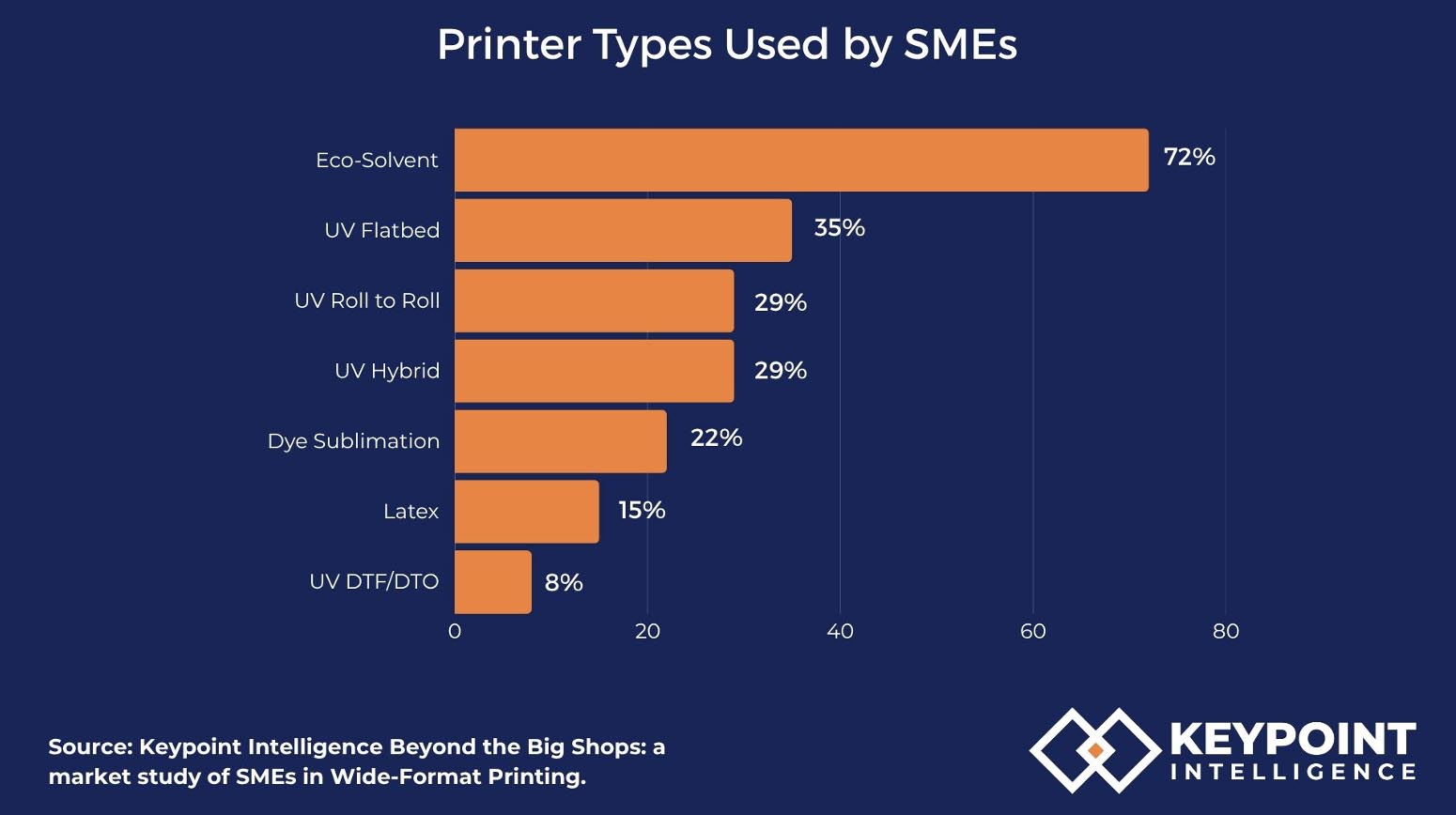
Most use eco-solvent, latex, or UV printers, and many are starting to add UV DTF and DTO systems. These machines let them print on a variety of surfaces, from banners and signs to drinkware and packaging, which opens new revenue streams without requiring major changes to their production floor.
With small teams, automation and ease of use are critical. Features like quick media changeovers, built-in print-and-cut, and intuitive RIP software help maximize output. Machines that can run overnight or require minimal supervision are especially useful.
Finishing is another pressure point. Most SMEs use basic tools like laminators and trimmers. For complex work like custom cuts or multi-layer graphics, they often outsource. Some are investing in entry-level automation, but only when the numbers justify it.
Diversification Is a Clear Priority
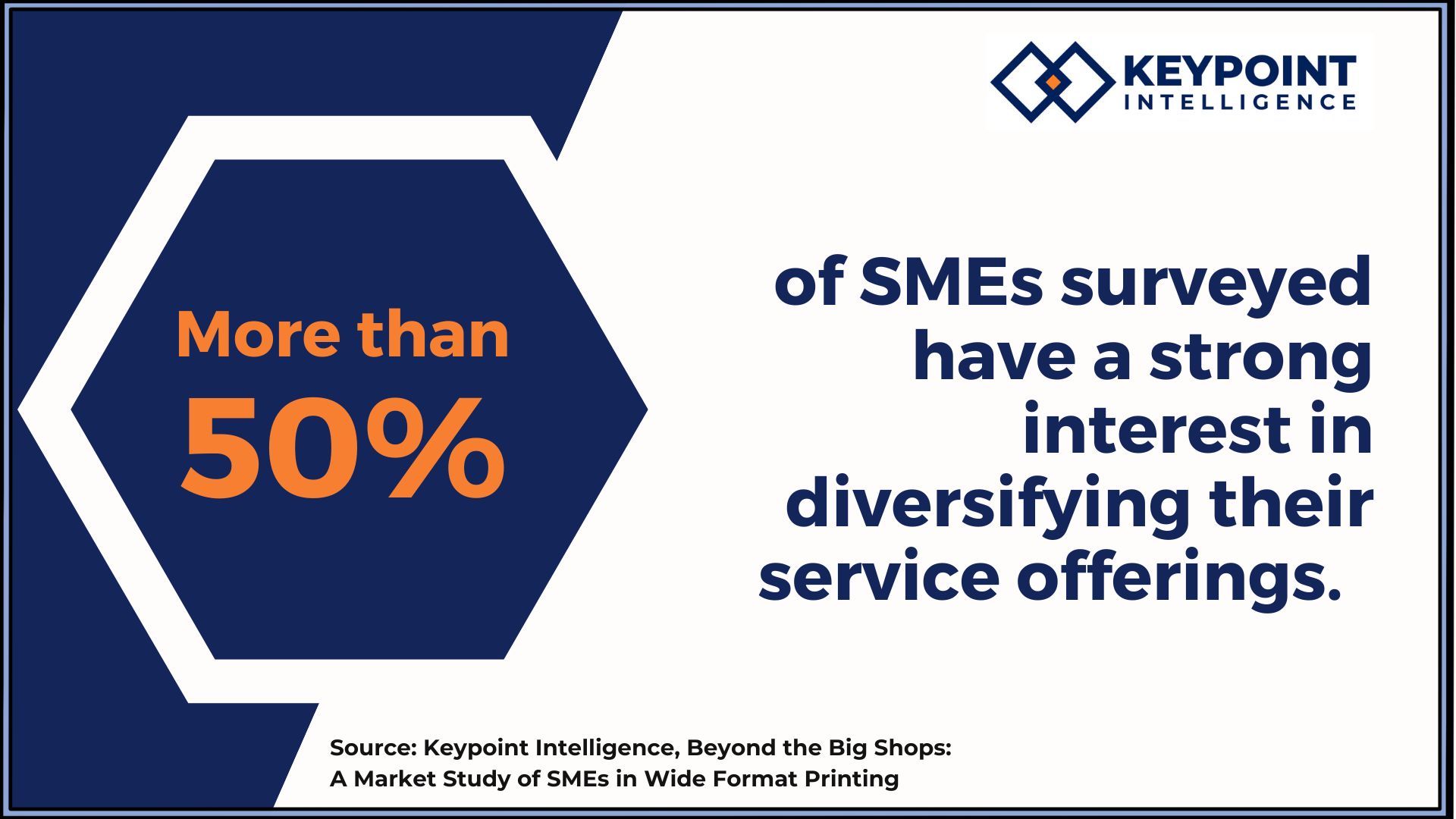
More than half of the businesses in the study plan to expand their application mix in the next 12 to 24 months.
A big part of that growth is in promotional items and custom goods. These high-margin, short-run products help drive repeat business and set SMEs apart from larger, volume-focused competitors.
Technologies like UV DTF and DTO, along with web-to-print tools, are making this kind of expansion possible. SMEs are adopting them not just to keep up with shifting customer demands but to stay ahead of them. Their proximity to local markets gives them an early read on trends, and their size lets them pivot quickly.
Why This Matters
For vendors and OEMs, the SME segment offers a clear opportunity. These companies aren’t chasing the biggest or fastest. They want reliable tools that fit their space, support new applications, and deliver a solid return. They’re practical buyers, but they’re also strategic. As Johnny Shell, Senior Principal Analyst at Keypoint Intelligence, puts it: “SMEs don’t make impulsive purchases. They invest in capabilities, in partnerships, and in tools that allow them to meet real customer demand with precision and responsiveness.” If you want to know where the market is headed, watch what these businesses are doing.
The full report includes more on purchasing behavior, equipment planning, and what these shops need from vendors. For more insights from Johnny Shell and our Wide-Format Printing service, go here.