Not long ago, robots in print shops felt like science fiction. Now, with technology advancing at full tilt and labor getting harder to come by, robotics has become less of a future play and more of a now-or-never decision. For modern print operations, it’s essential.
What the Data Shows
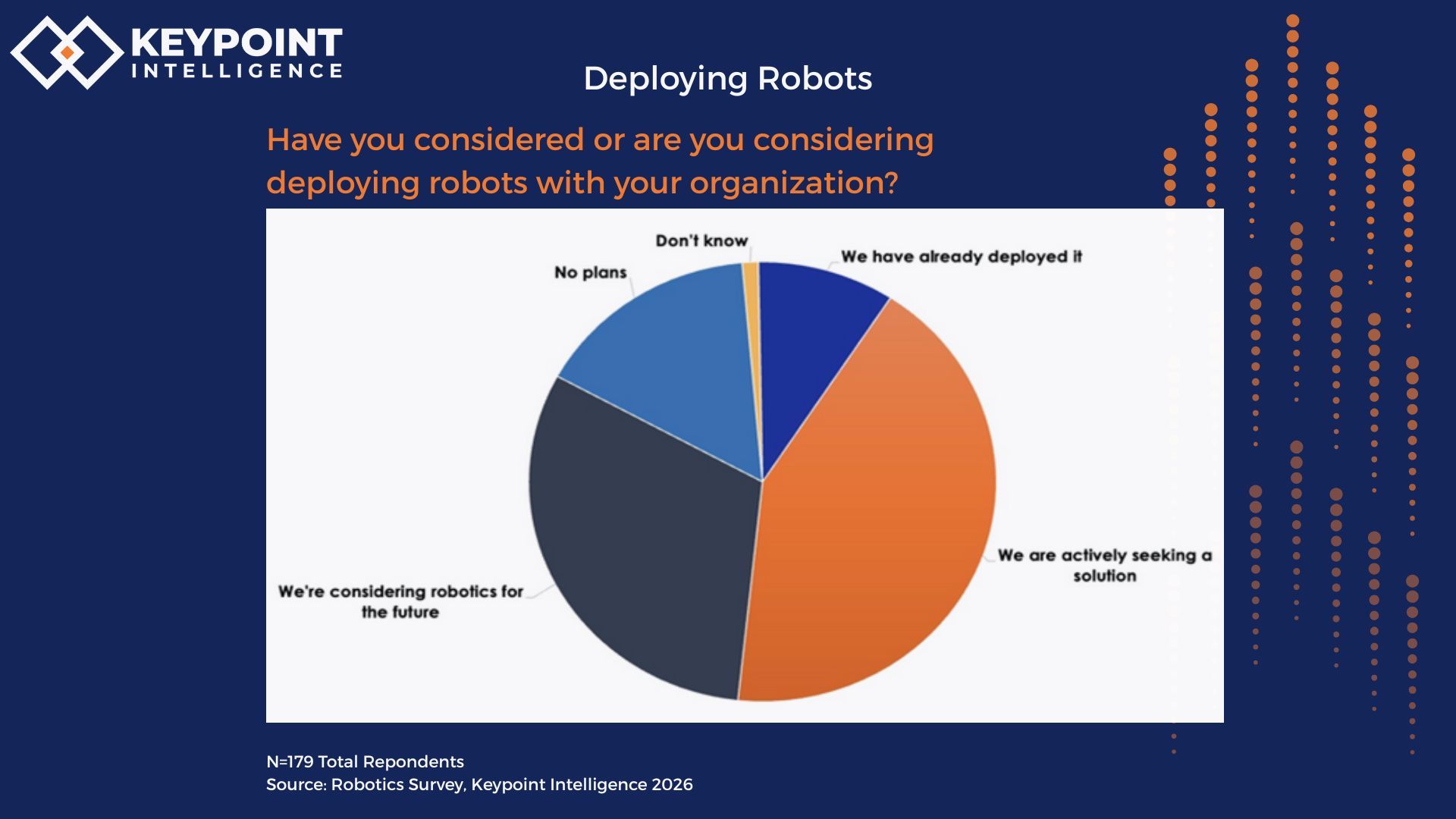
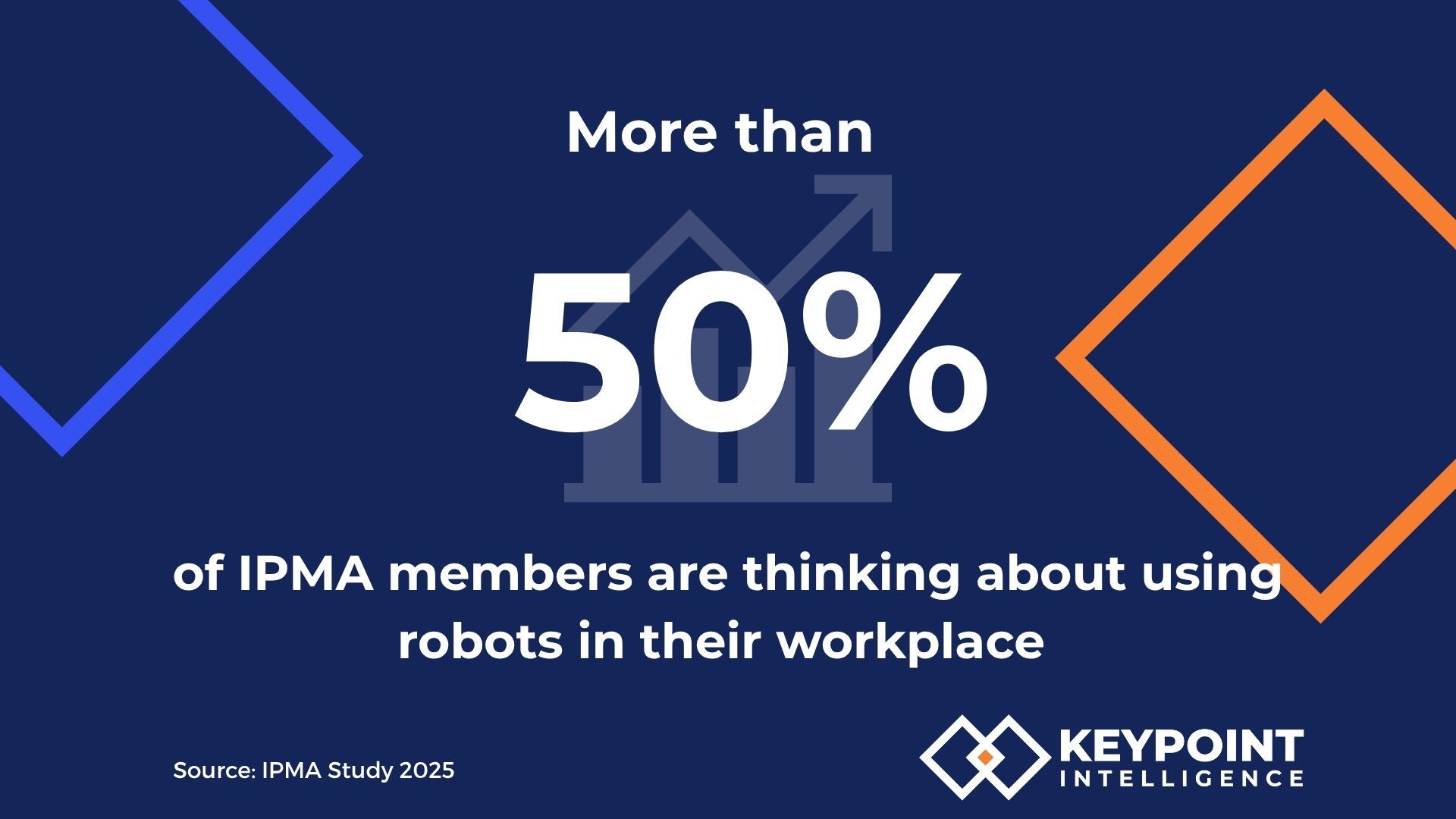
A recent survey by Keypoint Intelligence and the In-Plant Printing and Mailing Association (IPMA) found over 50% of respondents were already thinking seriously about robotics even before hearing expert sessions on the topic.

“The response was overwhelmingly positive,” commented Mark Boyt, Principal Analyst of Production Workflow Software at Keypoint Intelligence. “Words like ‘curious,’ ‘excited,’ and ‘hopeful’ came up again and again. This isn’t hesitation. It’s readiness.”
Why Robotics Is Gaining Ground
Robotics isn’t about chasing trends. It’s about tackling real problems that have been building for years. The workforce is aging out, and replacements aren’t exactly lining up. Skilled operators are retiring faster than they’re being replaced, and finding new hires willing to do repetitive, physical work is getting harder by the day. On top of that, the cost of doing business continues to climb, stretching already tight budgets.
That’s where automation enters the picture.
Automation is a practical solution. Robotics is the next step in workflow automation. Robotics can take on the tedious jobs that slow things down, allowing shops to keep production flowing and let people focus on higher-value work, and this isn’t just a concept. Print service providers (PSPs) already have a clear sense of where robots would go to work. Finishing and bindery are at the top of the list—those high-volume, repetitive processes are ready for automation. Internal logistics is another big opportunity, with many envisioning autonomous pallet movers and smarter material handling to cut back on manual transport and free up valuable time.
Proof Over Promises: What PSPs Need to See
Print providers aren’t blindly buying into the hype. They want robots that work. Real-world results matter more than polished demos. If a system can’t keep up with the demands of a production floor, it’s out. And support matters, too. Some questioned whether companies outside the print world understand what in-plants really need, especially when it comes to support across remote or multi-site operations—but to earn trust, vendors need to deliver on:
- ROI that holds up: Clear gains, not guesswork.
- Performance under pressure: Built to last, not just to impress.
- Support that gets it: Fast, expert service and systems that fit into existing workflows.
Who Should Be Paying Attention
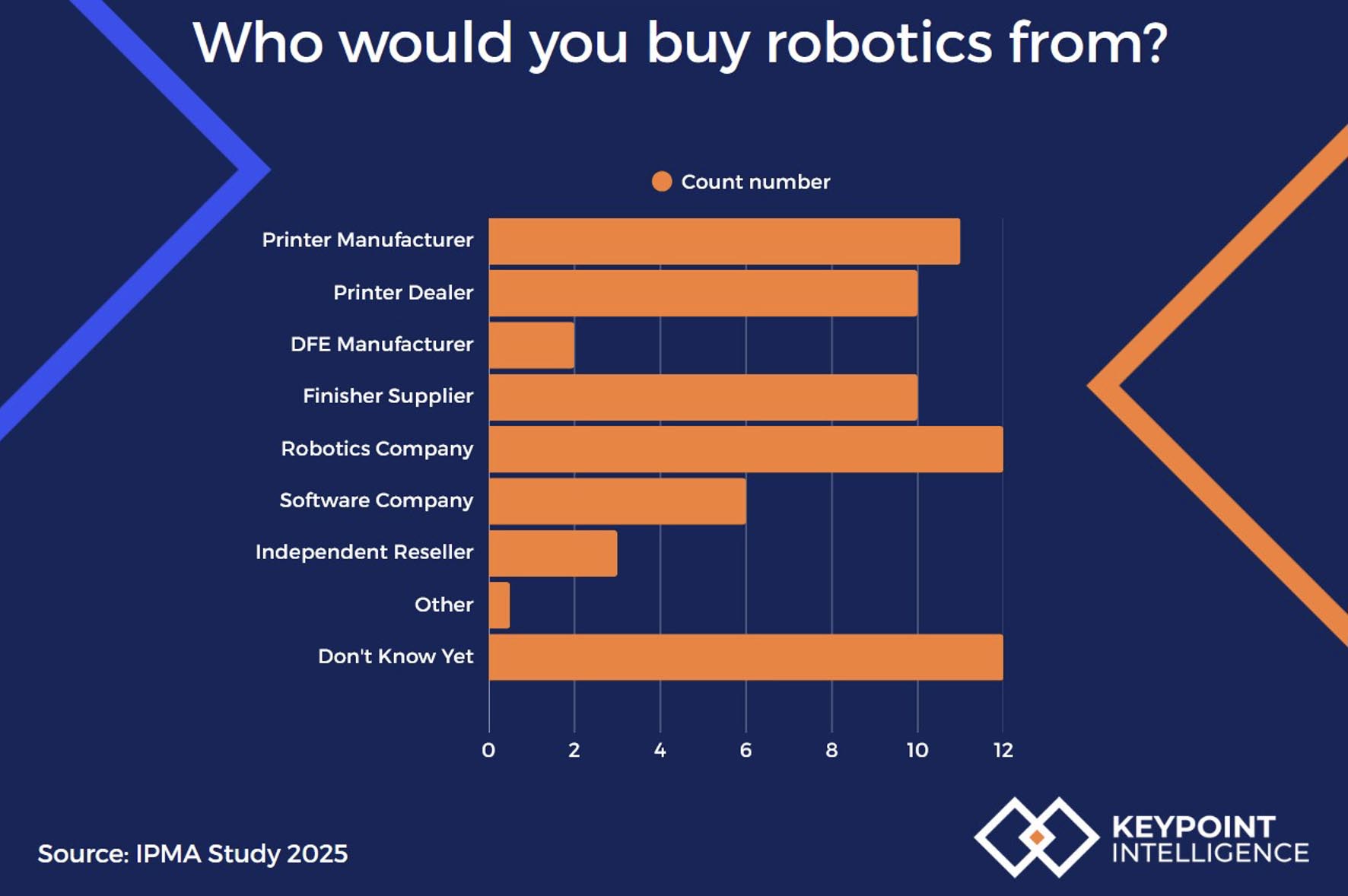
Nearly half of respondents said they’d prefer to buy robotics from print-savvy vendors—either robotics specialists or press manufacturers. They want partners who get the industry and can deliver real value, not just gear.
For press and finishing equipment vendors, this is the moment. The need is there. The interest is real.
Final Takeaway
Robots aren’t new, but in print, they’ve arrived with purpose. They’re tackling labor shortages, improving efficiency, and helping in-plants stay competitive. This isn’t a trend to wait out. It’s a shift to lean into. As Mark Boyt puts it: “Don’t wait for perfection—start exploring practical automation use cases now.”
Before making any investment, it’s crucial to conduct thorough research, consult with peers, and seek advice from workflow automation experts. To begin your research, learn more about Mark Boyt and Keypoint Intelligence’s Production Workflow Services.
The future of print is automated, and the time to act is now.
Discover how Keypoint Intelligence’s partnership with WhatTheyThink! can help you achieve your goals through market research and strategic consulting.